Most United elites out there have probably been disappointed by how hard it actually is to get into a United club. United’s own Star Alliance Gold elites don’t get access when flying domestically, and not even a domestic “first class” ticket will get you in. Rather, United encourages you to purchase a club membership to the tune of $450 a year in order to gain admittance. To my surprise, thousands of travelers find that cost worth it and purchase the membership. However, in order to have parity with their partners, United still allows Star Alliance Gold status holders with their other alliance airlines to access their club lounges. At the time I held Gold status with Singapore Airlines, so I was allowed in before my United flight to Boston. The check in agent actually rejected my business class boarding pass to Boston before I pulled out my membership card. I found it pretty funny that even the higher paying business class passengers are denied from these lounges on domestic trips.
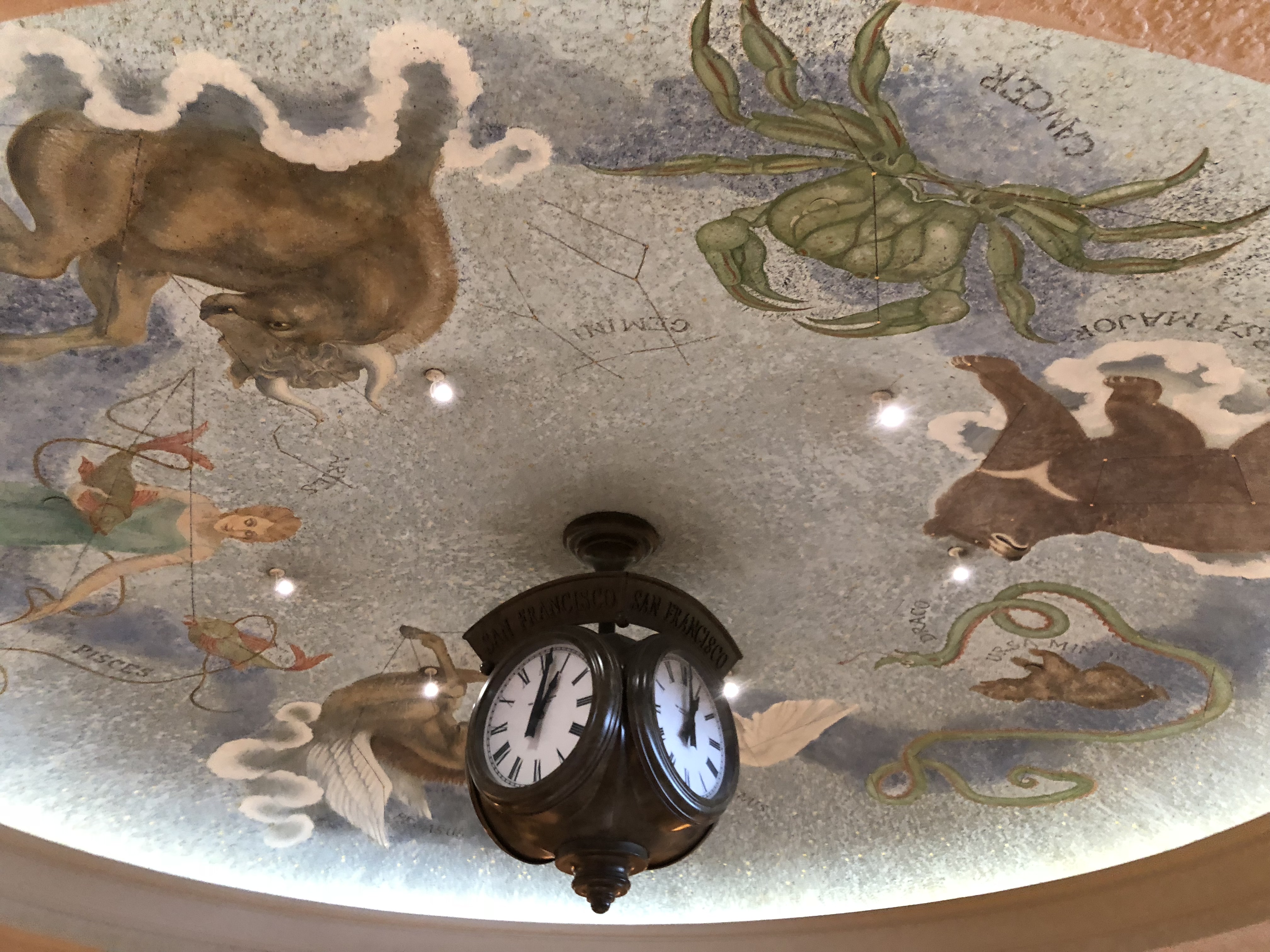
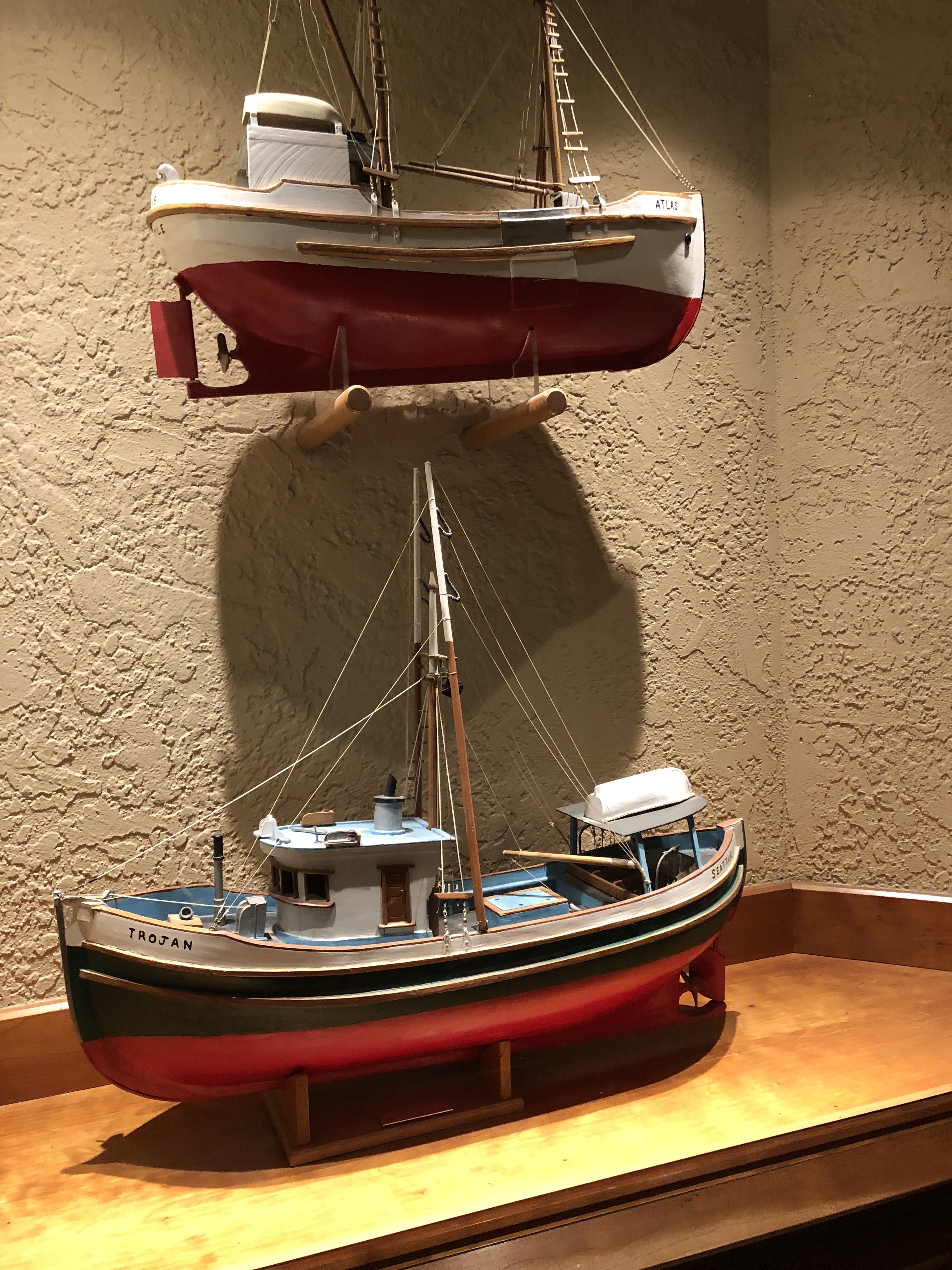
The ceiling fresco of the United club, with the (future Polaris?) bear in on the right hand side Model fishing boats from a fairly modern era on show at the United club
Right at the entrance, there’s a beautiful ceiling fresco featuring some of the animals in various constellations. There’s a clock above it to tell the time, which is a nice touch. There are also a few model ships like the one above on display at the entrance, which were fun to look at on my first visit. That’s most of the decoration in the lounge, however.
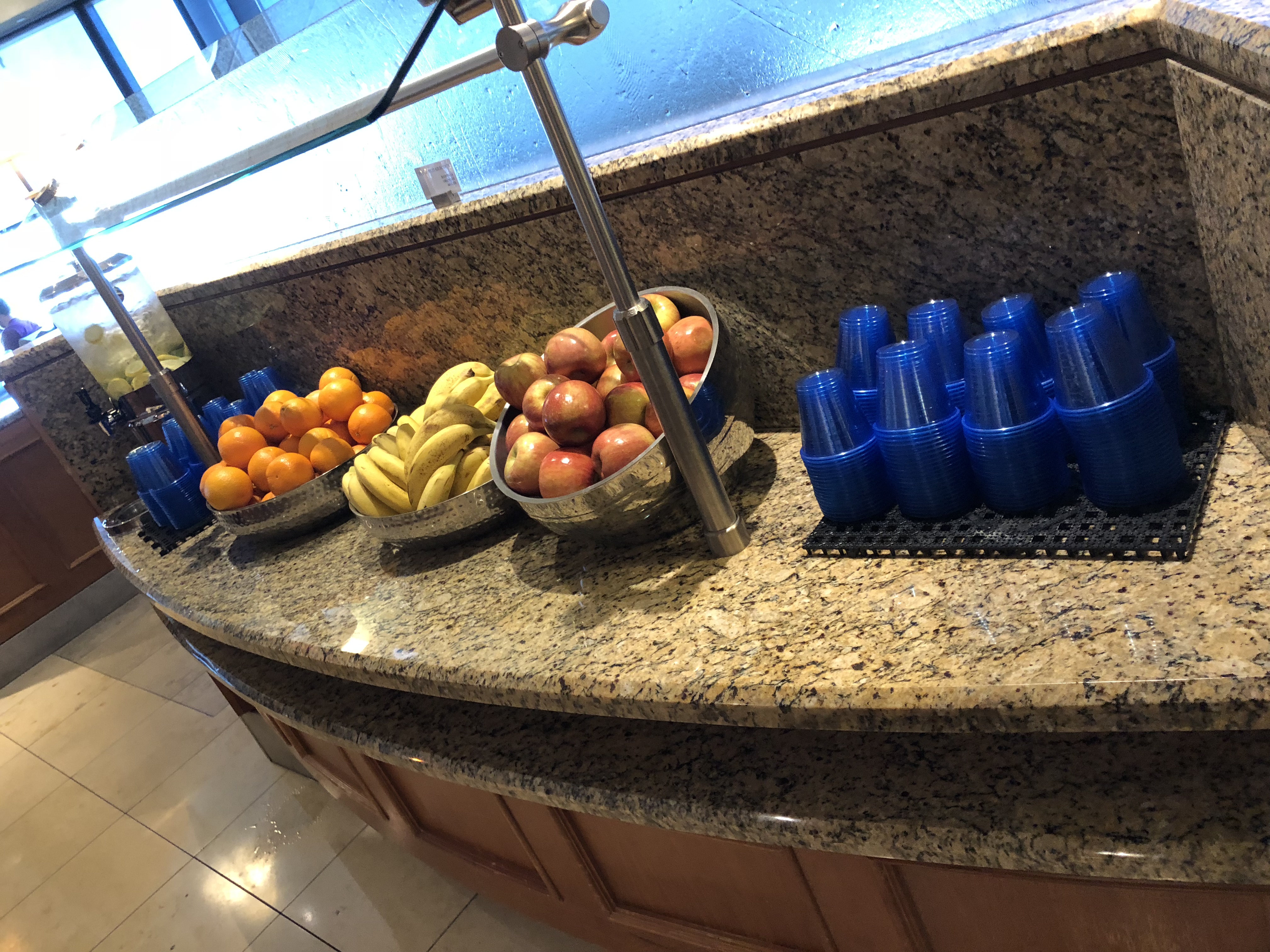
Lunchtime buffet offering of fruit
Domestic United clubs tend to be pretty short on food options, and that was definitely the case here. There were apples, bananas and oranges on display, but nothing beyond that. There’s usually a vat of clam chowder and some sort of bread on display, but I didn’t get them pictured. They have a machine that makes coffee, including a very fluffy cappuccino. Since I was looking forward to having a hearty meal on the plane, I skipped the food here this time. But I’ve sprung for coffee and some fruit on other days when I was due to fly in Economy class.
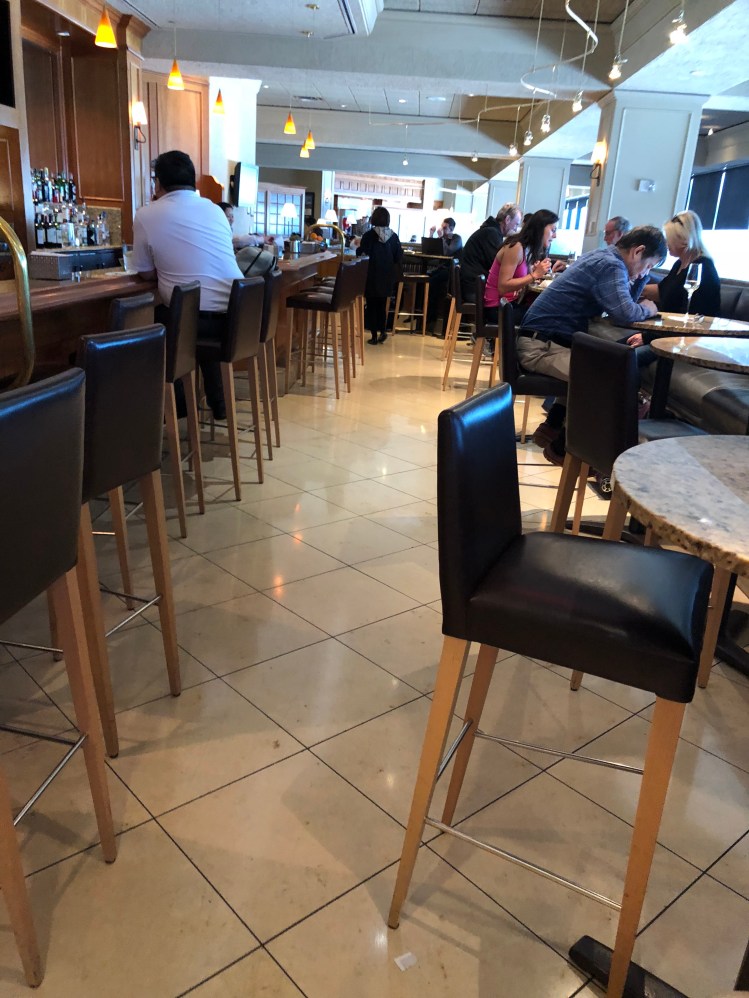
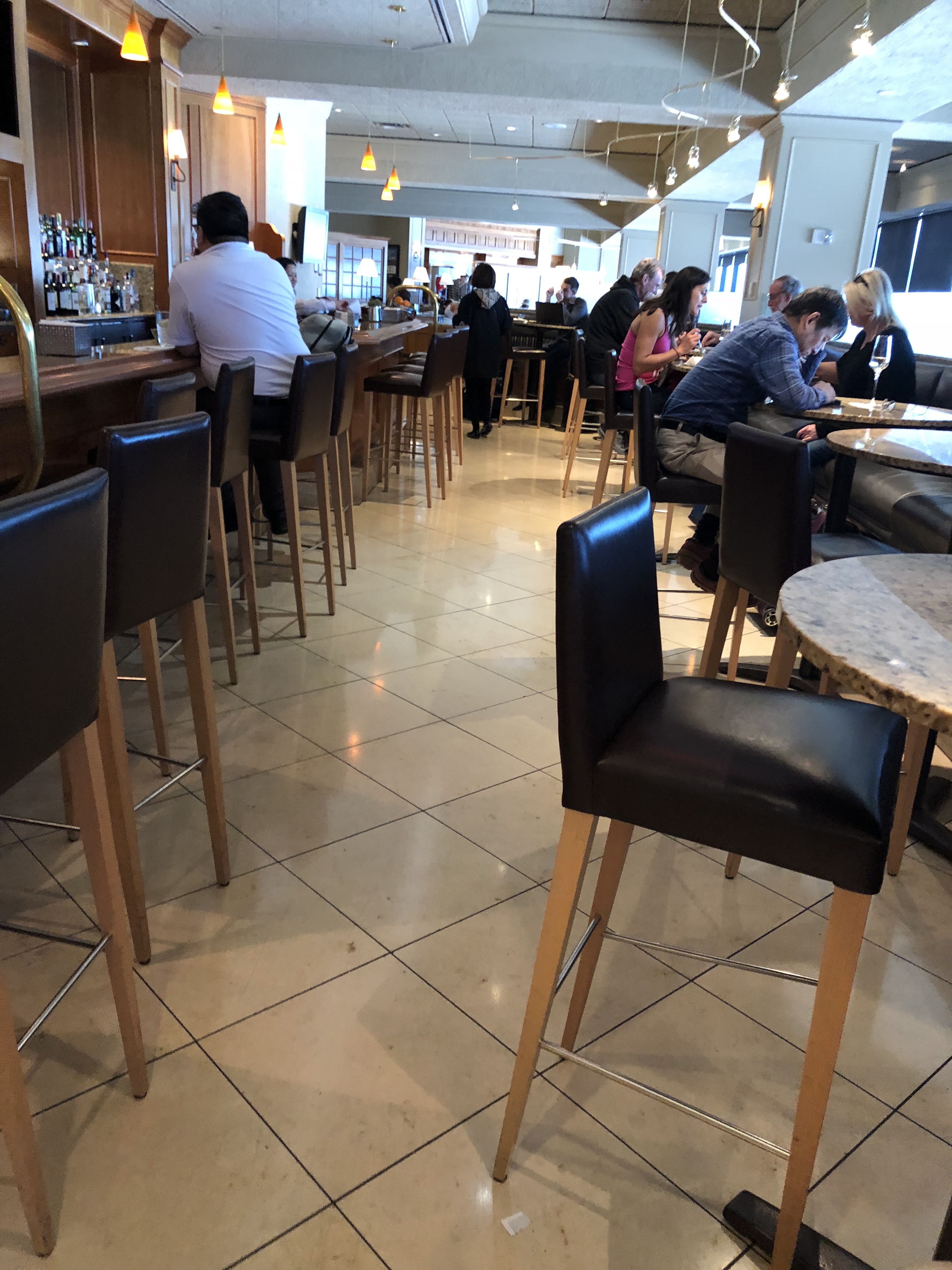
There’s all sorts of seating in the main areas of the lounge, from bar stools and countertops to couches with views of the apron and United’s domestic terminal. Even though it’s a hub lounge, I’ve never seen the seating fill up during the few times I’ve been here.
The United Club lounge seating around midday on a Friday. Half the seating is taken
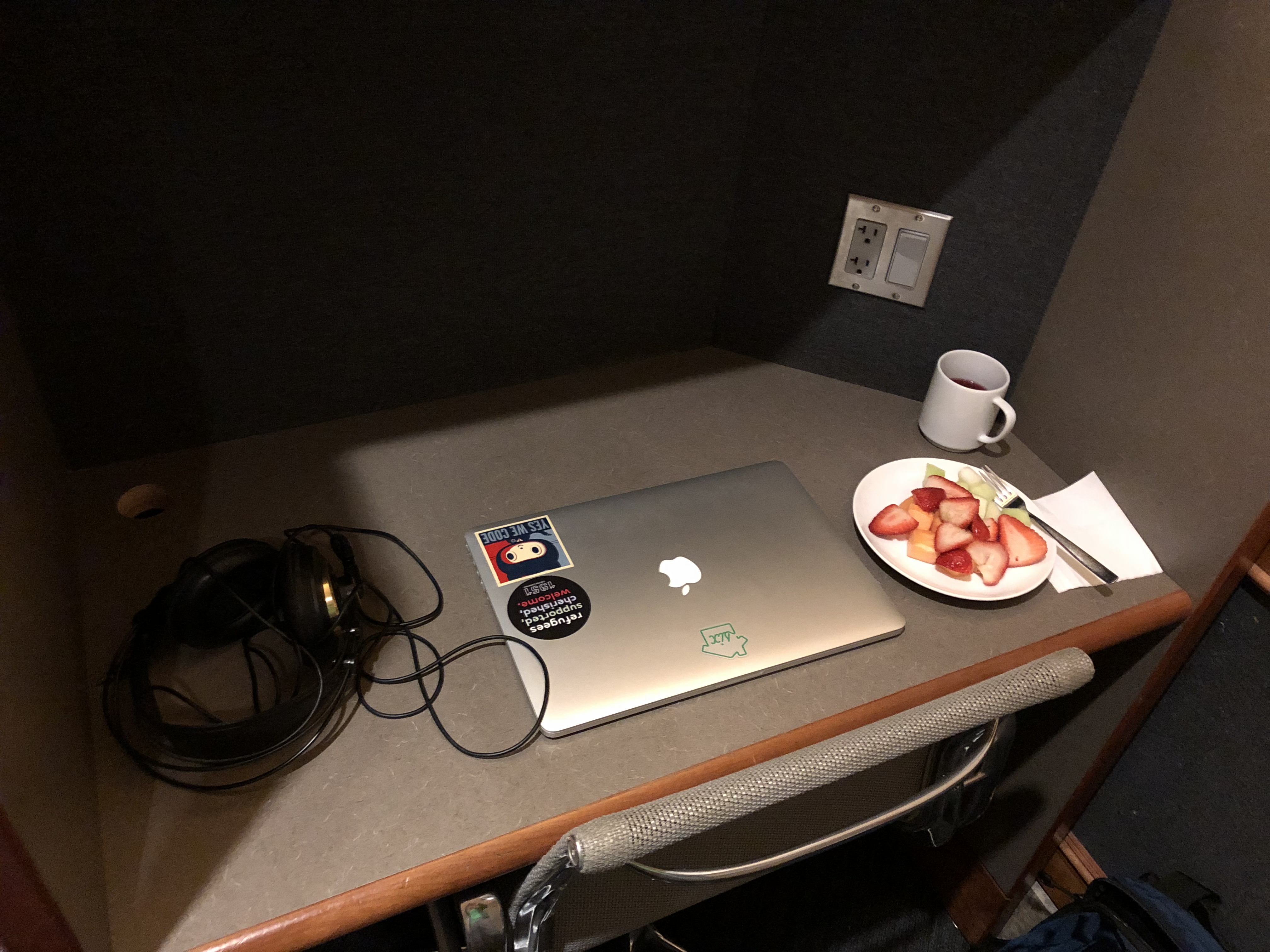
One of the best parts of this lounge for extended stays however, is the presence of a cluster of workstations that’s separated by the rest of the lounge by a quiet corridor. It’s easy to miss at first, but because it’s so quiet and gets very little foot traffic, it’s easy to be incredibly productive here. I’ve had a couple really solid afternoons of work before boarding flights to other places. Honestly, the workspace reminds me more of UC Berkeley’s desks in their underground Main Stacks library. I guess I’ll take that bit of nostalgia as a bonus.
So, is the United Club worth a stop if you have access? I find it more comfortable than the terminal, and some seat is usually guaranteed, so I’ll usually enter if I have time. However, I wouldn’t arrive at the airport early for it unless I thought I’d be more productive here than anywhere else I might work that day. I’ve come here early for say, noon flights where it wasn’t worth the detour to the office for being able to see coworkers that morning. And one key to productivity is snagging one of these desks. It isn’t impossible to be productive without it, but it does get considerably harder for me. I also stop by here to give my electronics some extra charge, rather than scouring the terminal for a port. And if I’m willing to choke down a banana (I hate bananas), then I’ll also stop to pick up a couple of those. All in all, I wish they’d improve the food offerings here, but that’s really my only complaint about the lounge, as it’s solid overall.
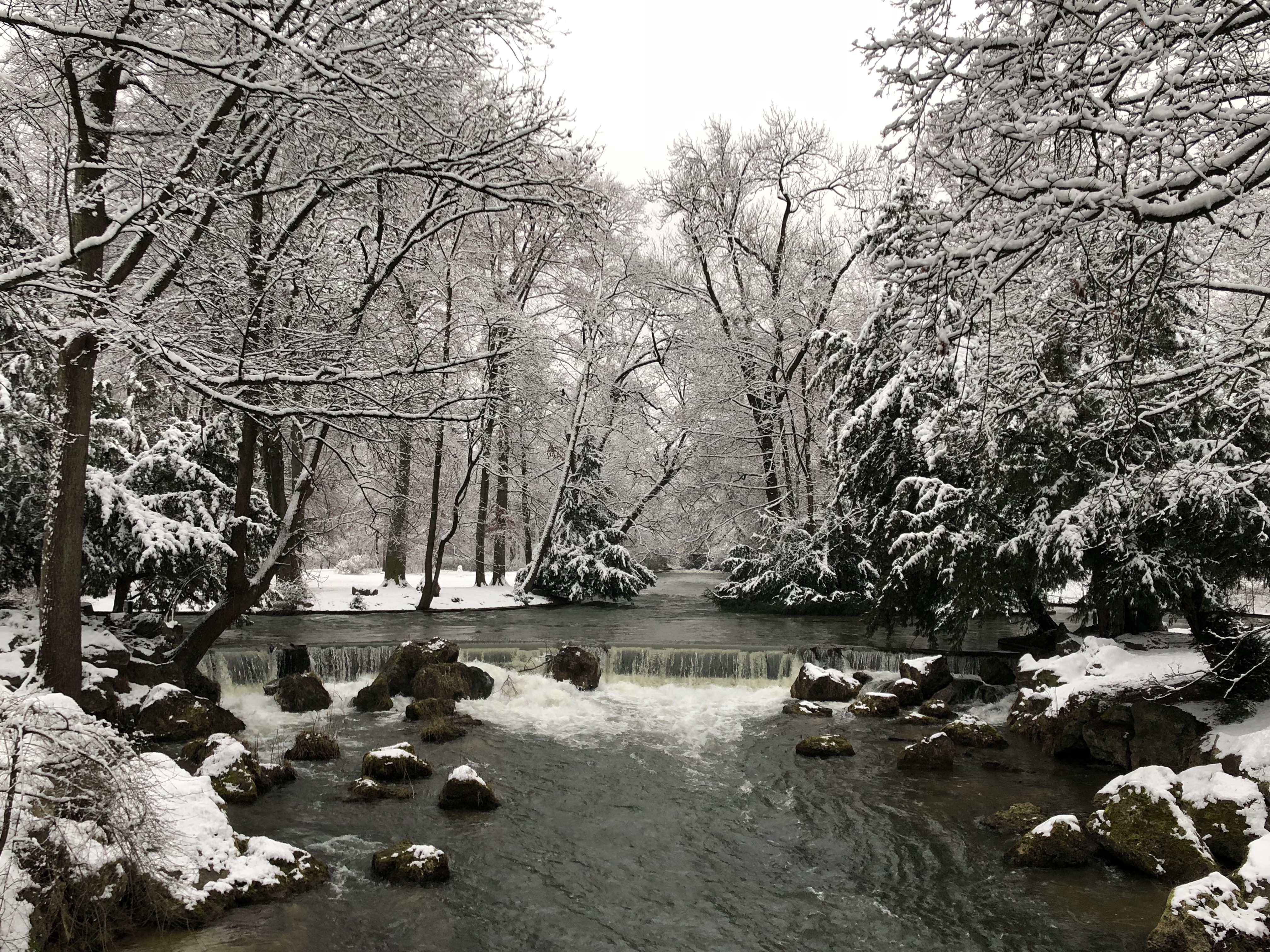
Munich’s Englisher Gardens turned into a wintry wonderland this weekend!
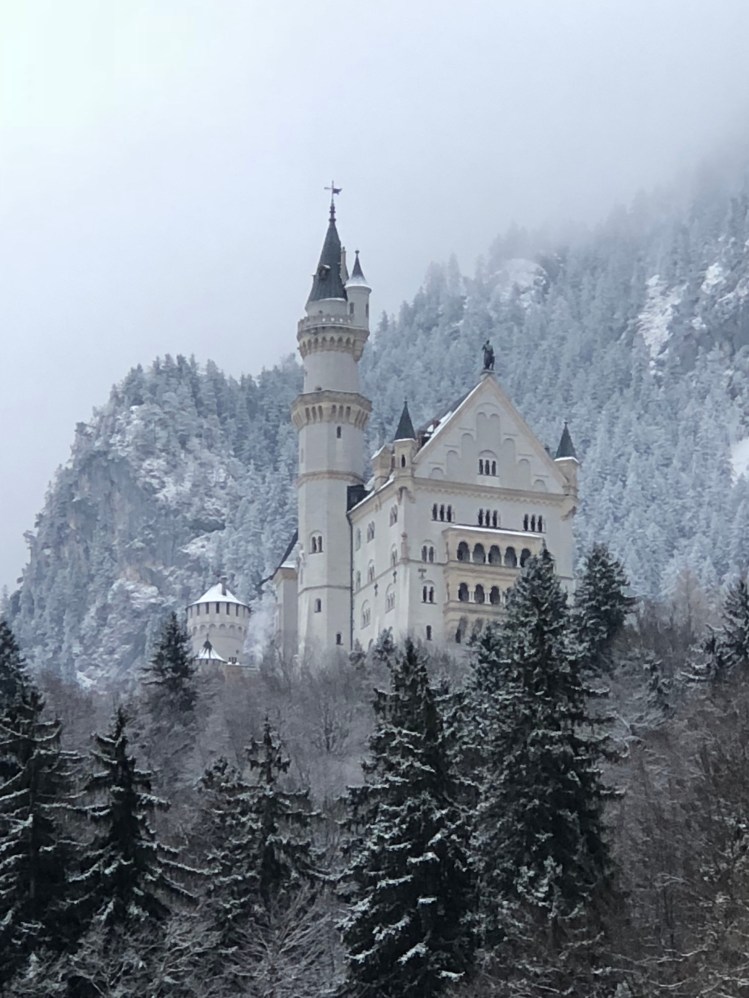
Welcome to my rendition of a weekend trip to both Boston and Munich, over the February President’s Day weekend in 2018! The scaffolding for this trip was set in place by an earlier one: a weeklong trip to central Europe with some friends in December of the previous year. Instead of a typical roundtrip flight, my itinerary there started with a roundtrip flight from Munich to San Francisco and back in business class. I decided at the spur of the moment that the President’s Day weekend was as good a time as any for the return leg to Munich. I chose my layover to be in Boston for 2 reasons: so I could try United’s 757 “premium service” transcontinental business class, and also Lufthansa’s new A350. Because I wouldn’t have many vacation days banked by February, I decided to return on the Tuesday morning so I wouldn’t miss any days of work. My return was on a KLM ticket from SFO to Vienna and then back from Munich, with layovers in Amsterdam both ways. Since I chose to have a full day layover in Boston, I ended up with just 2 full days in Munich. This was actually shortened to a day and a half by the time my Lufthansa flight delay became apparent. I spent most of my day in Boston visiting friends and exploring downtown a bit, and my time in Munich was spent exploring outdoor parks and going to Neuschwenstein. Even though it was a brief trip, I had a wonderful time and would absolutely do a rushed trip like this again.
United 777-300ER Flight 59 from Frankfurt to San Francisco
Scheduled Departure: 12:50 p.m., Sunday December 10th, 2017
Scheduled Arrival: 3:40 p.m., Sunday December 10th, 2017
Scheduled Duration: 11 hours, 50 minutes
Class of Service: “Polaris” Business Class
Daytime photo of United’s 777-300ER. (I cheated and used a later photo, taken in Hong Kong)
United first introduced their new “Polaris” service concept in December 2016 across their entire fleet. However, they had a very gradual approach to phasing in the actual redesigned business class seats. For all of 2017, the only planes with these seats were their newly-delivered 777-300ER aircraft. They took delivery of 19 in all, meaning that their routes were fairly limited. But I lucked out and they chose to put the plane on a single Europe route: the one from Frankfurt to my home airport of SFO! When I had the opportunity to book a cheap business class ticket home from Munich, I routed through Frankfurt for precisely this reason. I was excited for this flight in particular because it signaled so much about the potential for United’s premium product in the coming years.
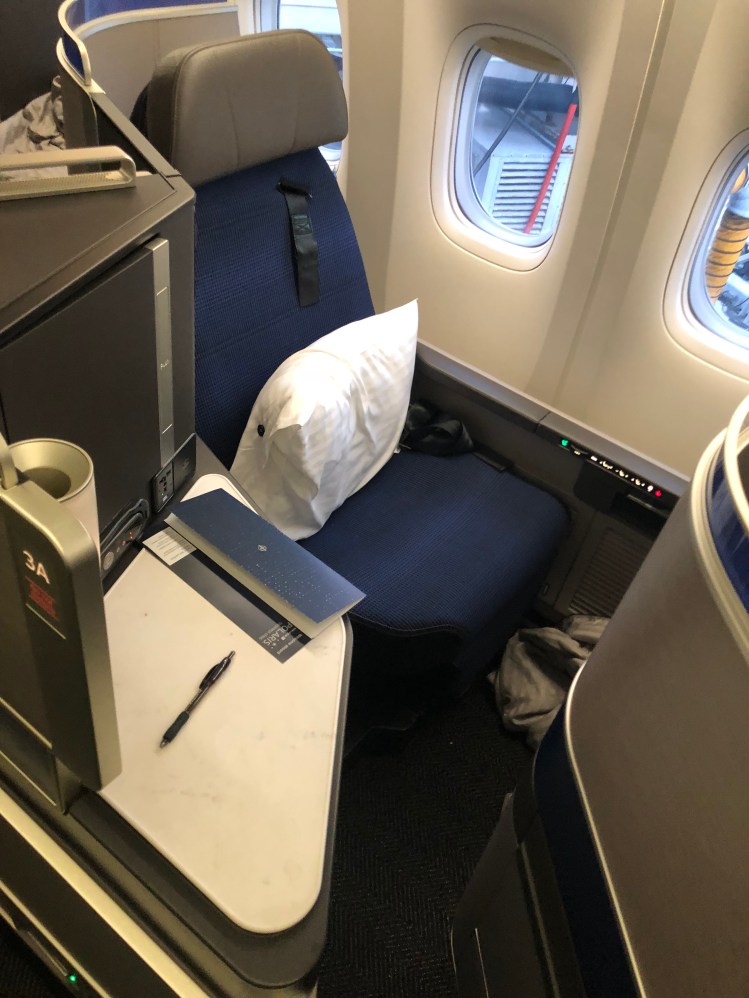
Sneak Peek at United’s Polaris seat, the most private variant on the 777-300ER
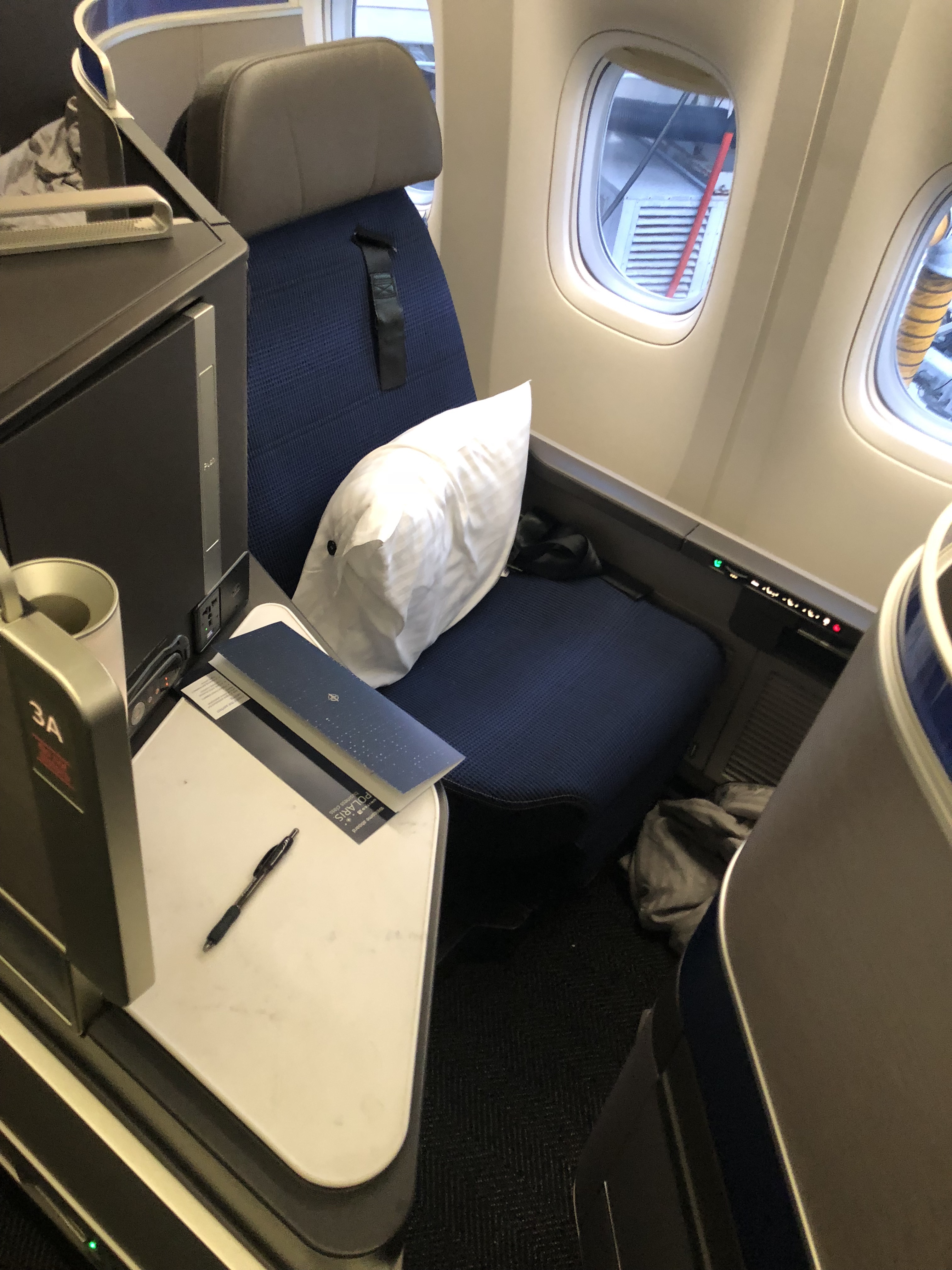
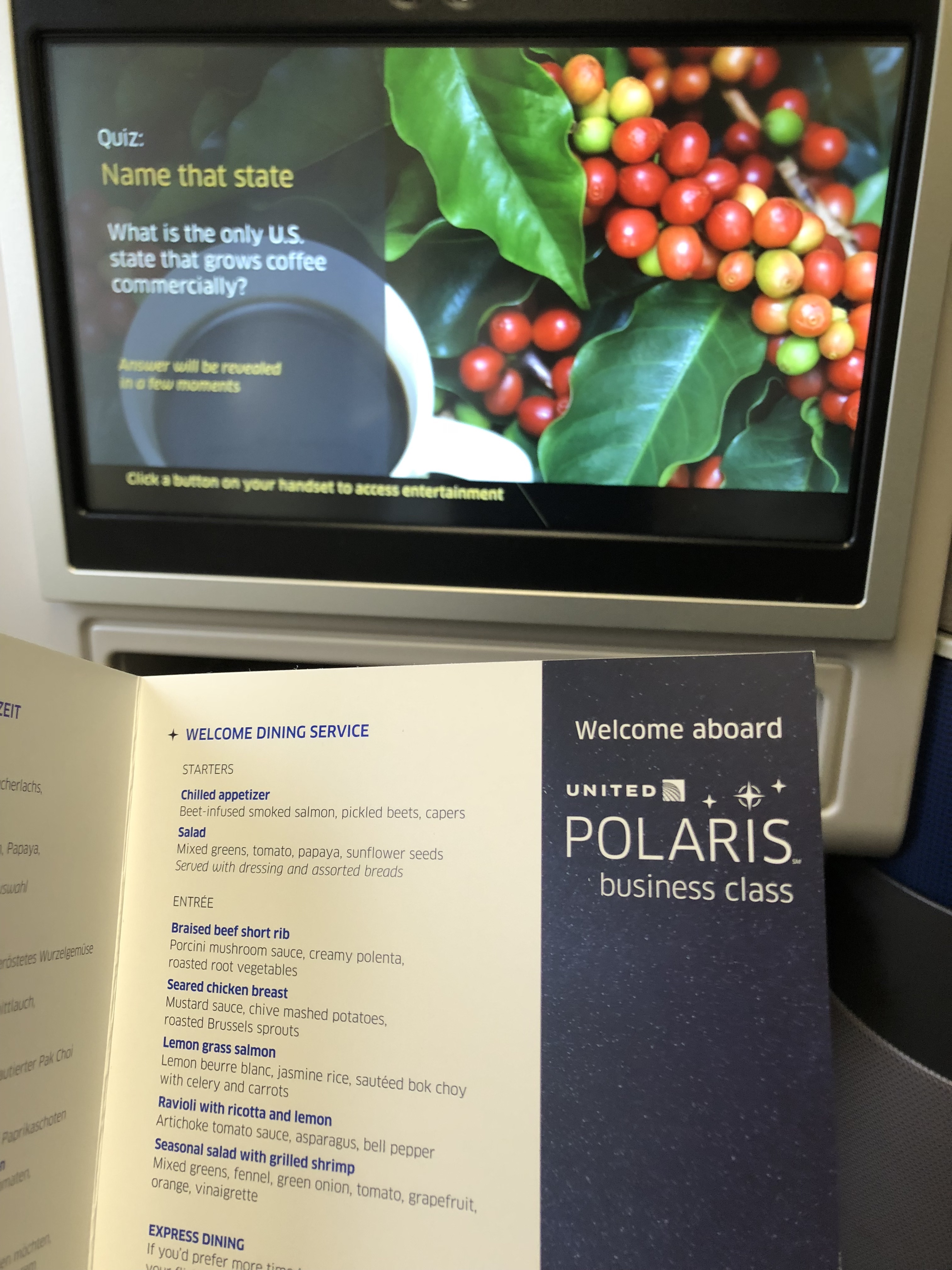
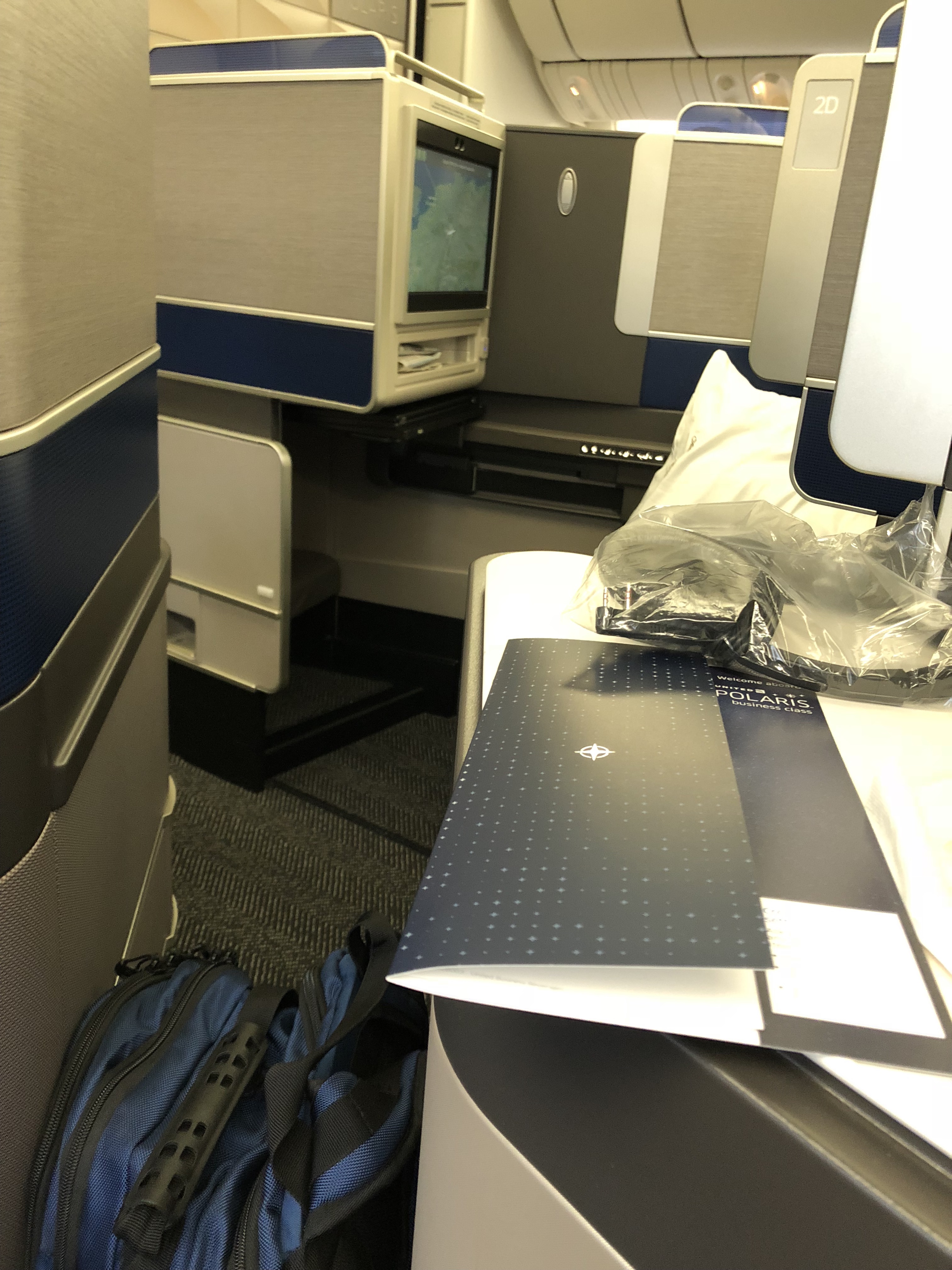
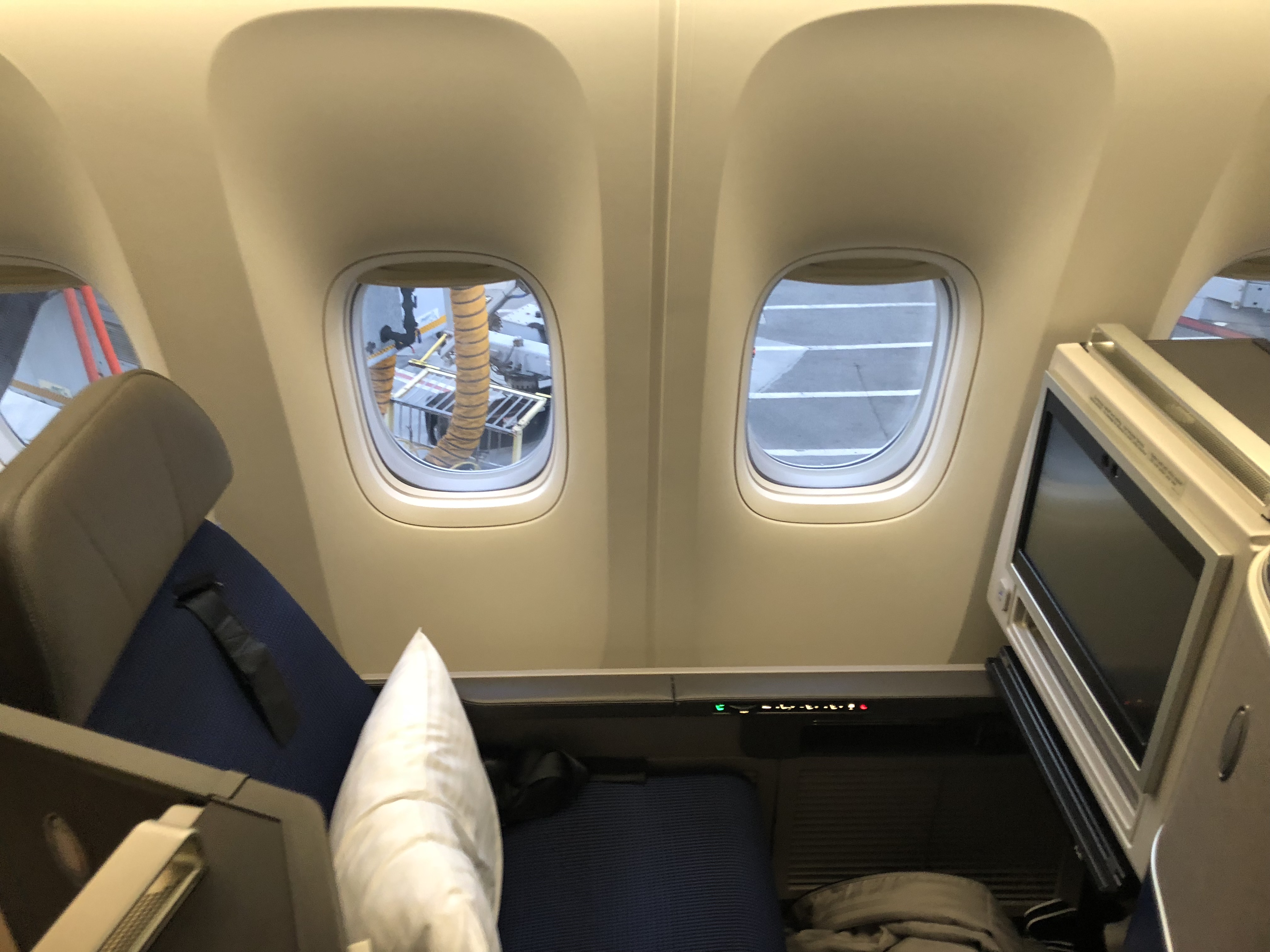
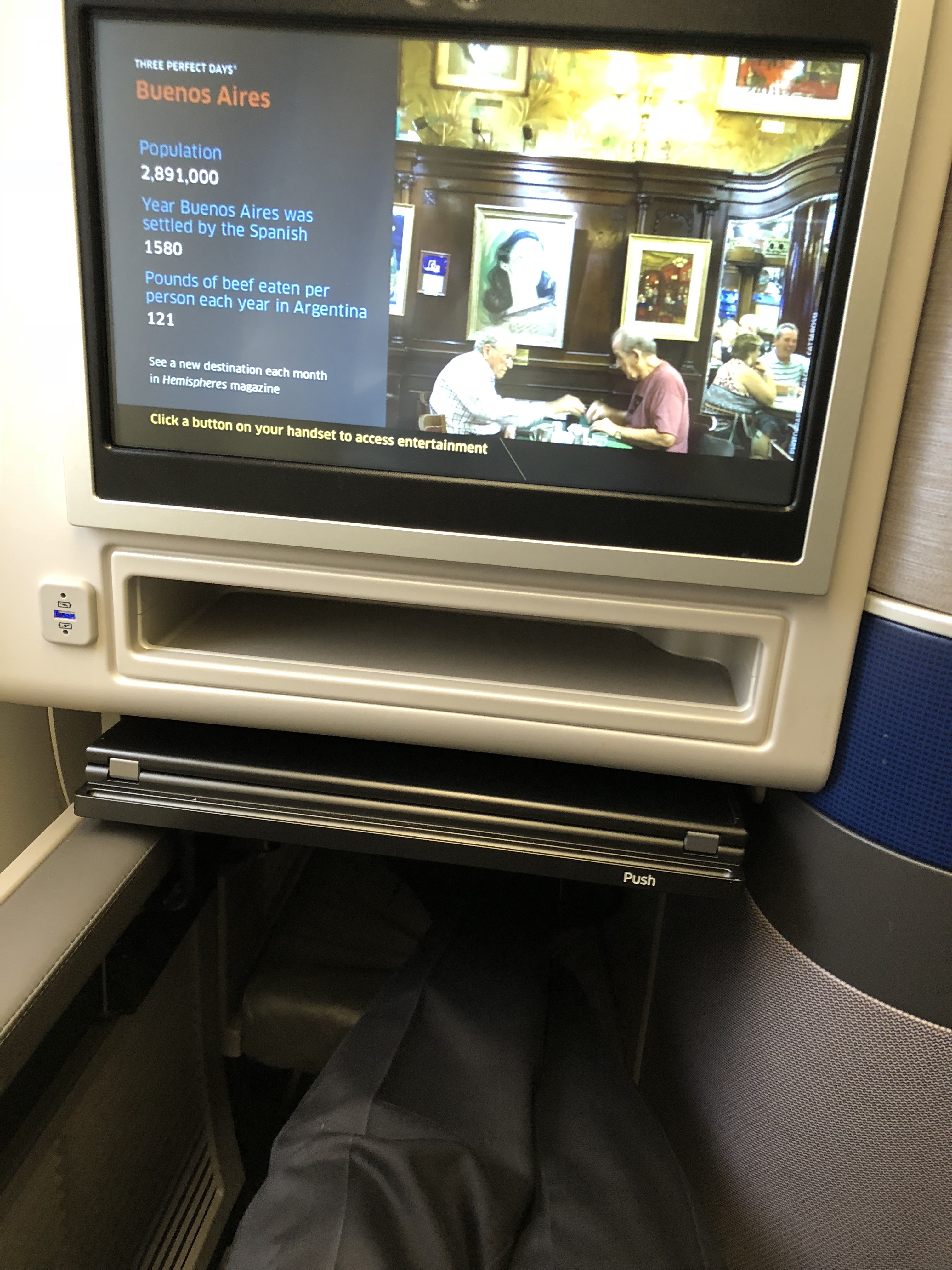
The seat map of the plane was wide open when I booked, so I was able to assign myself Seat 3A. I always choose the left side of the plane if I can when flying into SFO, since the plane sometimes overflies the city itself out the left window before circling around the peninsula for landing. And in the Polaris cabin structure, seats in odd rows are positioned forward and further from the aisle, while even number row seats are angled slightly towards the aisle and are significantly more exposed. I chose 3A so that it wouldn’t be right against the galley, and my usual preference anyway is to be in the middle of the forward cabin. The seat itself was even more private than I was expecting, as there was a narrow walkway you had to cross through in order to access the seat. Right behind this walkway was a faux-marble countertop, where the flight menu was left. A lamp sat above the countertop, making it possible to have light for your seat that wouldn’t intrude on the cabin like the ceiling lights would. A power plug and the inflight entertainment handheld controller were also positioned in back of this surface. As for the seat, the fabric is comfy but firm, with additional padding for the headrest. The seatbelt goes across your shoulder like it does in a car. One large pillow was on my seat initially, in addition to the substantial bedding for the flight. Facing straight forward was the inflight entertainment screen and ottoman. The screen wasn’t the largest I’ve seen for business class, but the resolution is sharp and it was sufficient for me. A USB charging port sat to the bottom left side of it. Below it, the tray table for working and dining could be pulled out. I’ve read other reviews stating that the foot cubby was too narrow for them, but it suited me just fine. I was especially appreciative that my feet actually reached it, and I was proud of myself for remembering to use this rare opportunity to stretch my legs on an airplane!
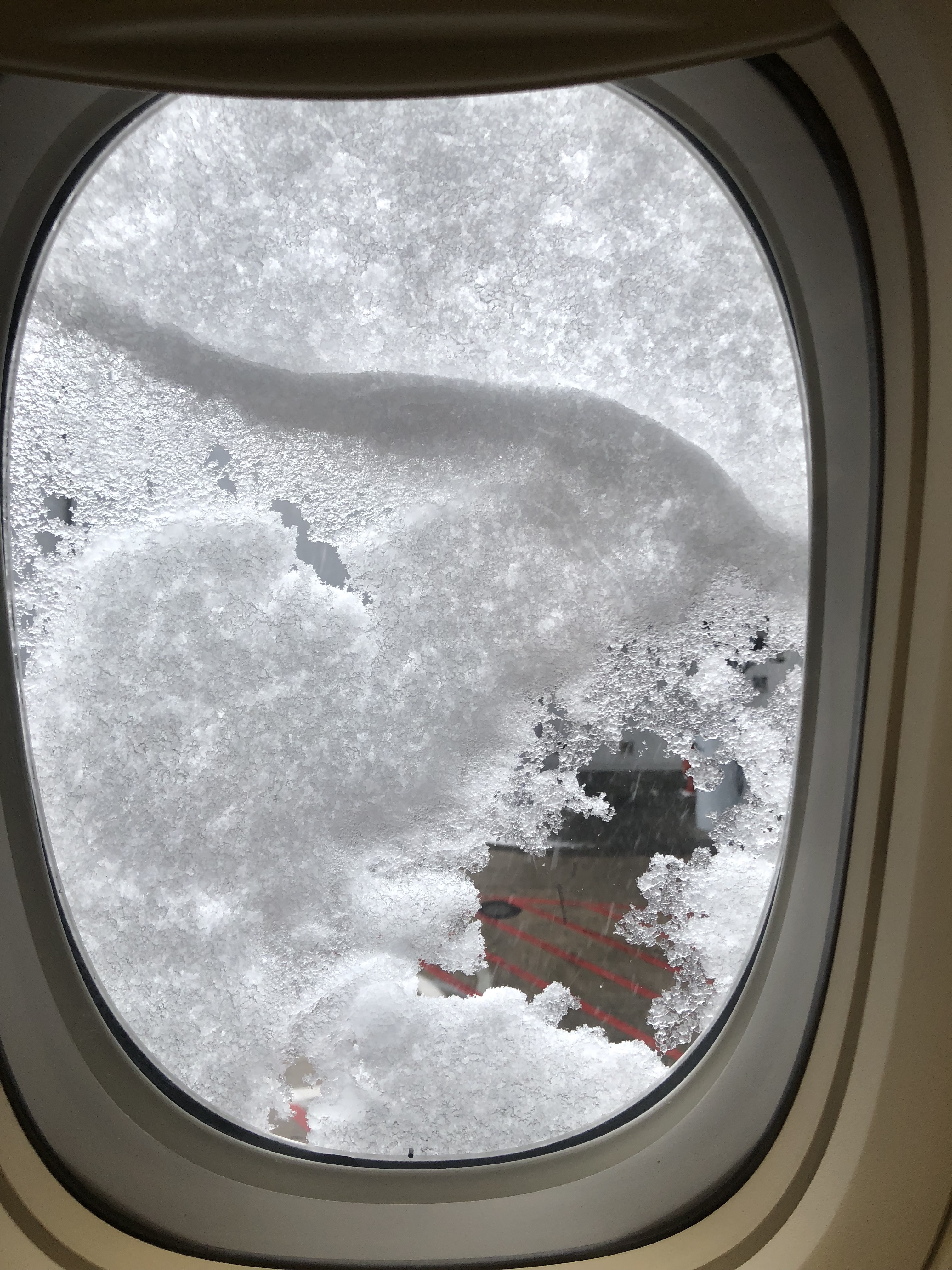
Observing the menu and the fantastic screen resolution (it’s not as sharp in this picture) The seat across from me was more exposed than mine. A small head-level divider helps a bit Taken upon landing, this picture gives a better idea about the “footprint” of this seat. The panel to control the upright, recline, and bed mode of the seat sits on a panel to the left We had a 2-hour de-icing delay in Frankfurt, but I loved watching the snow slip past my window! The hidden tray table, and useable ottoman. This was when I dressed up for each fancy flight
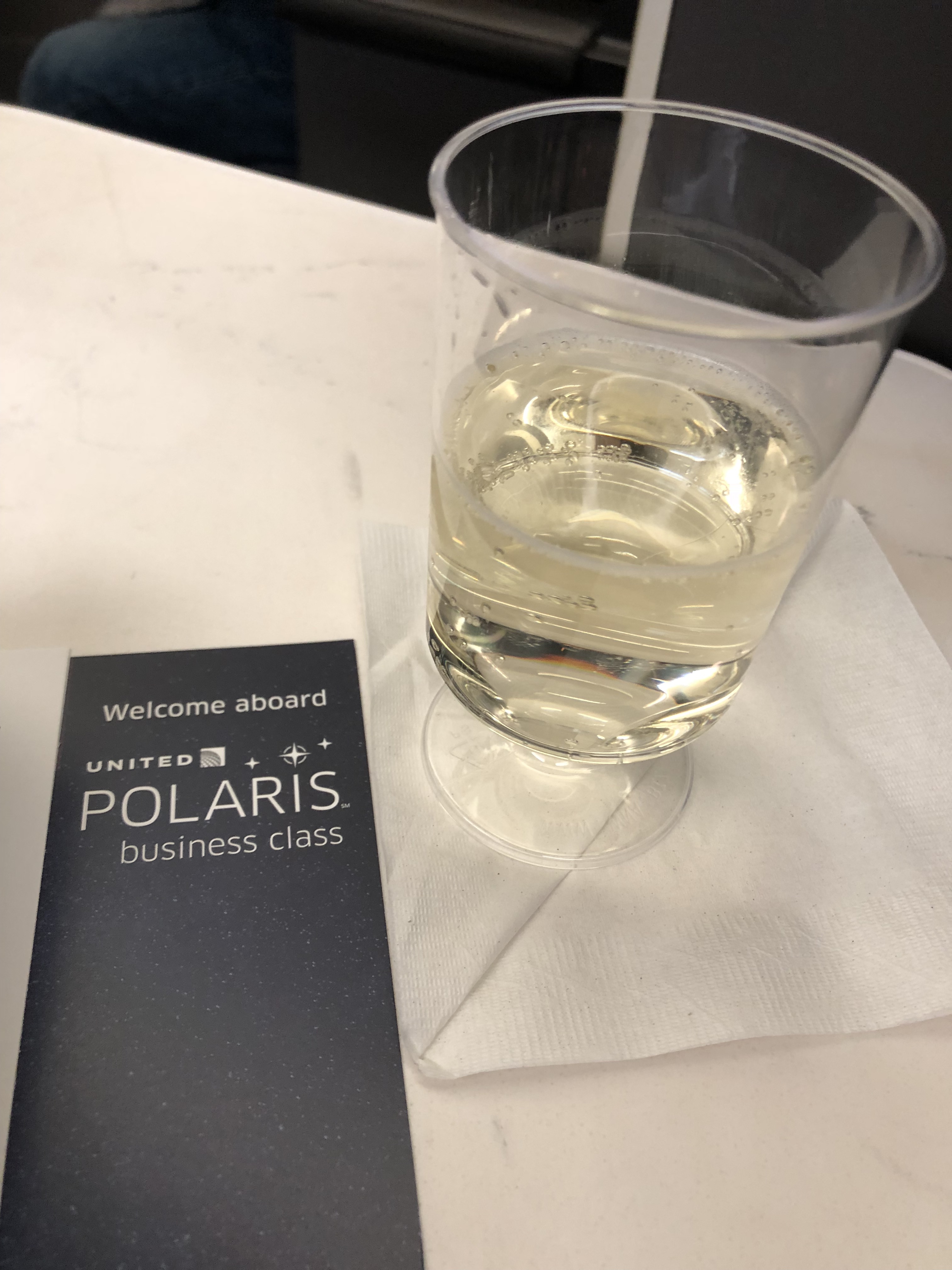
Due to the blizzard that day in Frankfurt, I experienced my very first de-icing delay. Over the course of 2 hours, our plane was sprayed thoroughly with antifreeze, which sent a river of snow flowing down my windows. I spent the delay fascinated with the patterns of falling slush, between catching up on the new Spiderman: Homecoming film. Pre-departure drinks were offered during the delay, and I requested champagne. My flight attendant replied that they didn’t carry champagne, but had prosecco instead. I had no idea what that was at the time, but I requested it anyway and it turned out to be the Italian (and in my opinion, lower quality) version of bubbly. I was also surprised to see it come in a plastic cup, but thankfully that didn’t extend to the meal service.
Prosecco offered before takeoff. The quality left something to be desired…
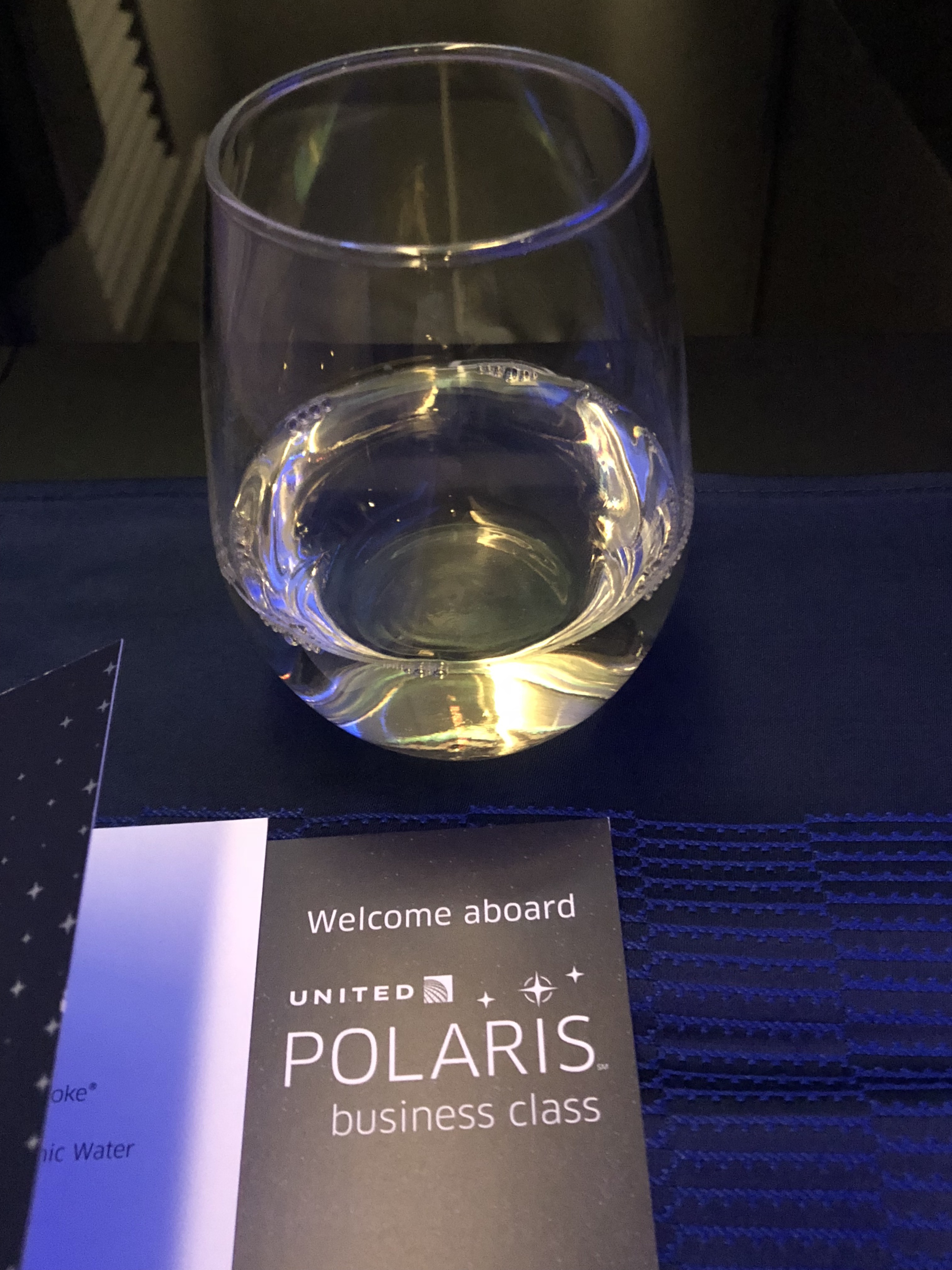
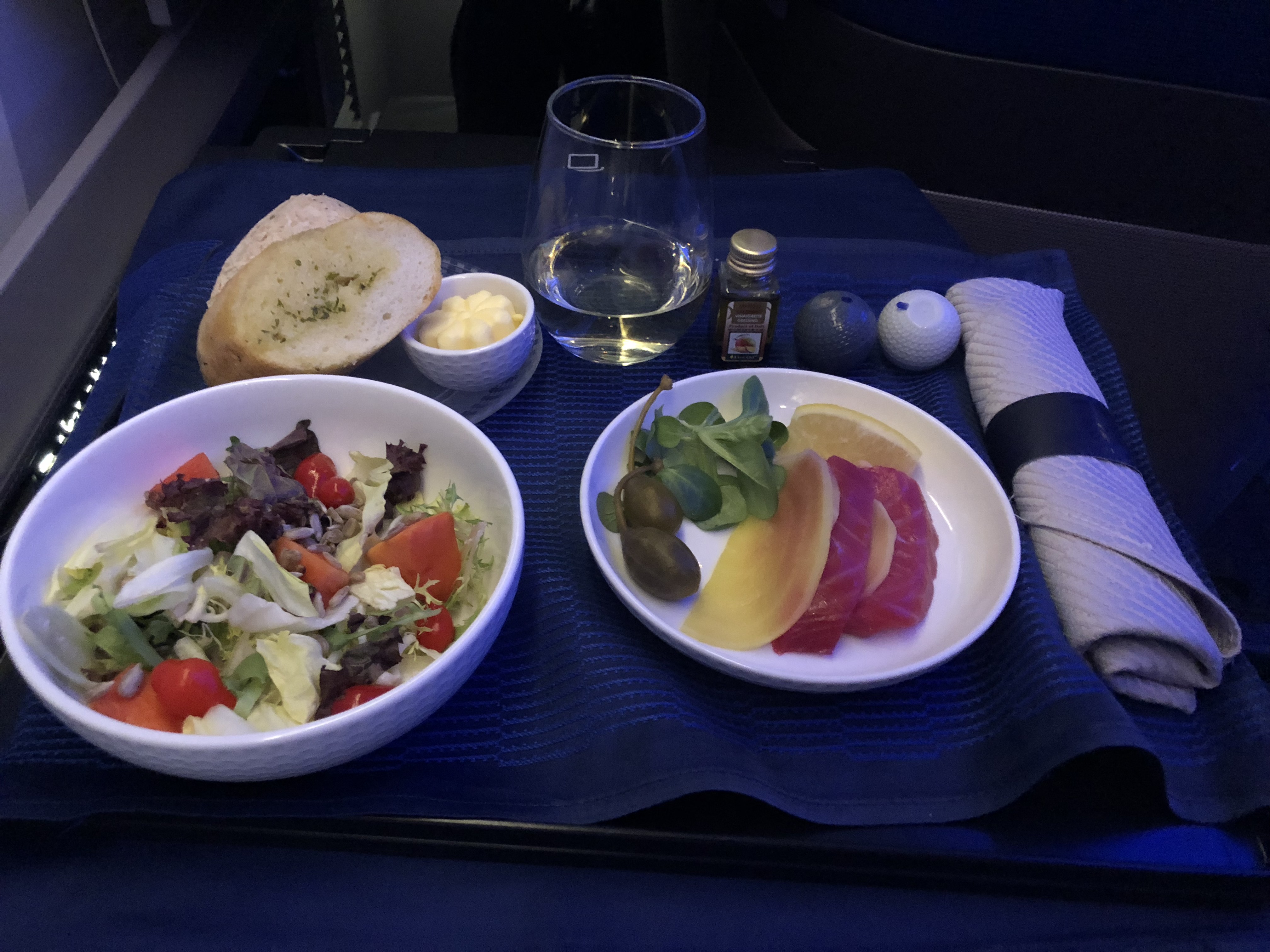
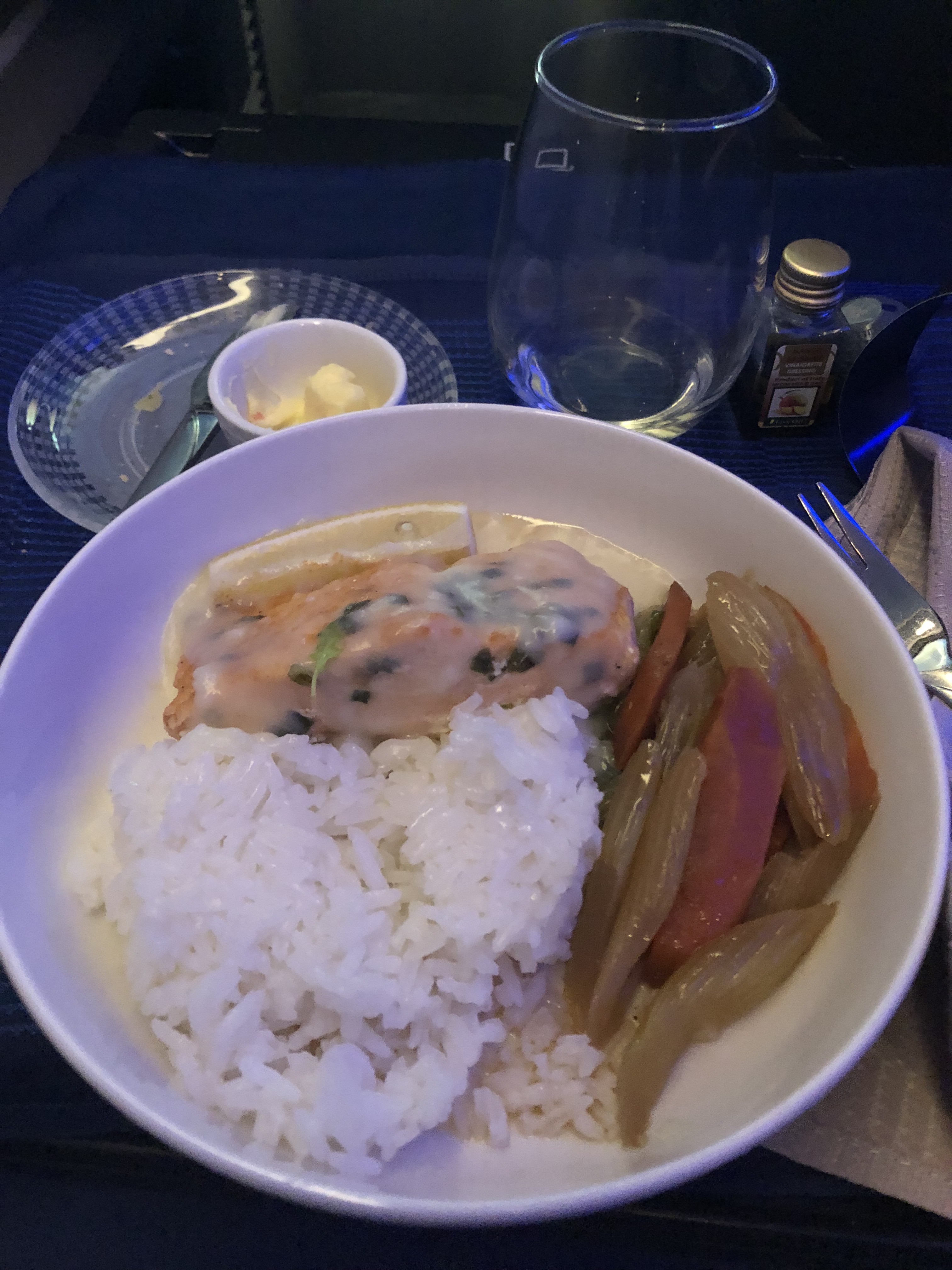
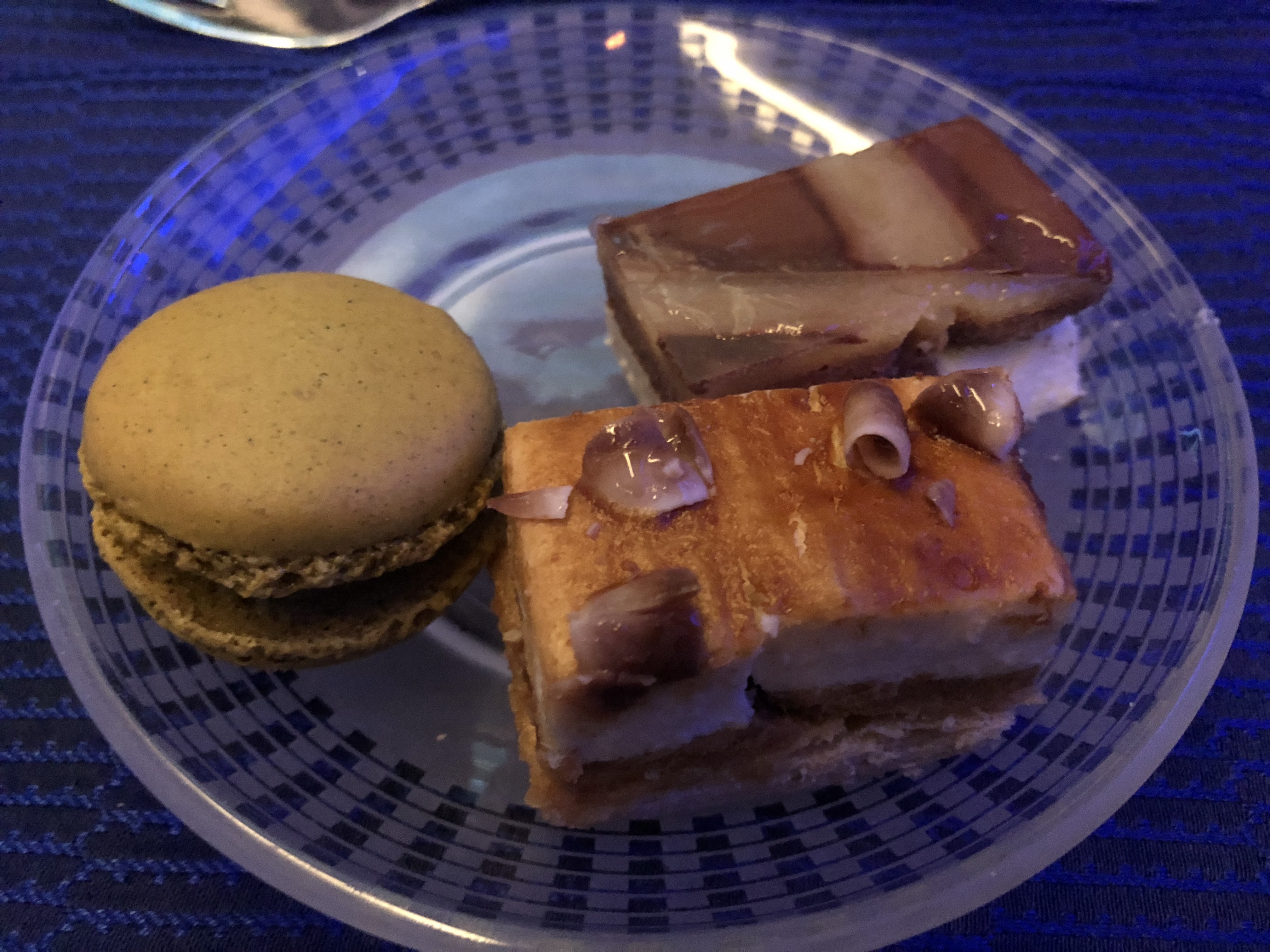
Back then, it was possible to start the post-takeoff meal with a “wine tasting”: a flight of 3 wines that came in a plastic holder. (Since then, United realized they had quadrupled their spending on wine, and cut the tastings accordingly). Being completely new to wine at the time (remember, I’d just started working!), I requested a red and white that weren’t memorable, and a Riesling that was. This marked the beginning of rieslings being my favorite version of whites, partially because I like the sweetness and partially because it became easy for me to remember. I stuck with my new favorite riesling for the meal service. The appetizer of tuna and radish, and the salad of Trader Joe’s mix with some tomatoes and carrots, came on the same tray along with bread, seasonings, and cutlery. Aside from needing to eat vegetables after a week in Central Europe, both of these were just meh. For my main I went for variety and got the lemongrass salmon. The vegetables were a little overcooked, but the salmon itself and the rice were pretty delicious and went well with the sauce. It wasn’t a spectacular dish by any means, but it did well enough to be the highlight of the food today. Lastly was a small tray of pastries, one of which was a pistachio macaron. Again, nothing spectacular. Thankfully, I had my newfound riesling to savor through it all.
United’s former wine flights, which I thought was the highlight of the service that day! The beginnings of Rieslings being my favored whites, which they still are An unremarkable set of appetisers. At least I got some much-needed vegetables! My lemongrass salmon. I needed a refill of wine at this point I hoped that they would do better than these pre-made desserts, which were just okay
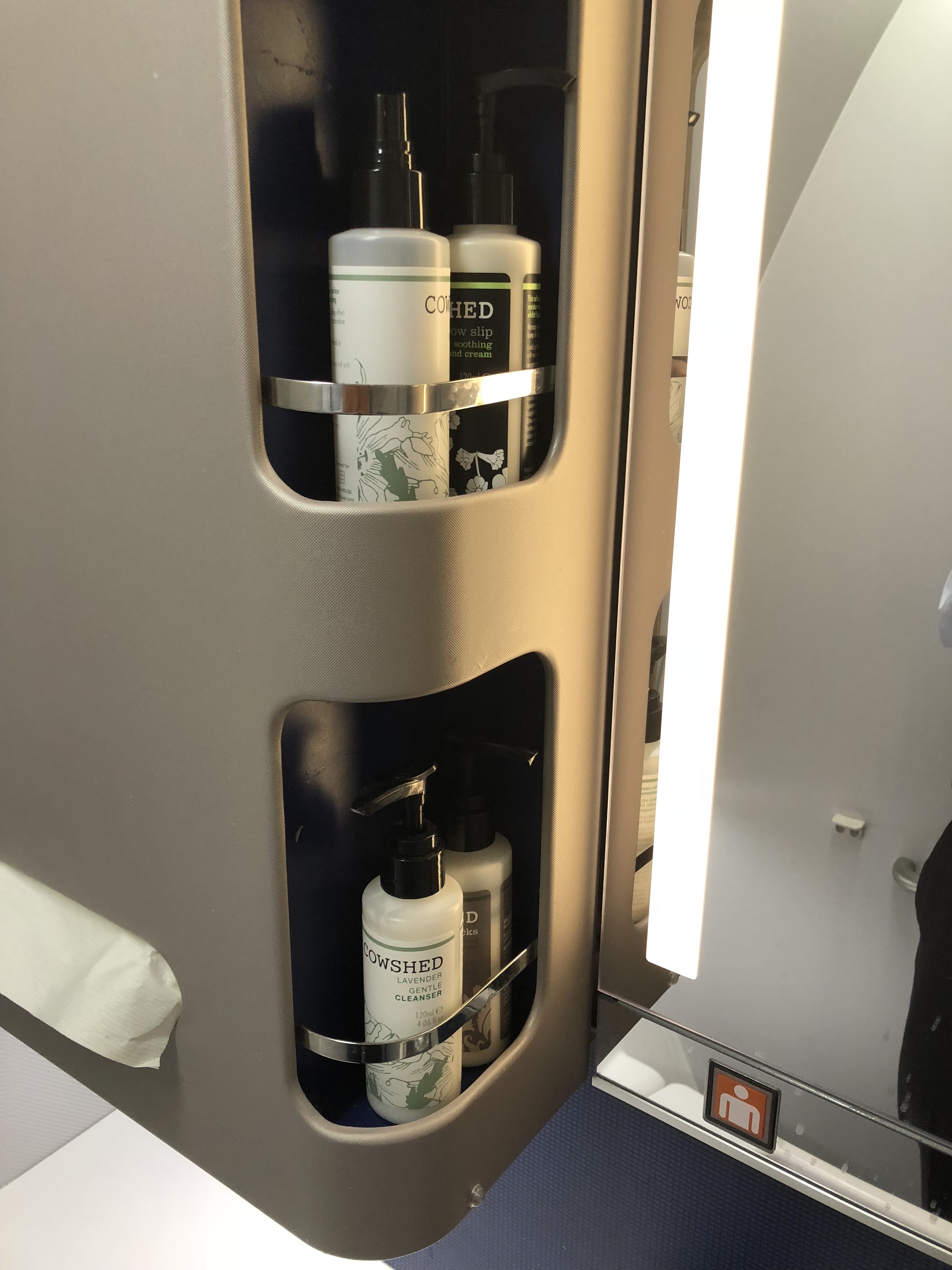
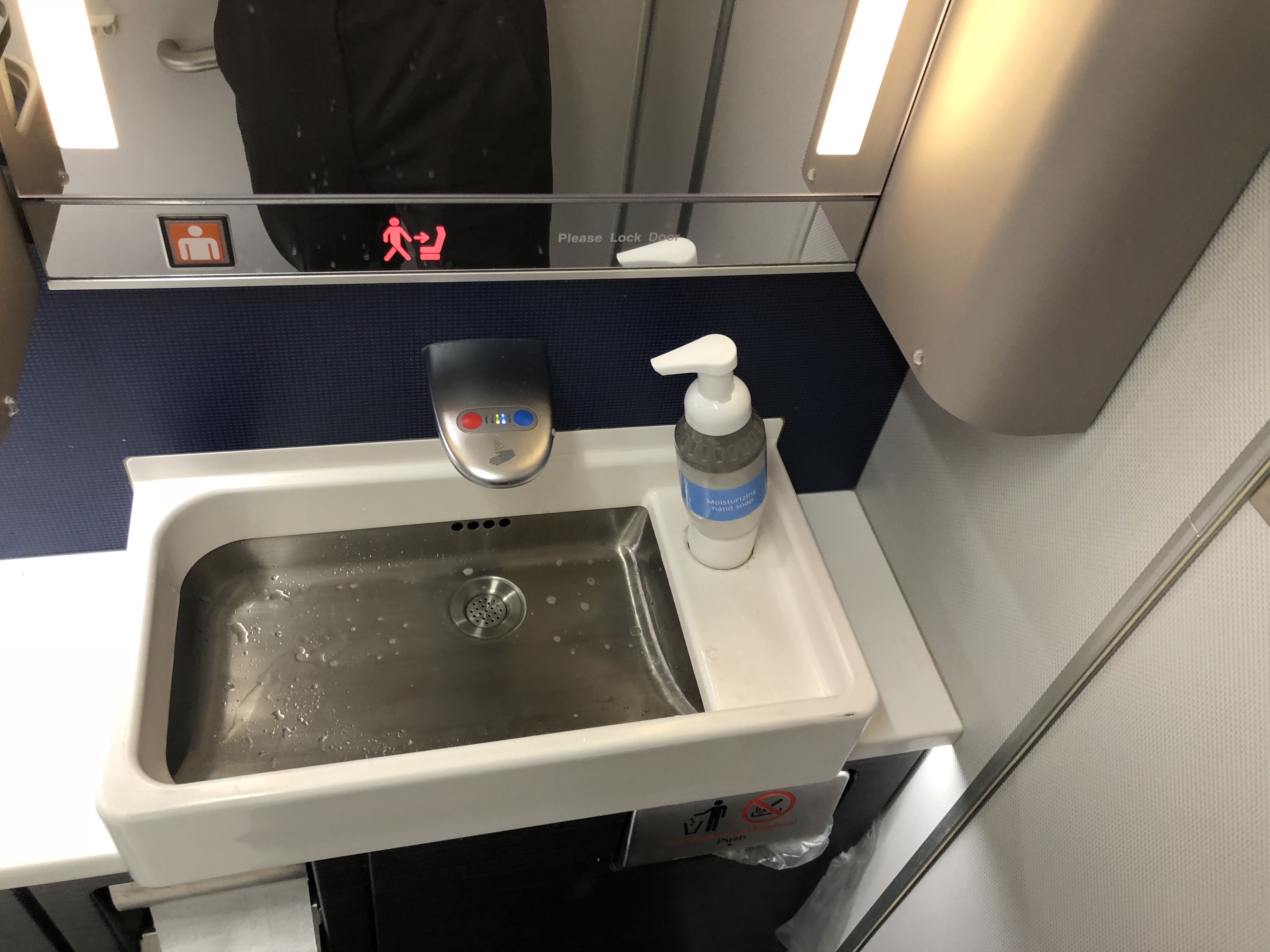
The meal service wasn’t too drawn out, and finished around 2 hours after takeoff. I got up to take stock of the lavatory at that point. Along with hand soap, they have a facial mist and moisturizing cream, all branded by Cowshed which is a partnership they still have. The rest of the lavatory was like the economy ones, however. On the way back to my seat I had to pass through the galley, and a flight attendant fussed about how it was hard to get anything done with passengers constantly traipsing through. It’s a nit but this was the first time I’d ever been scolded or talked about as an inconvenience by the crew. All 60 seats in the business class cabin were taken today though, so it must have been more stressful than normal.
I love all things lavender, so these Cowshed creams worked great for me! Otherwise the lavatory was like any other
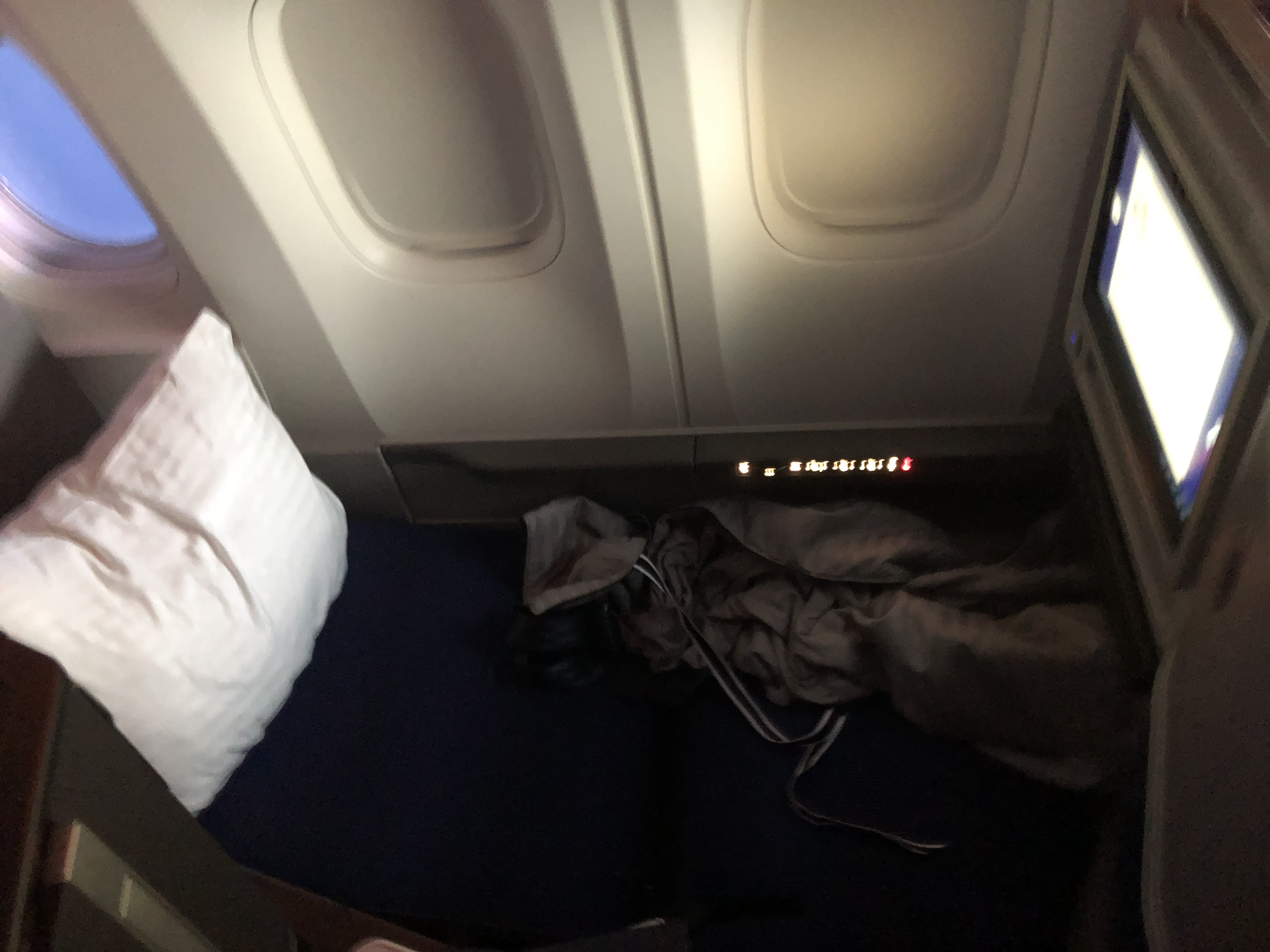
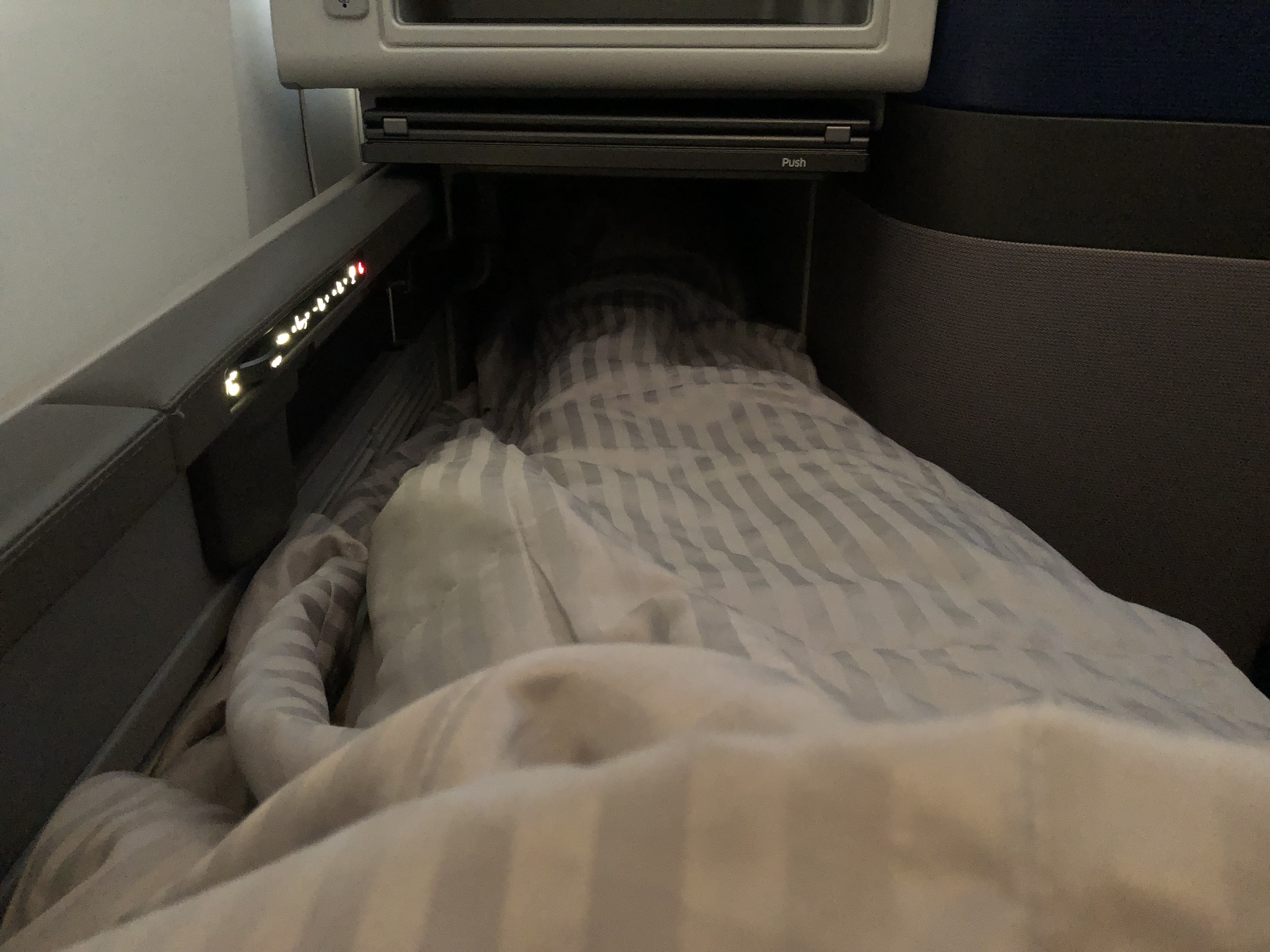
After this I decided to try to sleep. Using the panel to the left of my seat, I reclined it all the way into bed mode. I followed that up by unrolling my plush duvet and laying it across the seat. I climbed in and curled up, expecting to fall asleep quickly since I’d been awake for nearly 12 hours at that point. But my body had different plans and I woke up after only a couple hours. For the next 6 to 7 hours I alternated between watching movies and closing my eyes to try to sleep some more. I still don’t know if this was an anomaly, because this flight remains my only westbound daytime transoceanic flight in a premium cabin. It is possible that I was just much less comfortable sleeping in such formal clothes, as United didn’t offer pajamas and I didn’t bring my own to change into. This was the last flight I made that mistake… I do remember that this flight gave me the opportunity to watch The Notebook for the first time. It was Ryan Gosling’s breakout movie, but apparently he had no competition for the role, due to the character’s dull arc.
Blurry picture of the overall seat in bed mode. I didn’t find anything uncomfortable, but I struggled to get much sleep in it anyway Snuggled tightly in the duvet. Even though I couldn’t sleep much, it was a very comfortable way to go through movies until landing!
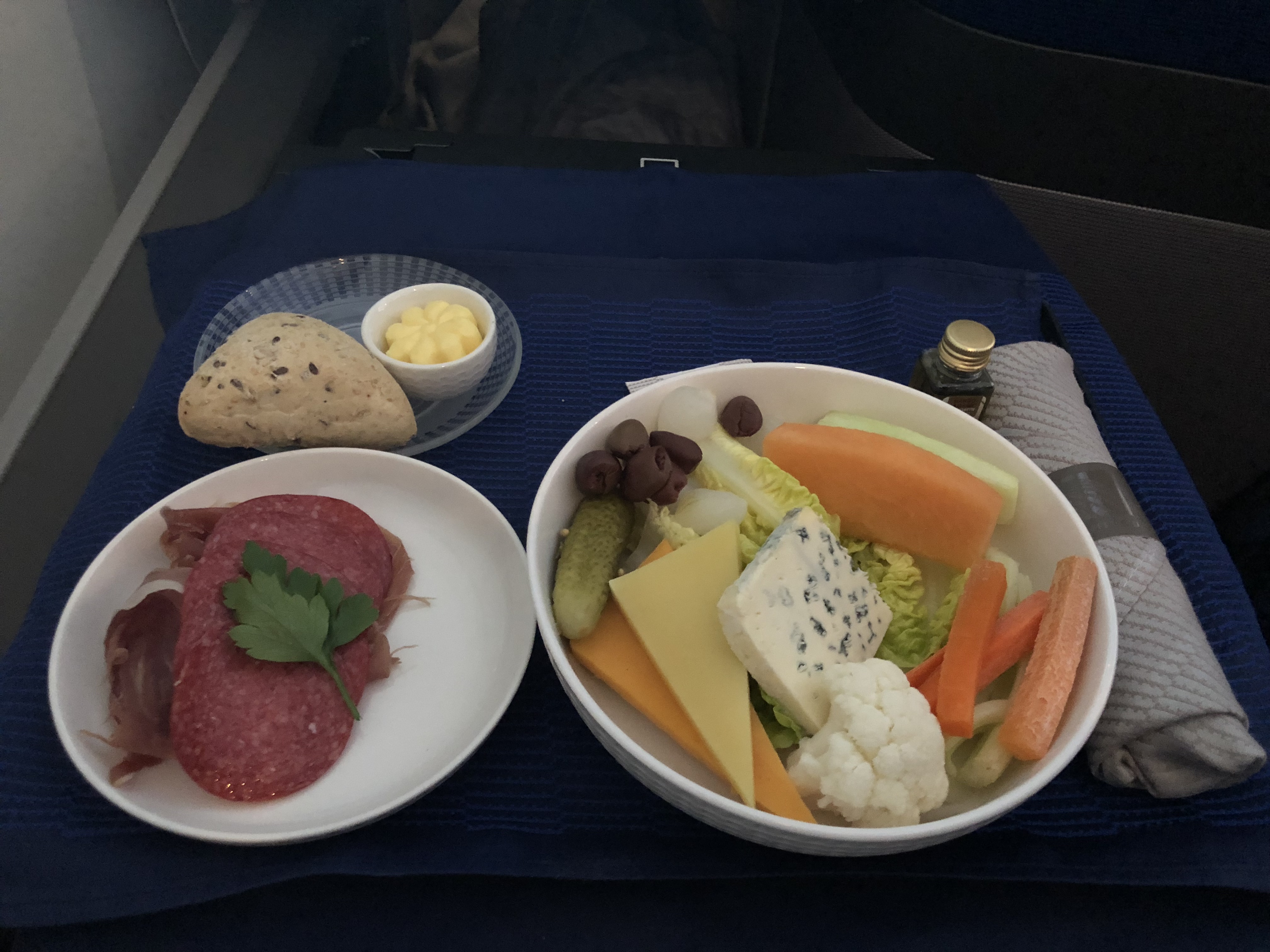
The final meal eventually came about 90 minutes before landing at SFO. Most longhaul flights have a breakfast service before landing regardless of the local time, but westbound transatlantics usually opt for a lighter snack or afternoon tea. United’s idea was an attempt at a charcuterie board. Salami and prosciutto came on one plate, with cheese and raw, cold, tasteless fruit and vegetables in a bowl. Bread with butter and olive oil was included, but that was it. I don’t believe alcohol was proactively offered, because if it was I would’ve definitely taken some. I ate the meat and bread, but the cheese and vegetables were tasteless and it felt like they’d been brought out of a deep freeze. I only ate the cantaloupe and melon off to the side. This was the most disappointing part of the flight, and one of the worst meals I’ve ever received in Business Class. I sure hope this isn’t par for the course on their Europe flights…
A sad attempt at a charcuterie offering, but even the necessity of wine is missing!
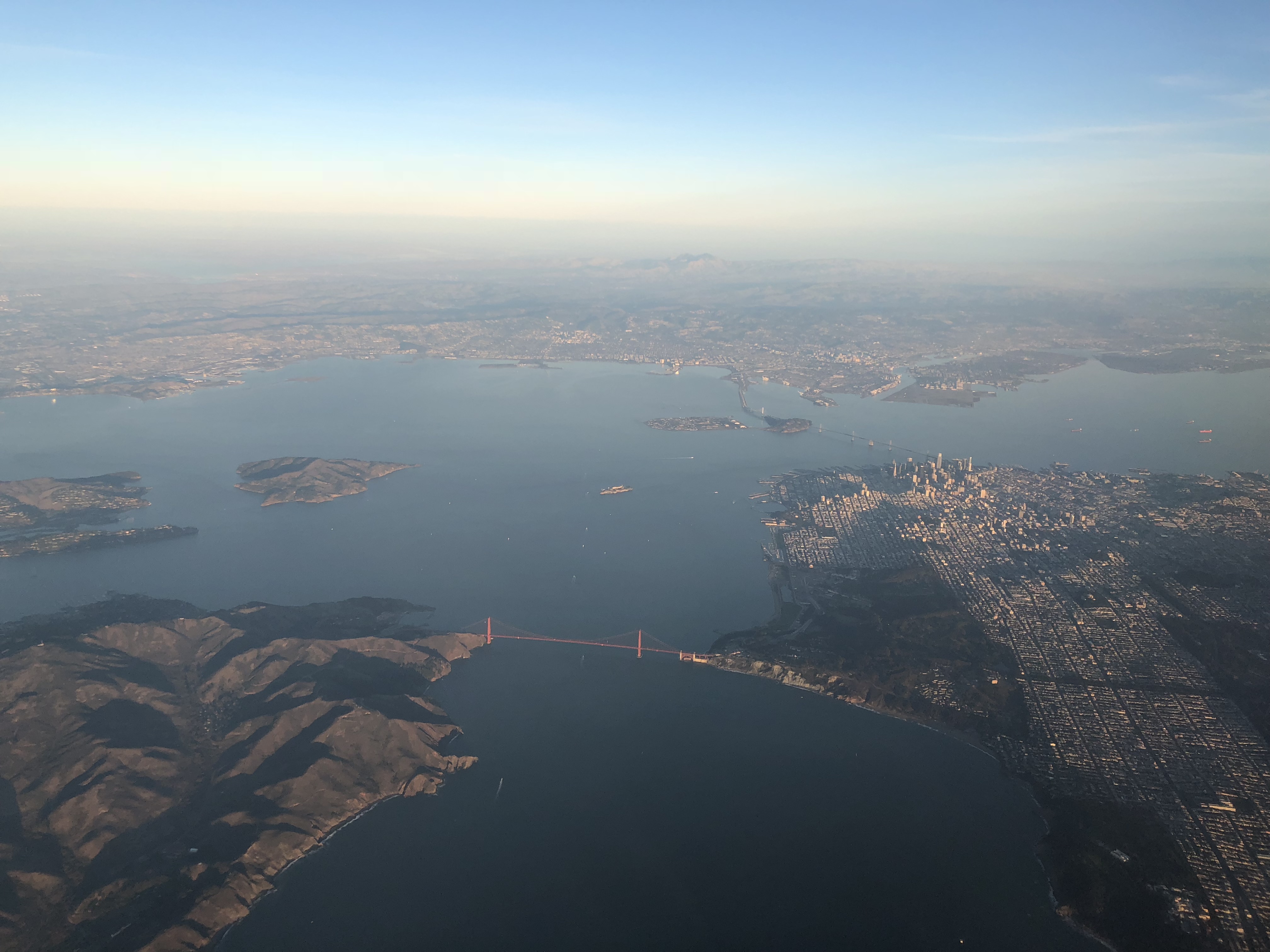
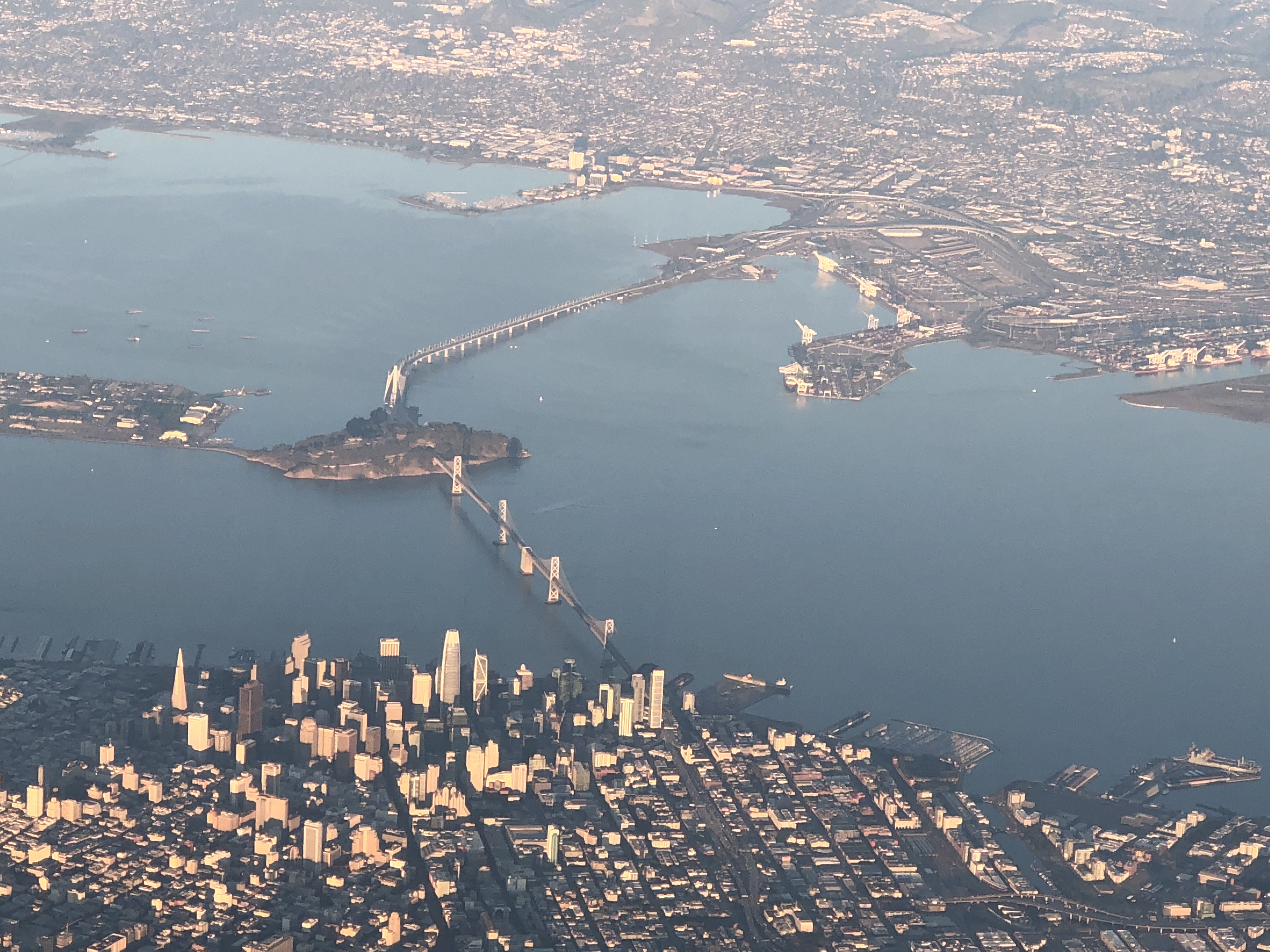
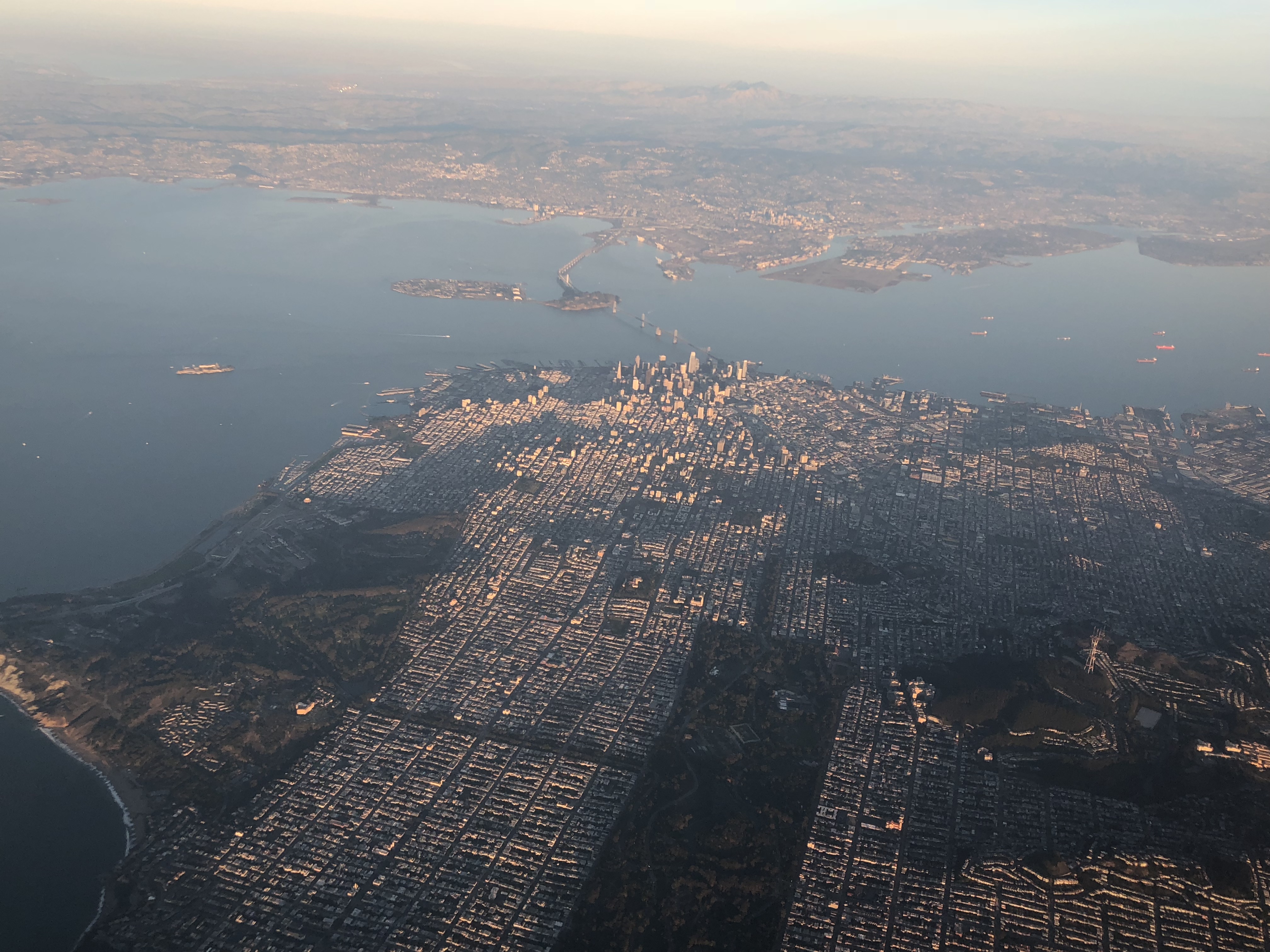
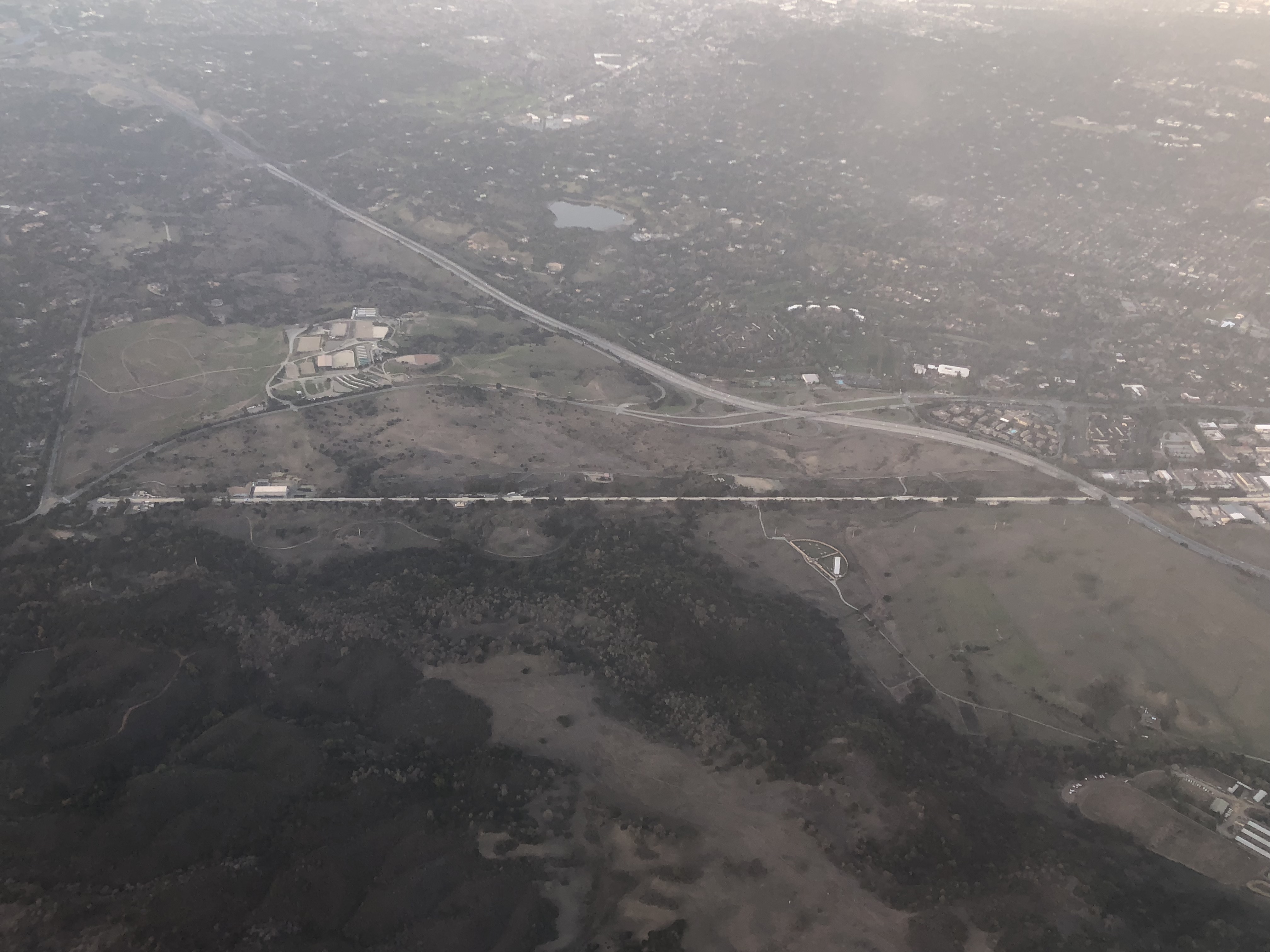
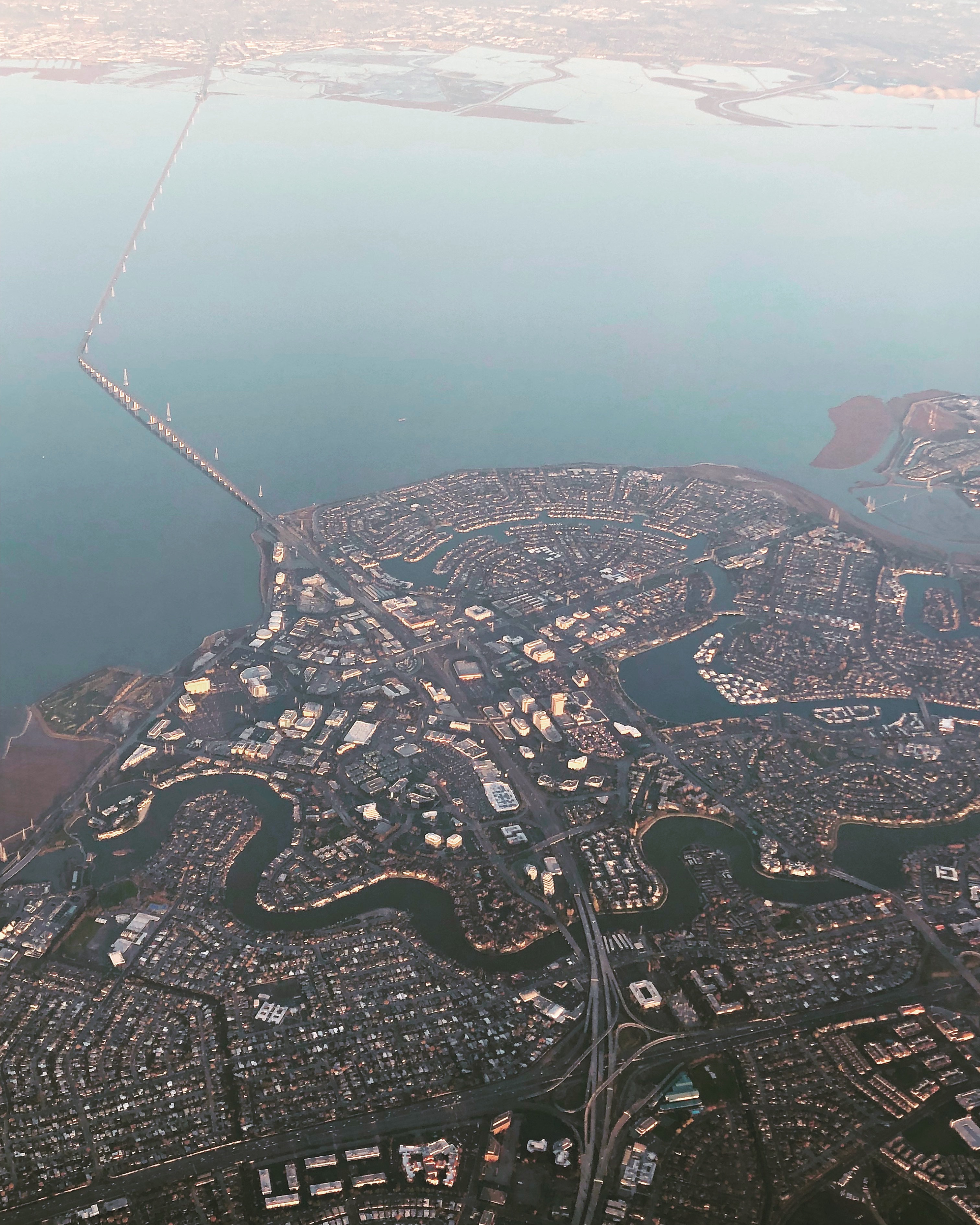
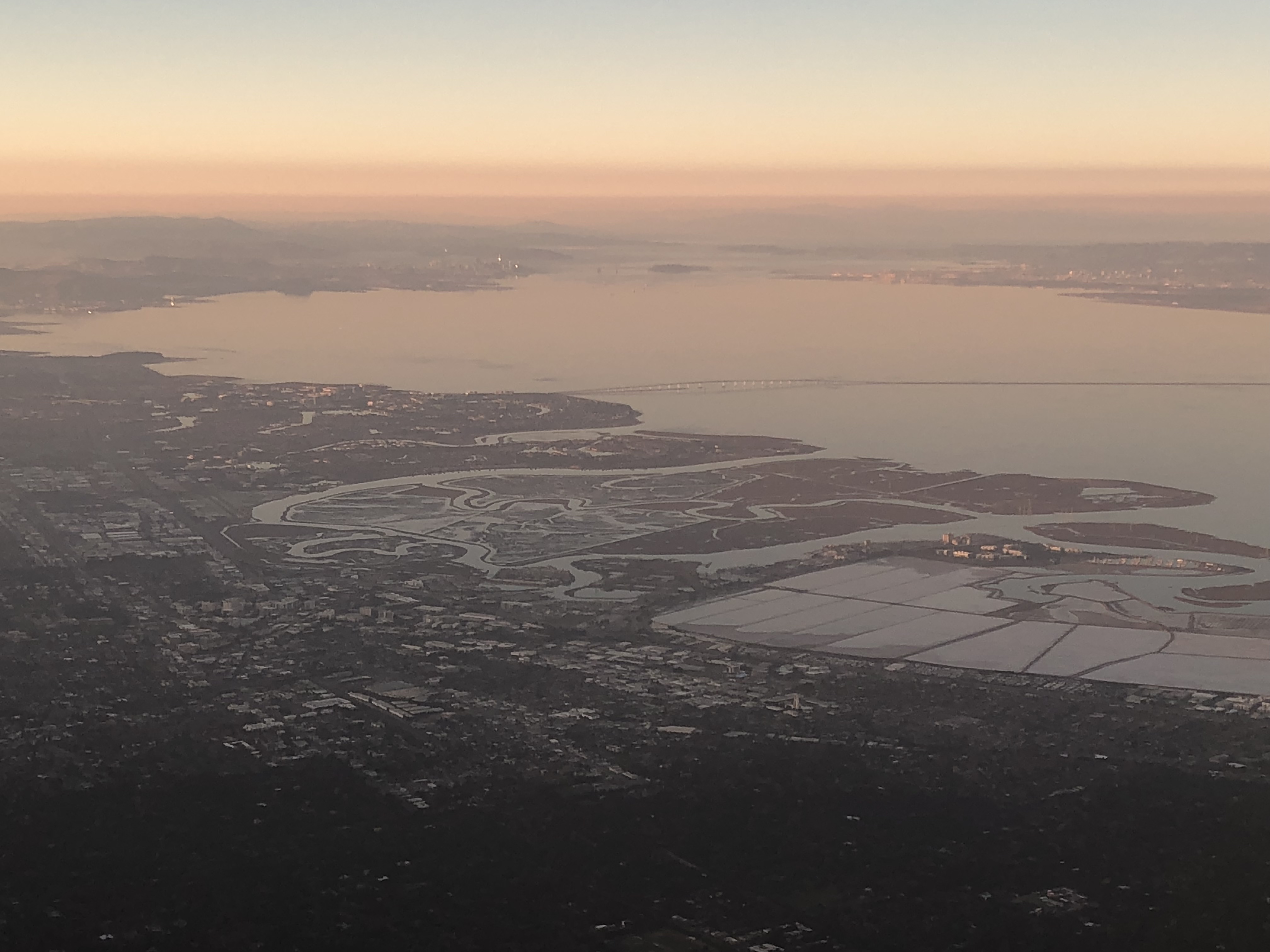
Soon after my tray was cleared though, the best part of the flight began. We approached San Francisco from the north, and our de-icing delay meant that we were swinging in just ahead of sunset. It was golden hour over the Bay Area, and my windows were crystal clear since this was a brand new aircraft! We spent the final 20 minutes of the flight in a sweeping arc over Marin and San Francisco, followed by the turnaround I was used to over the peninsula. I kept my phone out the entire time and snapped the best series of photos I’ve ever gotten of San Francisco and the Peninsula from the air. I’ll let them speak for themselves:
Juxtaposition of empty south Marin on the left linked by the Golden Gate bridge to the Presidio and bustling SF. The whole East Bay from Richmond through to Alameda makes the backdrop! Close-up shot of the Bay Bridge and the financial centre of SF, with Salesforce tower and the Transamerica Pyramid featured prominently. The port of Oakland and “MacArthur Maze” makes the top right corner Kudos if you can eagle-eye the UC Berkeley Campanile at the very to of this photo! A full shot of SF, from the Richmond and Golden Gate Park thru to downtown and the East Bay beyond that. The city’s famous steep hills look like mere ripples in the land from this high up! Clear shot of Twin Peaks and the surrounding residential area. All looks surprisingly uniform The full stretch of Stanfurd’s SLACC particle accelerator, one of the nation’s first Gorgeous flyover of Foster City and the Hayward-San Mateo bridge Sunset falling as we make our swing back around towards SFO. What a beautiful ride
We pulled into the gate only an hour behind schedule, around 4:45 p.m. I was far enough forward that I got to watch the jetbridge attach to our plane, and soon after that we were all left to gather our things and disembark. I was excited to unpack my souvenirs at home with my family, and finally catch up on some rest and switch back time zones.
I already noted at the beginning how thrilled I was to be flying United’s new business class product on a brand new plane, and for the elevated service of Polaris. Unfortunately, this ended up being one of my more lackluster flights. Let’s start with the positives: I managed to score a wine flight and got a new favorite type, the seat and bedding was extremely comfortable, and I had views on descent into SFO that were the most breathtaking I’ve ever seen. That said, there are lots of places where my experience fell short that I think could be improved. The pre-landing meal was only partially edible, and it was disappointing not to have another drinks service or any hot options. And except for my main dish I was unimpressed with my initial meal as well. United’s been experimenting with new entrees and appetisers in the time since then, so I could believe that this improved since my flight, or that I had a bad catering one-off. I didn’t sleep well, but that might just be my fault. The crew was also hustling and not very enthusiastic, although I suppose I could forgive that since the cabin was full. United has an excellent seat and the bedding is exceptional as well, so they got the basics right at least. With better meal choices and a more lively crew, I could see my experience jumping from mediocre to amazing. I had both on a later flight from SFO to Boston, and would actually score that flight ahead of this one in terms of how much I enjoyed it. I would absolutely give this product another try, but United has been stingy with their business class seats on these new planes so it will take some waiting and a bit of luck until I am able to try them again with miles.
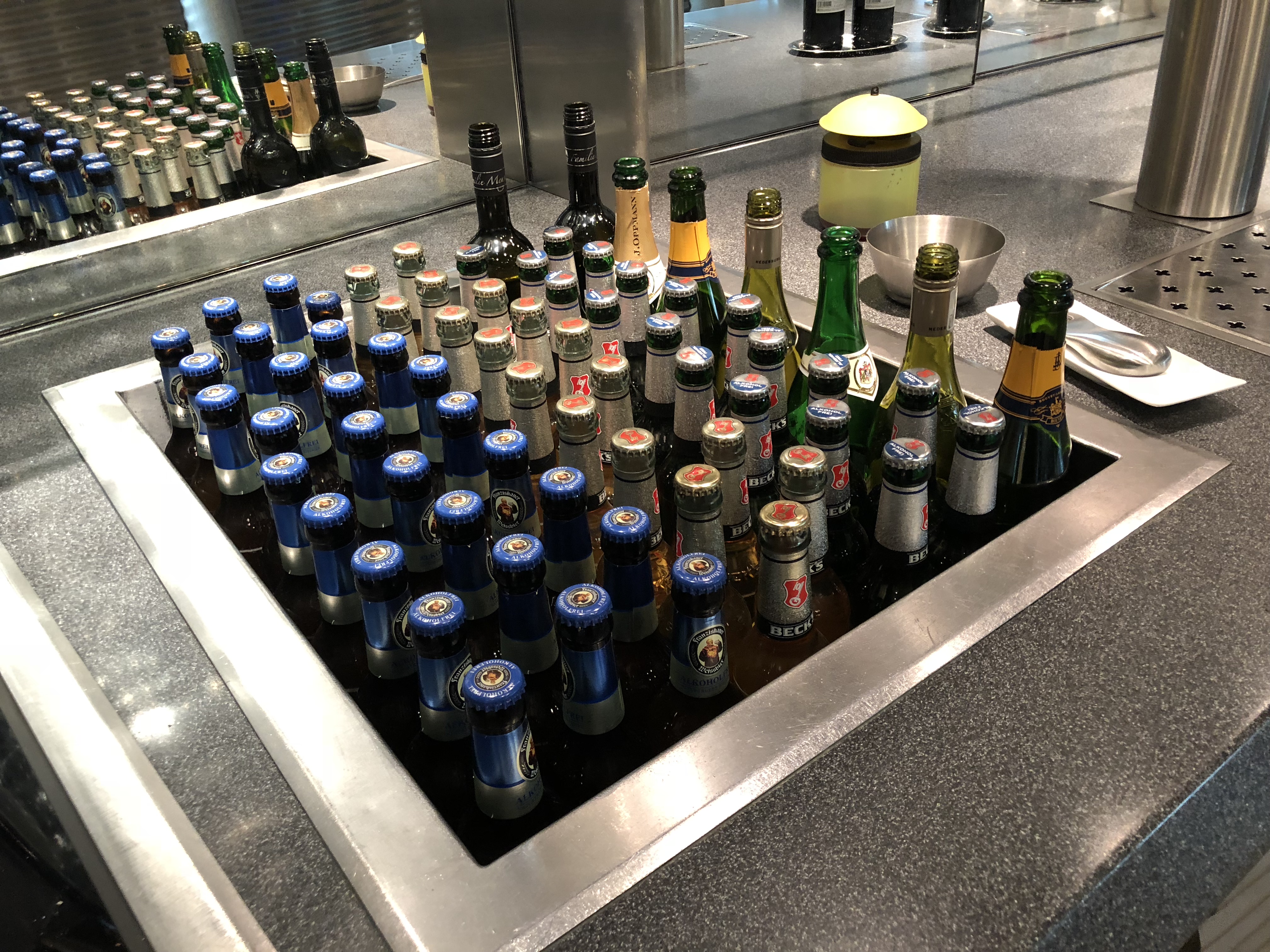
Befitting a German airline lounge, rows and rows of beer and a few open bottles of wine
My flight routing from Munich to San Francisco took me through Frankfurt, with the first leg on Luftansa and the second on United. I chose this routing in particular because United had recently retired the 747-400 that flew the route with their new flagship, the 777-300ER. The new plane was one of the only ones at the time to feature the airline’s Polaris seats, a huge upgrade from the 6-across and even abysmal 8-across seating on some United aircraft at the time. Over the last couple years, United took delivery of more 777-300ER aircraft and refitted their 767-300s and most international 777-200s with these seats, so future flyers won’t have to be too specific with their itinerary to fly these special seats.
Anyway, I arrived at Munich airport around 8:30 a.m. this morning with my friends, on an early-morning bus from Nuremburg. This got me in 90 minutes before my flight, and it would have gotten my friends in 90 minutes before their Delta flight to Atlanta if it hadn’t been delayed by over 5 hours. I was left to bid my friends goodbye and walked over to the Lufthansa check-in counters. They were quick and efficient checking me in, which I appreciated since I didn’t leave myself a ton of time. Since my first flight was to Frankfurt, I had access to the Schengen-area lounge in Munich. It was upstairs soon after security, and I appreciated that it didn’t take a long walk to get there.
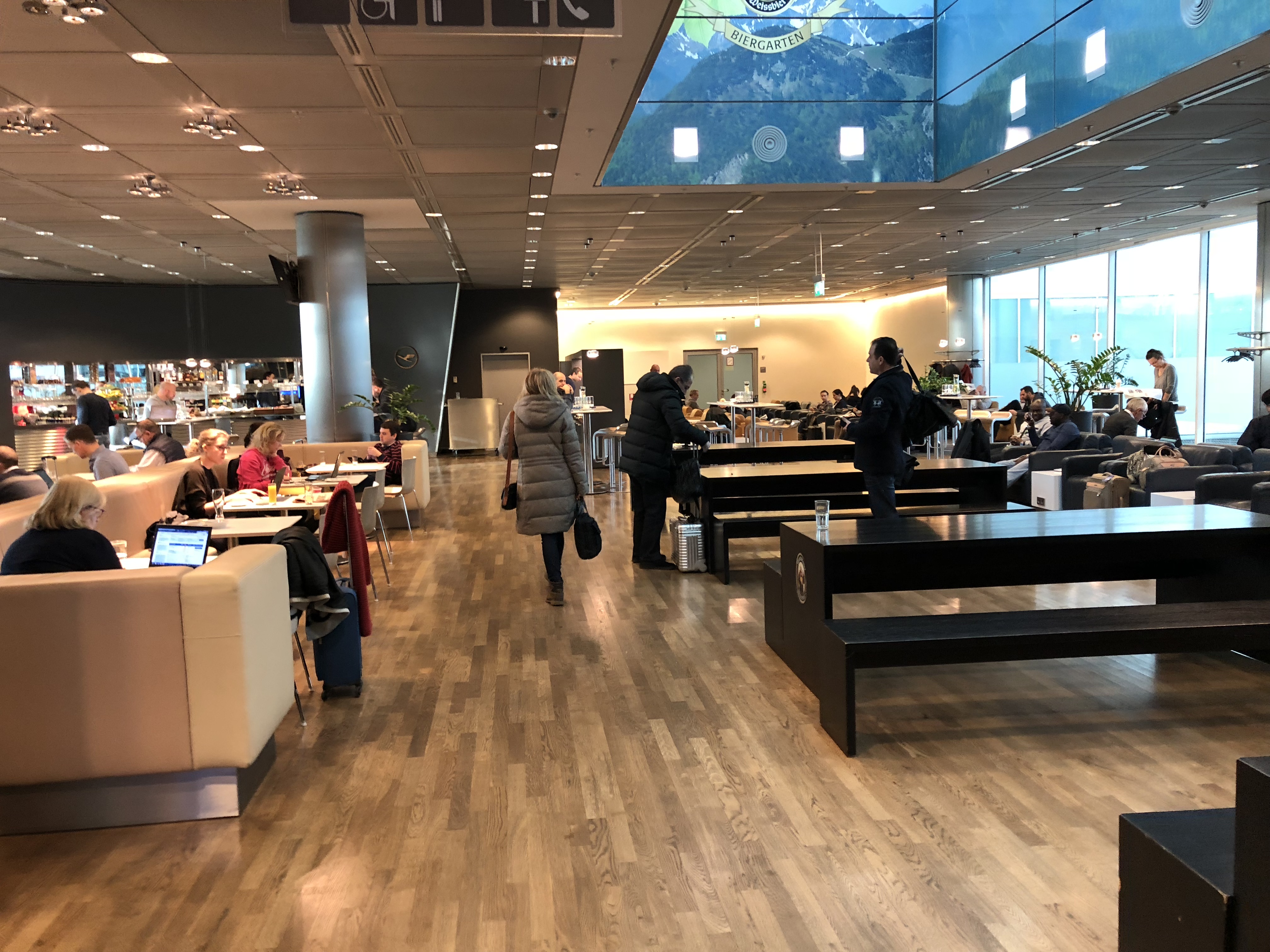
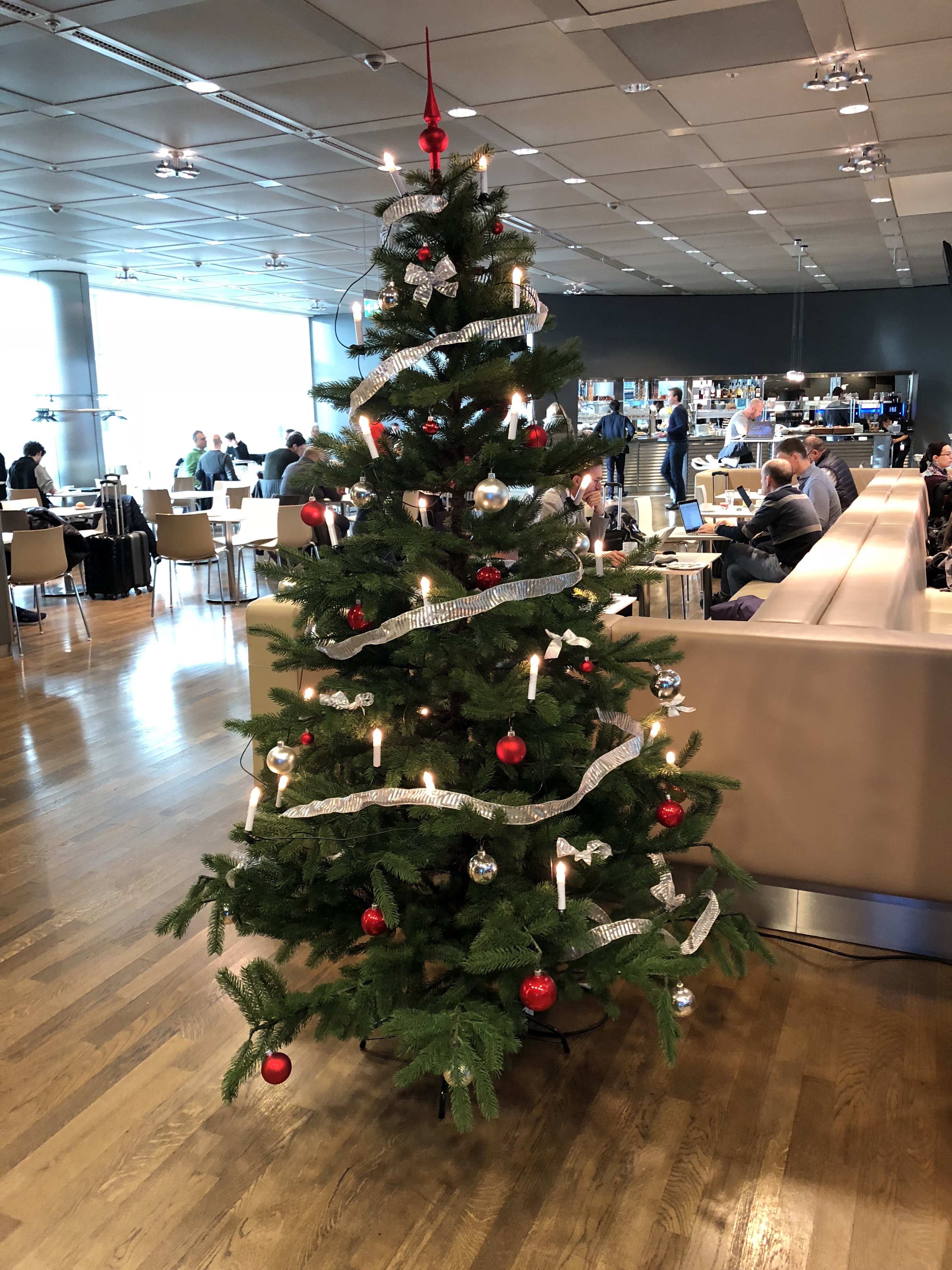
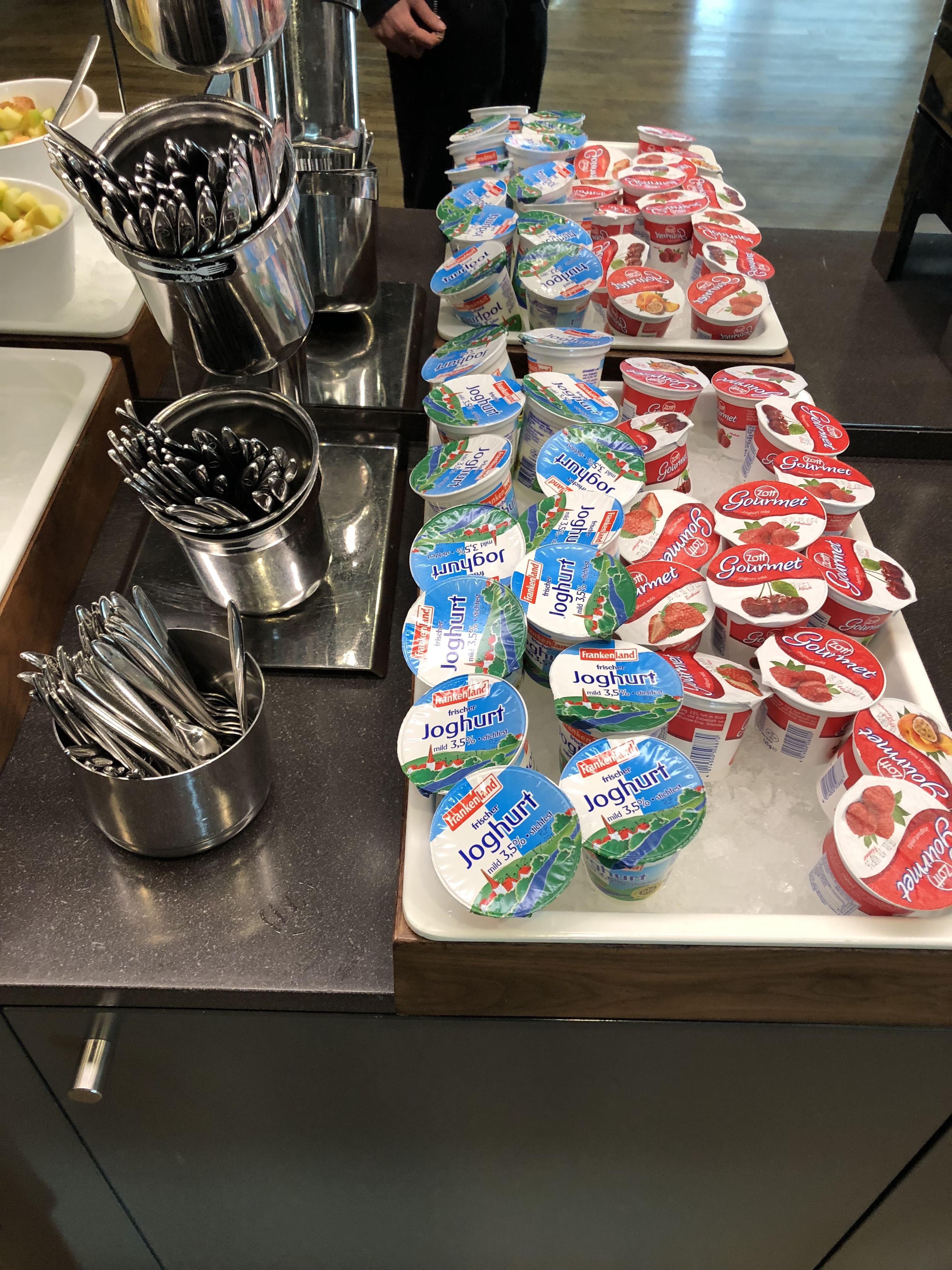
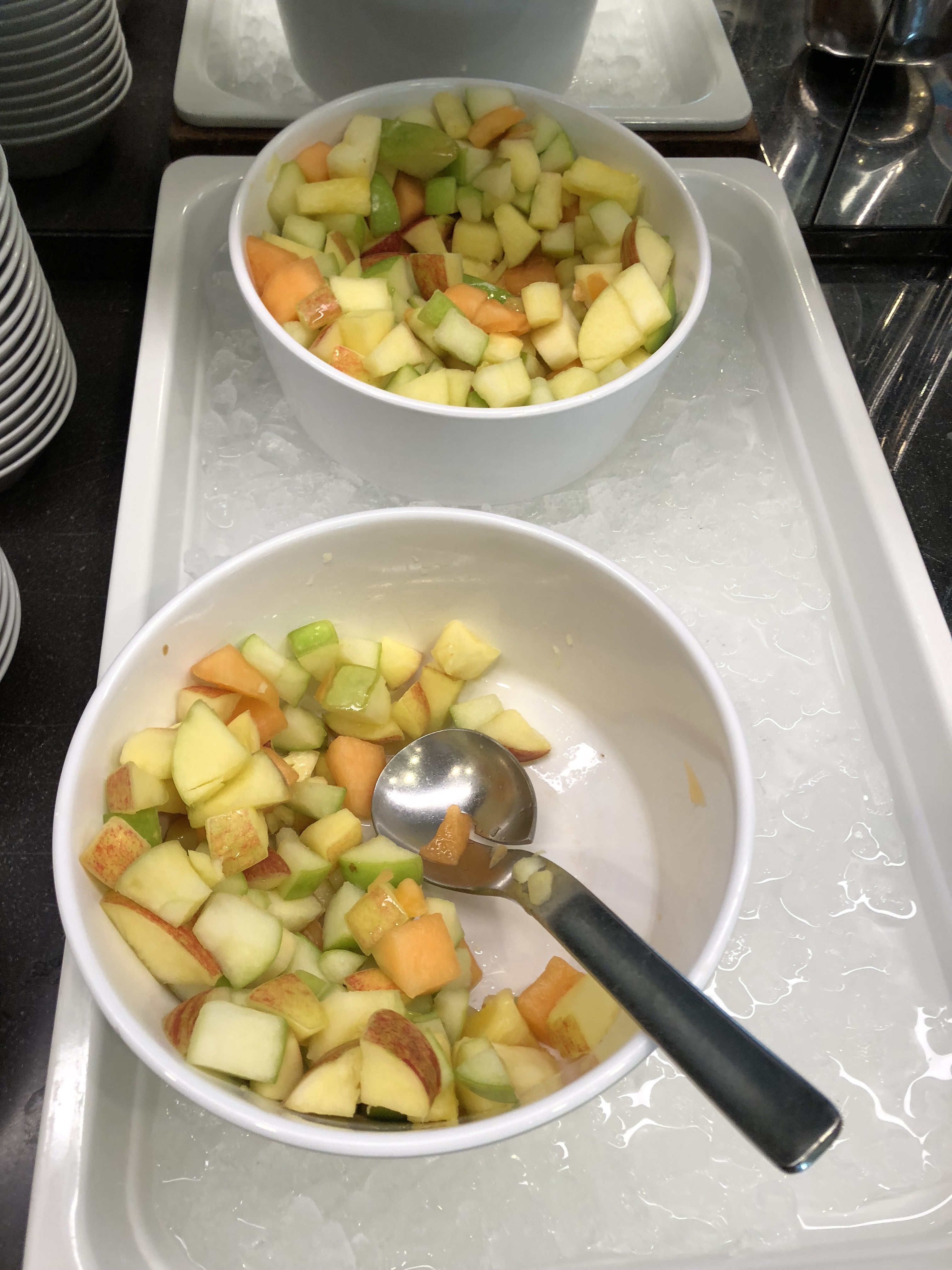
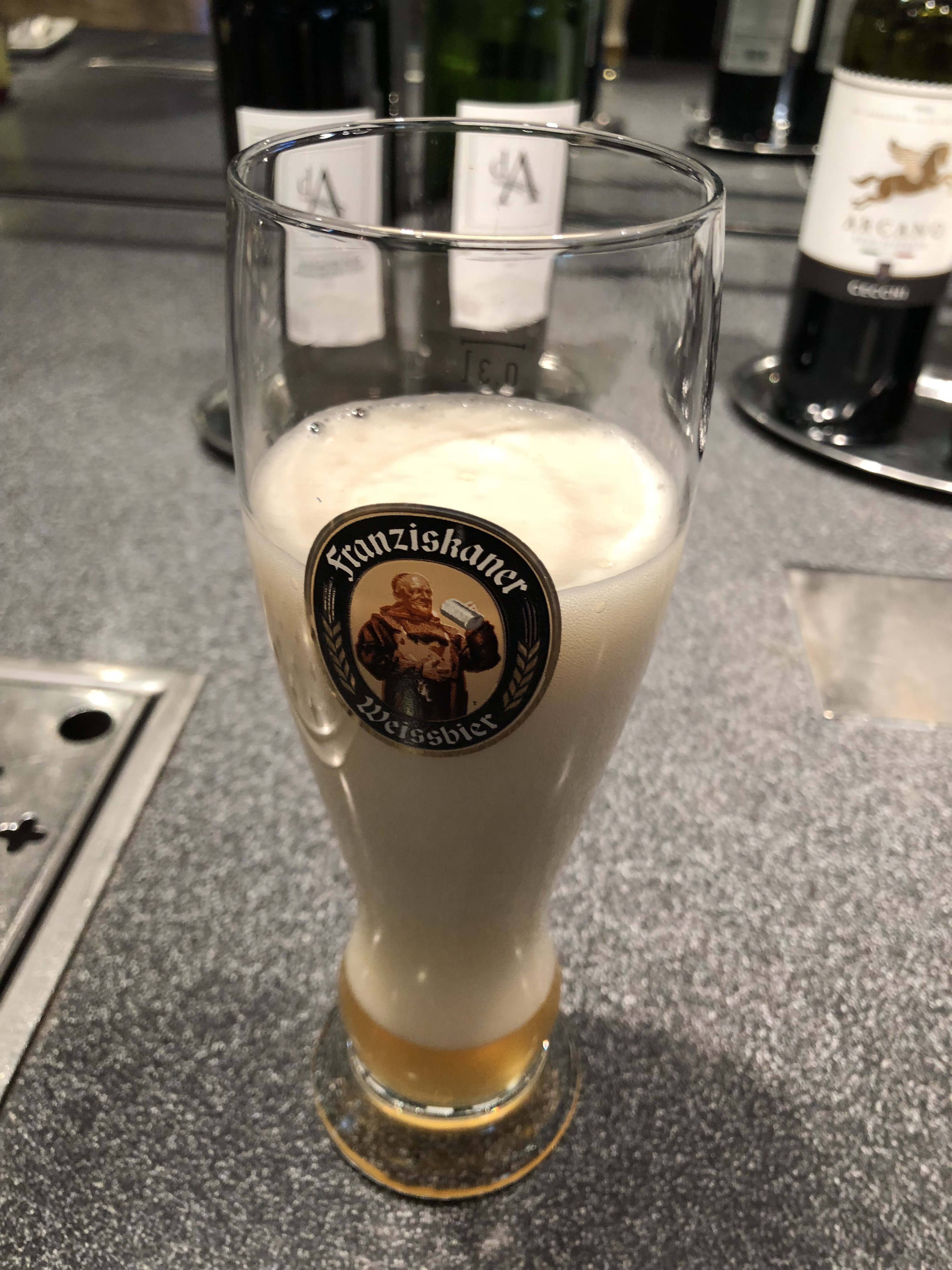
The lounge was in breakfast mode, with fruits, cereals, yogurt and granola being the main offerings I saw. The fresh fruit spread was heavy on fall apples, which I was happy to indulge in. I didn’t eat much else ahead of my flight though. Being 9 a.m. on a Sunday, the lounge wasn’t overcrowded but the most comfortable seats were already taken. After all, an enormous number of people have access to this lounge each day. There was a Christmas tree up, but the lounge wasn’t decked out any more than that for the holidays. Since I had a little more time to kill, I decided to explore the alcohol selection. In a first for me, there was beer on tap and I decided to give it a shot. Well I starting pouring and got more, and more, and more… foam! My glass ended up being 95% foam… and I was suddenly glad my friends weren’t here to see me making a fool of myself. Soon after that, my flight was ready for boarding and I left.
The seating situation. Most comfy booths were taken, but the hardwood tables were open T’is the season! Not quite as enthusiastic as the Christmas markets though The joghurt and silverware on offer Fresh fruit: a great way to start off the morning! Not such a great way to start… pour shame!
Lufthansa A320 Flight from Munich to Frankfurt
Scheduled Departure: 10:00 a.m. on Sunday, December 10th 2017
Scheduled Arrival: 11:10 a.m. on Sunday, December 10th 2017
Scheduled Flight Duration: 1 hour, 10 minutes
Class of Service: Business
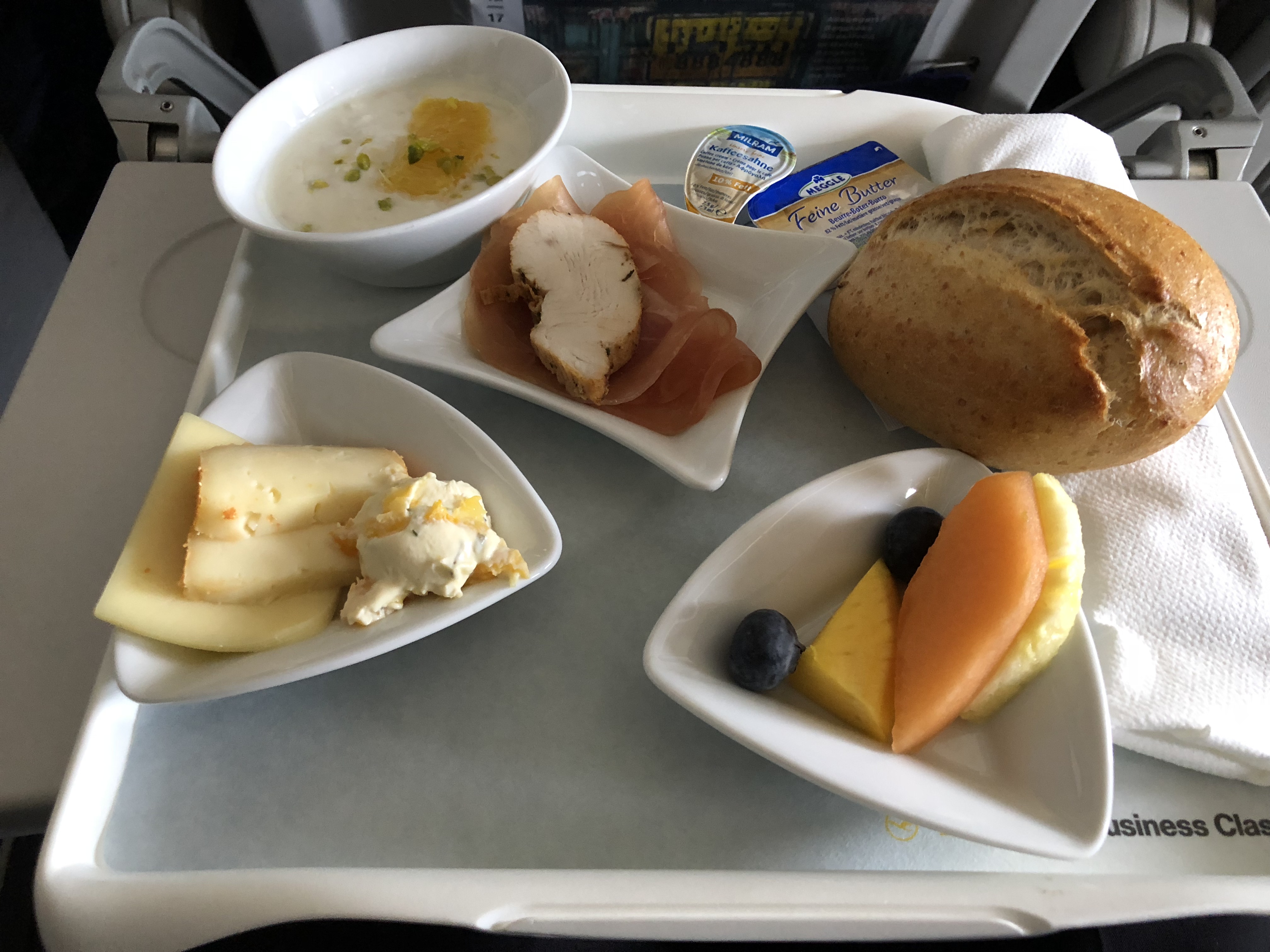
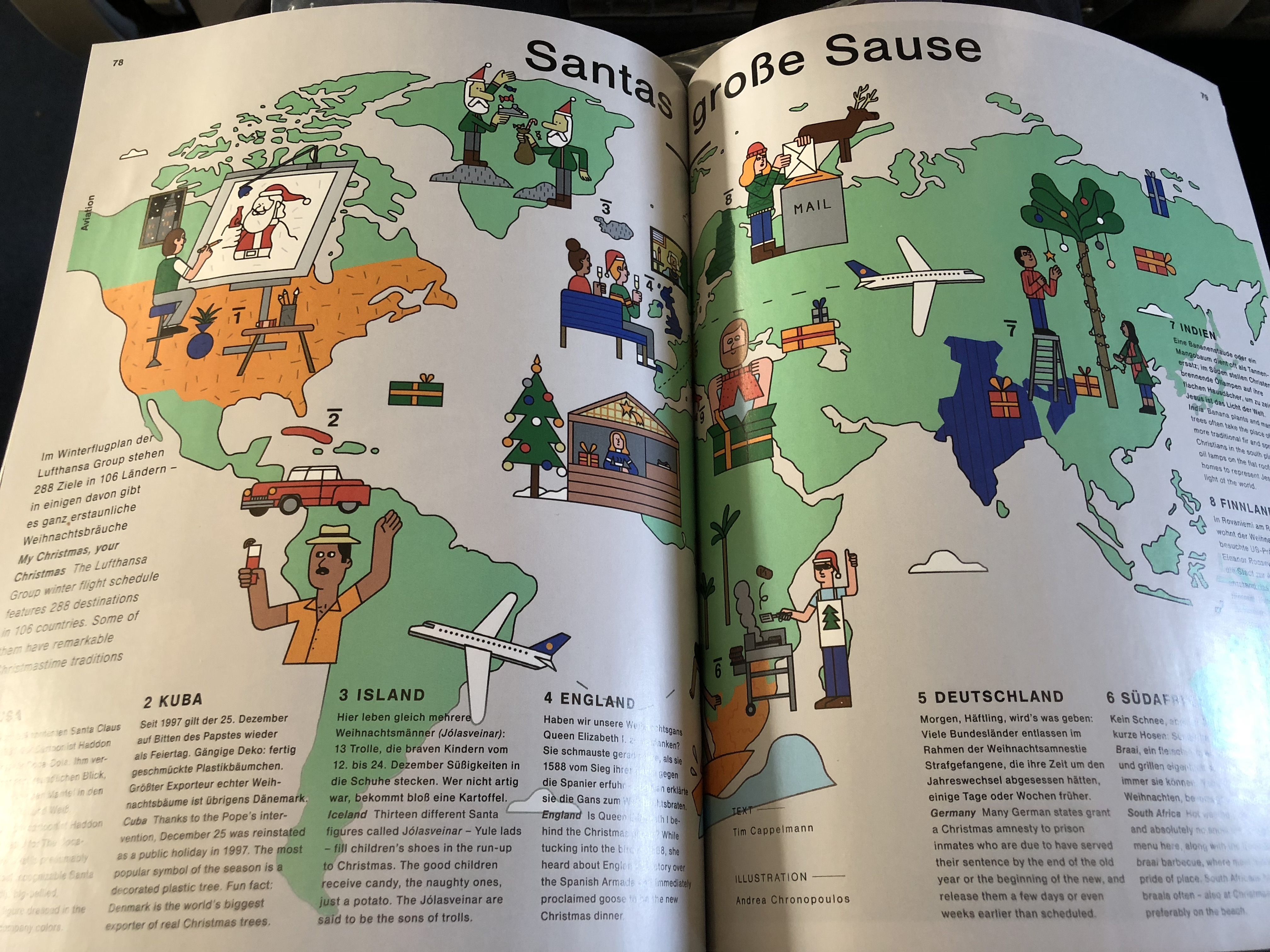
The only thing that really surprised me about this flight was just how many business class seats were allocated. Unlike most airlines which make their business class seats larger, the trend in Europe is to have the seats be the same as in economy but with the middle one blocked off. This means that the cabin size can be adjusted by moving the dividing curtain further up when the load is light, and further back when demand is high. My flight had a staggering 16 rows of business class, equating to 64 people in the cabin. The curtain dividing us from economy was over halfway back in the plane! Otherwise, the flight really felt like an economy one where I lucked out in having an empty seat next to me. The only difference was that this time, I got a meal. It was pretty decently sized, with cheese, meats, muesli, bread, and a bit of fruit on the side. Since I was hungry I finished it all, though I wasn’t thrilled about the quality of anything. I spent the rest of this short flight leafing through the inflight magazine, which felt like a Christmas catalog this month.
A mediocre breakfast, but it was nourishing enough Inflight magazine clip of Christmas traditions around the world
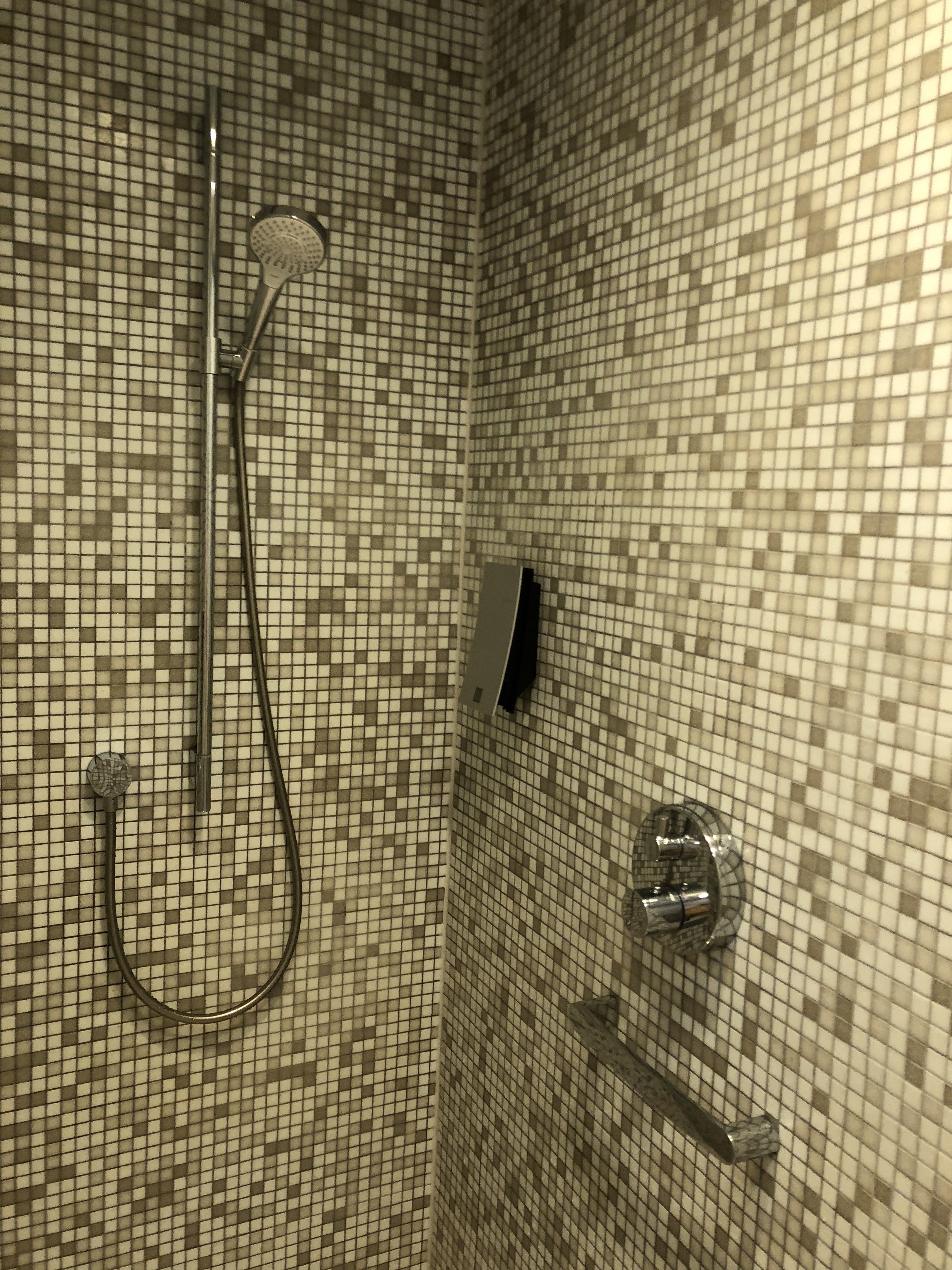
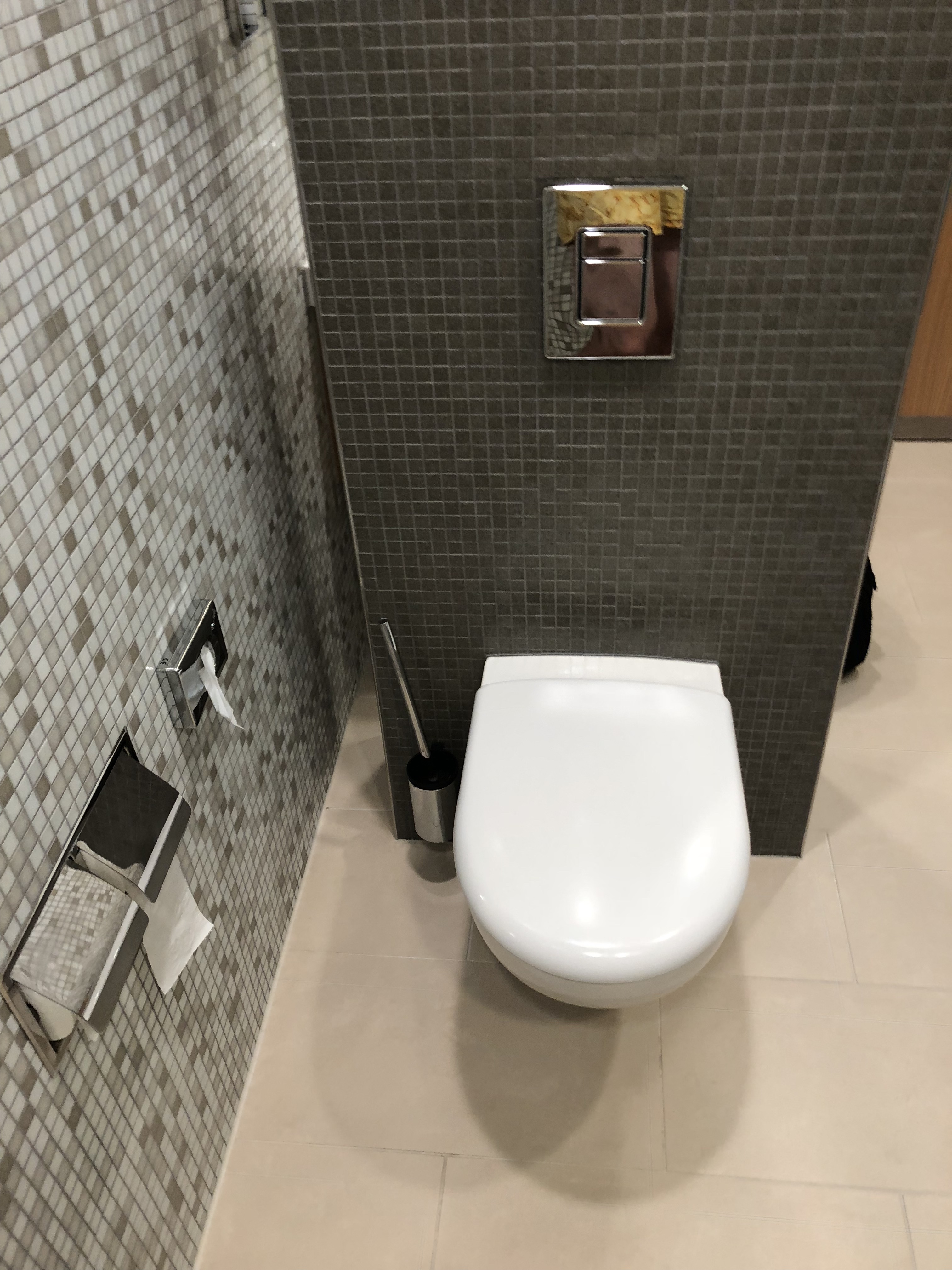
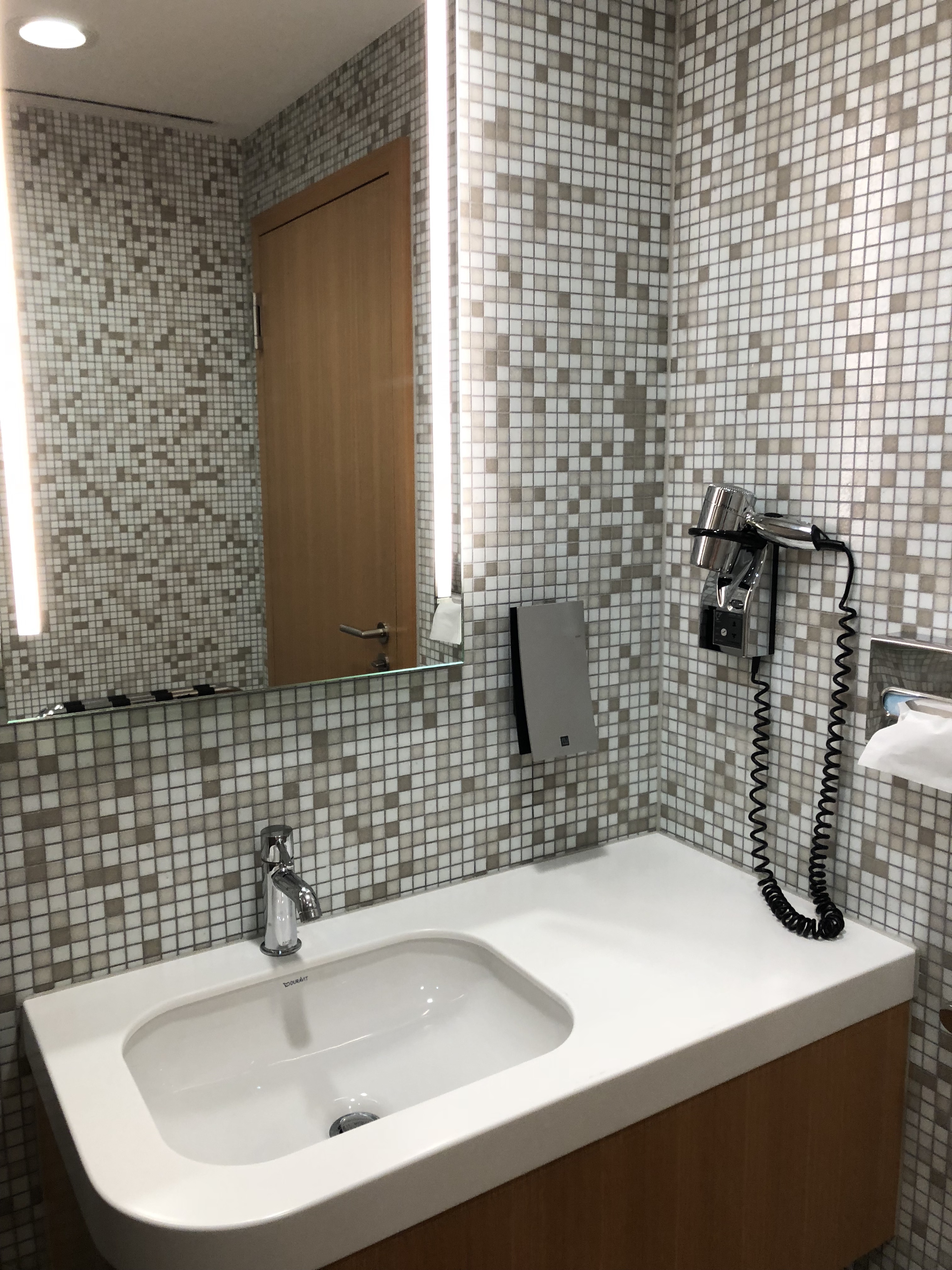
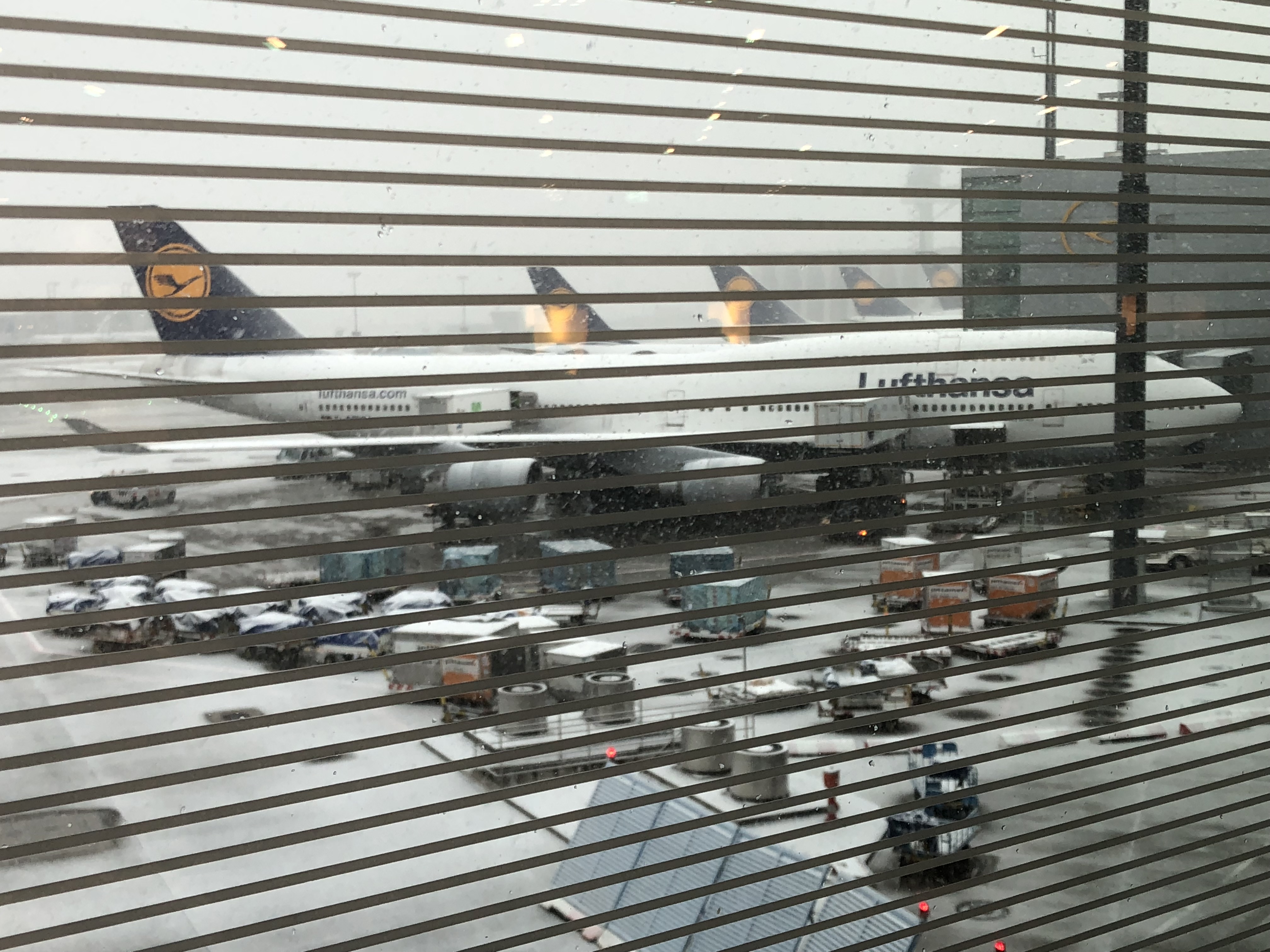
Despite it being sunny when I left Munich, we descended into a light blizzard in Frankfurt. The swirling snow didn’t seem to delay our taxi to the gate, and we were off in time. Luckily for me, we exited right next to the line to clear immigration and leave the Schengen area. By the time I did, it was about an hour before my United flight back to SFO boarded. I went straight to the Lufthansa Senator lounge and requested a shower pager, since you never know how long the line might be. Even though the lounge was bustling, it only took me 10 minutes to get a room. It was sort of clear why once I got there, as the shower room wasn’t particularly nice and the toiletries were pretty bare bones. Still, I felt pretty filthy after my long morning and was glad to get more refreshed before my flight.
The bare-bones shower. No surprises that the regulars give this one a skip The toilet was a little better apportioned. Apologies if this is TMI Sink and hairdryer, which was really the only other extra amenity in this lounge
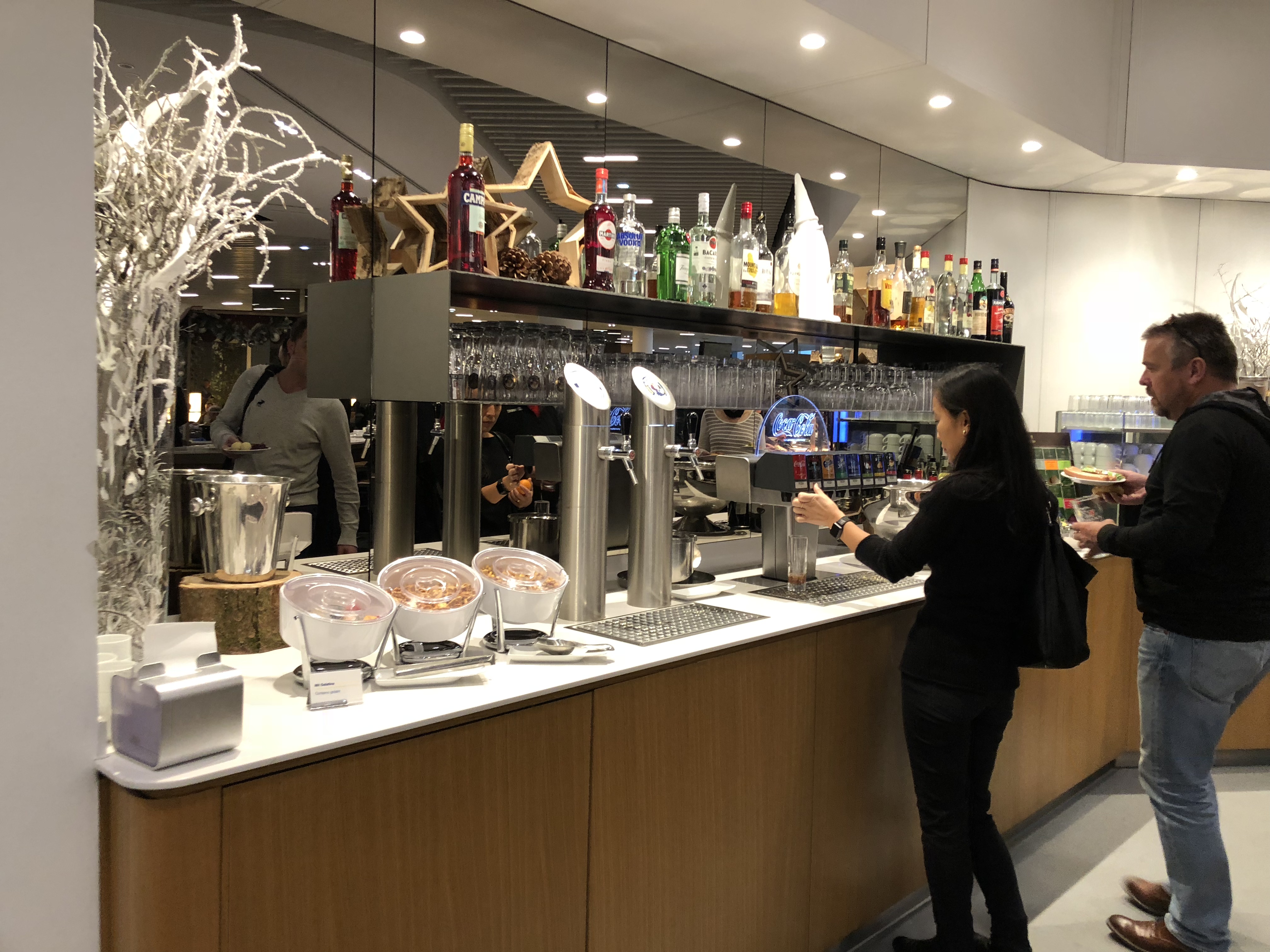
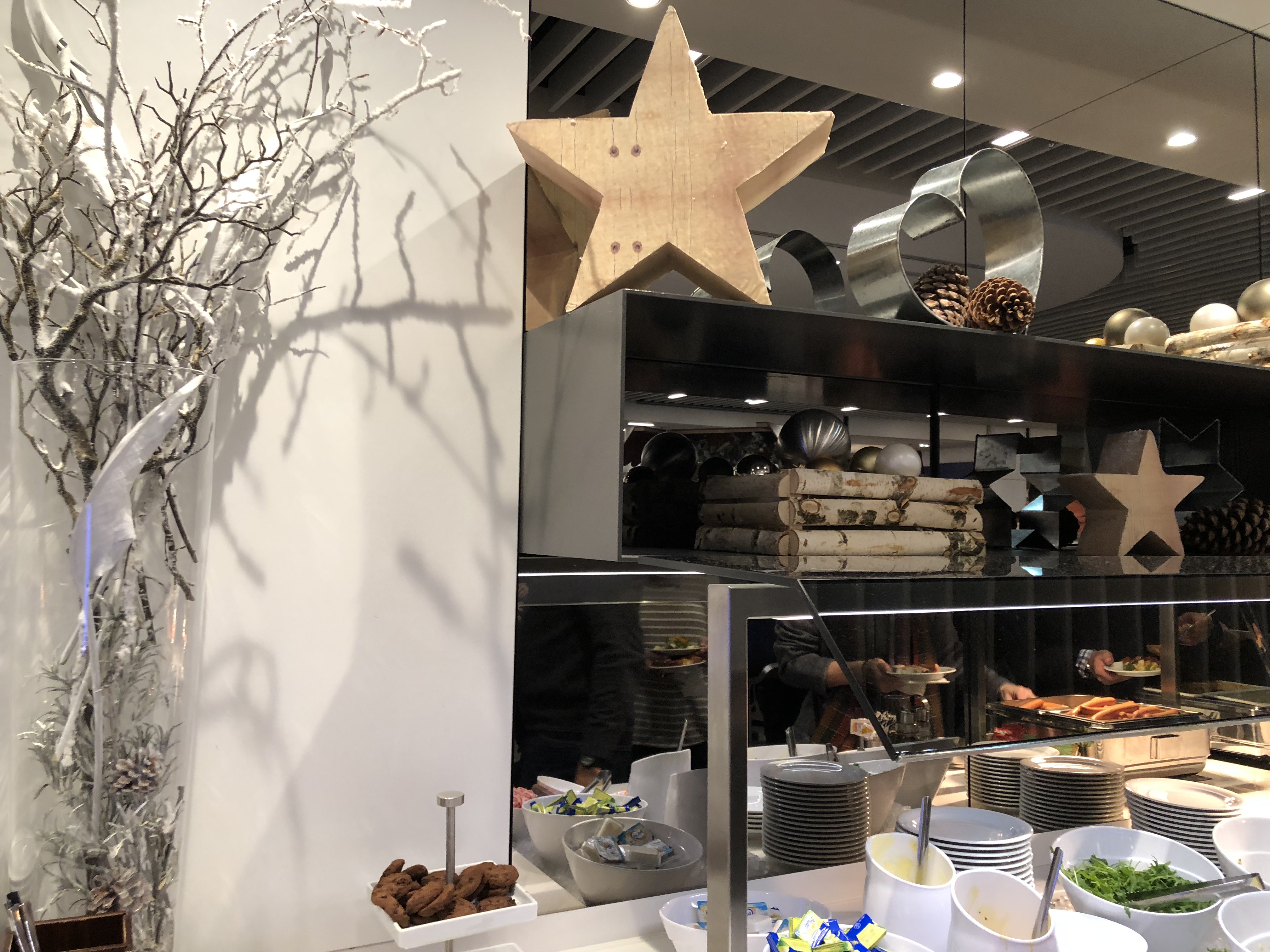
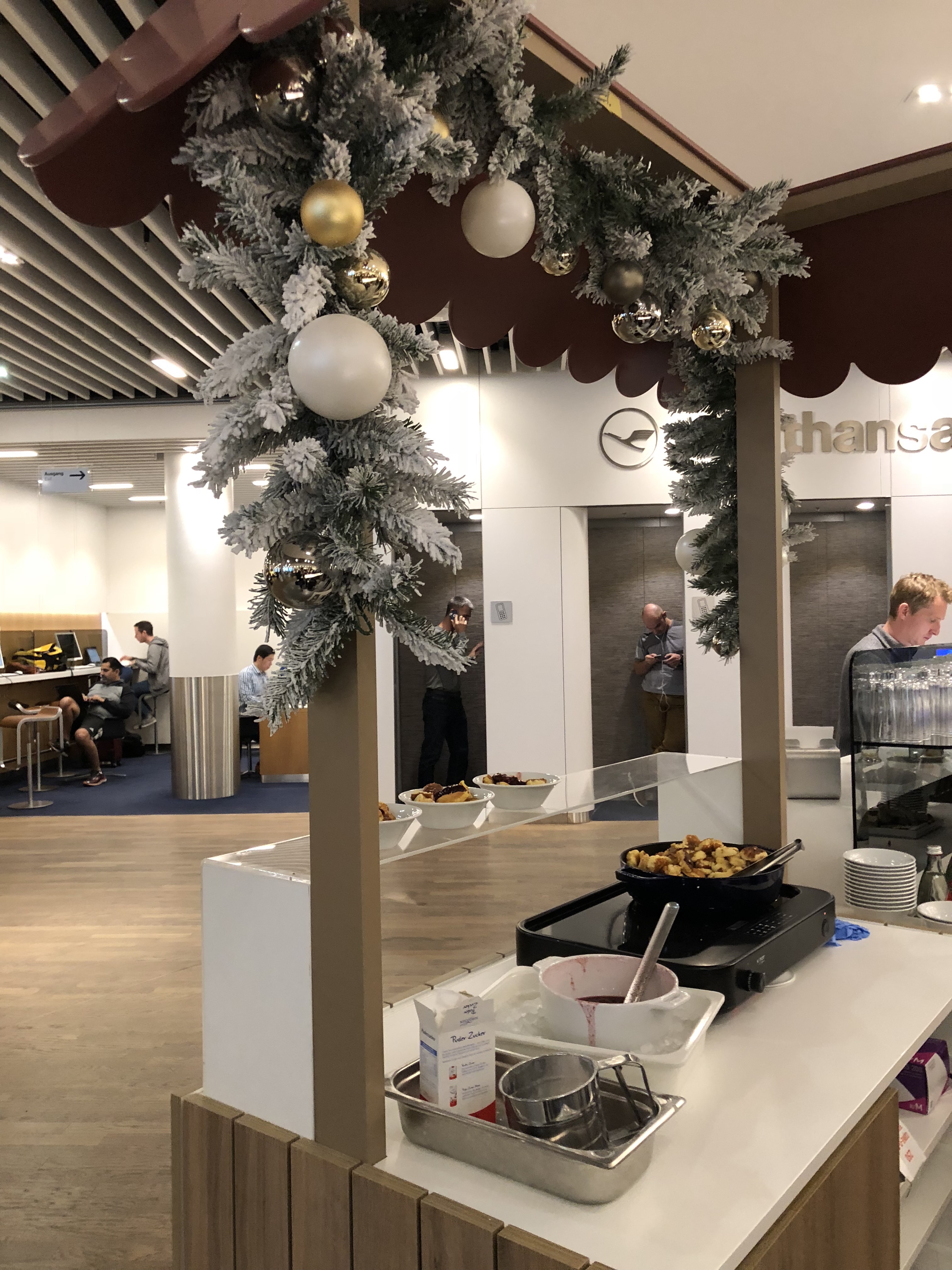
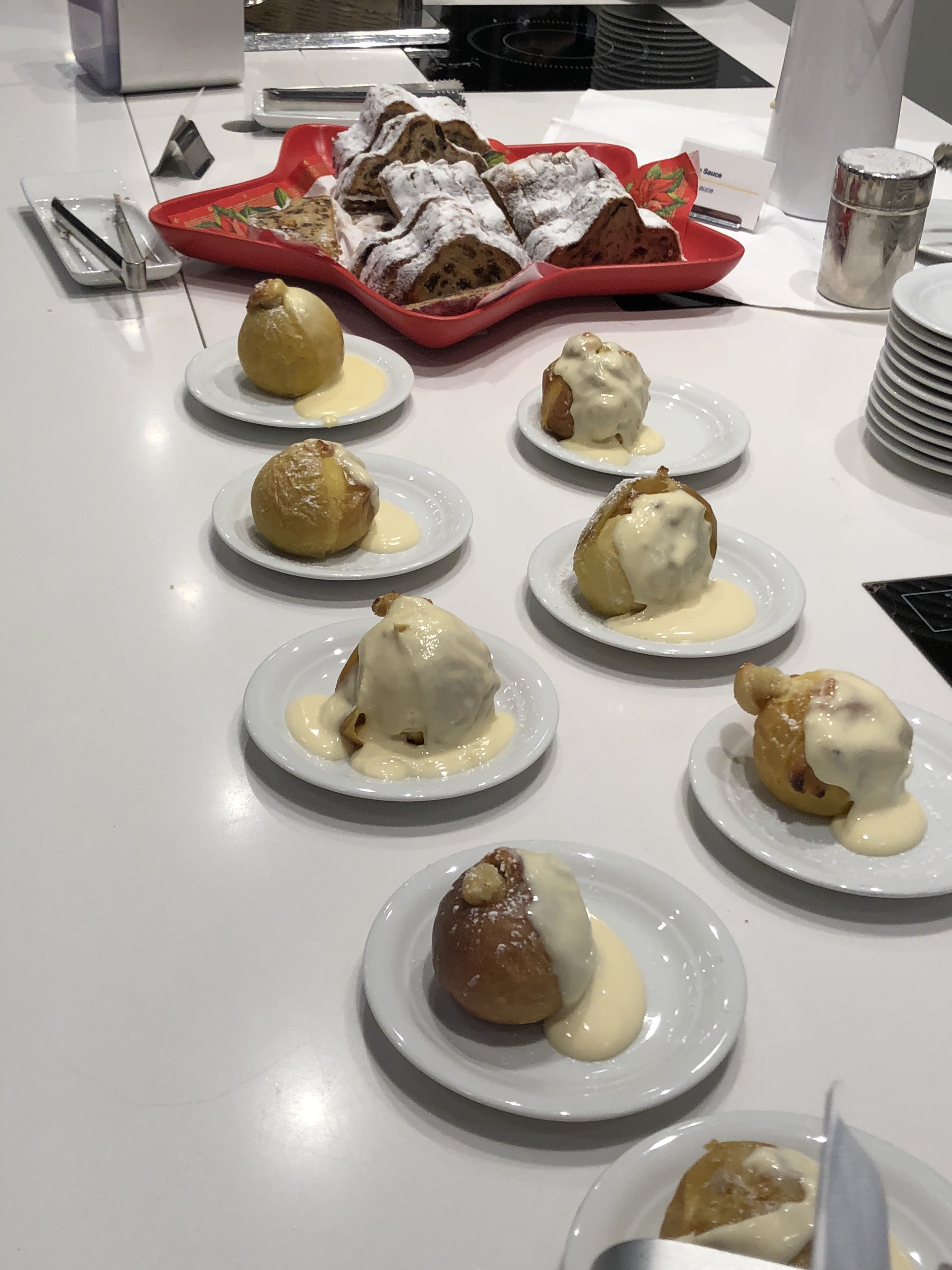
Once I’d showered, I had about a half hour more to explore the lounge before boarding, so I walked around and snapped some food pictures. Contrary to the Munich lounge, this one was much more festive and featured snowy and woodsy-themed decorations. There were also Christmas-related dishes on offer, from bread pudding, fruitcake, and roasted apples. I nibbled on some fruitcake, but before long it was time for boarding. I had an additional document check prior to boarding, which sometimes happens prior to US-bound flights. One glance at my passport and I was let on right away. I was absolutely thrilled to be embarking on this last flight of a packed year, and experiencing United’s new business class product for the first time!
A snowy Frankfurt airport through the lounge windowblinds The alcohol selection at the Frankfurt non-Schengen lounge. I did not try to pour another beer… Woodcarved stars, pinecones, and other festive decorations for the Christmas season The bread pudding station, with a do-it-yourself option Roasted apples and fruitcake. Wish I’d had the appetite for an apple!
Overall, I’ll give a slight nod to the Lufthansa lounges I came across this time. The high point was the food and alcohol selection, and you definitely won’t go hungry in this lounge. They do include enough seating in these lounges that I’d be surprised if it filled up completely, but during busier times I could see nothing comfy being available. The shower room was a weak point, although at that point in my travels I was just glad that they had one at all. I guess another low point was my experience with the beer tap, but that one’s really on me… I wouldn’t build in extra time arriving to the airport or on a layover for these lounges, but if I have access I will certainly use it.
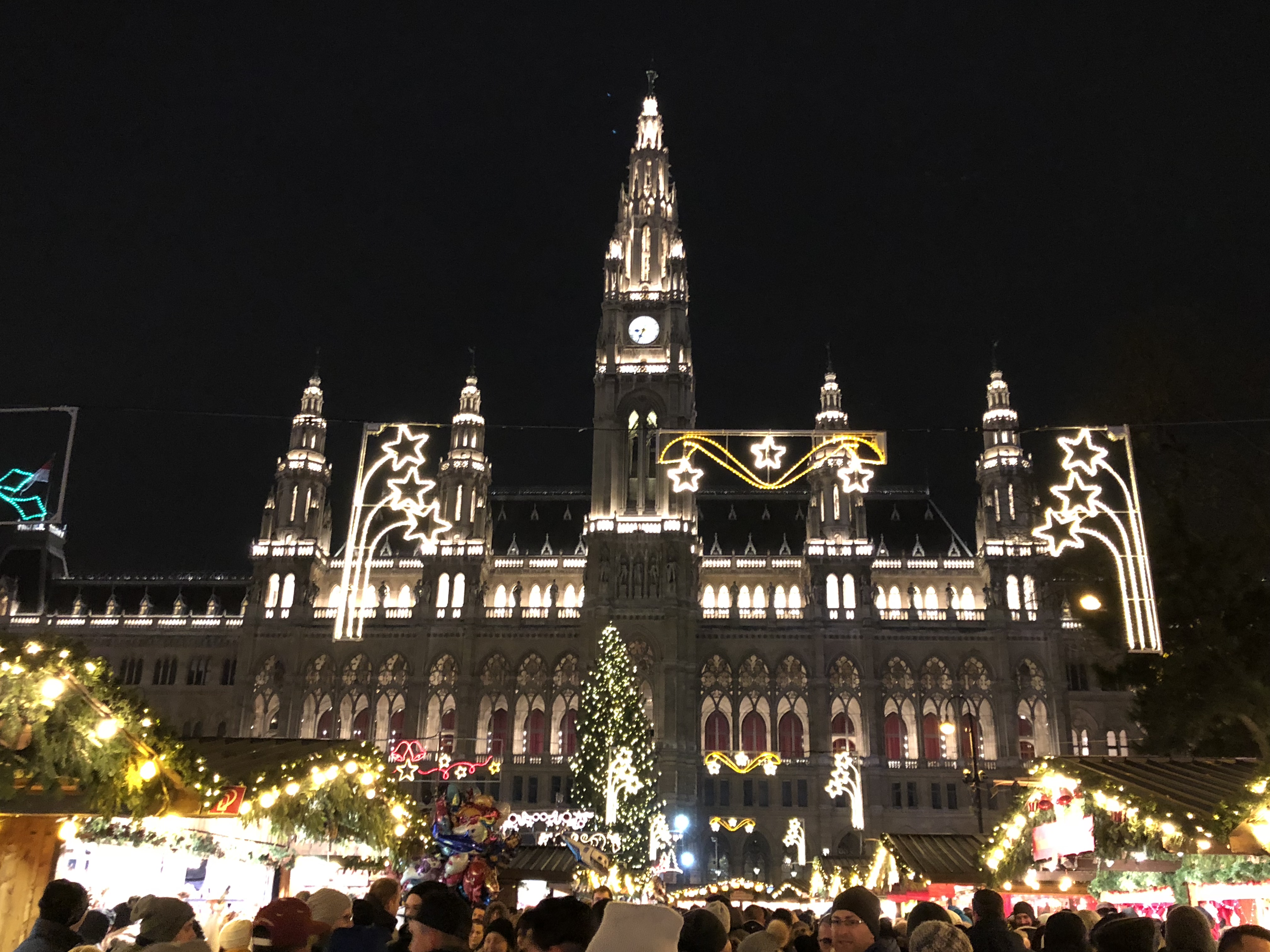
Christmas Market at Vienna’s Rathausplatz, one of the city’s largest
Ah, Christmas markets! They’re one of the staples of a December trip to Europe. Most major cities set up at least one near their city centres, and they’re especially widespread in Germany where they originated. In each of the 4 cities of Vienna, Budapest, Prague, and Nuremberg that we visited, there were multiple Christmas markets and we made a trip out to see each of them. The markets all have common characteristics, including to-go food and drink, in addition to local handmade souvenirs. However, we still found that each city’s markets had a distinct flavor. Here’s our experience in each of the four cities.
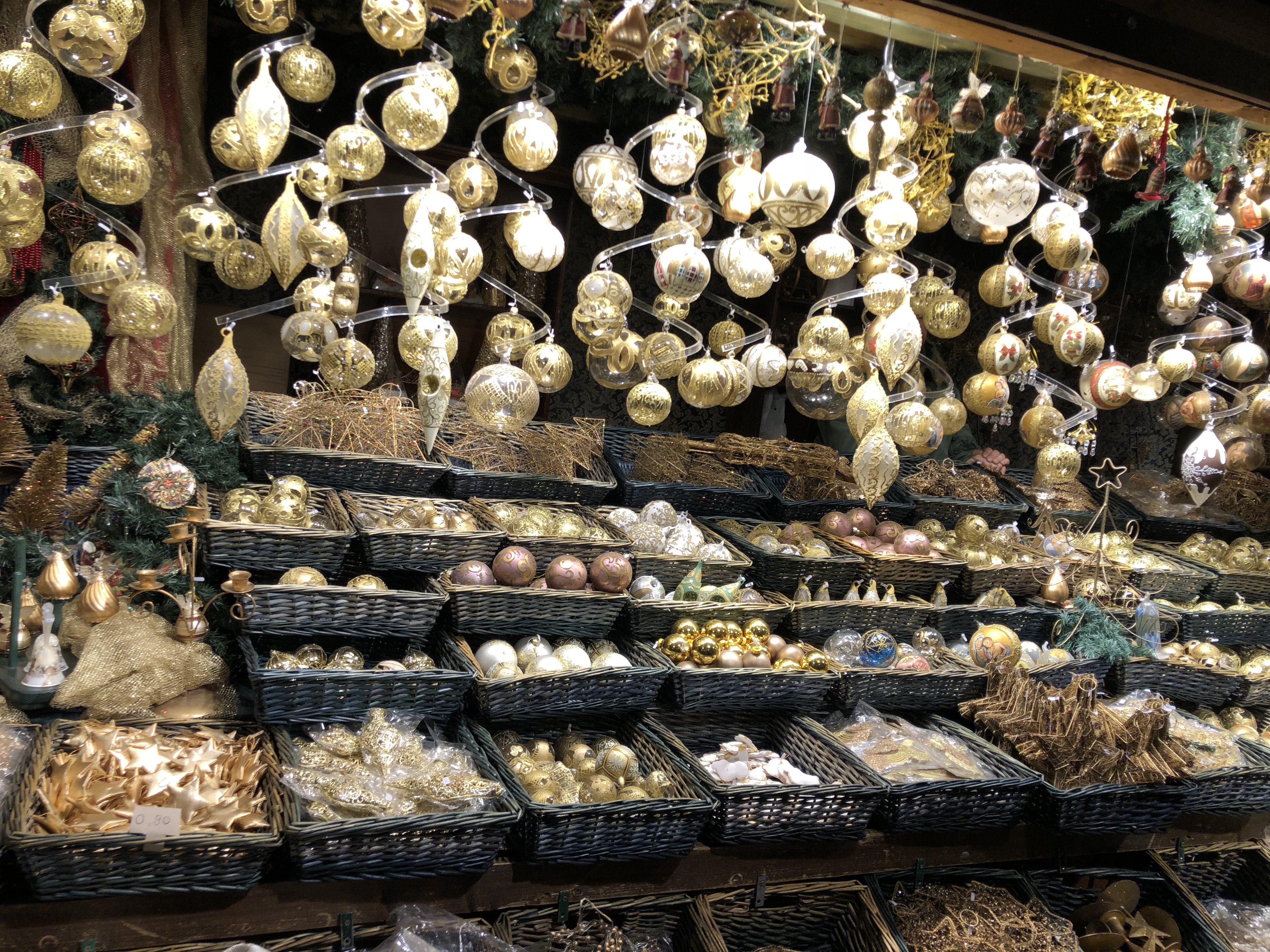
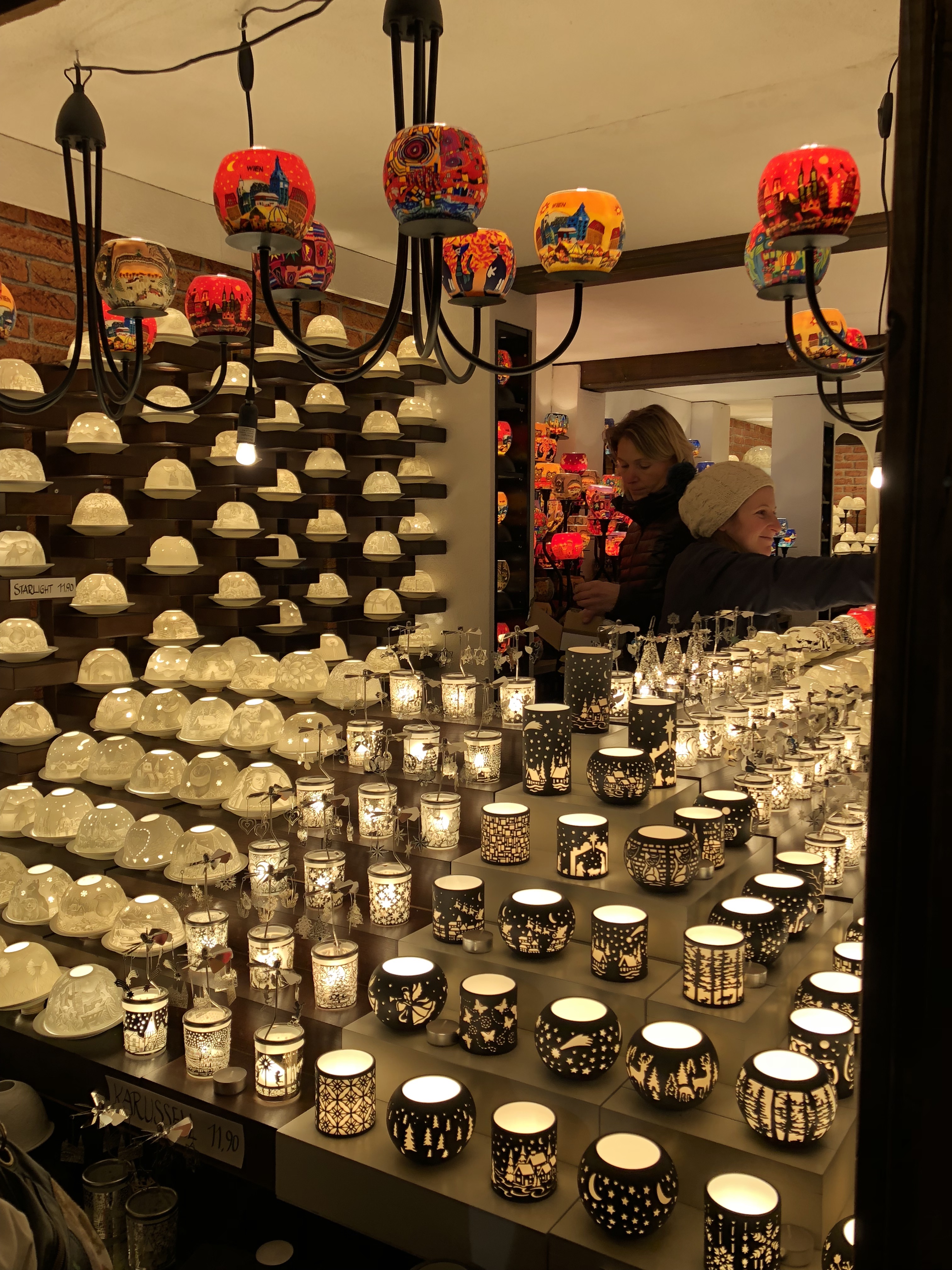
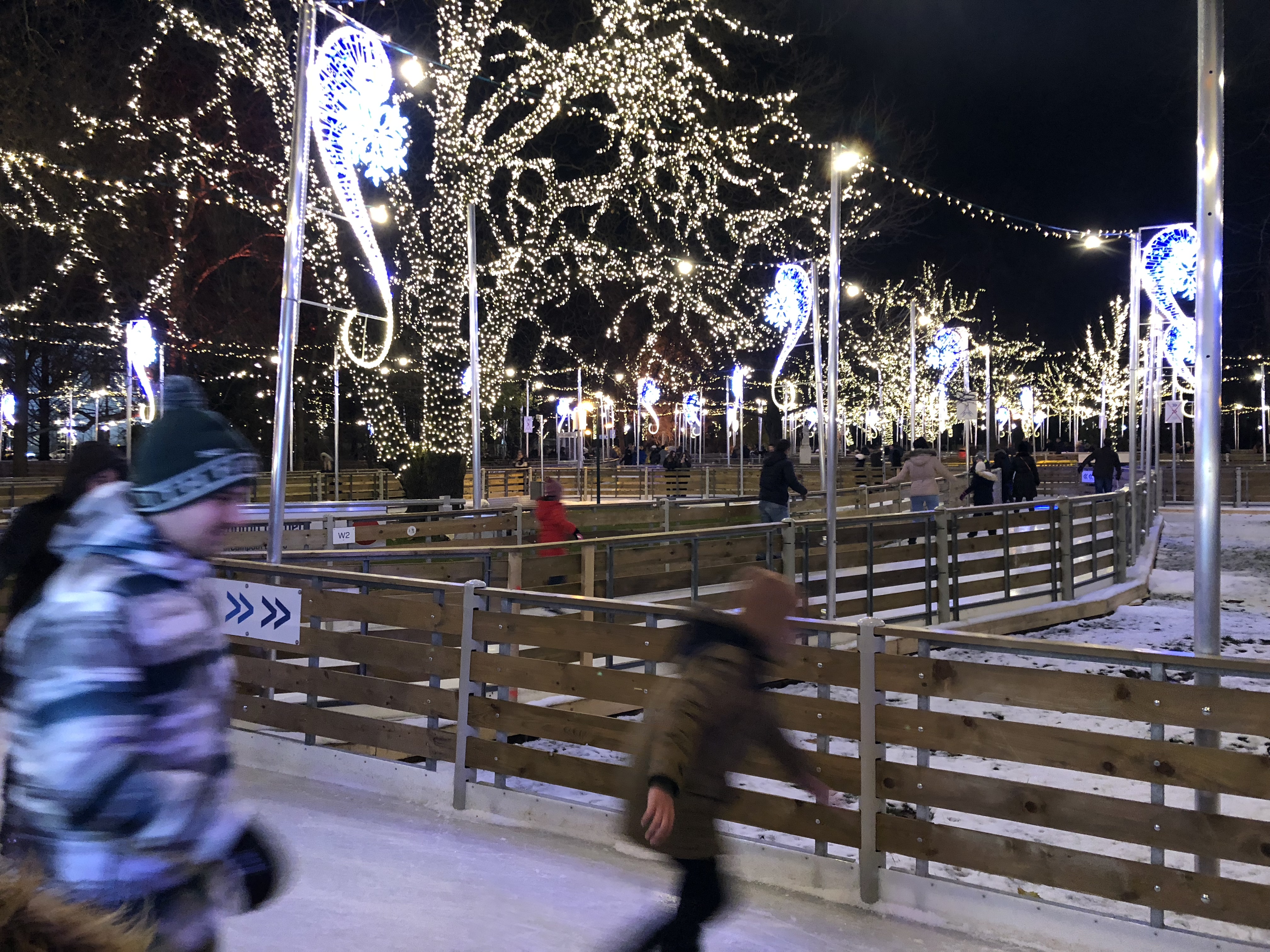
We started off in Vienna, and our first night we had enough energy to walk to the Rathausplatz market. This one was centered in front of city hall, which was a massive church-like structure that was flooded with light. Being a Saturday, the market was flooded with merrymakers, most of them European. Except for Nuremberg’s massive market, this and Austria’s Stephensplatz markets had a greater variety of souvenirs than any other. Ornaments, candles, and woodcarvings featured heavily in their offerings. There were also stuffed animals, writing materials, and most anything you could imagine giving as a gift. I remember getting a stuffed penguin and a stuffed koala (because Austria is spelled similarly to Australia) for friends. Another special part of Rathausplatz is that they set up an ice skating track that people were zipping around. Seeing as I had to be carted off a rink with a bleeding wound the last time I went, I decided not to try it this time. Of course there was mulled wine and pretzels as well, but I think my group was too tired when visiting to partake in either.
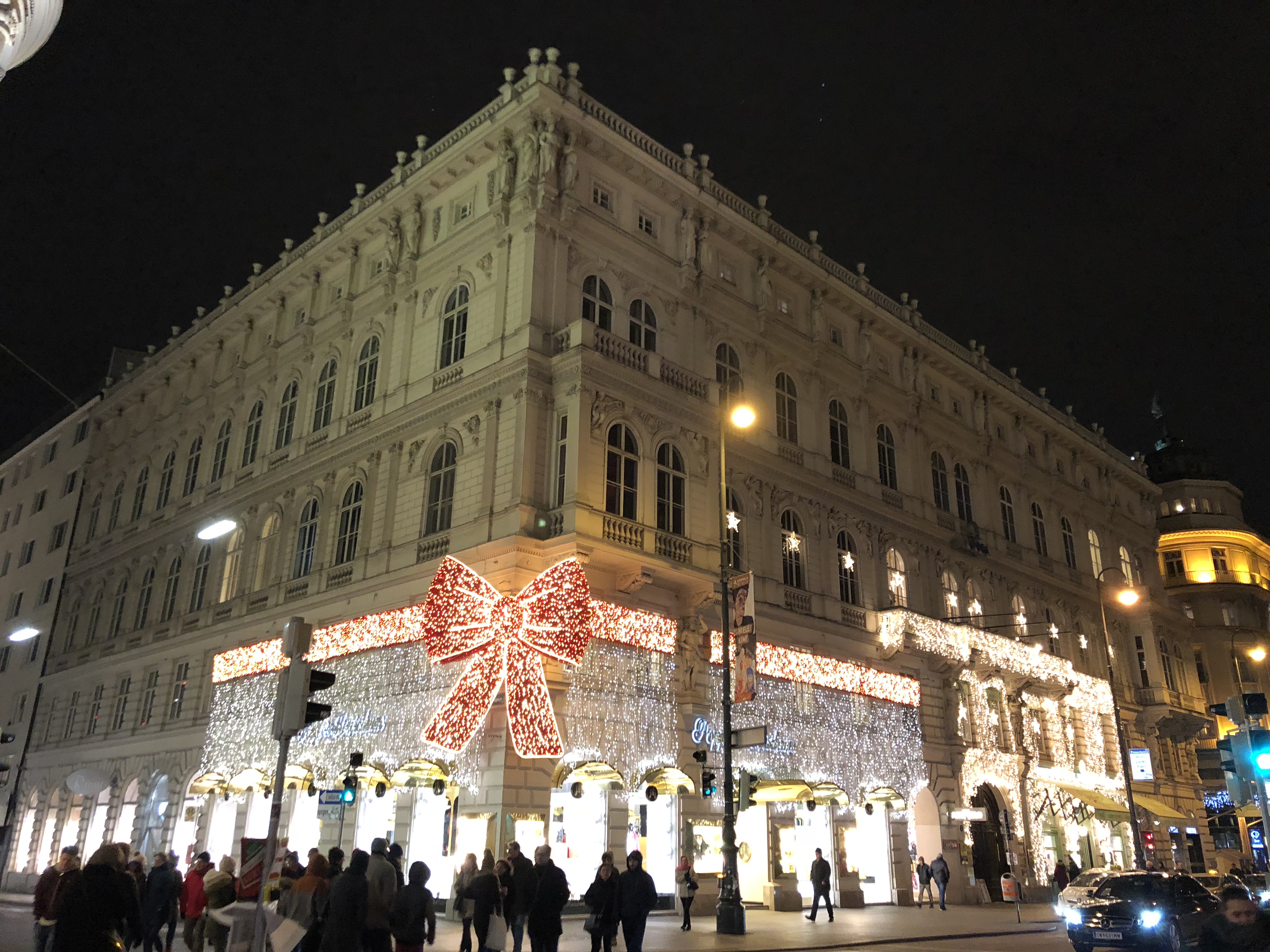
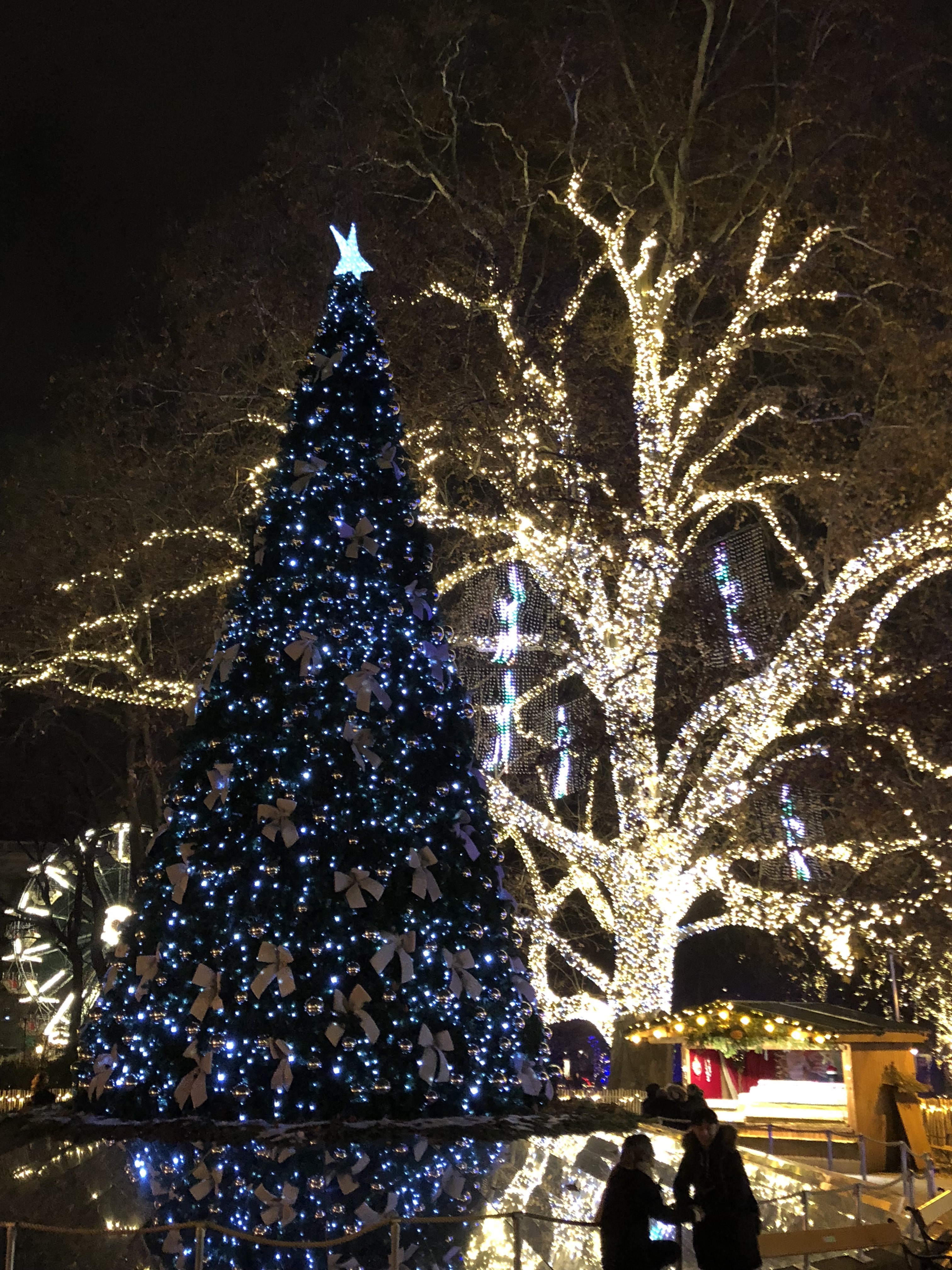
One of the ornament shops we came across. They looked too fragile to carry back safely An illuminated candle stand. These were tempting, but I didn’t end up buying any Ice skating rink at Rathausplatz. I was content to just watch the skaters whiz by Vienna hotel with a bow on top! Two very different types of trees decked out with a wonderful array of lights!
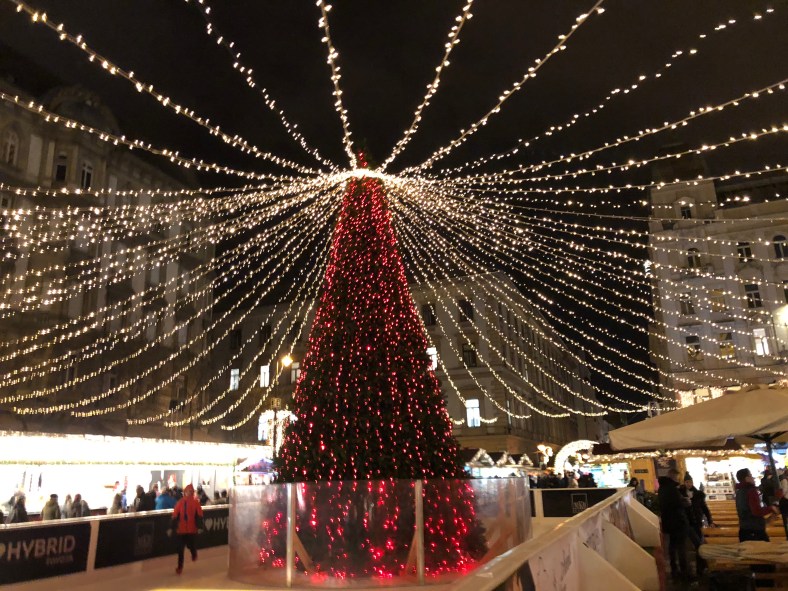
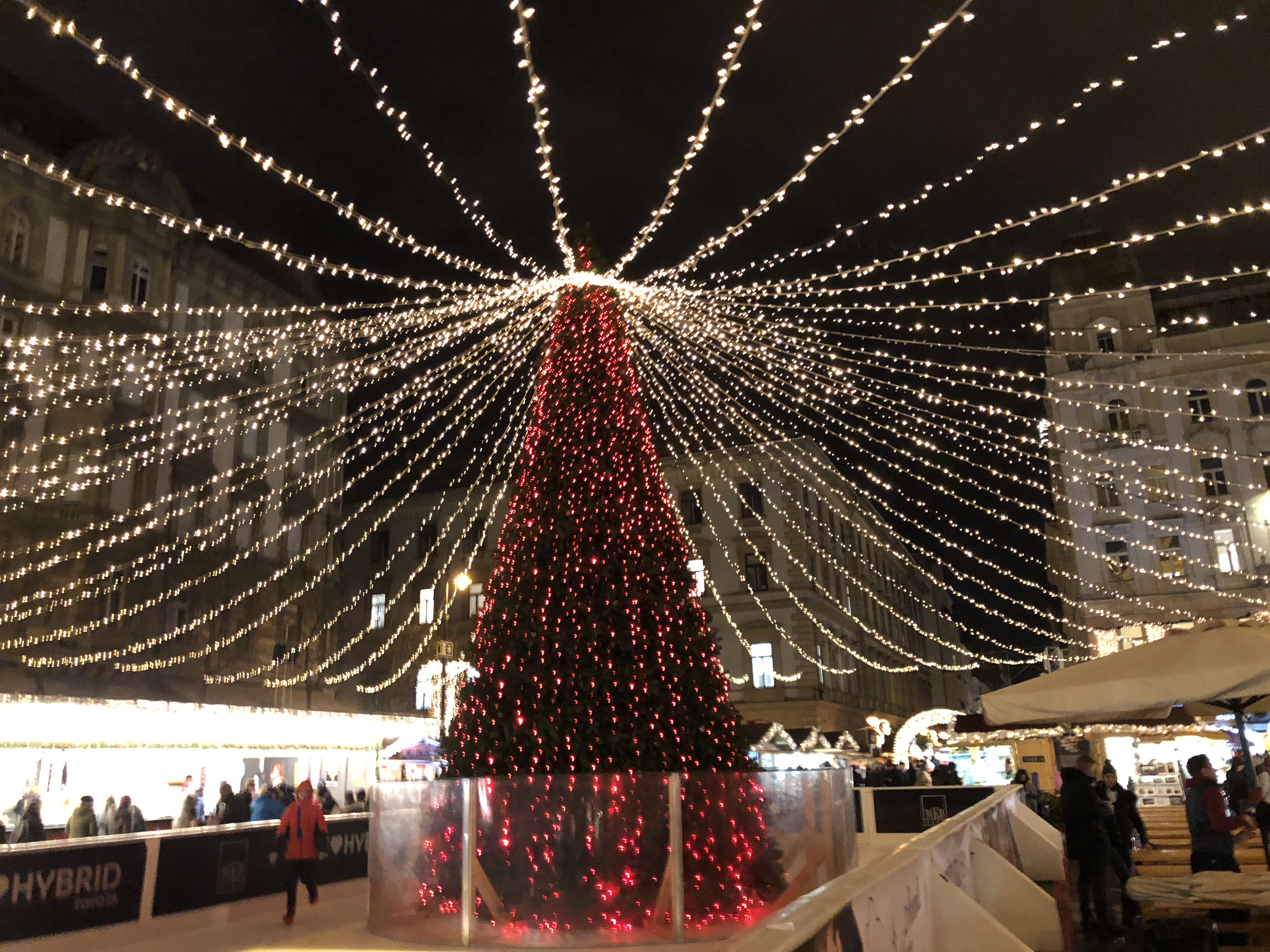
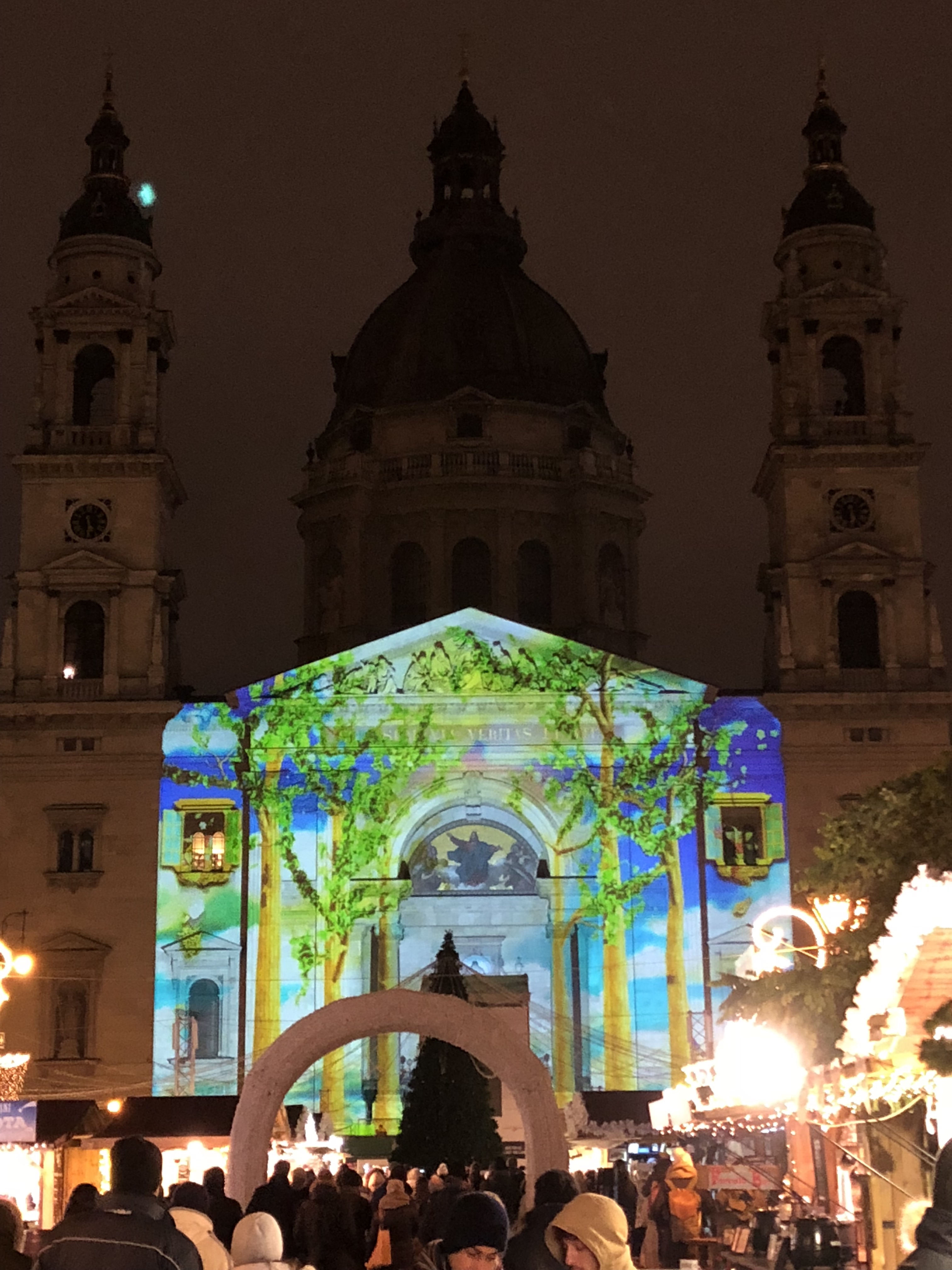
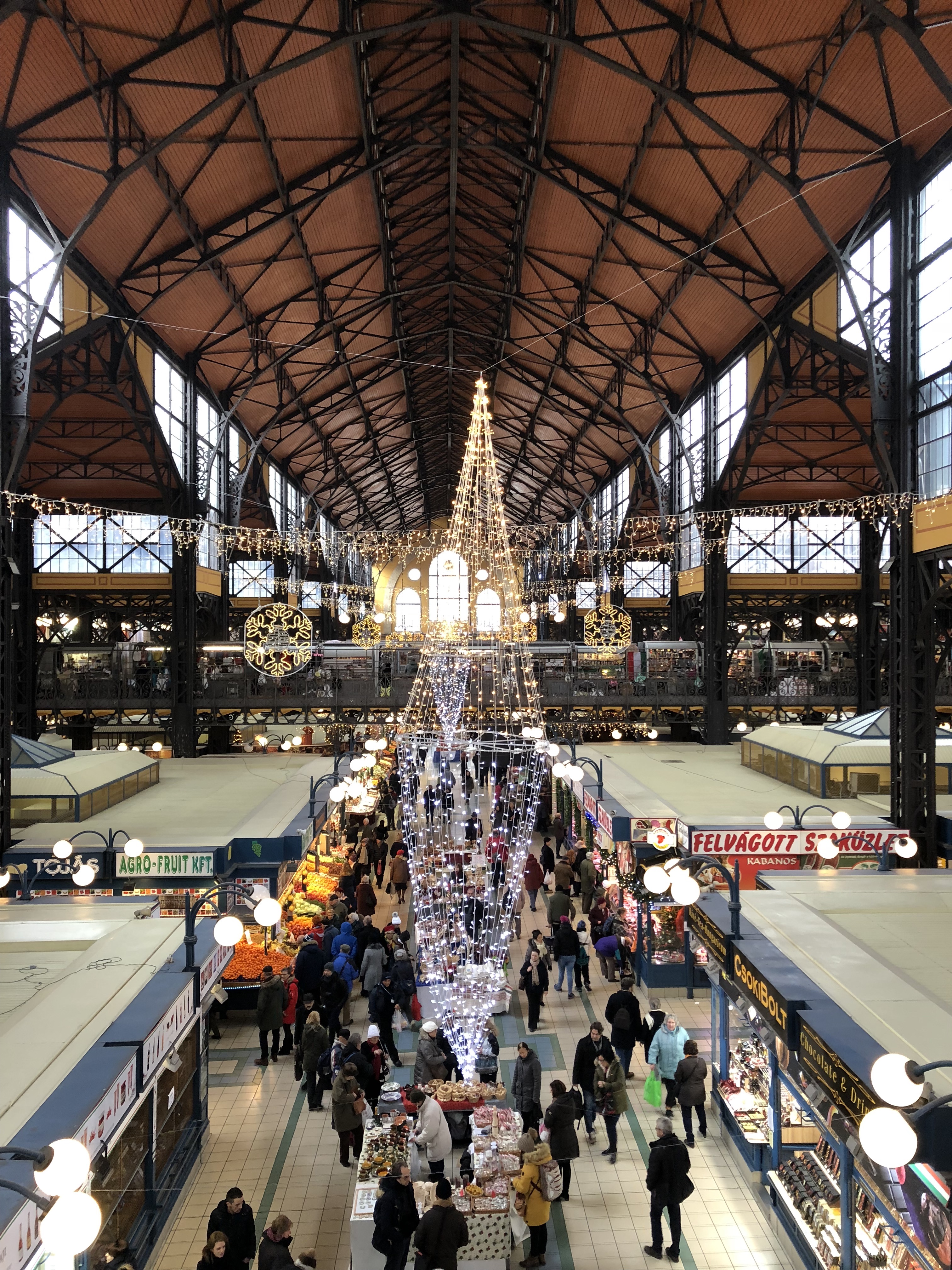
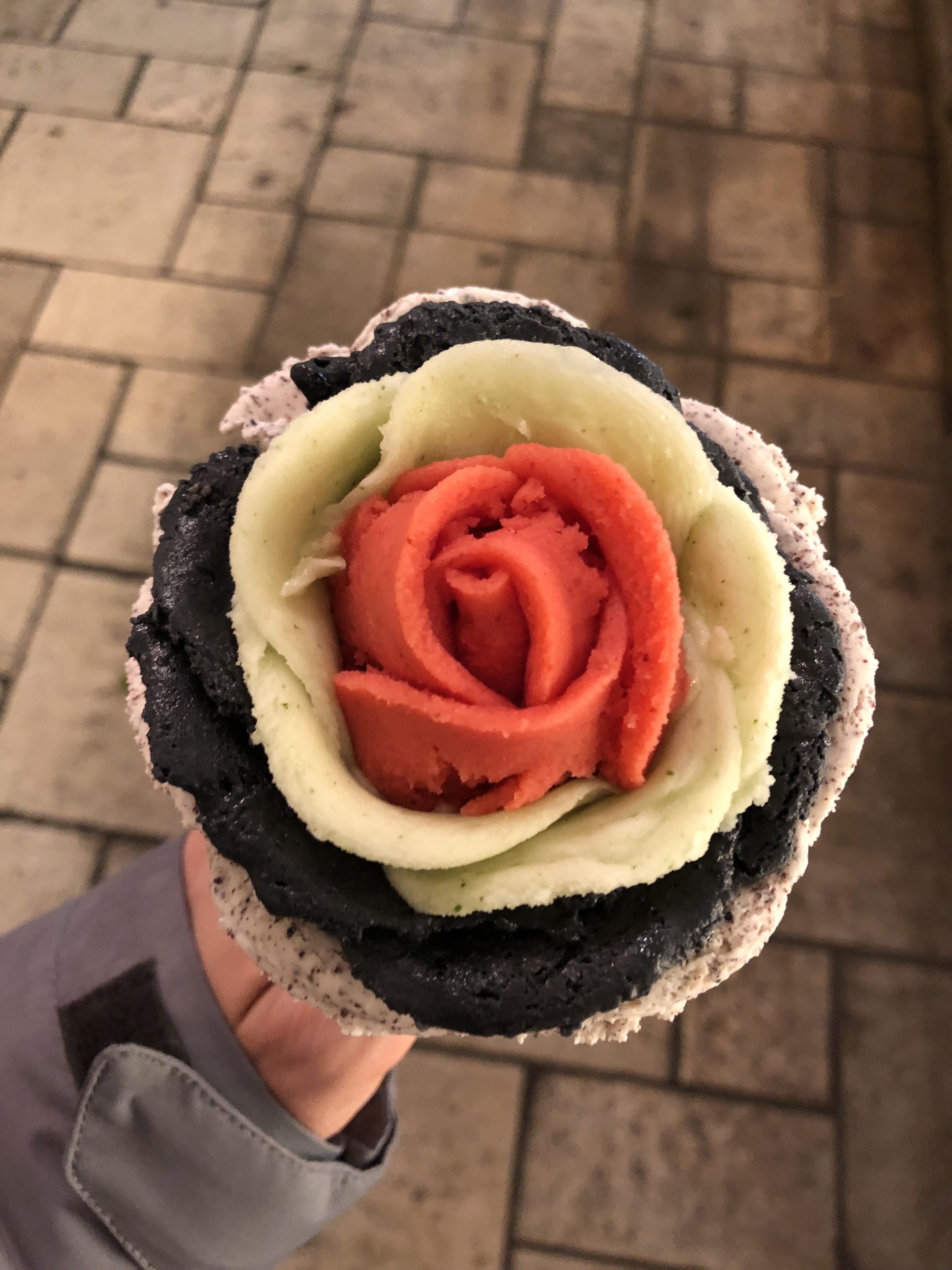
Our next stop was Budapest. Perhaps I’m biased because it’s my favorite city in Europe by virtue of the semester I spent abroad there, but they also had my favorite Christmas market. Their main one was just to the west of St. Istvan’s cathedral, which is just north of the city center. They had a gorgeous Christmas tree set up with red lights, and a canopy of bright lights were draped from the top of that tree to various stands around the market. It was here that my group tried mulled wine for the first time and we loved it! It’s much thicker than normal wine, and usually has hints of apples and citrus fruits that are brewed in. Next we tried unicum, which is a bitter herbal drink that was a one-and-done for me. Apparently, its origins lie in an herbal blend that a doctor administered to a sick Hapsburg prince that cured him. Istvan’s cathedral has an enormous frontal facade, and for the market it was the backdrop of a nature-themed light show. It was similar to light shows I’d seen at Vivid Sydney earlier that year. Overall, this market had less variety of souvenirs than the Viennese ones, but they had local goods that the former didn’t. Included in these were the porcelin shop where I got a tea set for my mom, and local woodworking and paprika-based souvenirs. I guess this next one isn’t technically part of the market, but my favourite gelato shop of Gelato Rosa is right next to the cathedral as well. Their strawberry-elderflower and basil-lime flavors are the best flavors of fruit gelato that I’ve ever tried in my life. That shop was where I’d go to treat myself and celebrate life events during my semester abroad, including finishing my first half marathon and my 21st birthday! Anyhow, they’re worth a visit no matter what time of year you go to Budapest. Lastly is a picture of our stop by Budapest’s Grand Market, just east of the Liberty Bridge. The market’s souvenir offerings changed to reflect the demand for Christmas goods, but the lower floor of food stalls were virtually unchanged. Lots of festive light installations were still hung up here, though.
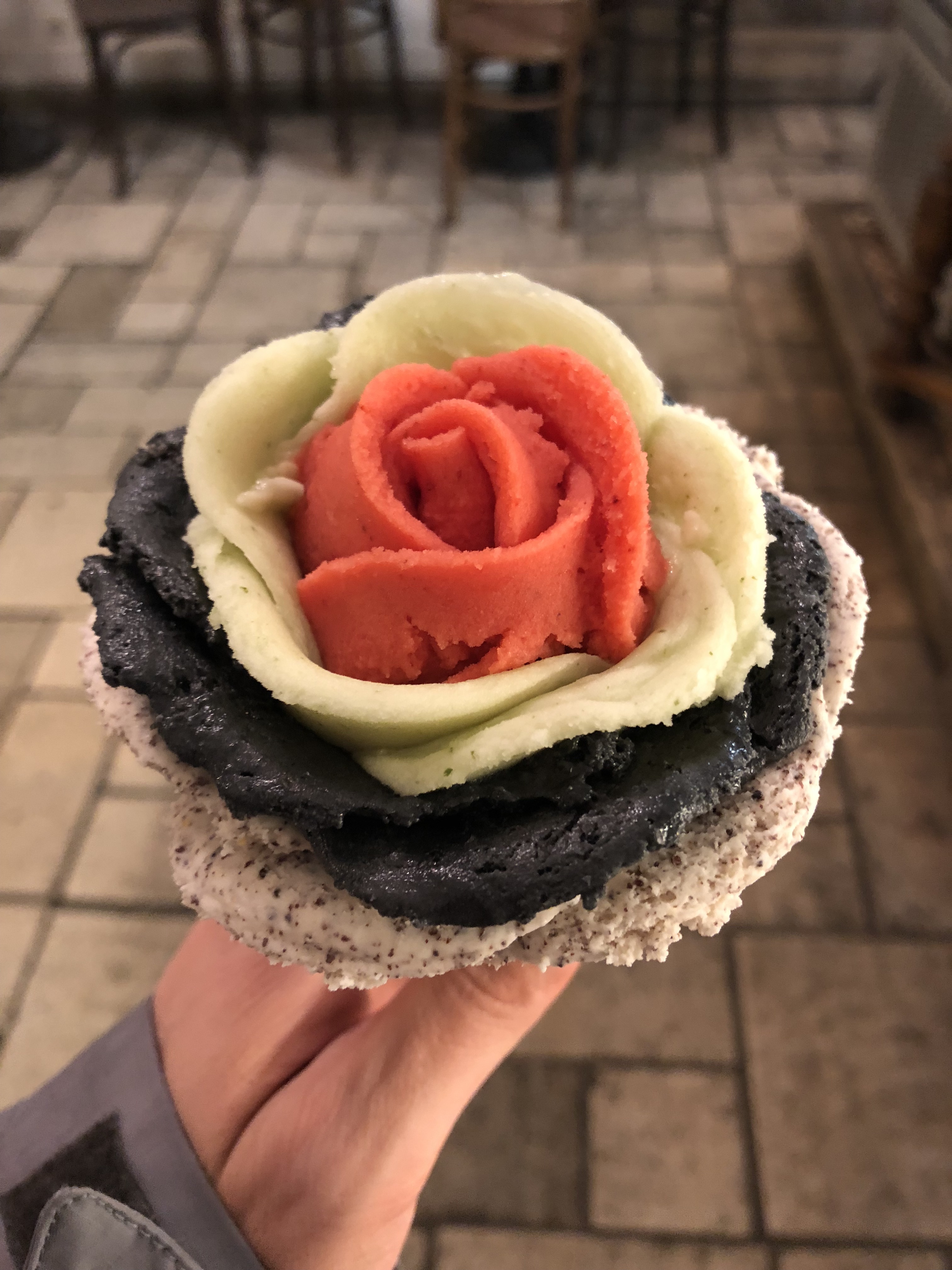
The market’s central Christmas tree, with a canopy of lights draped above an ice skating rink St. Istvan’s Cathedral with trees superimposed on it, as part of a nature video! Gelato Rosa’s famous rose petal gelato! Strawberry-Elderflower, Basil-Lime and Black Sesame! Budapest’s Grand Market hall, part Christmas Market but all business-as-usual downstairs
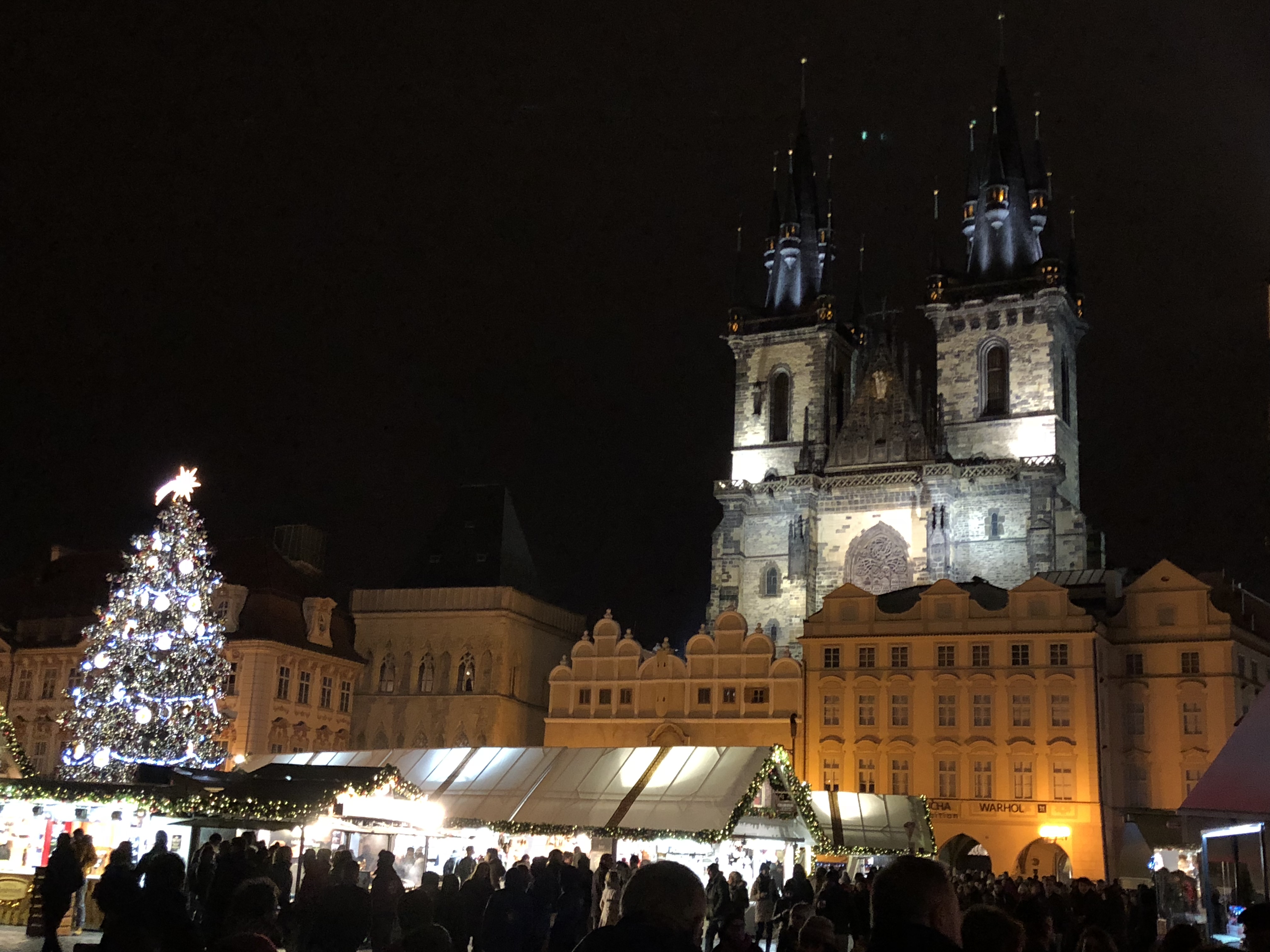
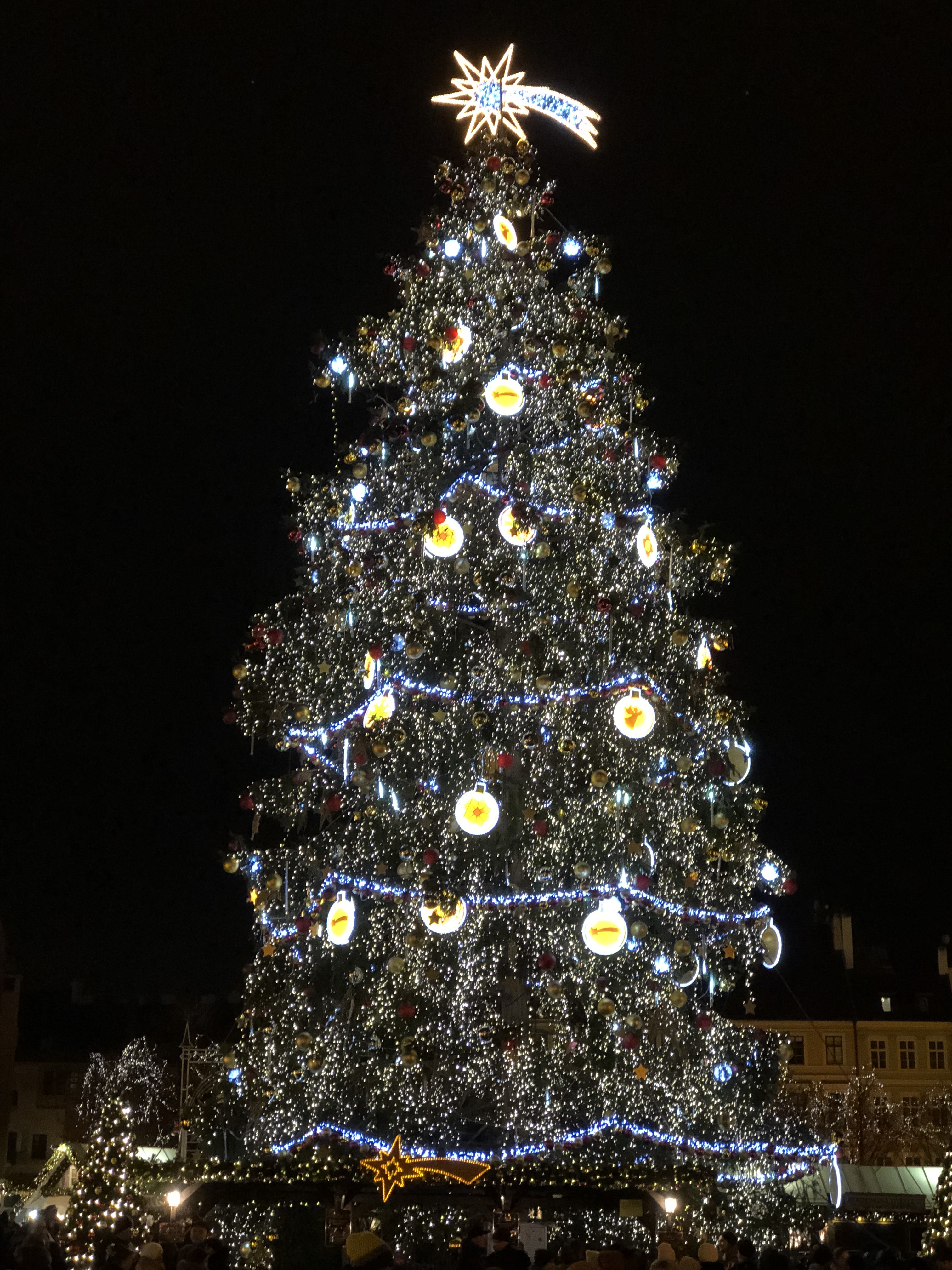
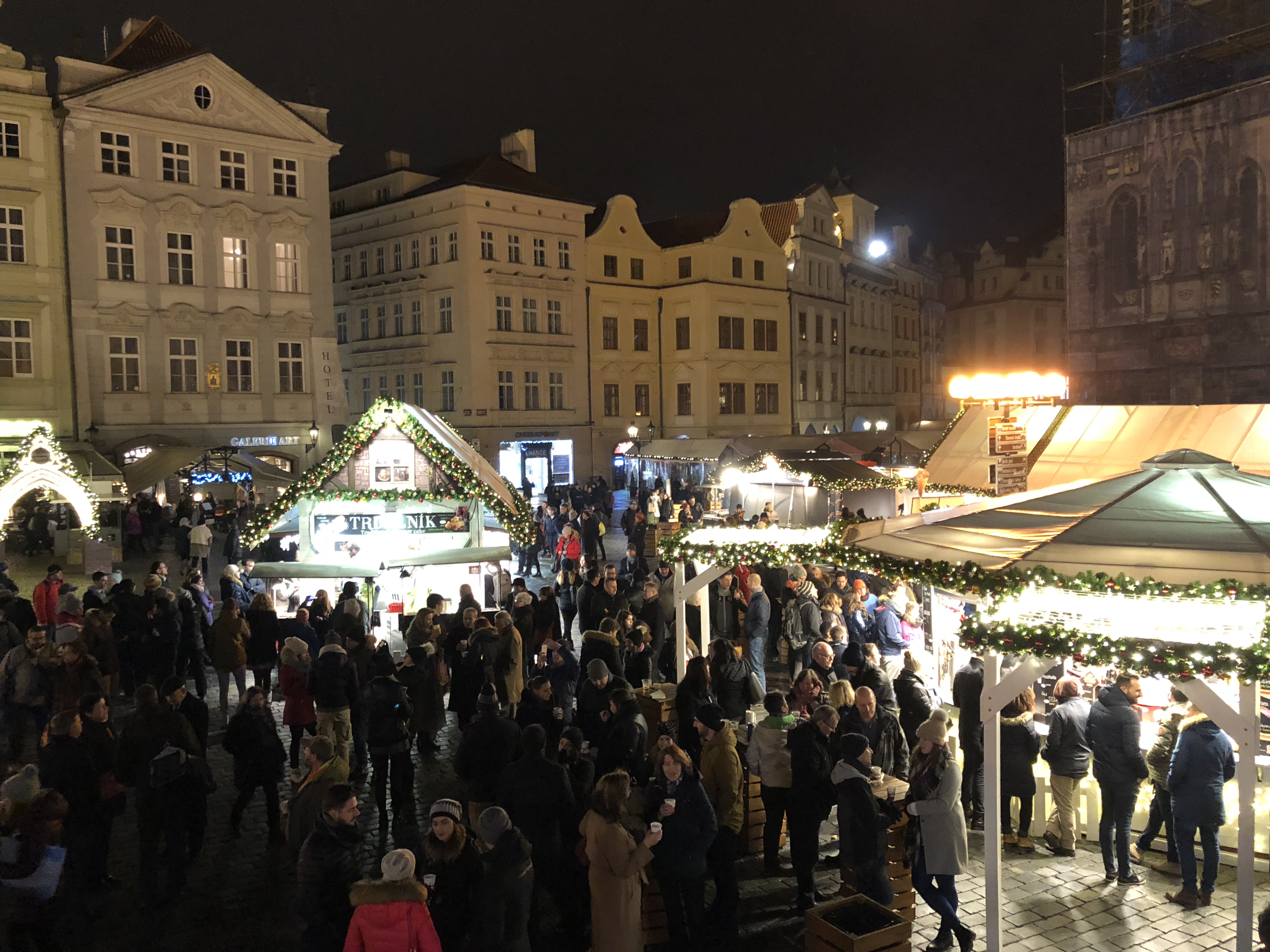
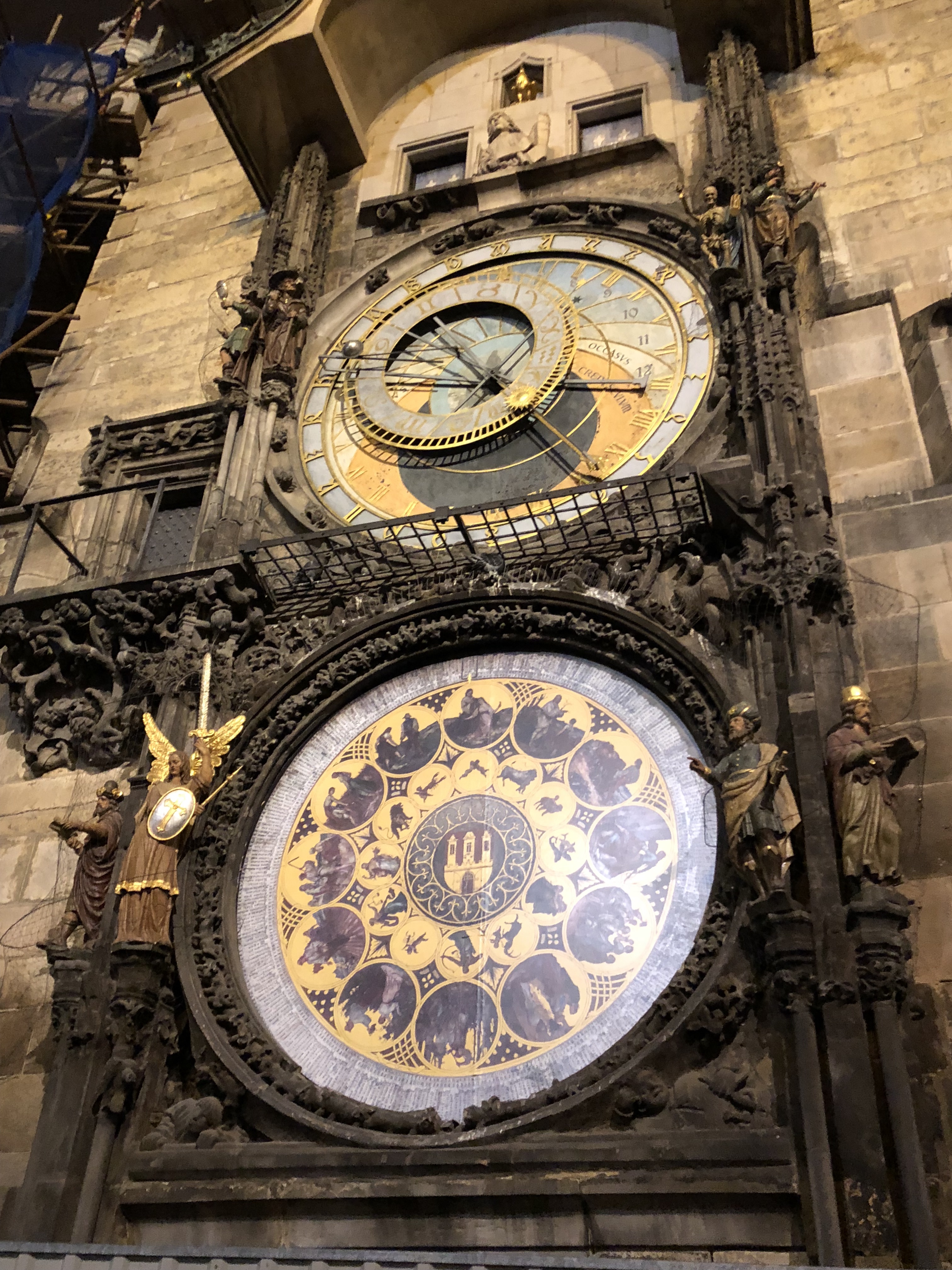
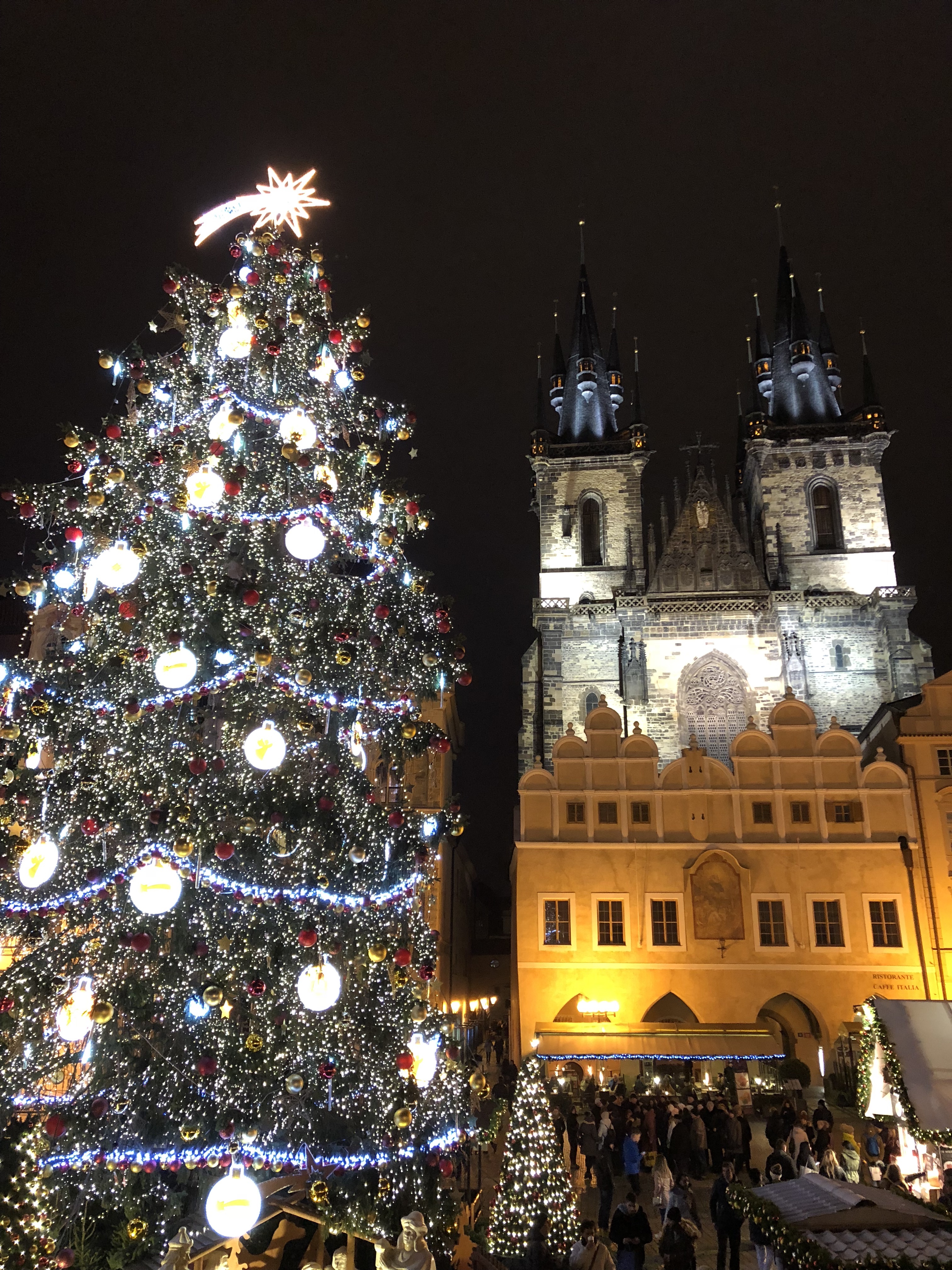
Next was Prague, which probably had the smallest Christmas markets we came across in Europe. Their main one was set up just east of their Astronomical clock, but there were others peppered west of the Vlatta river, especially in the castle area. Here the focus seemed to be more on food, as there were more hot drink and food options than before but the fewest souvenirs sold out of anywhere we went. The main market’s special attarction was a massive Christmas tree, the largest we came across. It had a viewing platform nearby, so it was easy to get good pictures of it with the city’s ancient towers in the background. This city was the only one where we found Grog, a drink made from rum and hot water. Needless to say, we found it disgusting and passed it around a lot before someone just chugged the rest. Prague certainly has an abundance of charms, enough to draw more tourists than any of the other cities we visited by far. However, I would not pick them for the Christmas markets alone.
Prague’s main Christmas Market, near the astronomical clock Prague’s enormous Christmas tree. Reminds me a bit of the Disneyland one, but more natural Some of the rest of the crowded stands at this market. I wouldn’t give these a must-see
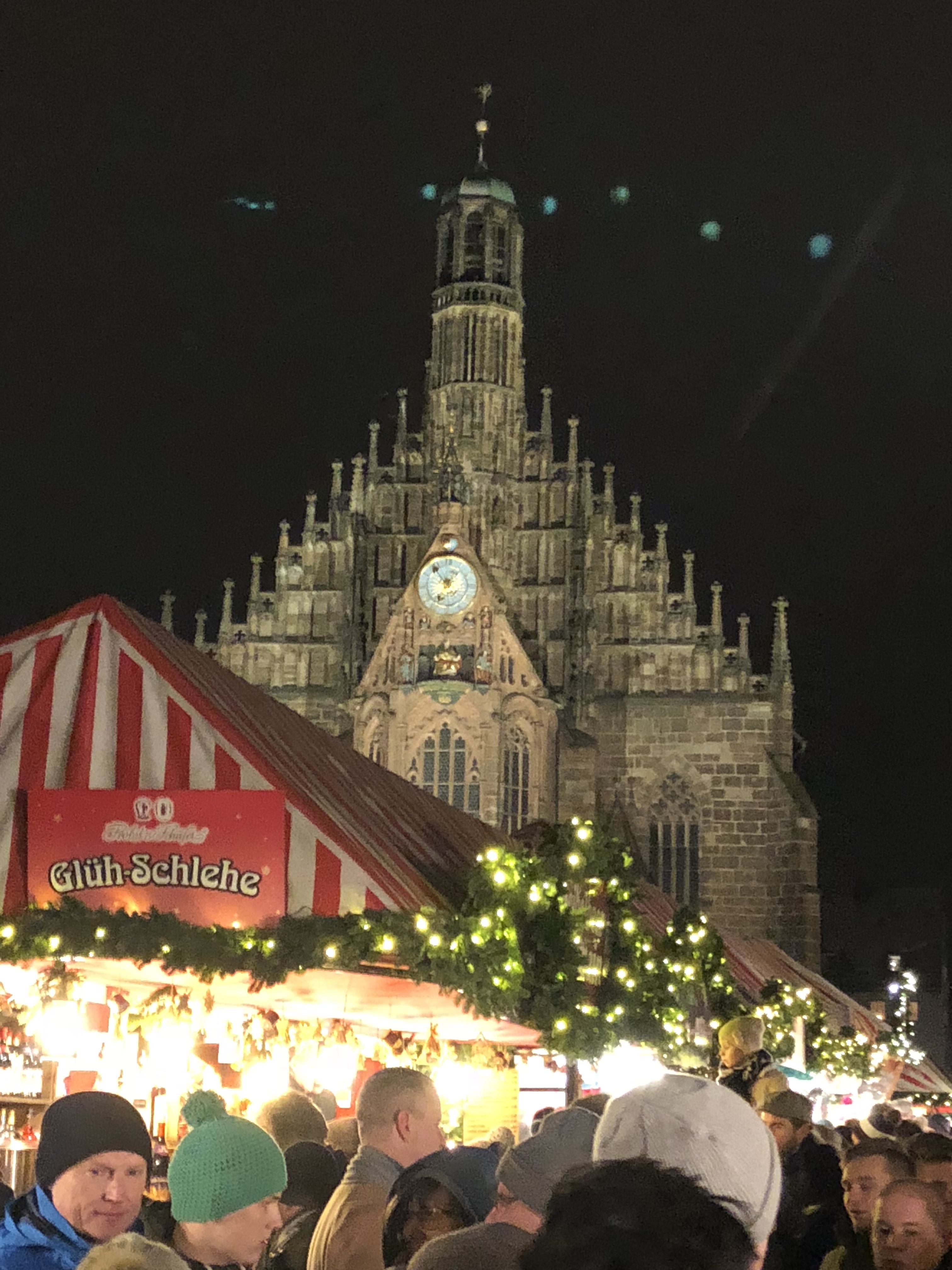
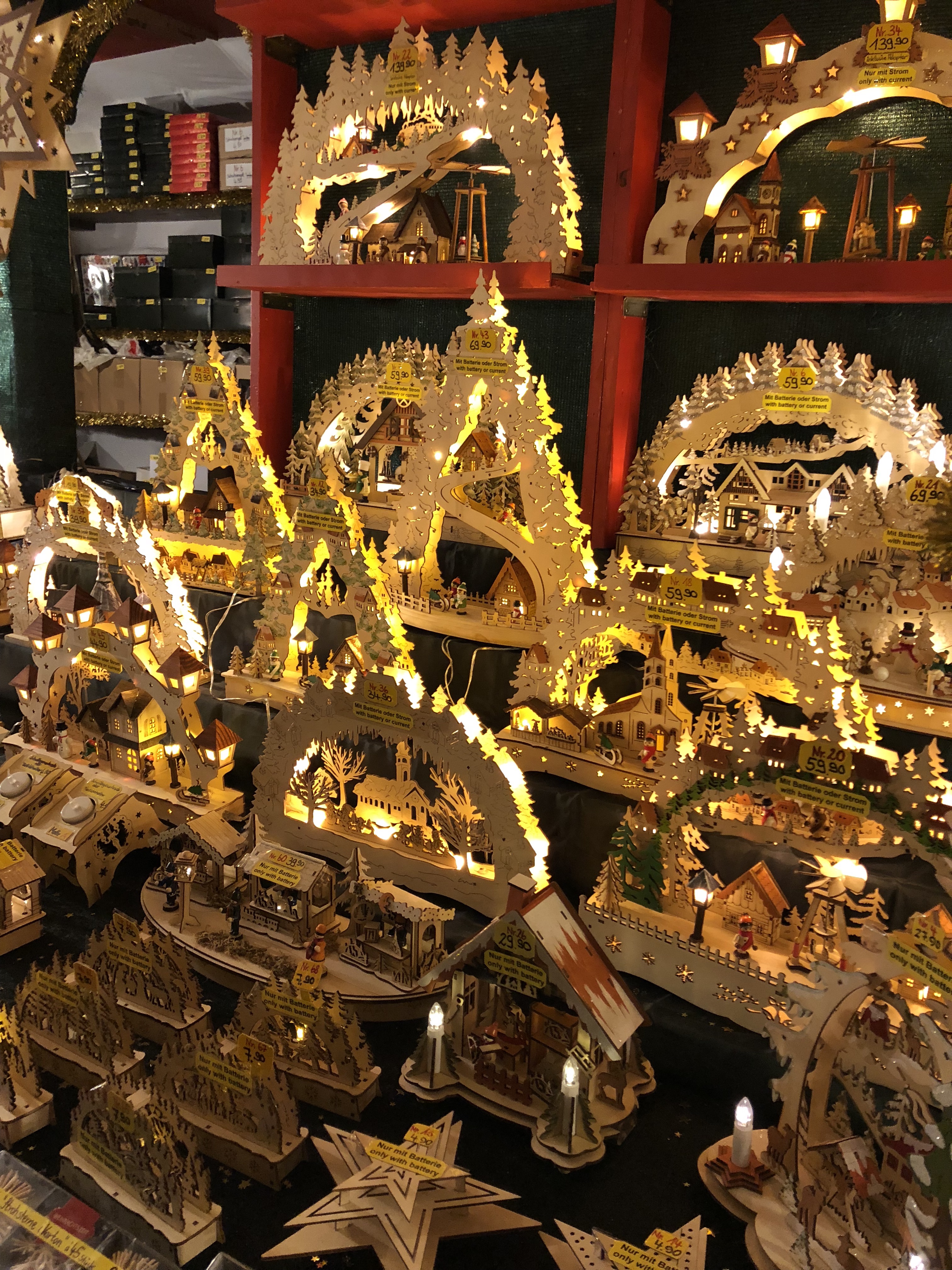
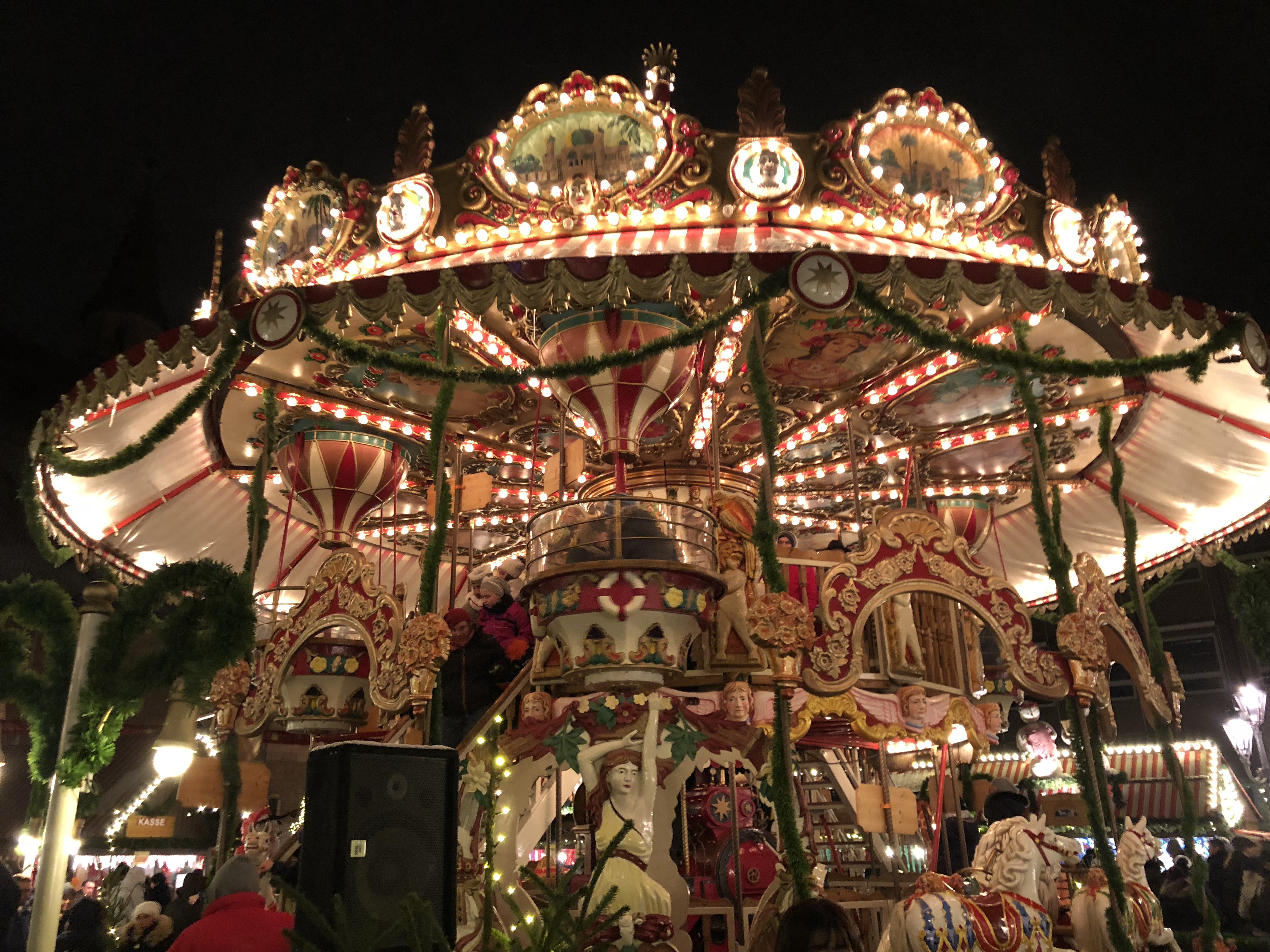
We thought we were saving the best for last with our stay in Nuremberg, reading earlier that they had the largest Christmas market in all of Europe. Their main market is just north of their city center, and it’s positioned right in front of a church. Naturally, this German market has the widest range of food offerings, centering on sausages. We had dinner here both nights and the sausages were more than filling enough for us. We also visited over the 500th anniversary of the reformation, and the mulled wine came in special souvenir cups commemorating this event. This market had a much larger collection of woodworking shops than the others, since that’s a German specialty. But what really set this market apart were the amusement park rides that were set up for children. These included a couple fancy merry-go-rounds and a few other compact rides. Despite this, the Nuremberg market didn’t give us the feeling of being the largest, as we thought even the Rathausplatz market in Vienna was slightly bigger. In the future, it could be worth visiting other markets across Germany, such as Frankfurt, Munich, Berlin, and Hamburg. I’d certainly be curious to see how they compare.
Nuremberg’s main cathedral, picked as the backdrop of their largest Christmas market A stall with special Christmas woodcarving scenes. I carefully transported one of these home One of the merry-go-rounds that was ported in for children to ride on
There ended up being a few common themes for the Christmas markets we visited. First, we always found them more exciting to visit at night, sometimes around dinnertime if we were fine dining on pretzels and sausages that night. The lights would turn on, and that was when the markets themselves really shine. Night is also more convenient because most of the city’s daytime attractions might have closed by that time. Even though it will be cold, likely hovering around freezing, the mulled wine and warm sausages will help you stay warm. They’re a great central place to pick up souvenirs, and I was able to find everything I wanted to buy as a gift there. There were variations in the markets by city, but I wouldn’t recommend say, a mega-tour of 7 different cities’ markets as you’ll probably not find enough differences to be interested in all of them. They can also get quite crowded at night, so if you want to be less crowded while exploring them or shopping for souvenirs then I’d recommend going closer to when they open, in the early afternoon. I do think that experiencing them once is a great reason to go to Europe in December, in addition to the snowscapes and winter activities that the region has to offer. They wouldn’t bring me back year after year, though. And out of the markets we did visit, I’d have to rank them: Budapest > Vienna > Nuremberg > Prague.
The famous Den Noc pancakes that were worth losing a passport for a 2nd pass! What.
Rather than stuff my already lengthy accounts of our time in each individual city, I decided to talk about the food we encountered throughout the trip in a post all to itself. Each city and country we visited had strong regional variations, but I thought a single post would also be good for tying together the similarities we saw, too.
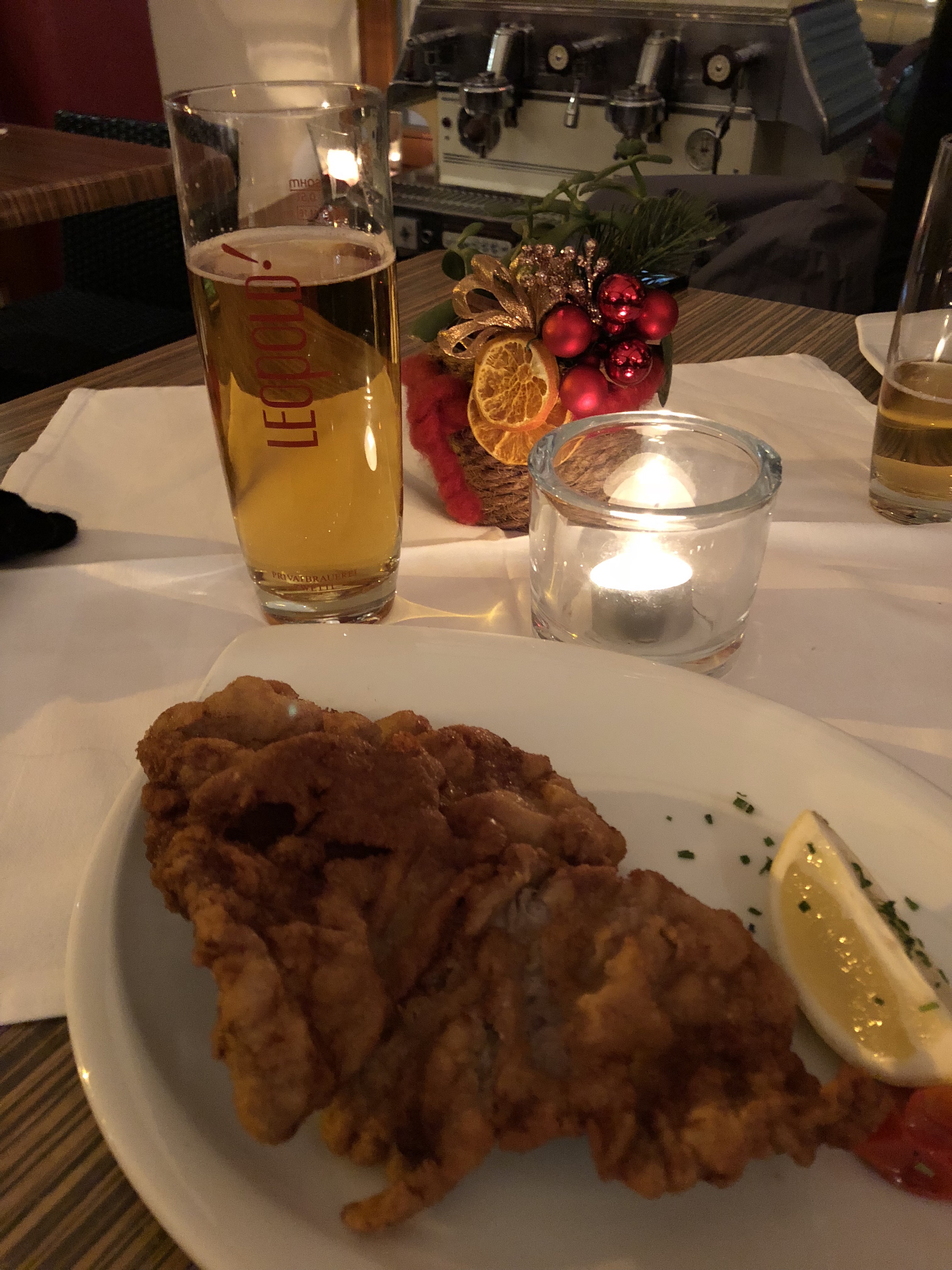
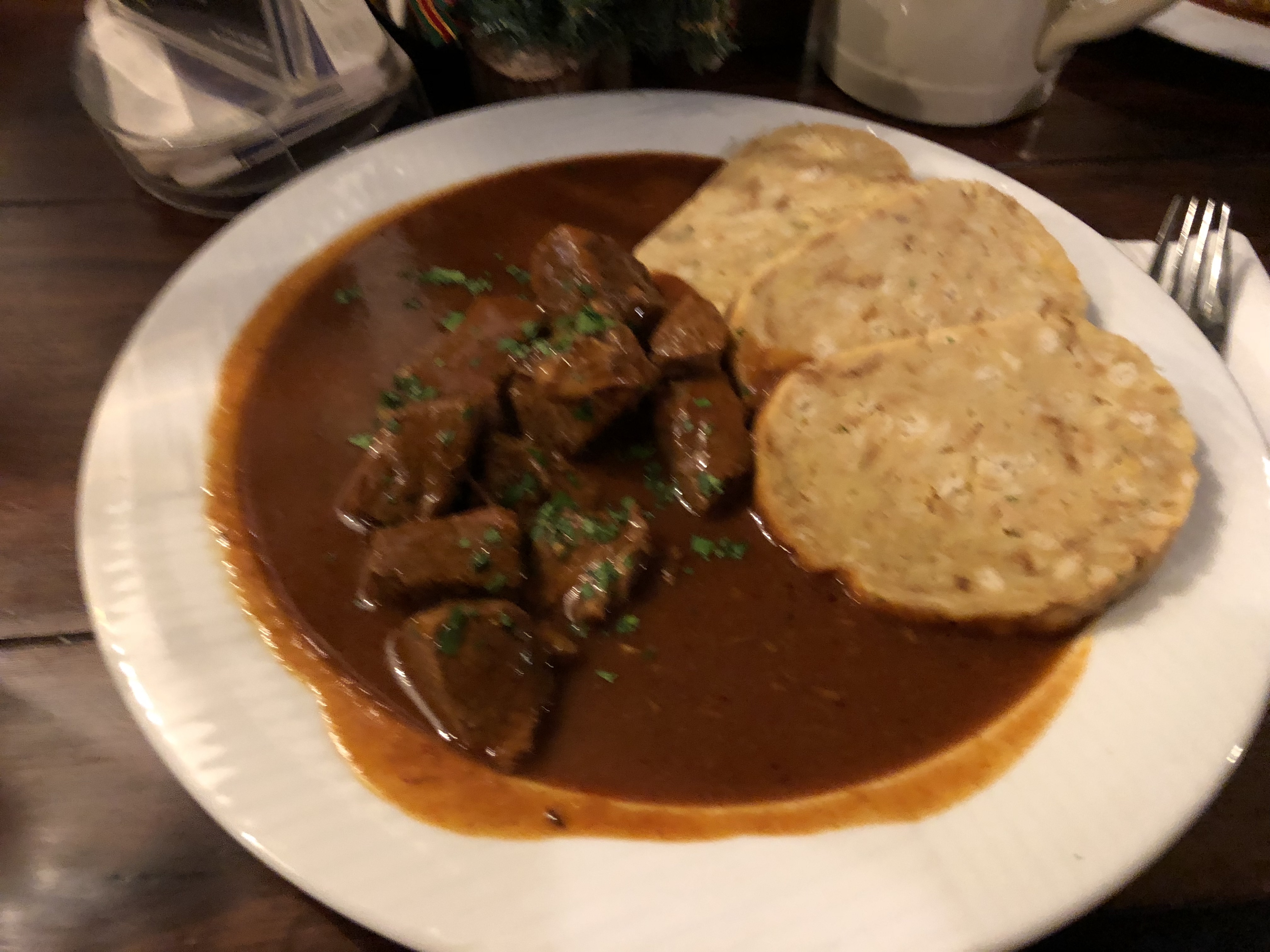
Let’s start with Vienna. Bordering Germany and Czechia to the north, the base of its cuisine is similar to both of those nations. It weighs heavily on grains and meat, especially pork and beef. However, Vienna has a couple specialties that feature prominently, and I tended to focus on those when we ate. First is schnitzel, which comes cheaper with pork and 30-40% more expensive with veal. The dish features a large slice of meat, between a centimeter and inch thick, that is encapsulated in a light fried dough. It comes with various accompaniments, including potatoes, parsley, lemon slices, and tart cranberries in the past. Any of the city’s wheat beers also pairs great with this dish. Vienna has a take on goulash as well, although it’s more of a stew and was, in my opinion, less flavorful than the Hungarian version.
Schnitzel I got the first night. Just a lemon came with it this time Austria’s take on goulash. I’d give it a pass next time, in favor of more vegetables
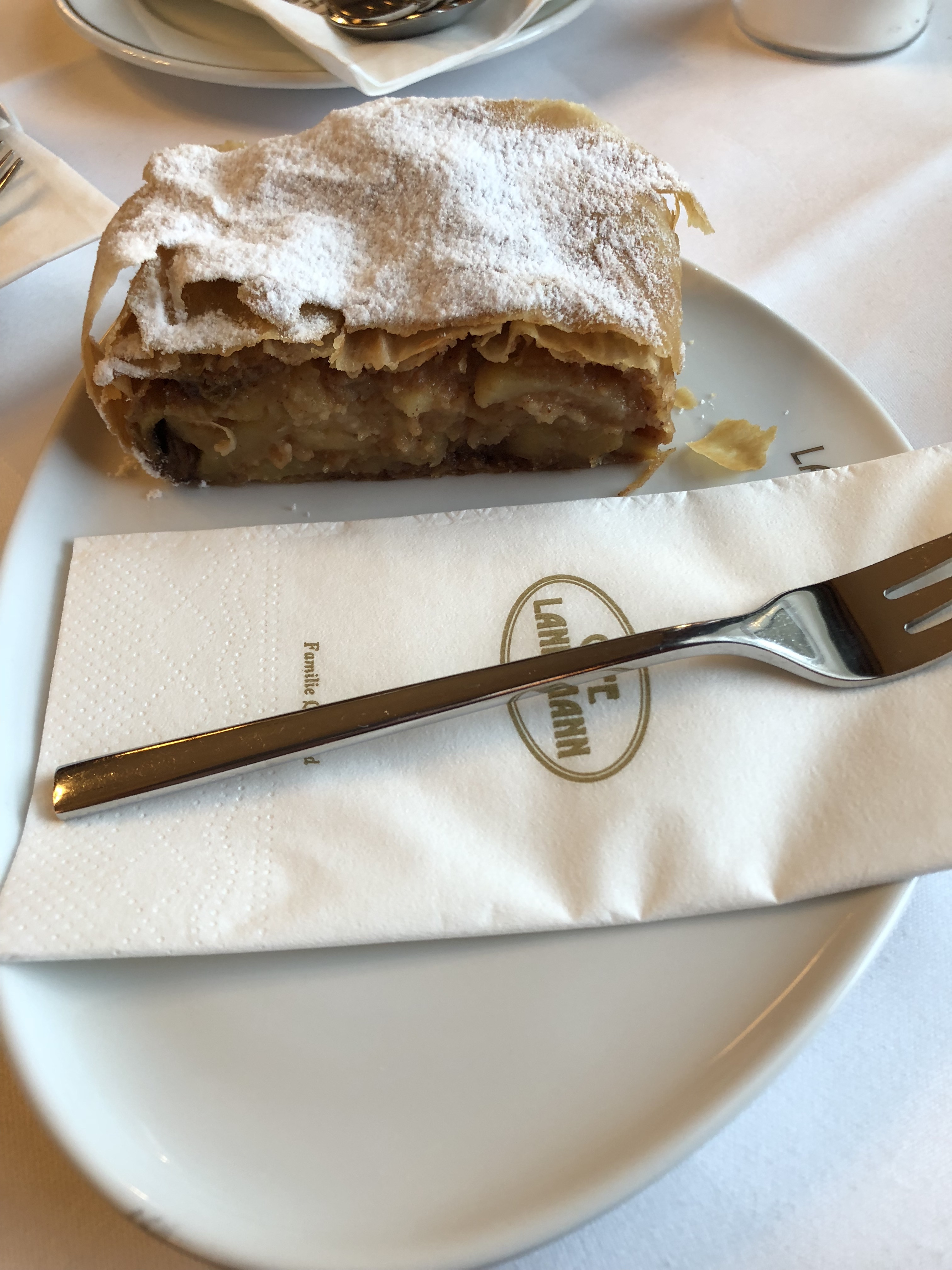
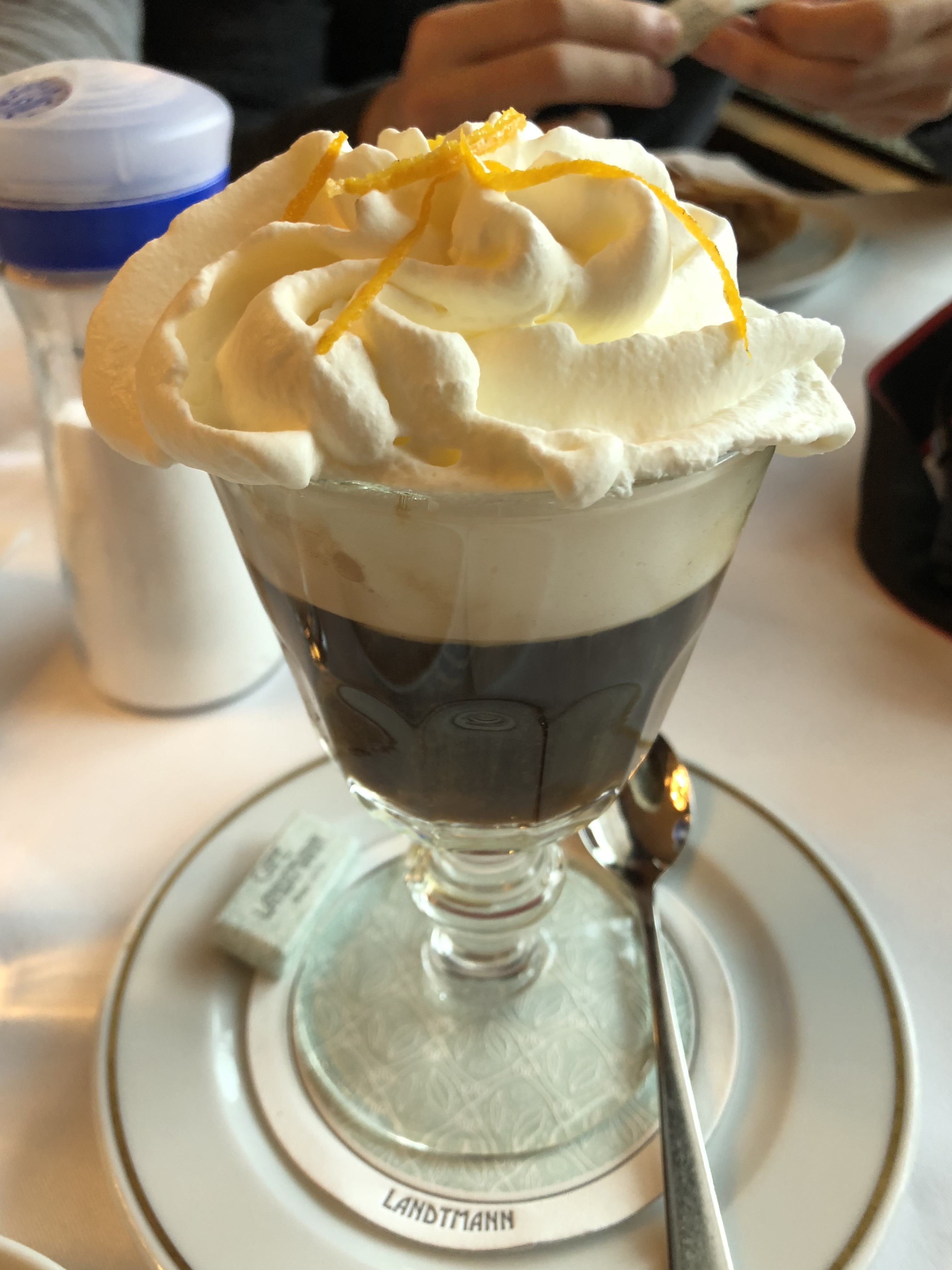
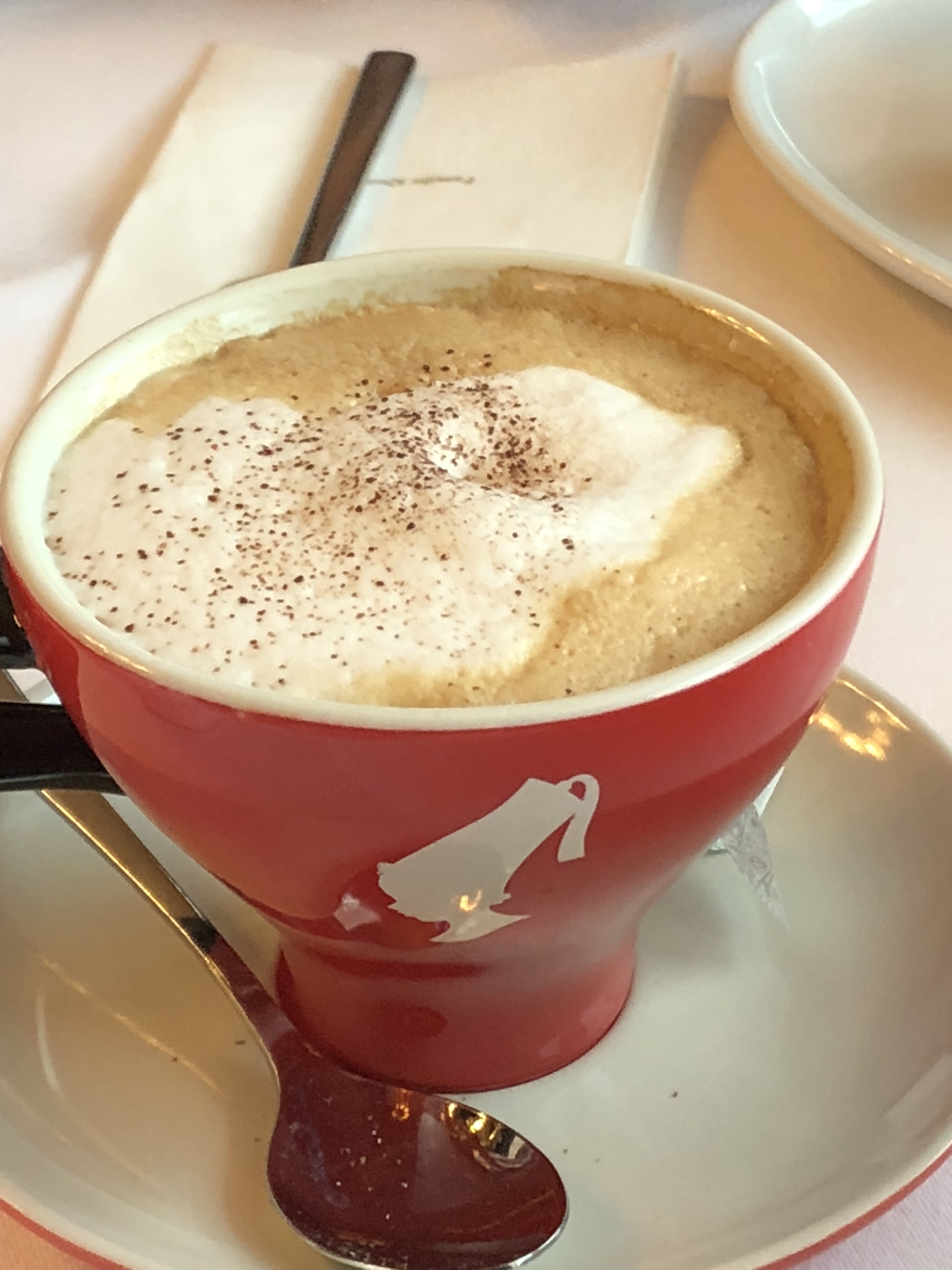
Vienna’s other strong point is in coffee and pastries. We took the opportunity to indulge in both at Cafe Landtmann, a famous spot near Rathausplatz where Freud used to frequent. One of my friends got a cappuccino which came with much more foam than one in say, Australia would have. I opted for a coffee variant that was topped with orange and whipped cream. Coffee purists would turn their noses up, but sugar fiends will love it! The pastry game was pretty strong too. One pastry in particular is most iconic: the apple strudel. Layers of pastry dough with roasted apples and sauce in between, usually topped with powdered sugar and whipped cream. It’s both hearty and filling, but doesn’t leave you with quite as much of a sugar rush as the city’s more decadent cakes. I certainly didn’t need the amount of whipped cream that came with my coffee, so I actually ended up ordering my strudel without the cream to save money, and then took it from my coffee! Then my friend Joel did the same. How’s that for frugal travel?
Cafe Landtmann’s apple strudel. Normally, ordering w/o whipped cream would be criminal but… Said coffee that we smuggled the whipped cream off of. It was a bit sweet for my liking anyway Cappuccino with quite the heavy dose of foam. Too much if you ask me
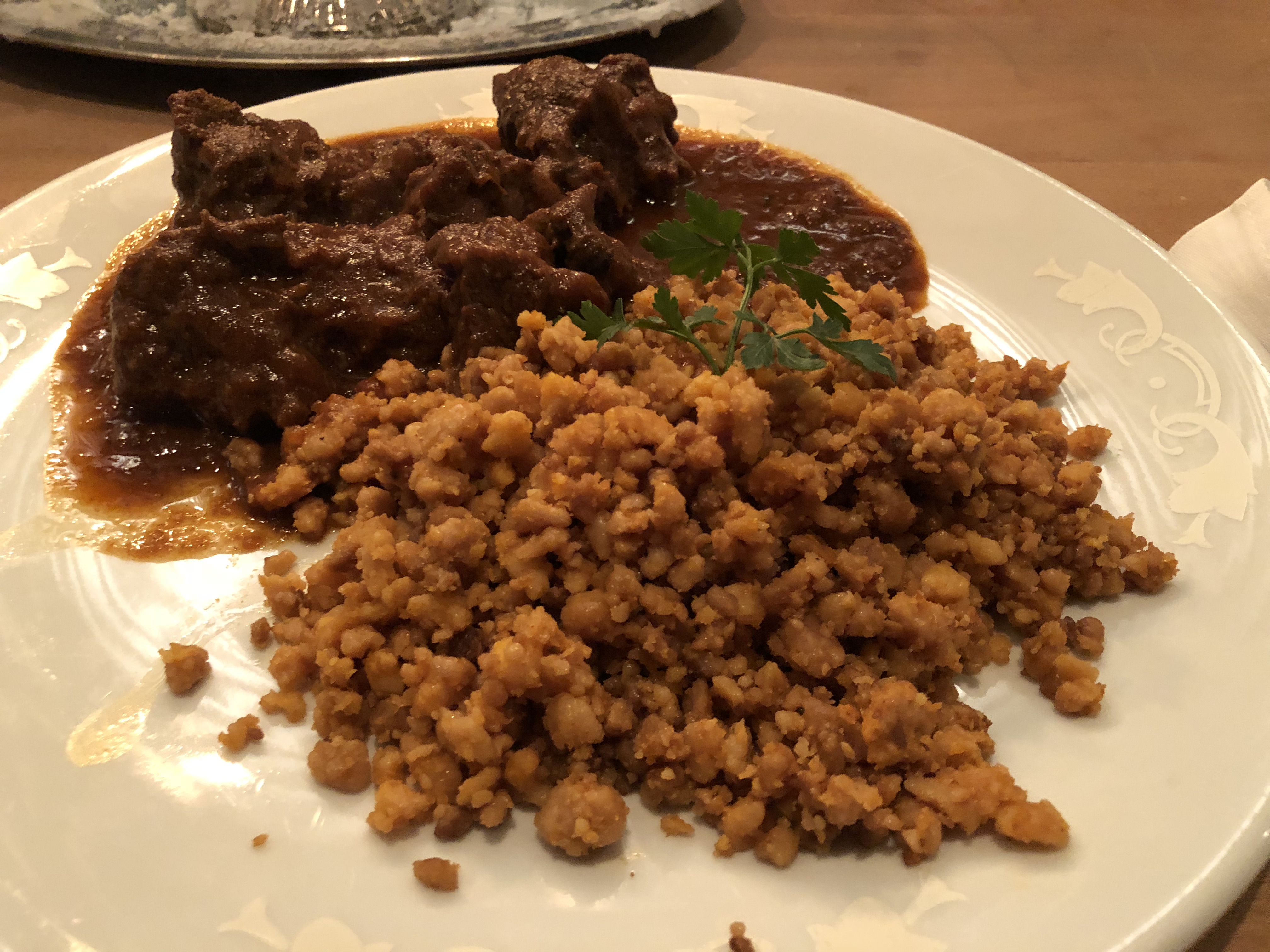
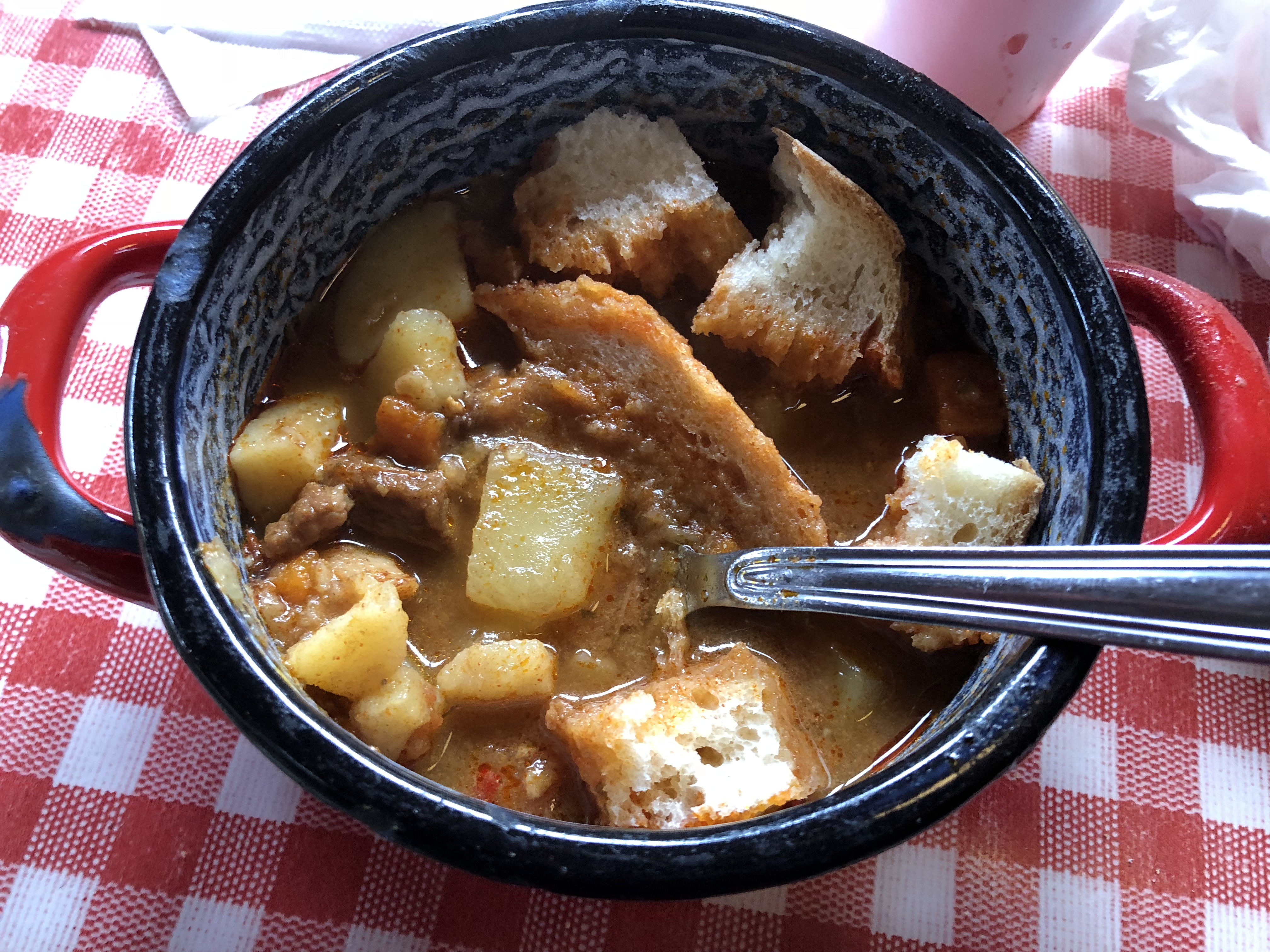
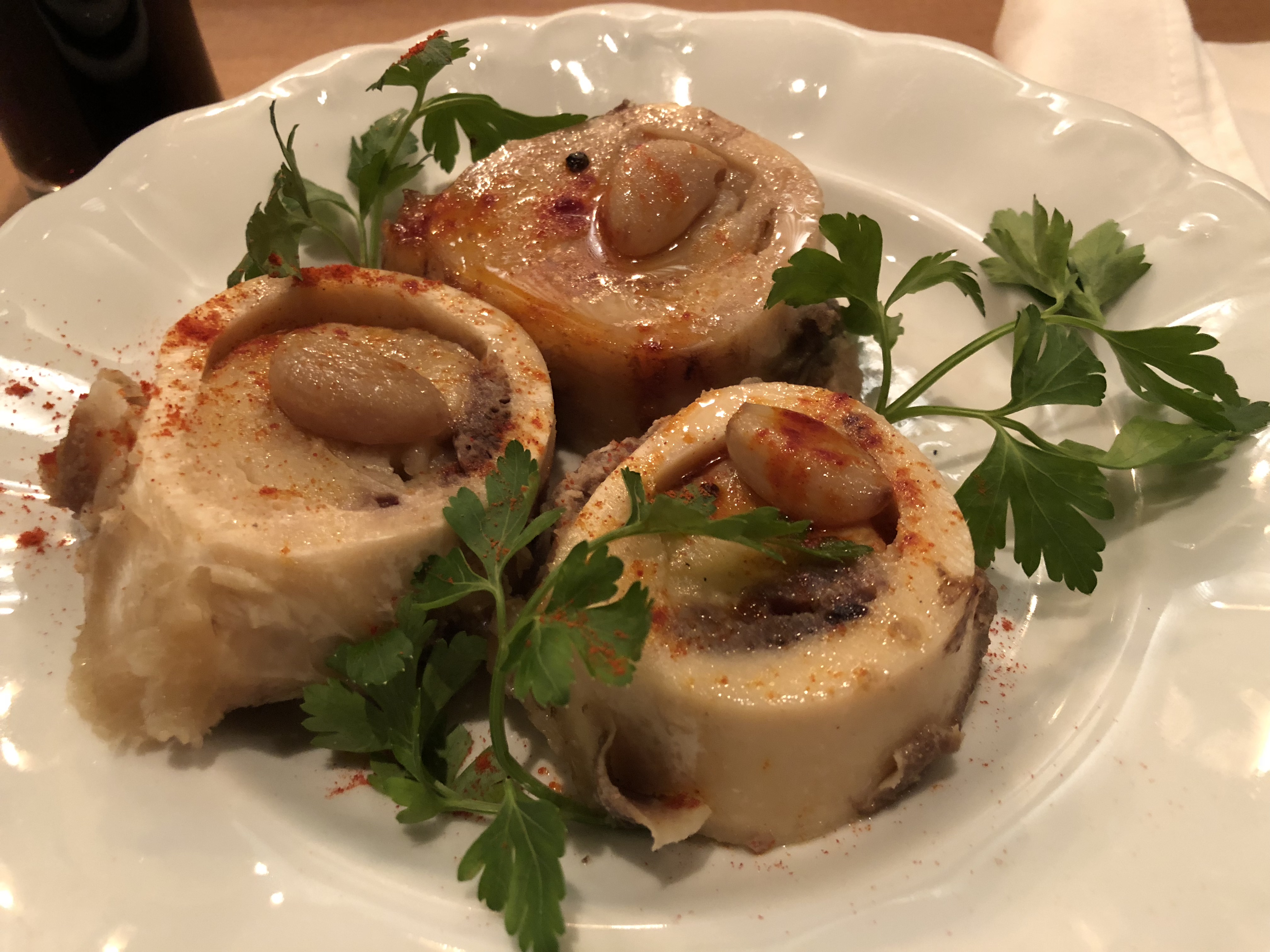
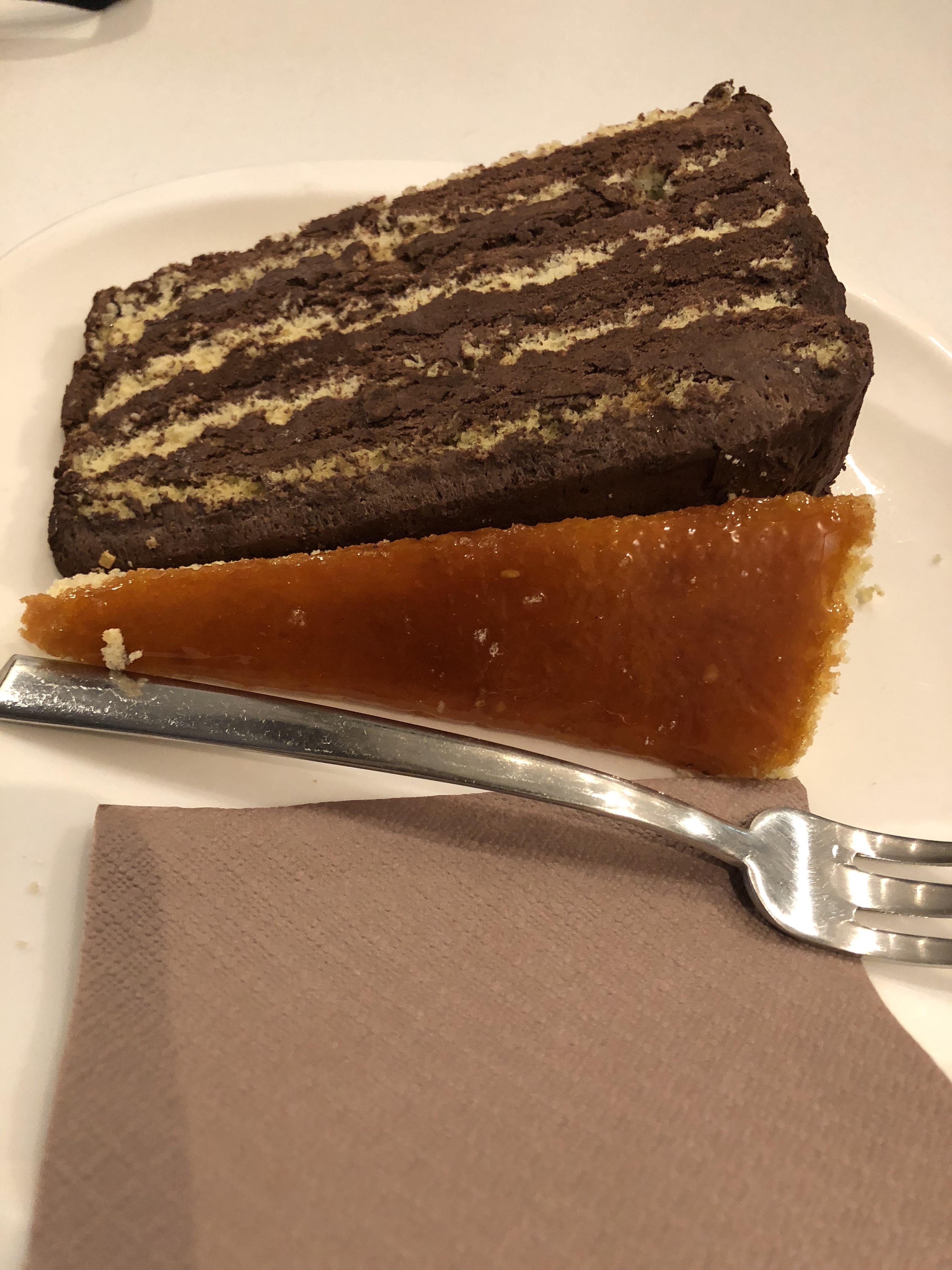
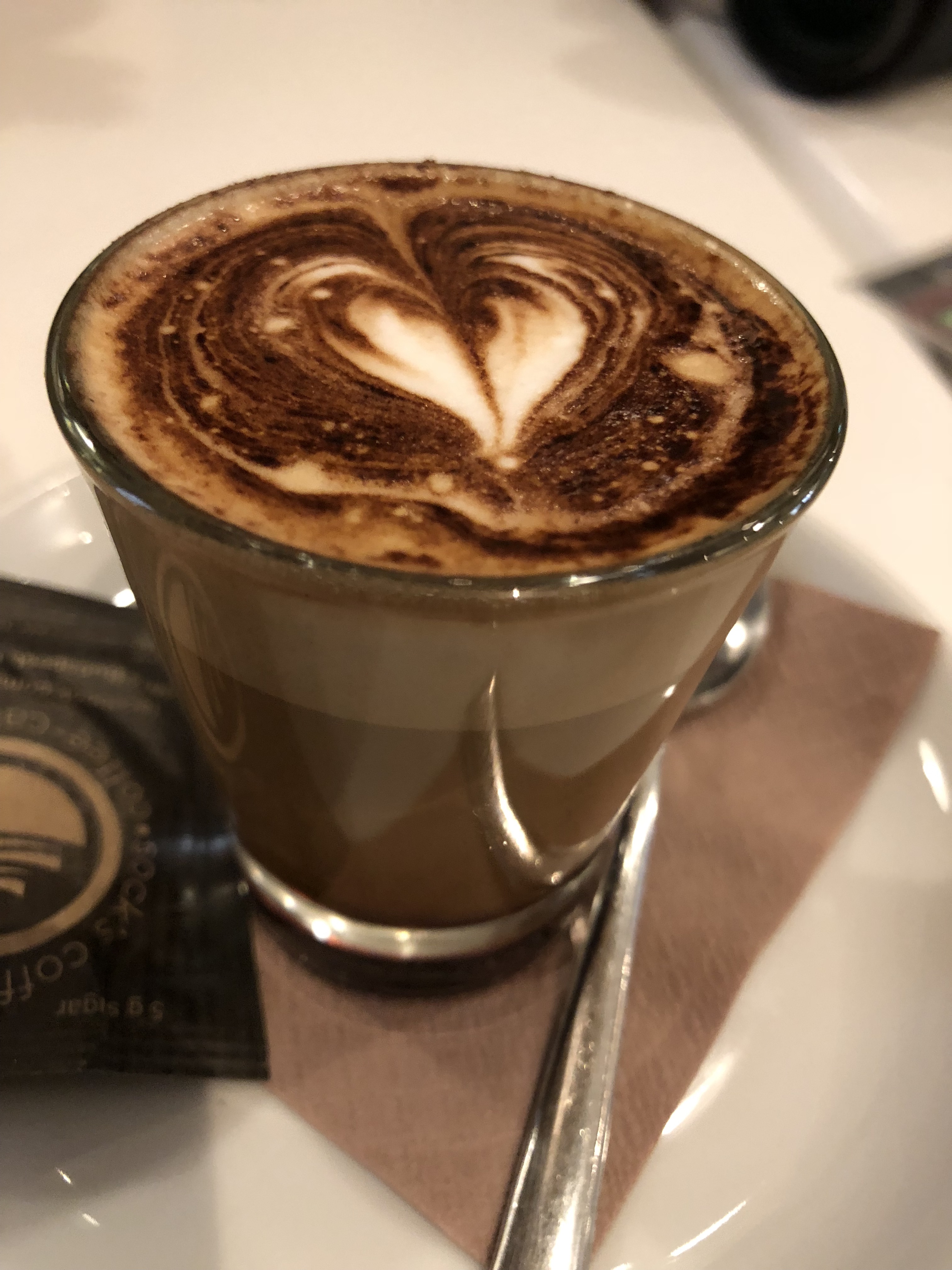
Next was Budapest, my personal favorite for food. The first thing to note is that Hungarians love their paprika. One year they had a bad harvest and declared a nationwide emergency and rationing as a result! This peppery spice manifests in several dishes, with the most common one probably being goulash (spelled gulyas in Hungary). Our first night in Budapest, we stopped in a restaurant called Getto Gulyas, a restaurant I stumbled across my last week of study abroad, but went to thrice in that last week. Contrary to most gulyas in Hungary which comes in soup form, they still serve it as a stew with doughy “dumplings” to the side. The best part of gulyas is the accompanying sauce, which is rich and flavorful, and is soaked up well by bread or other grains. We also got bone marrow, which came topped with garlic. Meat and grains still form the foundation of the diet here though, and my study abroad program actually warned that Budapest would be harder on vegans than most cities. Anyway, Budapest joins Vienna in being pastry-proficient, even though they aren’t as well known for it. Our only stop for sweets this trip was Socks Cafe, the one I used to work for hours at. Back then I’d eventually cycled all the way through their menu, although this time I just got their Sacher torte. I also got their cherry coffee, which would’ve been a splurge for me during study abroad but was a drop in the bucket now. Lastly, my favorite gelato shop should be familiar to anyone who loves the chain Amorino and their rose-shaped ice cream creations. It’s Gelato Rosa just south of the St. Istvan cathedral, which is my favorite for their creative flavors of basil lime, strawberry elderflower, and lavender white chocolate. This was my most special treat during study abroad, and I went there to commemorate events like my first half marathon, 21st birthday, and the day my Microsoft housing stipend hit my savings account! They’d added black sesame to their roster this time, and I went twice this trip despite the freezing weather. I still haven’t experienced anything like the freshness of their fruity flavors anywhere else in the world.
The Getto Gulyas take on this staple Hungarian dish A more soupy version of gulyas from Budapest’s Grand Market Hearty bone marrow appetiser from Getto Gulyas A collapsed slice of Sacher Torte from Socks Coffee The lovely cherry drop coffee from SocksThe loveliest of roses! I got strawberry-elderflower and basil-lime every single visit
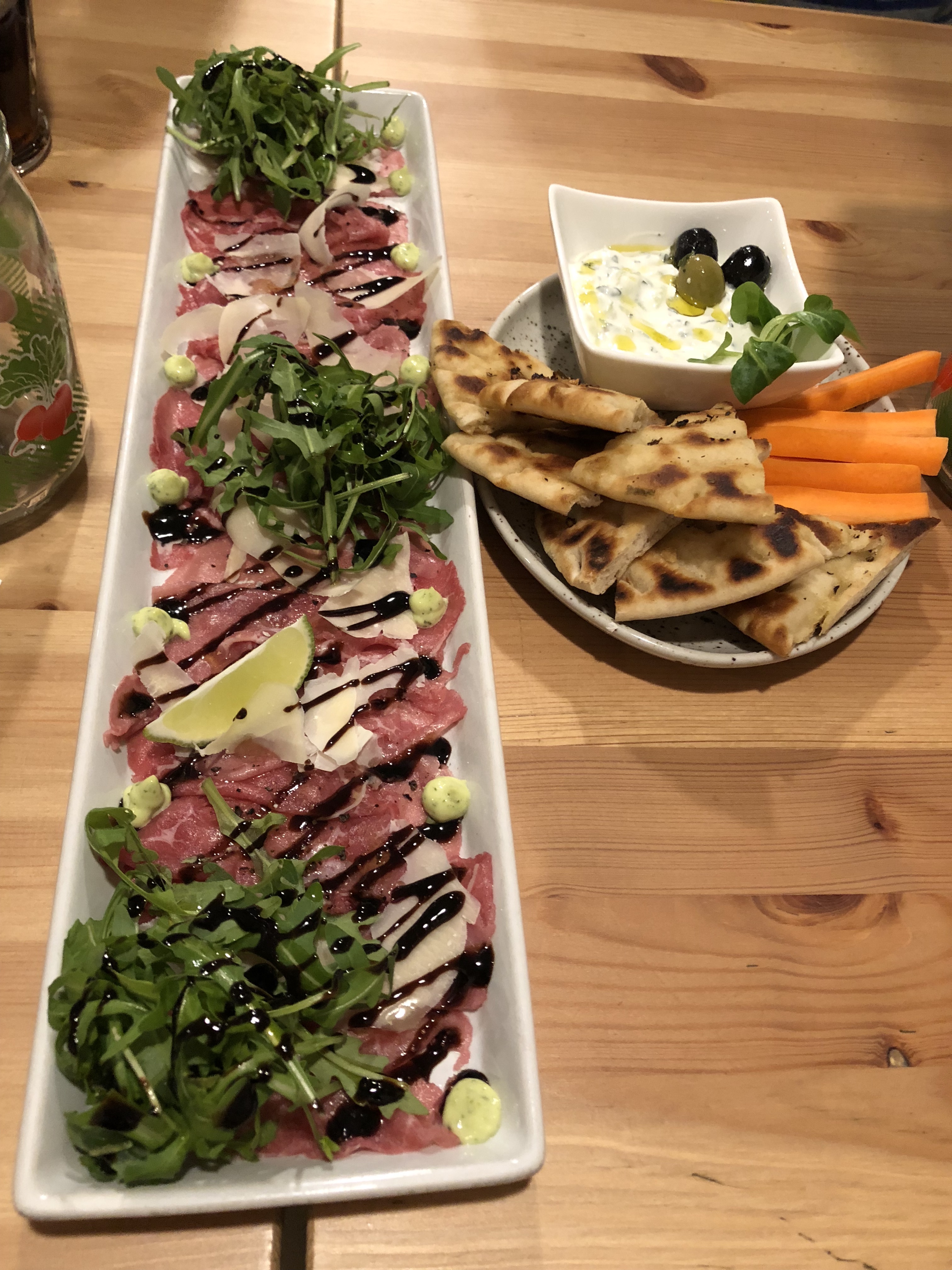
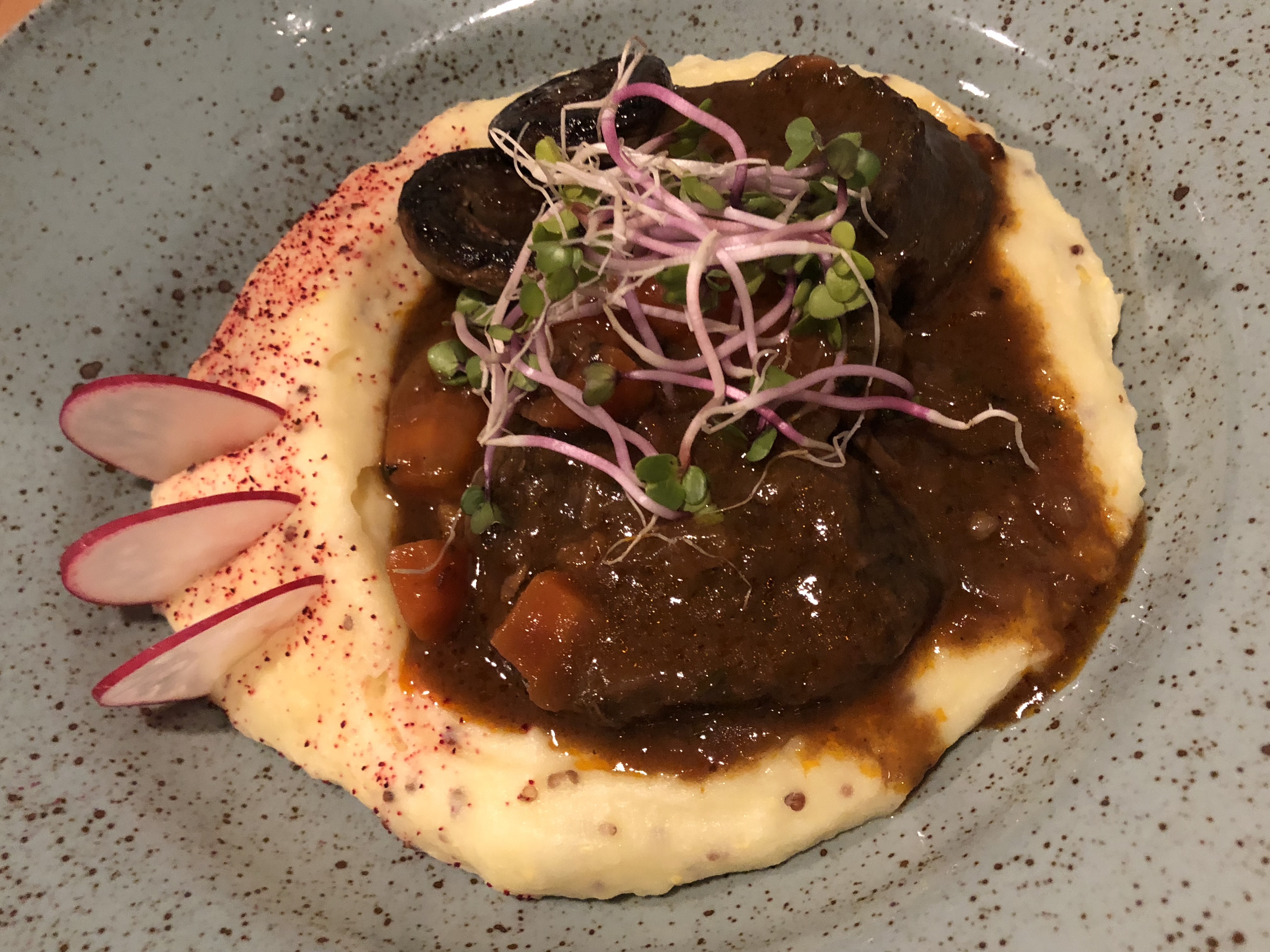
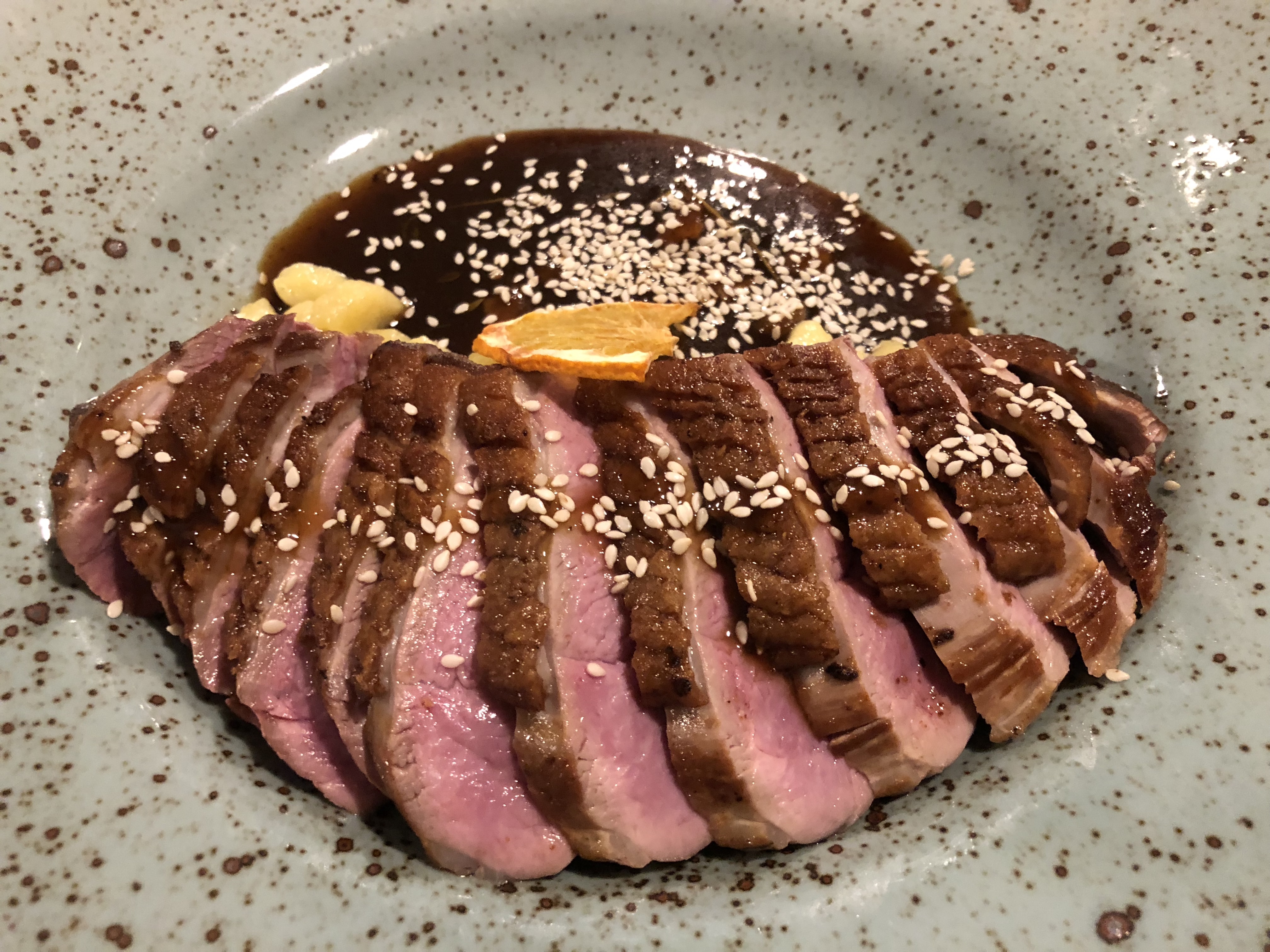
Next was Prague, which was probably the highlight of our trip both in terms of variety and quality of our food. We actually started off with our favorite dinner of the trip, at a restaurant our Uber driver recommended that was a block from our AirBnB. We never would’ve found it otherwise, since it wasn’t even listed in Yelp by my memory. We started with a bowl of pita bread and tzatziki sauce, along with a plate of prosciutto and arugula. After mostly meat in our first two cities, we were glad to finally see more vegetables. The rest of their dishes were meat-based, but more creative and flavorful than the schnitzels and gulyas we’d had so far. Particularly good were the thick slices of duck that came with a rich orange sauce.
Prosciutto to share, along with arugula. Rare for us, those vegetables went quickly! Beef stew in a bed of mashed potatoes. Still more variety than we were used to This duck was incredibly juicy and the skin lent the dish a light but fatty texture too
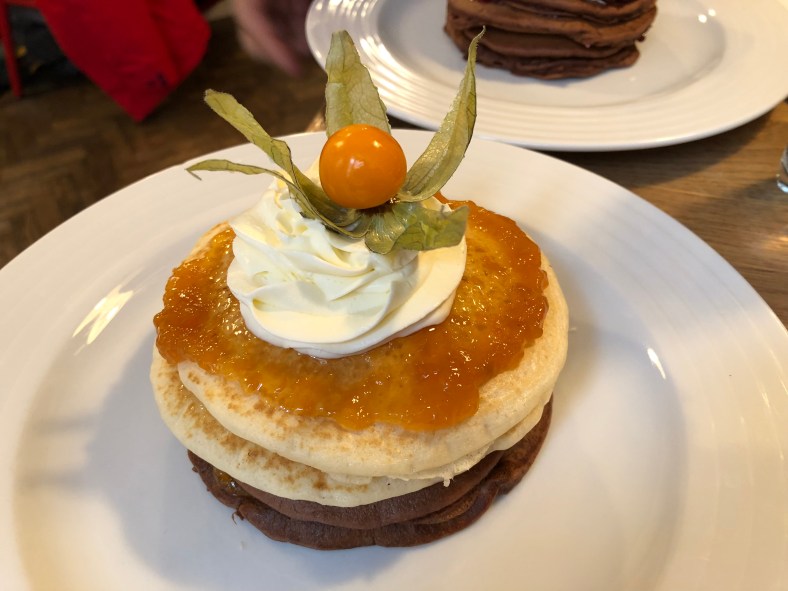
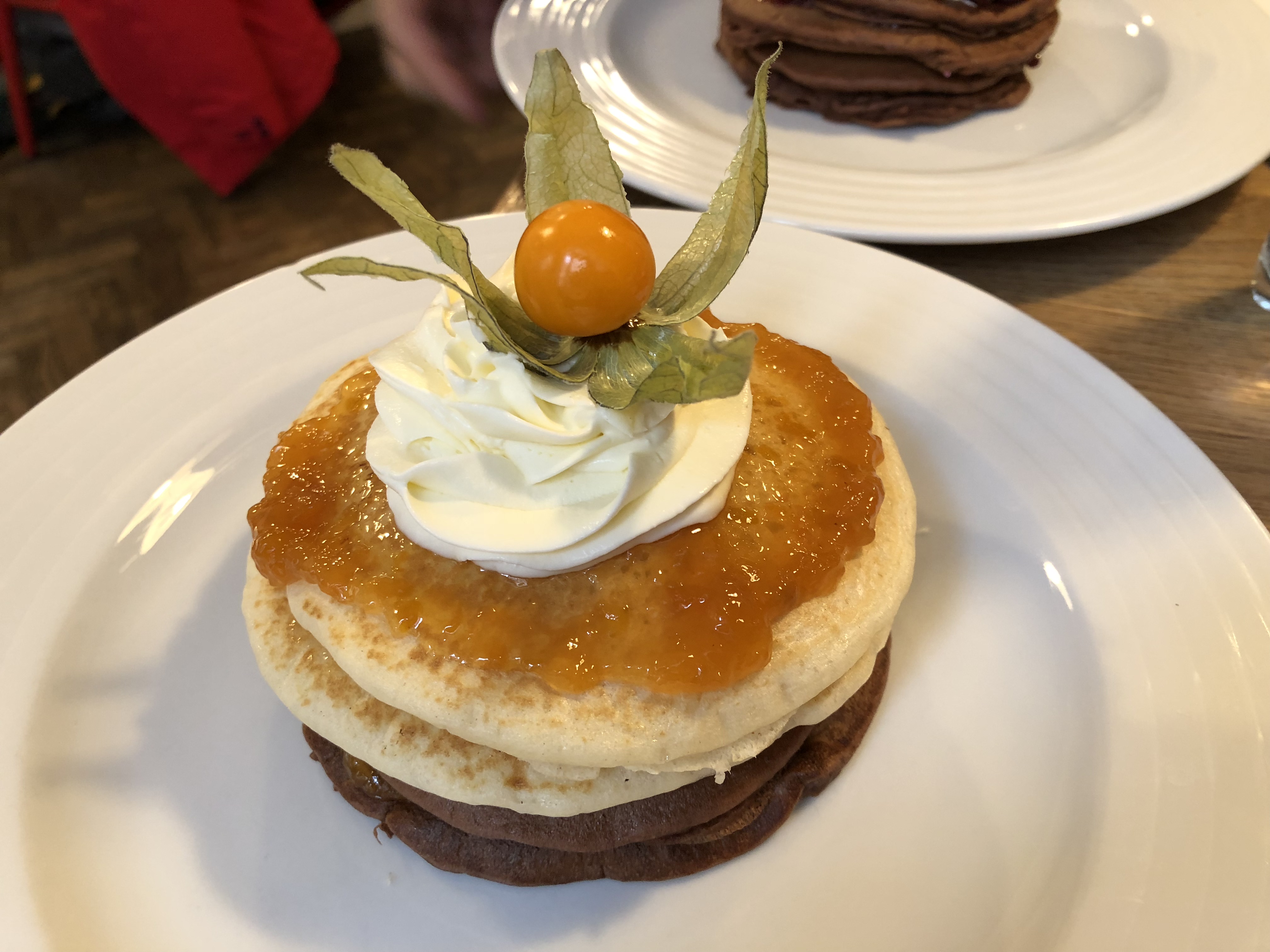
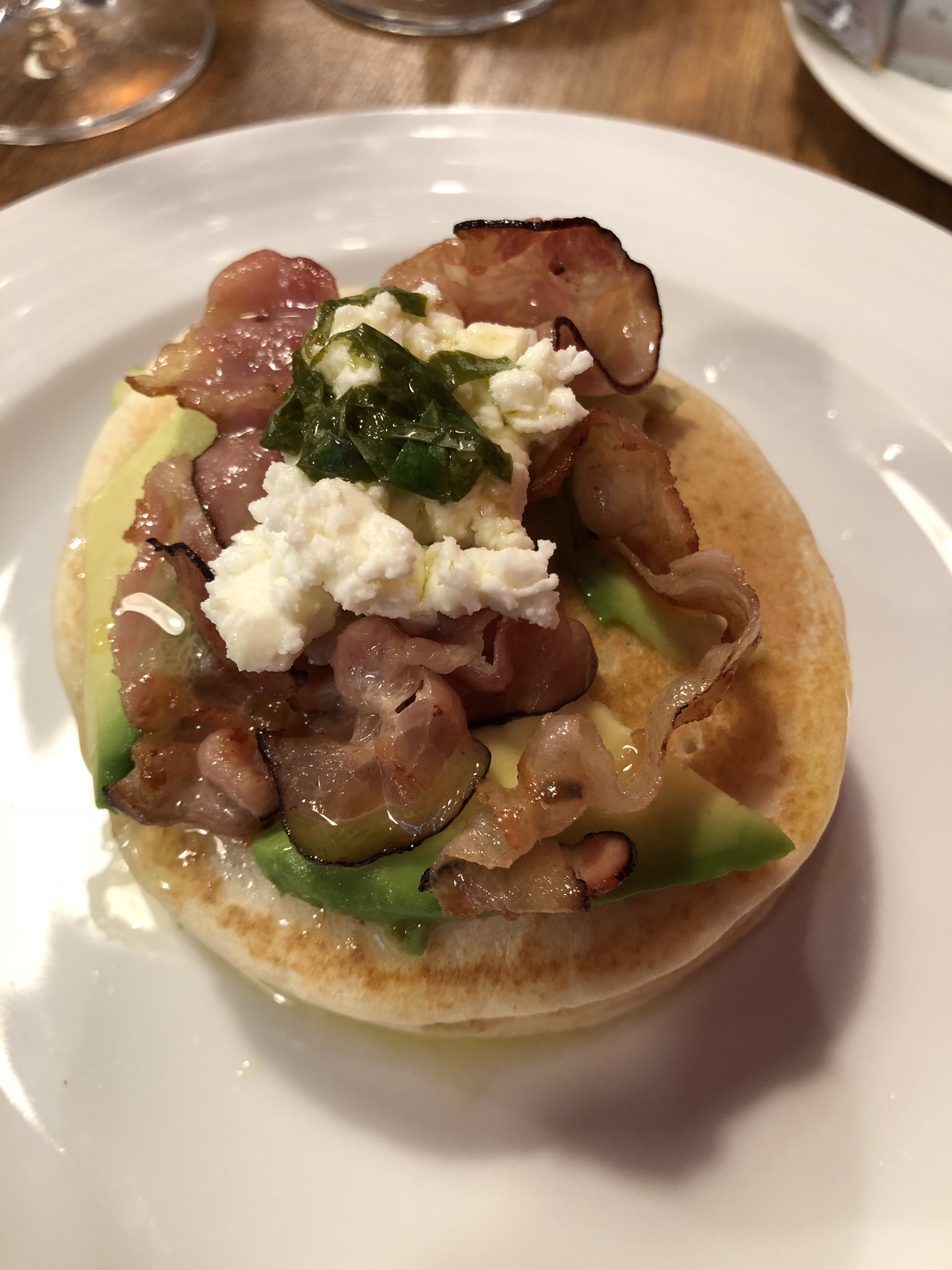
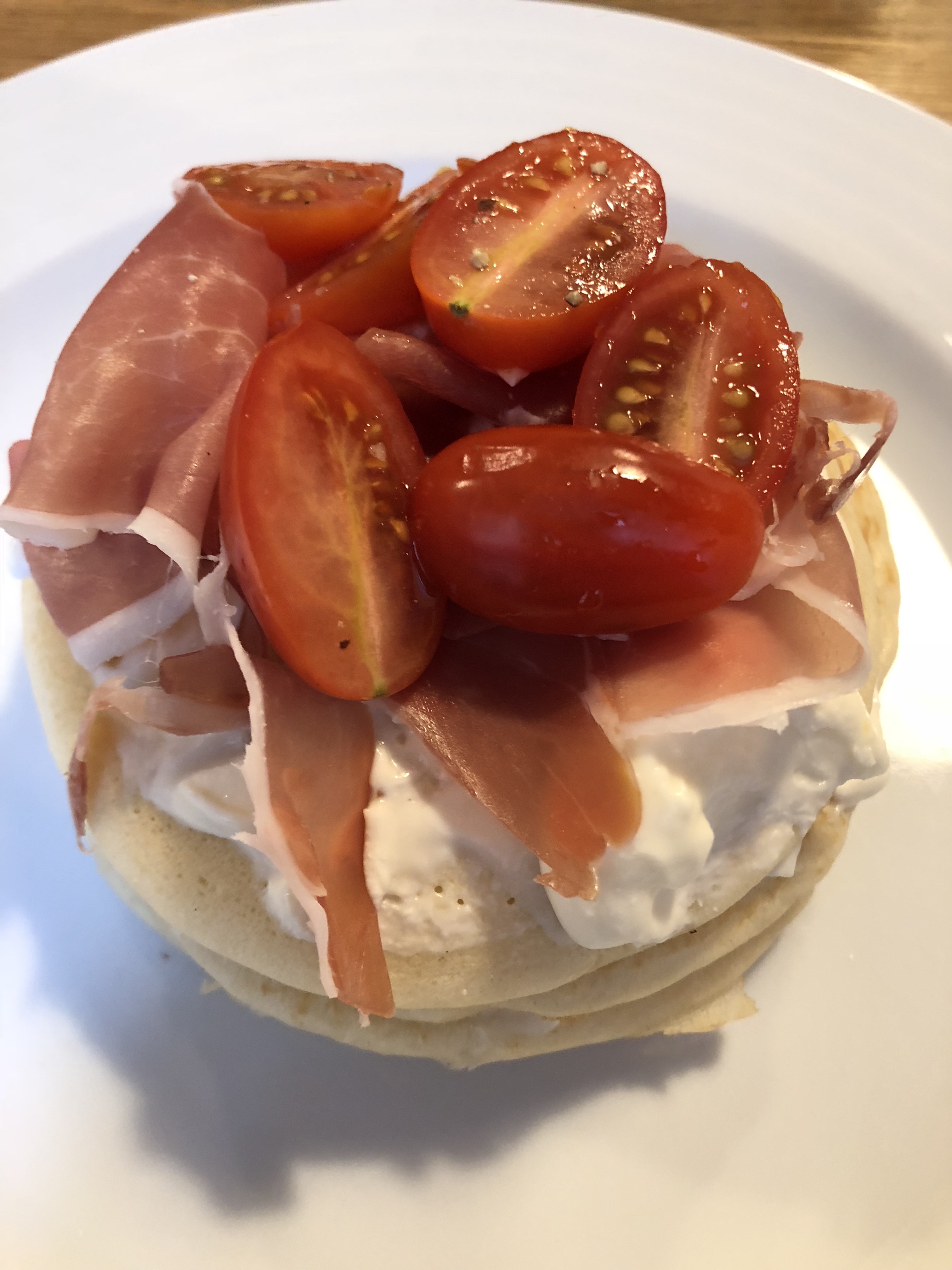
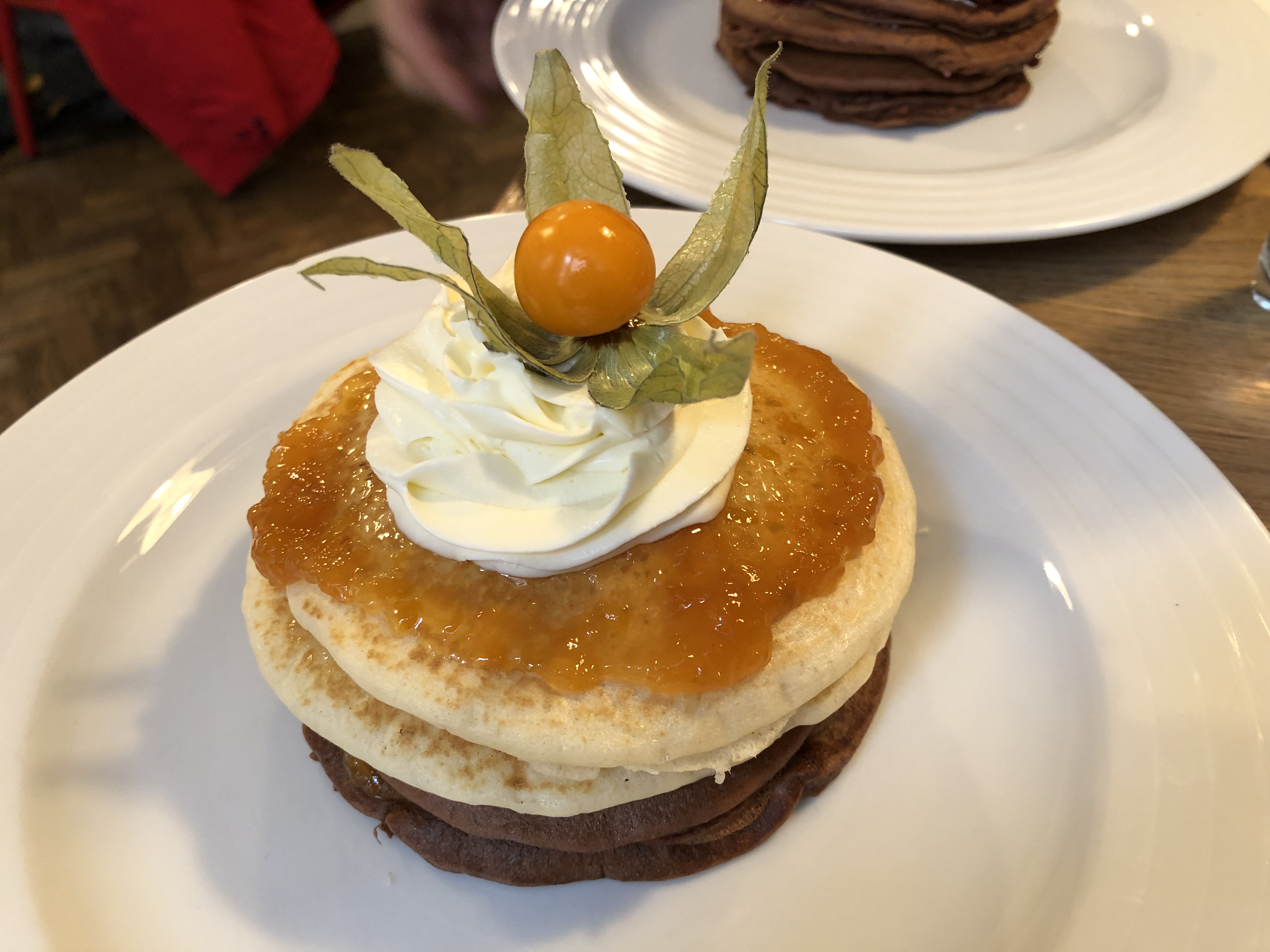
Of course, everyone agreed that the real culinary highlight was going to Den Noc for pancakes. Our first pass through we didn’t arrive until 11 a.m. or so, and had to wait 15-20 minutes for a table. It went quickly and we were seated and had ordered before long. But only the coffee and wine that I’d ordered came right away. Our food took so long that I ordered another glass of wine, which was brought promptly. And then another… although at this point the rest of my party was getting irritated with waiting. When the waitress came back with my third glass, I asked politely how much longer they expected our food to take. She went back to check with the kitchen, and her response upon returning was: “Apologies, but we had forgotten about your food. It is starting to be made now”. It’s the most blunt I remember a restaurant ever being about an error. Also, did they really just think we were there for one of us to sip wine for an hour? Anyway, there was a lot of huffing and puffing and one friend pledged to leave a bad review after we’d eaten. Little did we know we would be eating our words with the pancakes once they came out, though! They were light and fluffy, and provided the perfect bedrock for the toppings we had. My favorite savory one is probably the one with bacon, avocado and feta cheese on top. Another good one had a light sour cream beneath a bed of prosciutto and cherry tomatoes. The undisputed star of the show, though, was Den Noc’s specialty pancakes, half of them chocolate, beneath a layer of apricot jam and topped with whipped cream. They were so good that my friend and I ordered them again while we waited for his emergency passport to finish processing. Out of all the dishes we tried, it was the one that my friend recreated for us and his family once we’d returned home. And when I returned to Prague with my family two years later, we stopped here not once but twice. Although I ordered wine again, they did not forget our food again!
Their “California” pancakes. Bacon, avocado and feta cheese. A great savory creation The prosciutto and cherry tomato version The famous (well, famous to us) Den Noc pancakes in rare form!
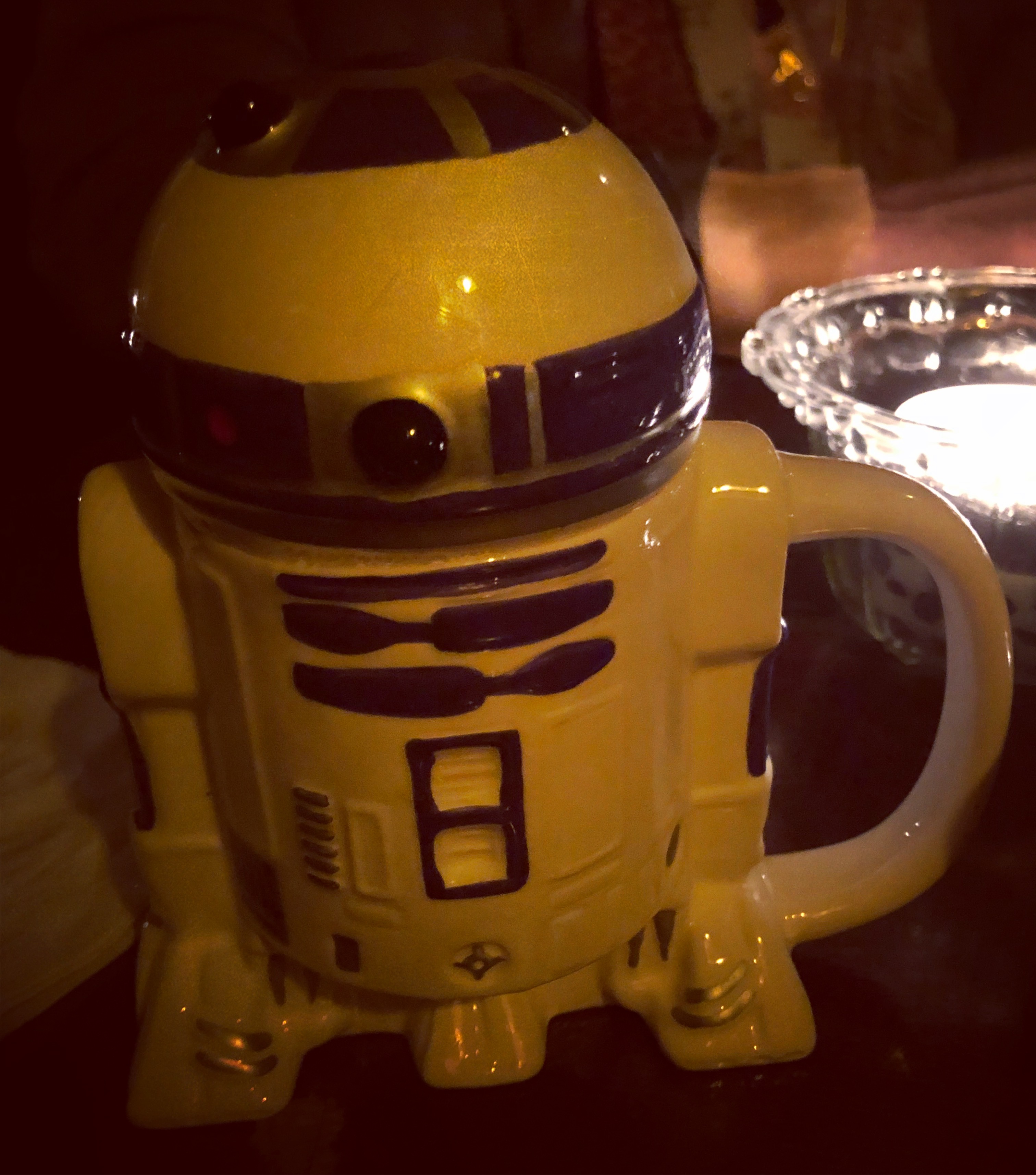
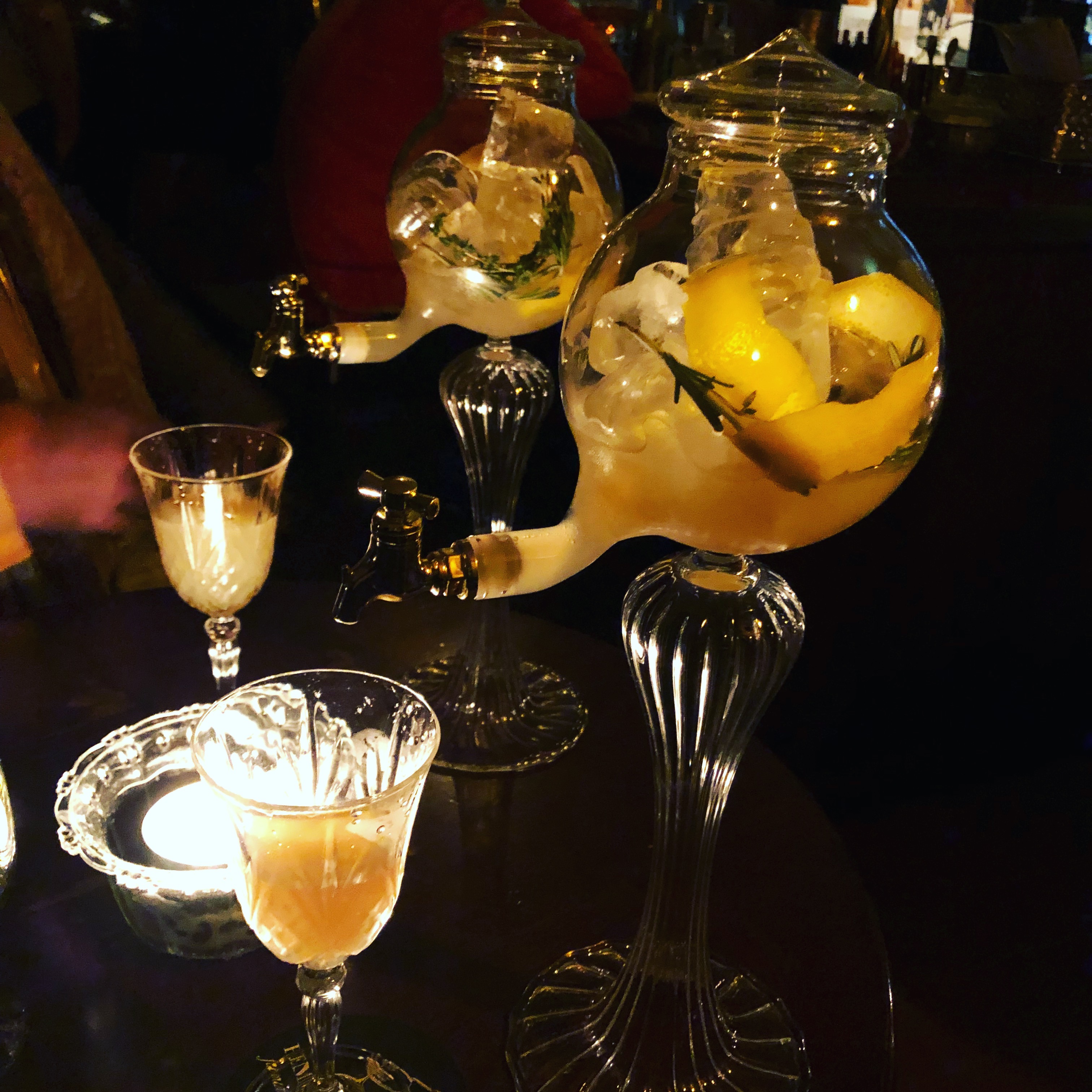
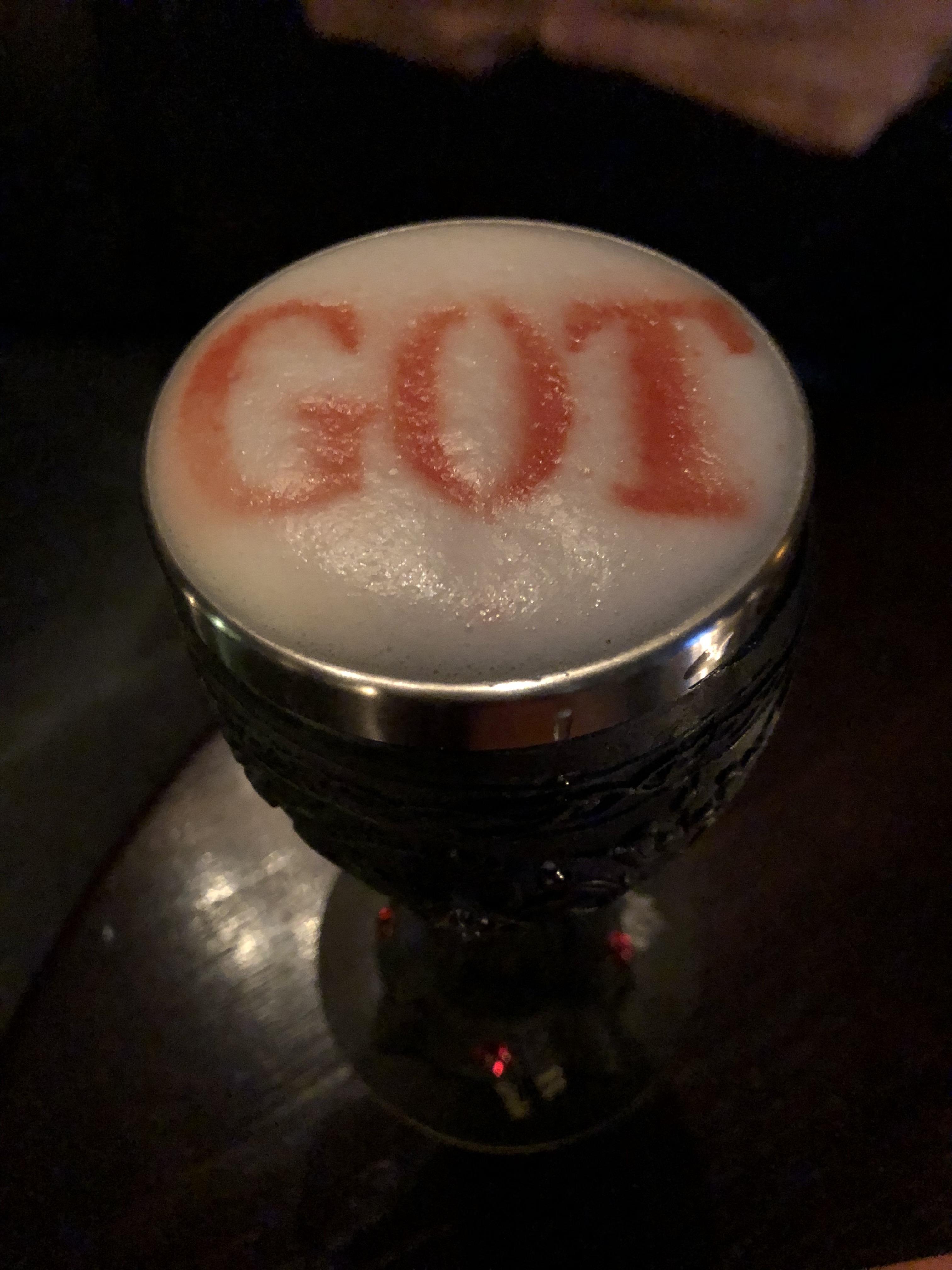
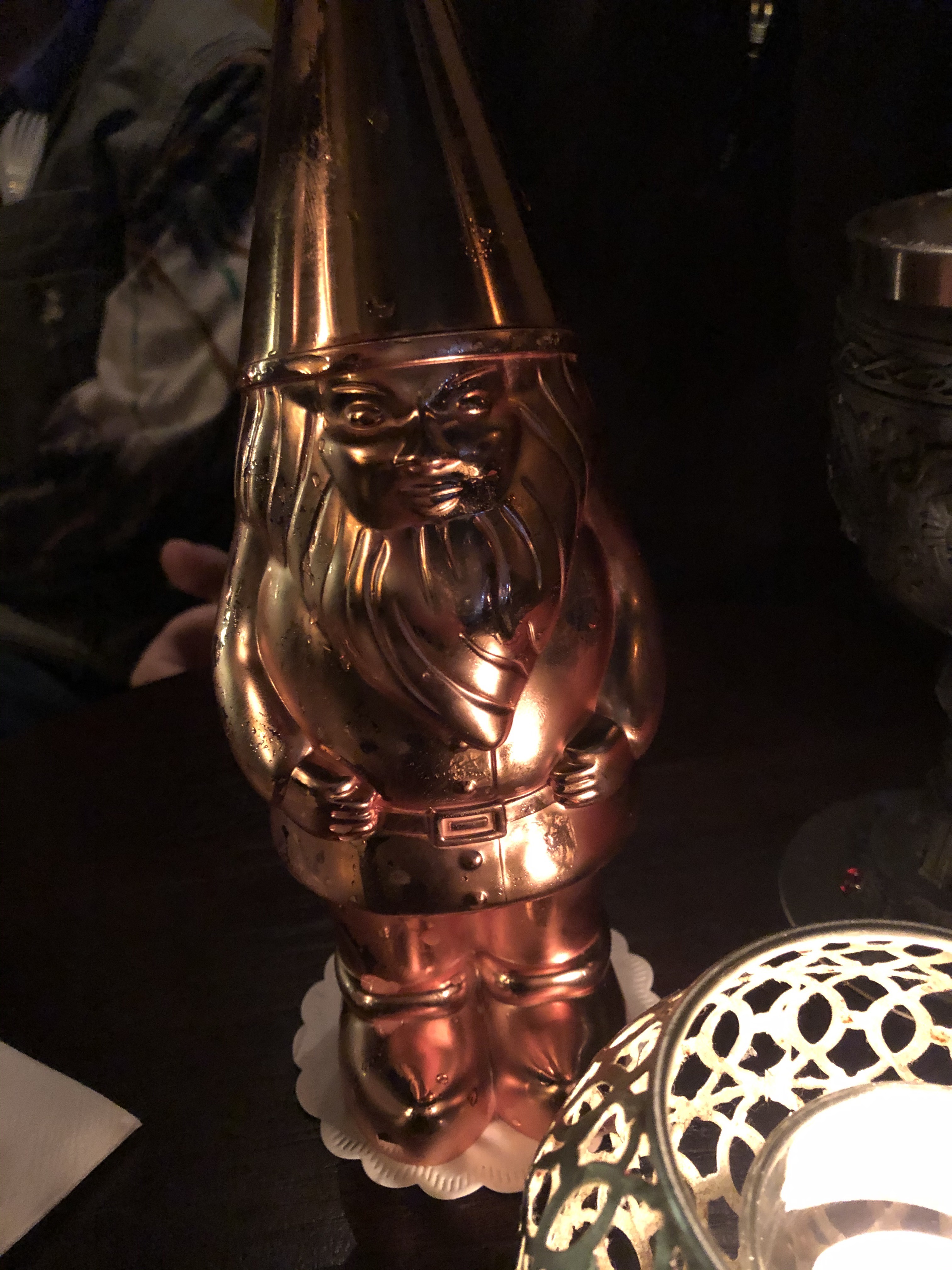
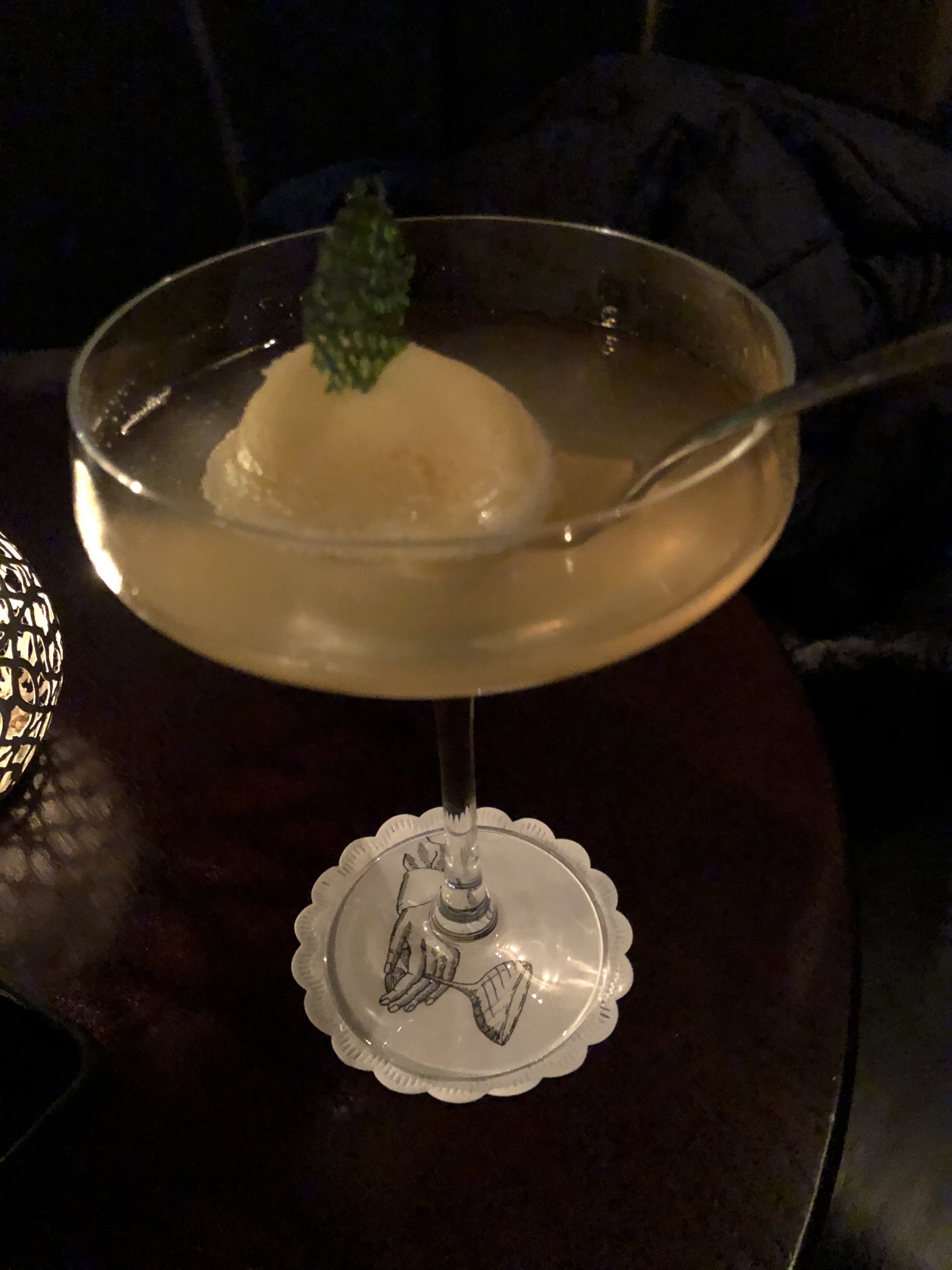
Our last stop in Prague was one of several Hemingway Bars around the world. They’re known for creative themed cocktails, which I’m a huge fan of! (They also carry hundreds of brands of extremely rare liquors, including some very rare bottles, but those are frankly out of my budget). On this first visit I sampled both the light side and dark side cocktails, the former of which came in a mug styled after the droid R2D2. I would have purchased the cup, but that sadly wasn’t an option. Next was probably the fanciest serving contraption I’ve ever seen for a cocktail, a styled glass dispenser. Because the drink was heavy with absinthe, they pack the dispenser with ice so that it’ll weaken slightly as time goes on. I’m sure many a customer has appreciated this in retrospect, but for me it was just something else of note. Their menu does change every now and then, and when I returned with my family they had ones themed for Game of Thrones and Garden Gnomes. We also opted for a light limoncello drink that came with a scoop of sorbet. Except for more outlandish creations like the GOT foam, quality craftsmanship shone through in each of these drinks. It’ll probably be awhile until I find myself in another one, but when I do I cannot wait to see what they come up with next!
The “Light Side” cocktail, featuring the cutest mug I think I’ve ever seen! The absinthe cocktail dispensers. Given the effort they put into this one, it’ll probably be a permanent fixture on their menu Winter came to Prague… this is how we fought back! What an ignominious drink this was! You could be forgiven for mistaking this one for a dessert
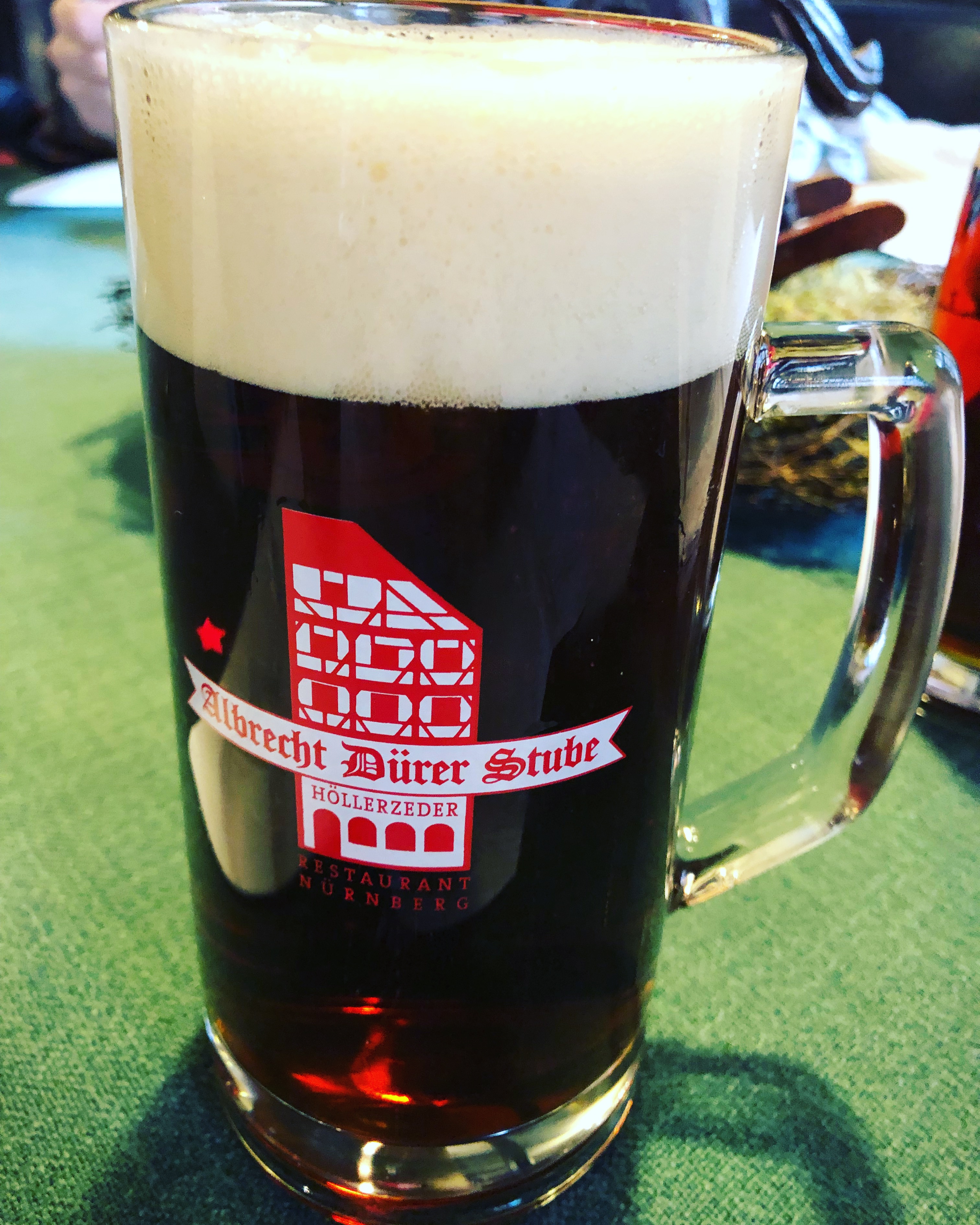
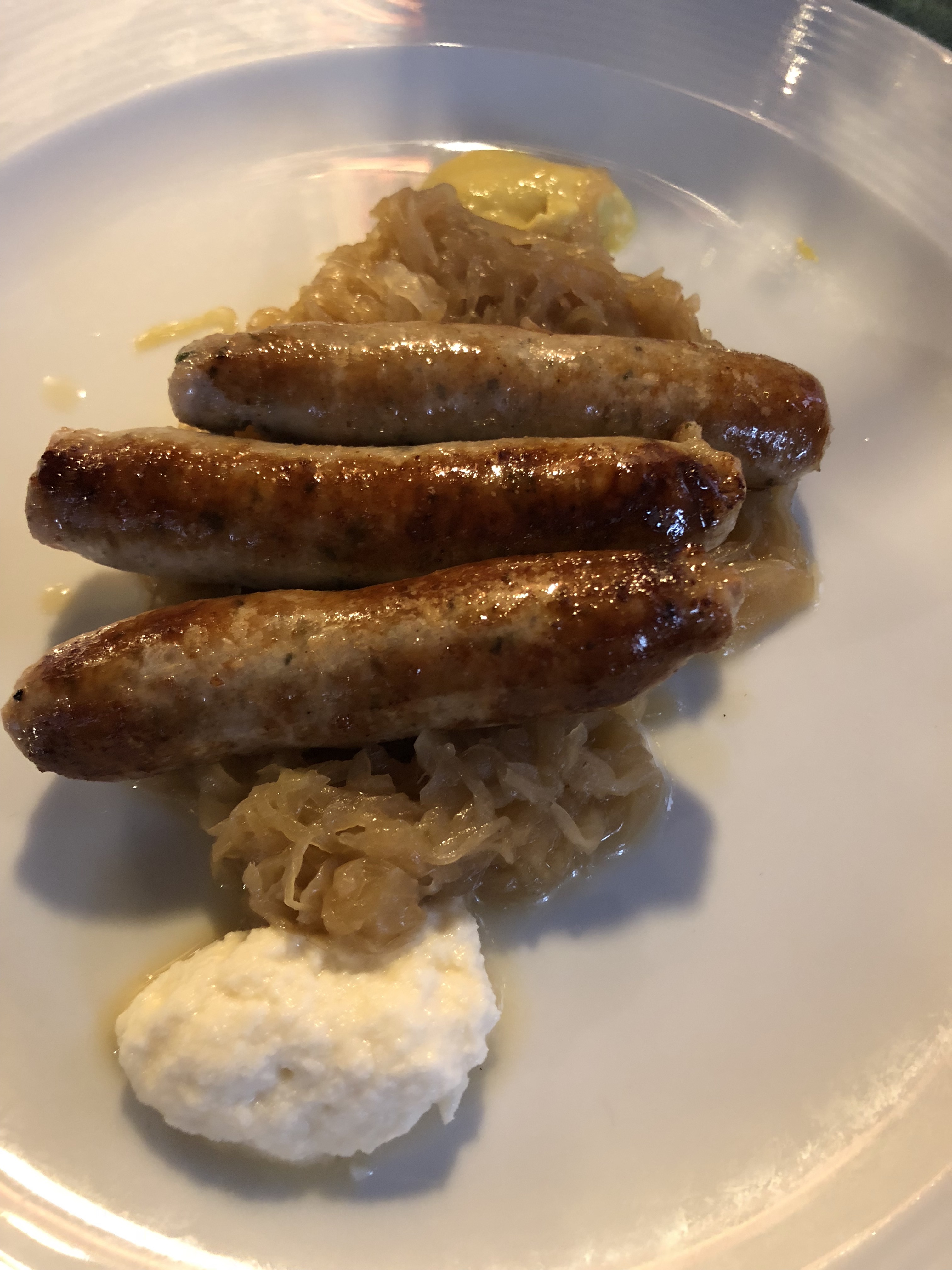
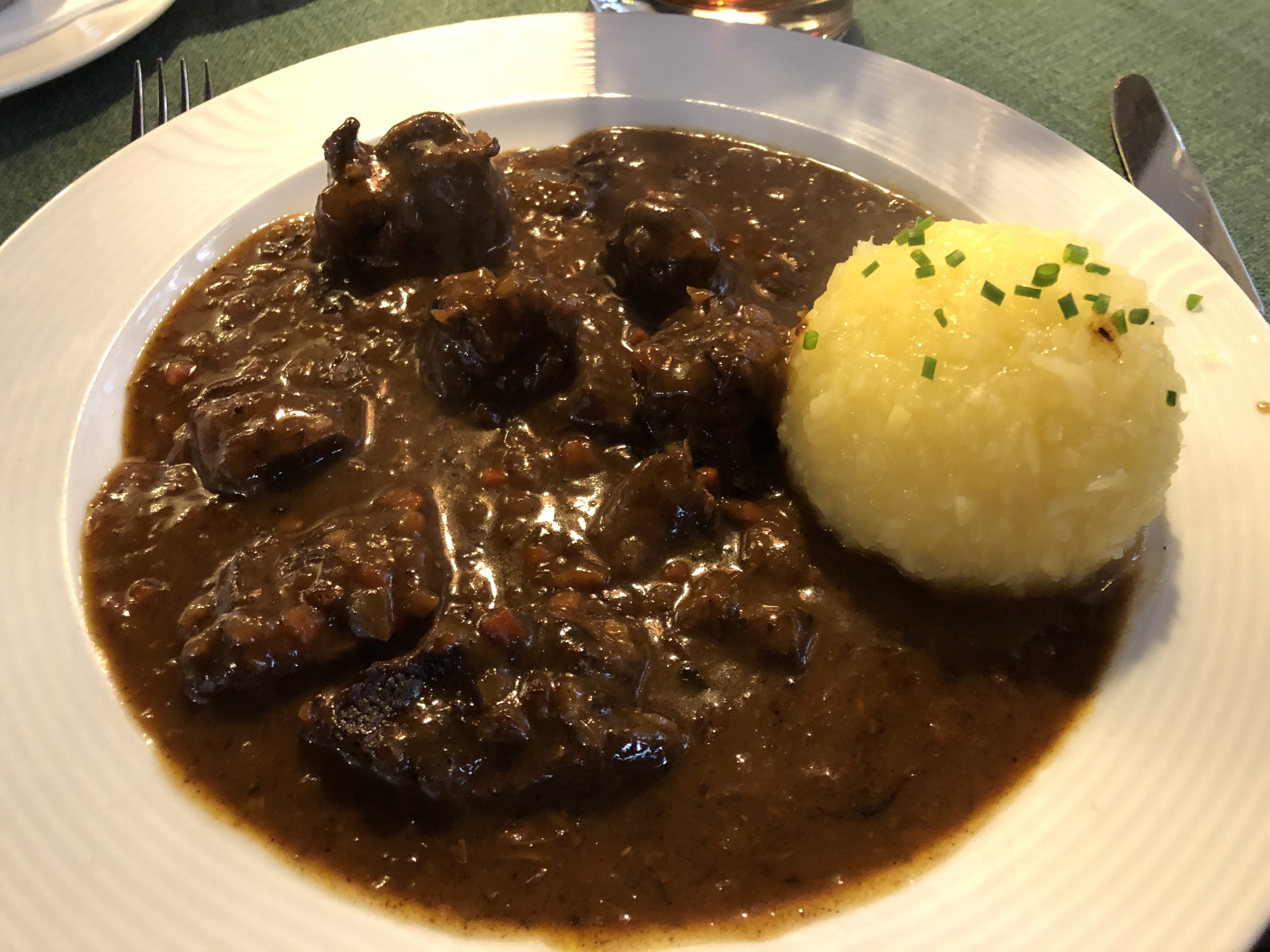
Last, and honestly least, was our visit to Nuremberg in Germany. We were all pretty ready to go home at this point, but I found the food here to be underwhelming. Our first night, we arrived late enough that we just grabbed sausages at the Christmas market, which were hearty and did the trick. The next day, we made lunch reservations at the Albrecht Durer house restaurant. We were served the most stereotypical German food I could’ve imagined. We got sausages and sauerkraut, a heap of beef stew and starch, and a massive steaming bowl of purple cabbage. Seriously, that cabbage could’ve been a meal on its own and I still don’t think I could’ve finished it! The food was good and I finished most of my main, although I barely touched the “side” of cabbage. It was just completely lacking in variety. Also in true German fashion, I ordered a litre of dopplebock (that was the smallest size they had) to down it all. Beer was cheap, delicious, and came in large sizes for every stop of this trip. We probably each drank 5 litres or more by the time it was over. Anyway, dinner that night proved to be sausages once again, adding to my enthusiasm that we would finally be headed home.
The massive dark beer I downed with an equally sizable lunch Sausages. I went for quite awhile without another one after this trip A heap of rich beef stew. Great for one meal, but I couldn’t eat this stuff all the time
The high points of our trip for food were definitely in Budapest and Prague, while you’ll probably have to search harder in Vienna and Nuremberg in particular to switch it up. You’ll also have to be mindful to get enough vegetables (excluding cabbage), because those aren’t prominently featured either. One thing you certainly can be sure of, though, is that you won’t go hungry with the meal sizes here! Just make sure your pants are stretchy, or have a size to spare.
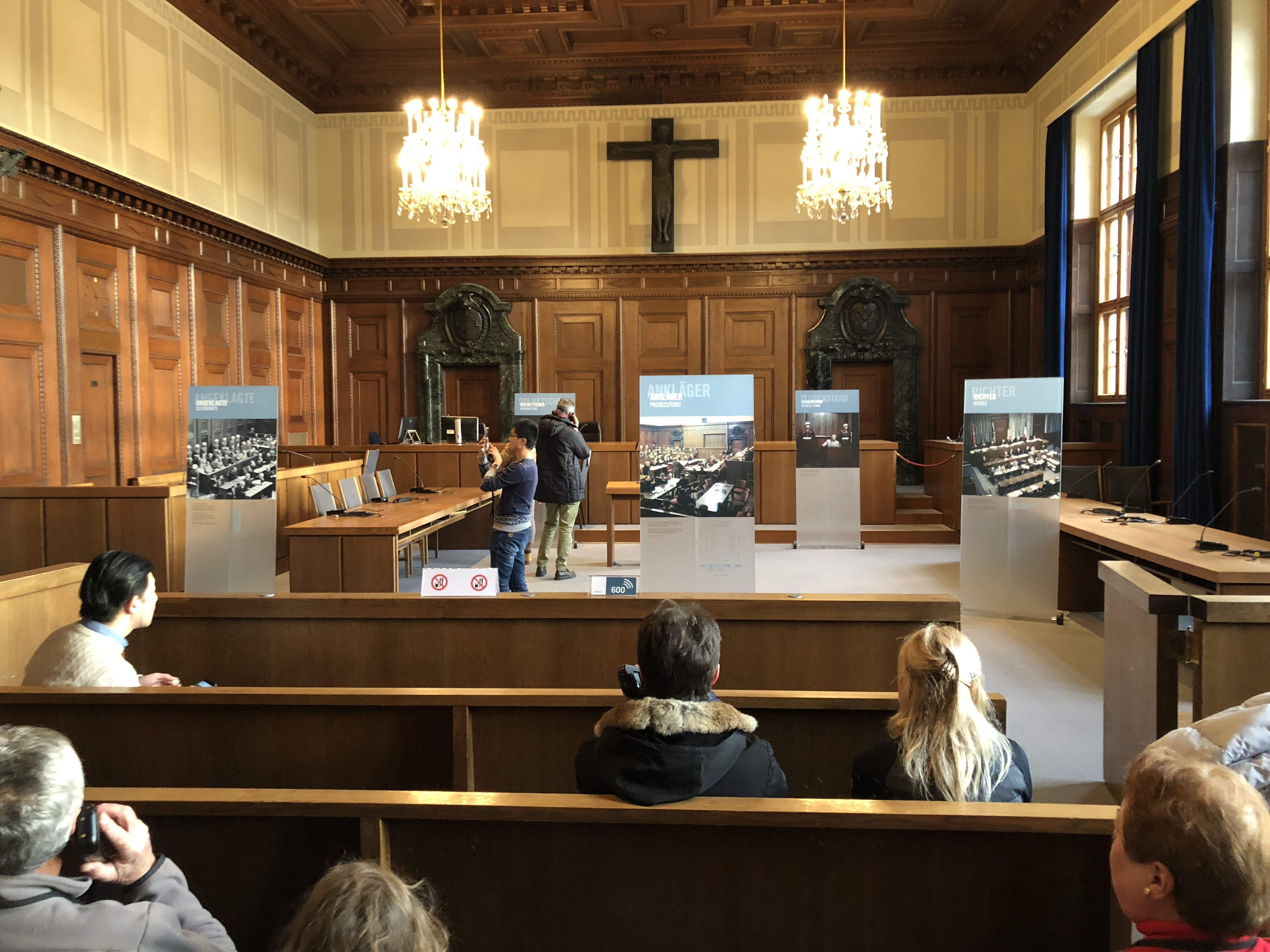
The courthouse of the Nuremberg Trials, which offers an English tour that we attended
Our group’s final stop was Nuremberg, Germany. Honestly, I think we were all so exhausted at this point that we were more excited to return home than anything else. Still, we were out and about during our full day to trace the path from the massive Nazi rallying grounds to the courtrooms where the Nuremberg Trials were held.
The rally grounds in particular were eerie, especially under the gray clouds and fallen snow. The center stadium was built in a Colisseum shape, where echoes traveled. Although it was silent save for our light footsteps, you only had to close your eyes to imagine the roar of tens of thousands of former Nazi faithful. Due to the biting cold, we didn’t spend too long there.
We lucked into entering the courthouse minutes before the only English tour of the day was due to start. While it was well furnished, the courthouse was pretty pedestrian. The trials held here were a crucial part of bringing this horrifying chapter of history to a close, and giving some closure to the victims. In the longer term, it was also a critical effort to have a testified and legal record of the war crimes and atrocities that were committed, so that any doubters in the future would be unable to refute to the world the truth of what happened. Our guide spoke to us about how the trials themselves were conducted, what high ranking Nazi officials were present, and who remained absent because they had either died beforehand like Hitler or escaped to say, South America. They were important as well in establishing a precedent as well for the United Nations’ standards for future criminal trials and war crimes standards. It was a heavy visit to end the trip, and one that we all appreciated the chance to have.
The remainder of our time was spent at the city’s Christmas Markets, which I’ve written about in another installment. In general, we were glad we came to visit but once is definitely enough. Nuremberg was a key city in Germany’s infancy, going as far back as the renowned artistry of Albrecht Durer in the 1500s. Along with Munich and other Bavarian cities it was also a bedrock of support for Hitler during his rise to power. It’s easy to get there by train from Berlin and Munich, and is definitely worth a stop for history buffs. Even for the average tourist though, I think a visit would be a very valuable experience.
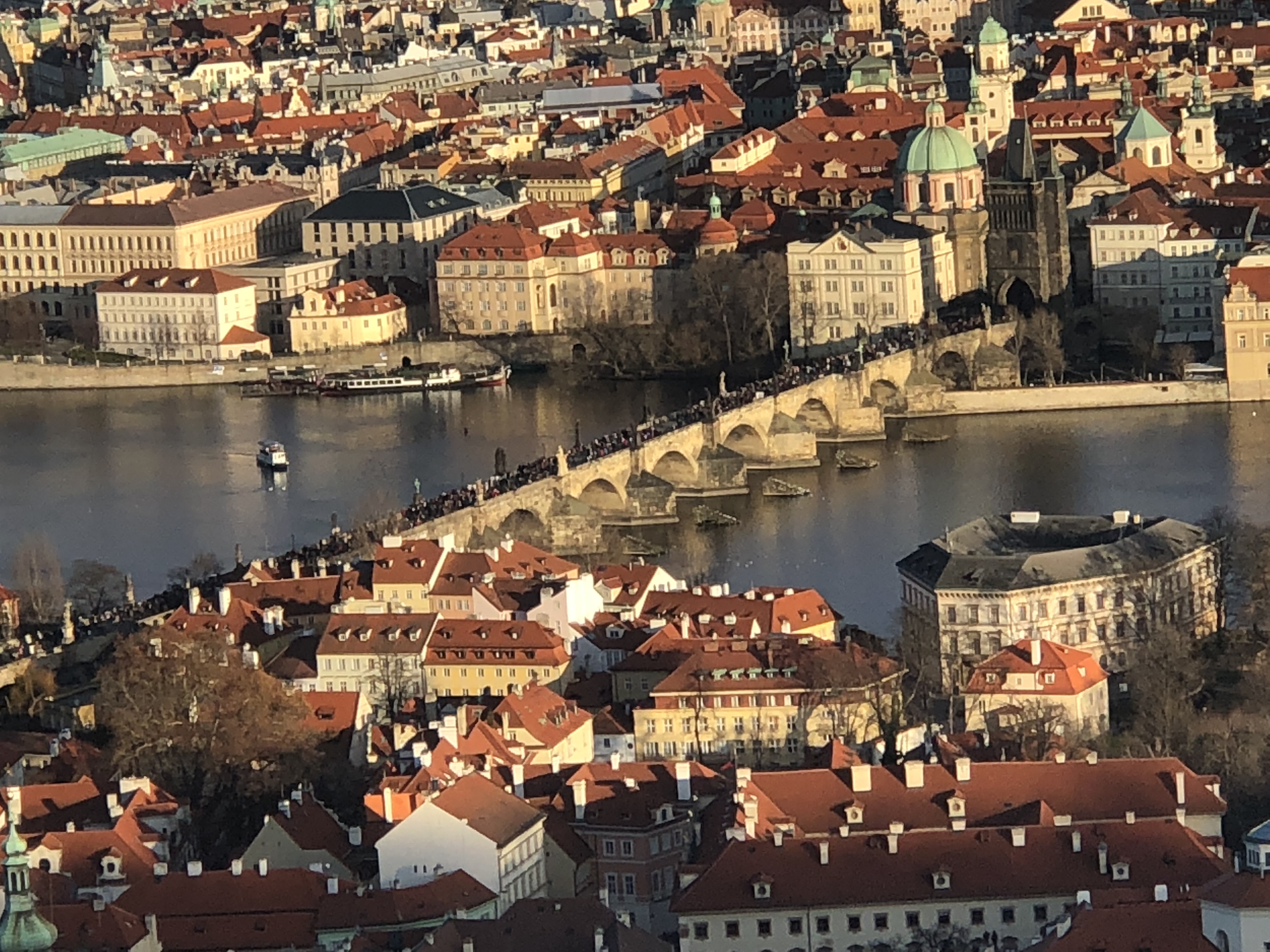
The crowds on Prague’s bottleneck Charles Bridge are evident even from this far away
Oh Prague… I think my whole group came away with mixed feelings, and not just because of a certain lost passport. On one hand, Prague has a well deserved reputation for being one of the most beautiful cities in Europe. Thankfully the Prague metro area was never targeted by Allied bombing raids, and escaped the worst of the damage that most of central Europe suffered. They also made a larger effort than most capitals to preserve their old town, making most of it into pedestrian-only streets. Of course, that reputation has not remained a secret and we saw crowds unlike those in any other city we visited here. And these were crowds so dense that there were times that it was hard to walk around the parts of the old town, and attractions that filled up so that we were unable to visit. While this put a damper on the logistics of our trip, we were able to enjoy the more limited scope of things we could do.
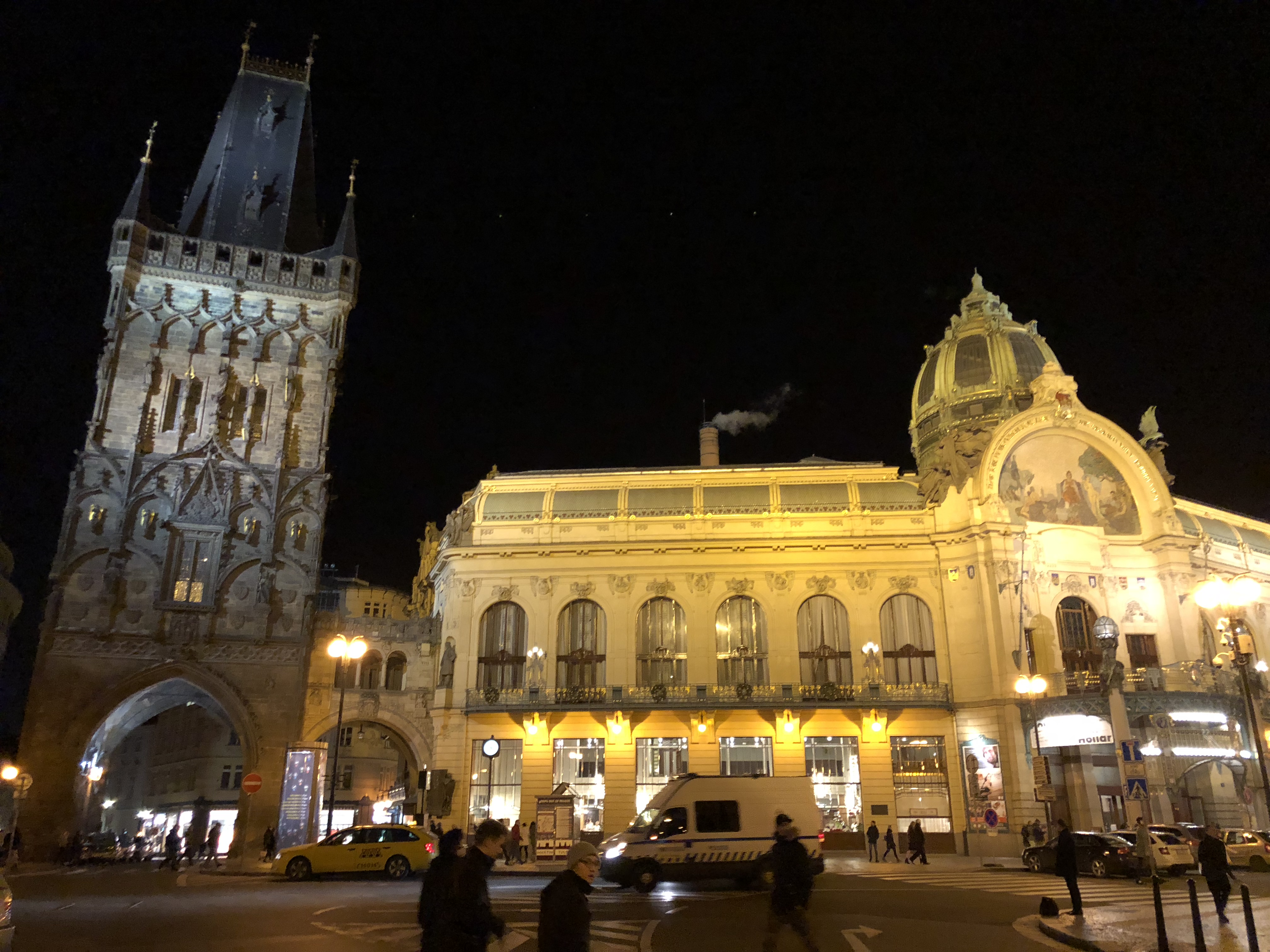
Our first night after dinner, we decided to cross the Charles bridge into old town and take some photos. Traffic was light on the bridge and we got lots of time to take our photos, but it was frigid cold. Further into the old town, we spotted another Christmas market and a very large tree. It was wonderful getting these unobstructed nighttime shots. But I was exhausted from an early wakeup in Budapest and the flight to Prague, and ended up sleeping over 10 hours that night.
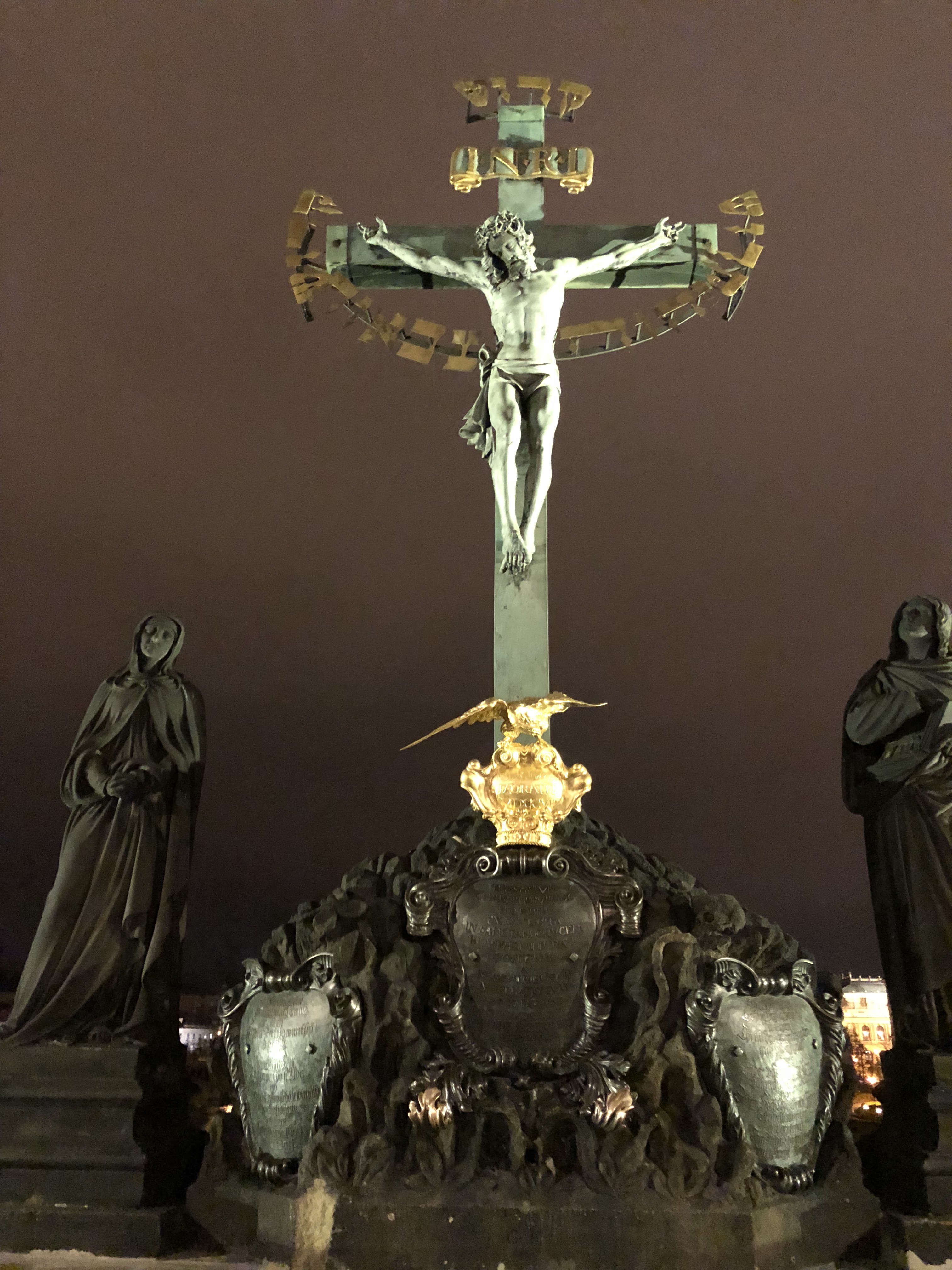
One of the city’s old guard towers juxtaposed with a more modern shopping arcade Statue alongside the Charles Bridge, over the Vlatta River The medieval Astronomical clock in Prague’s old town at night An enormous festive Christmas tree and market setting
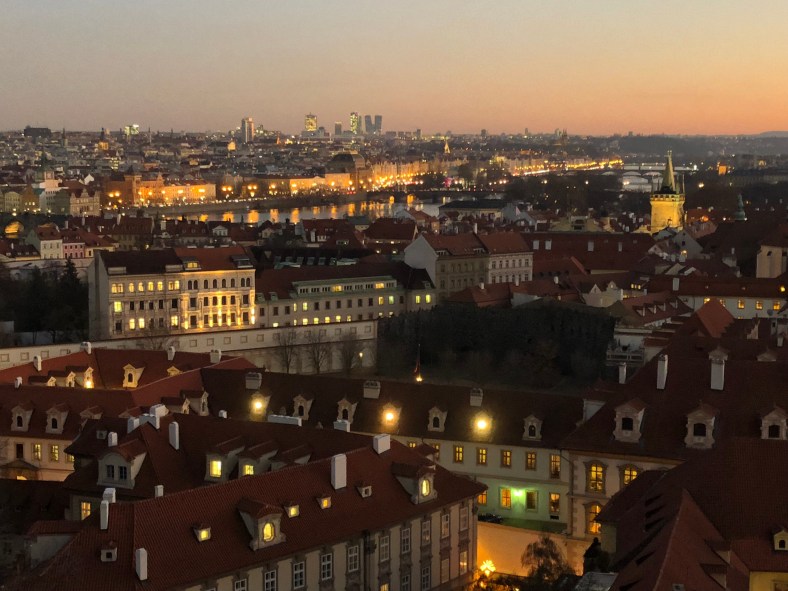
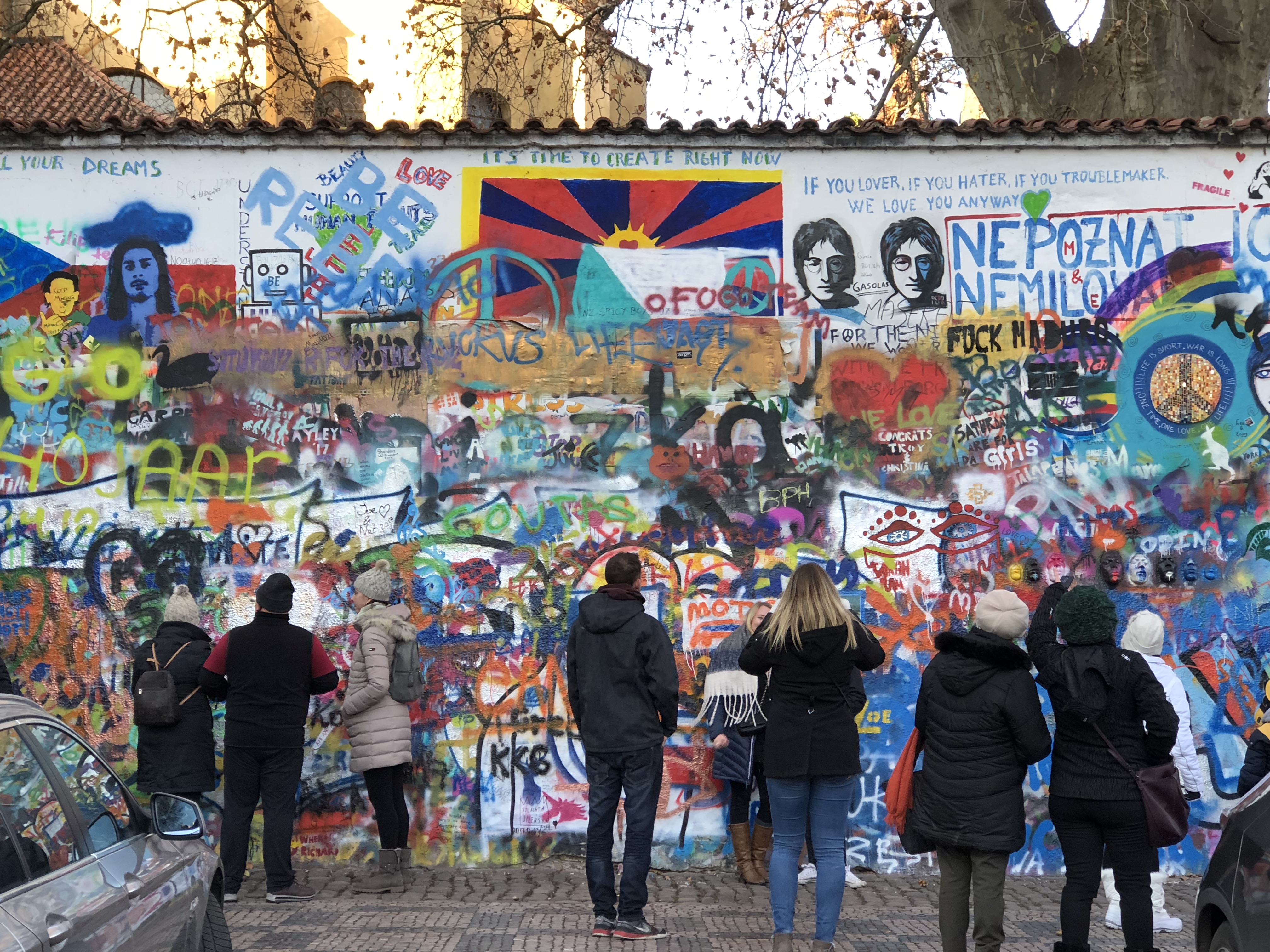
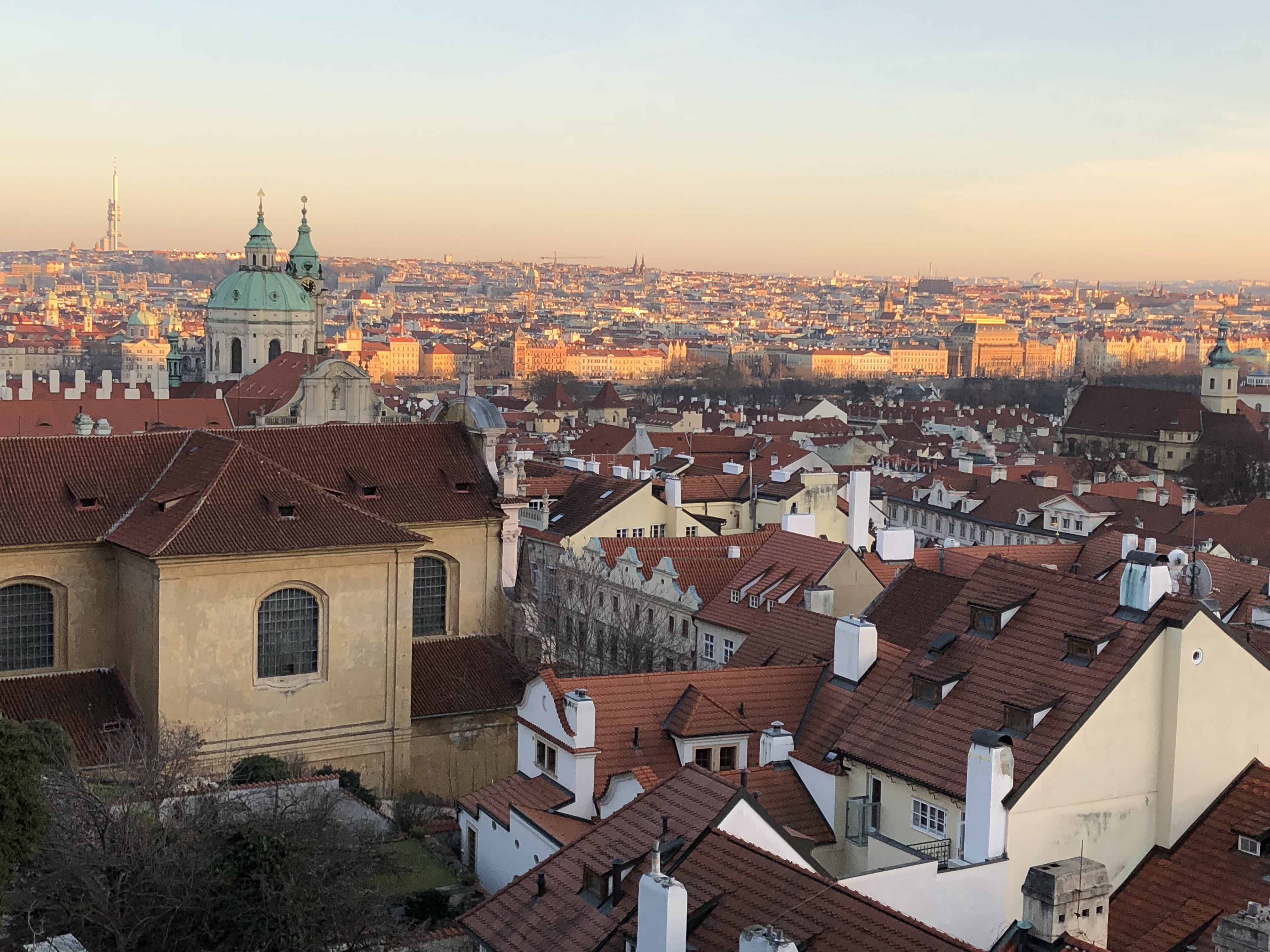
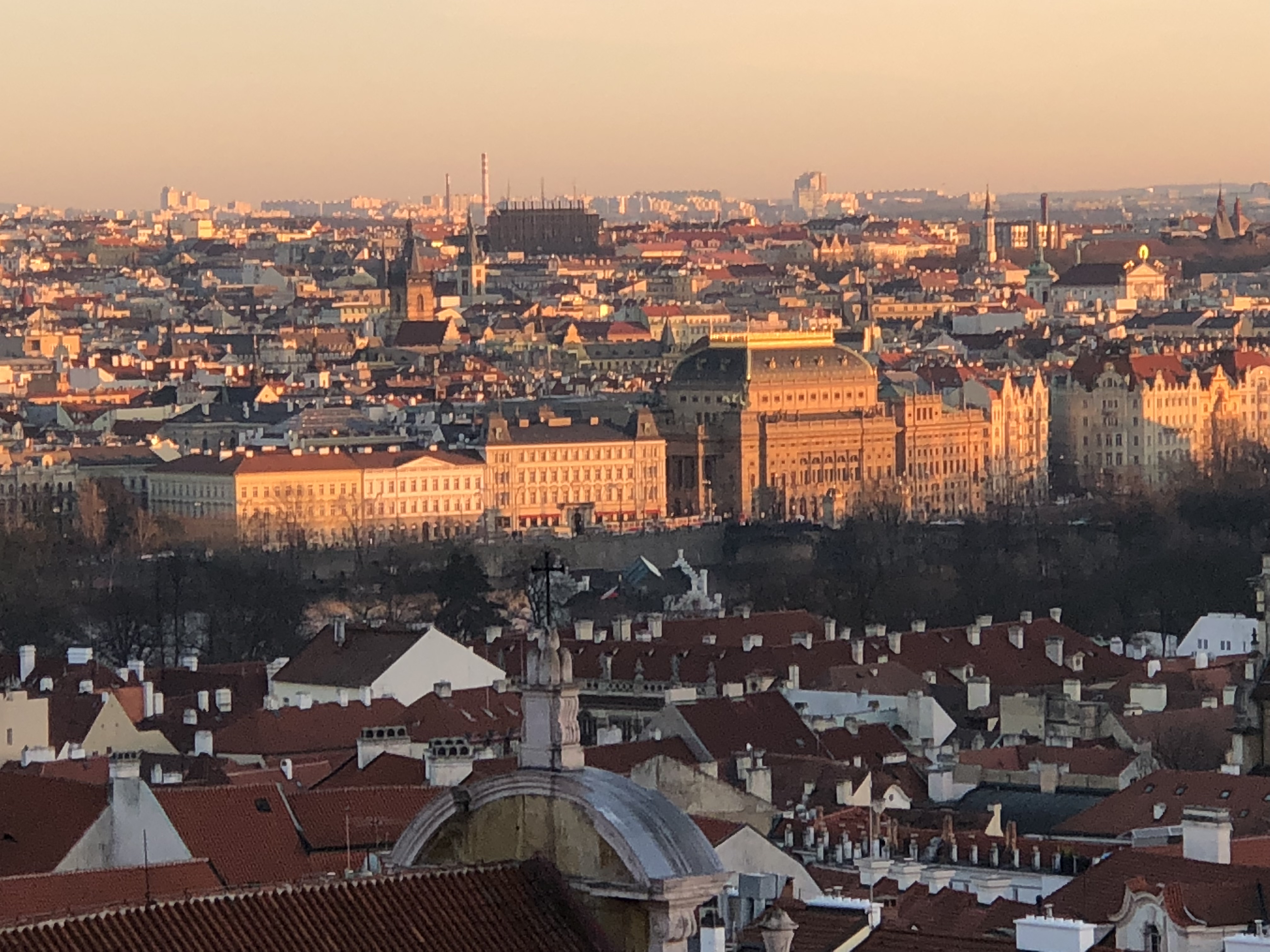
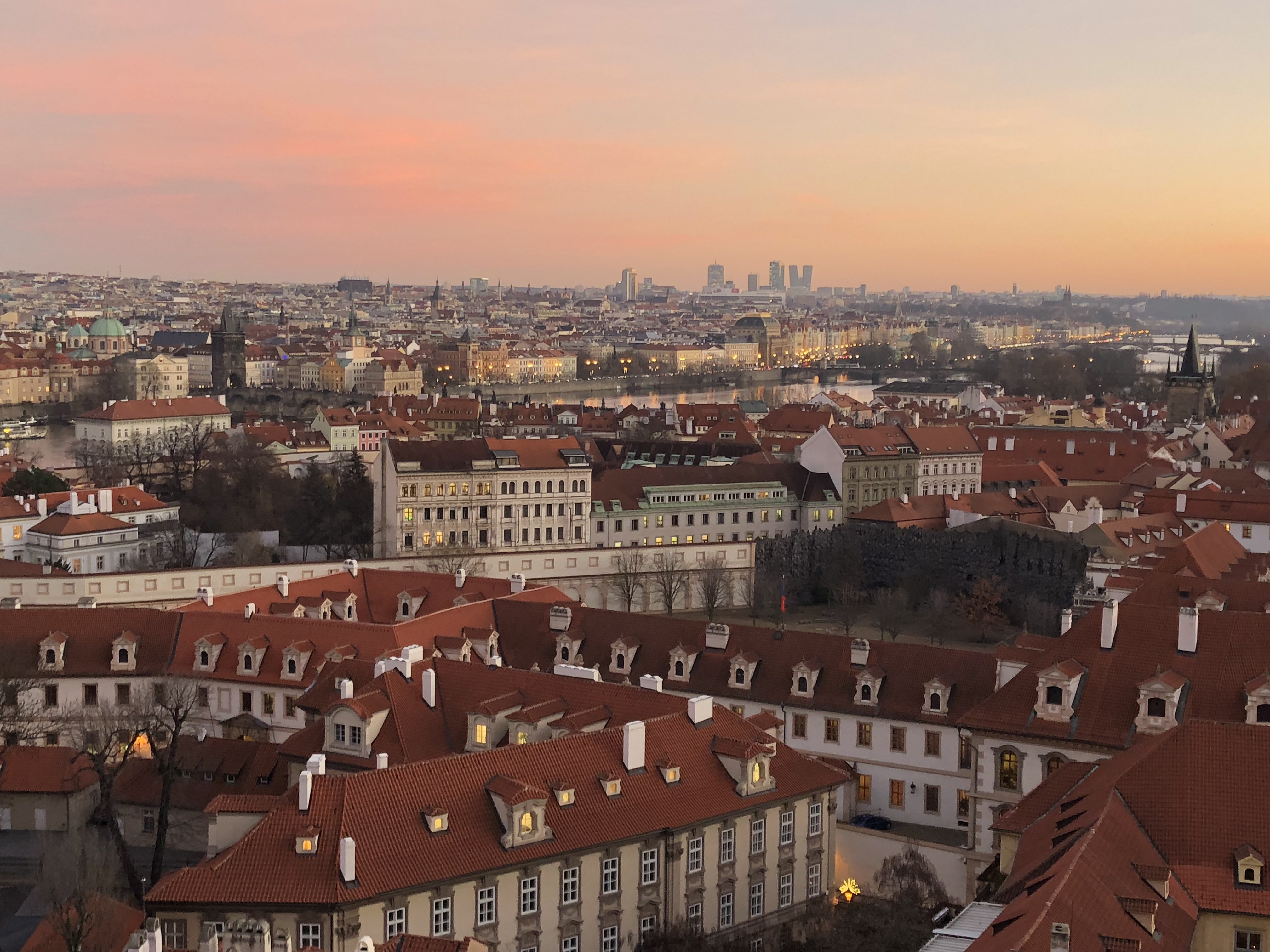
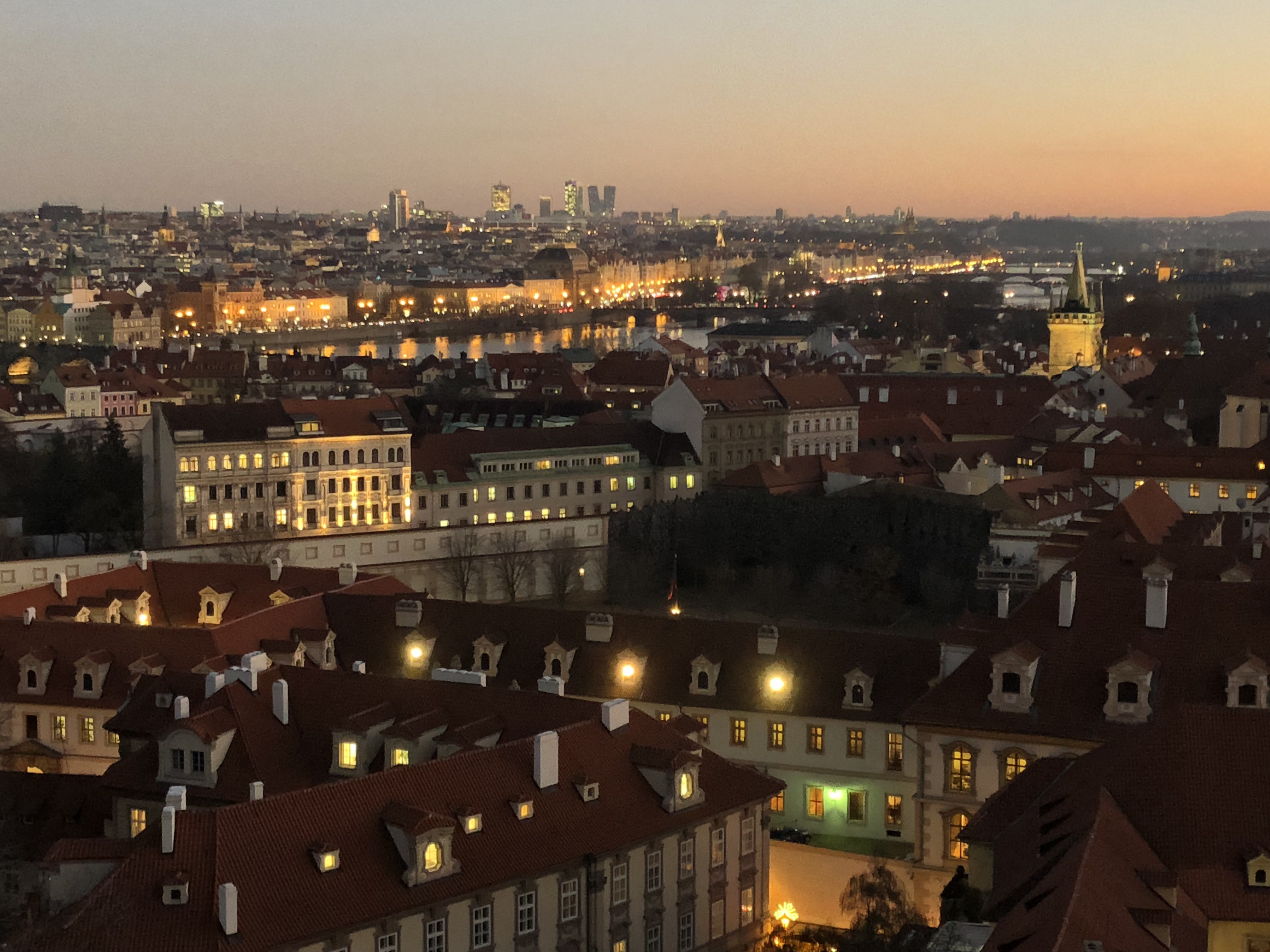
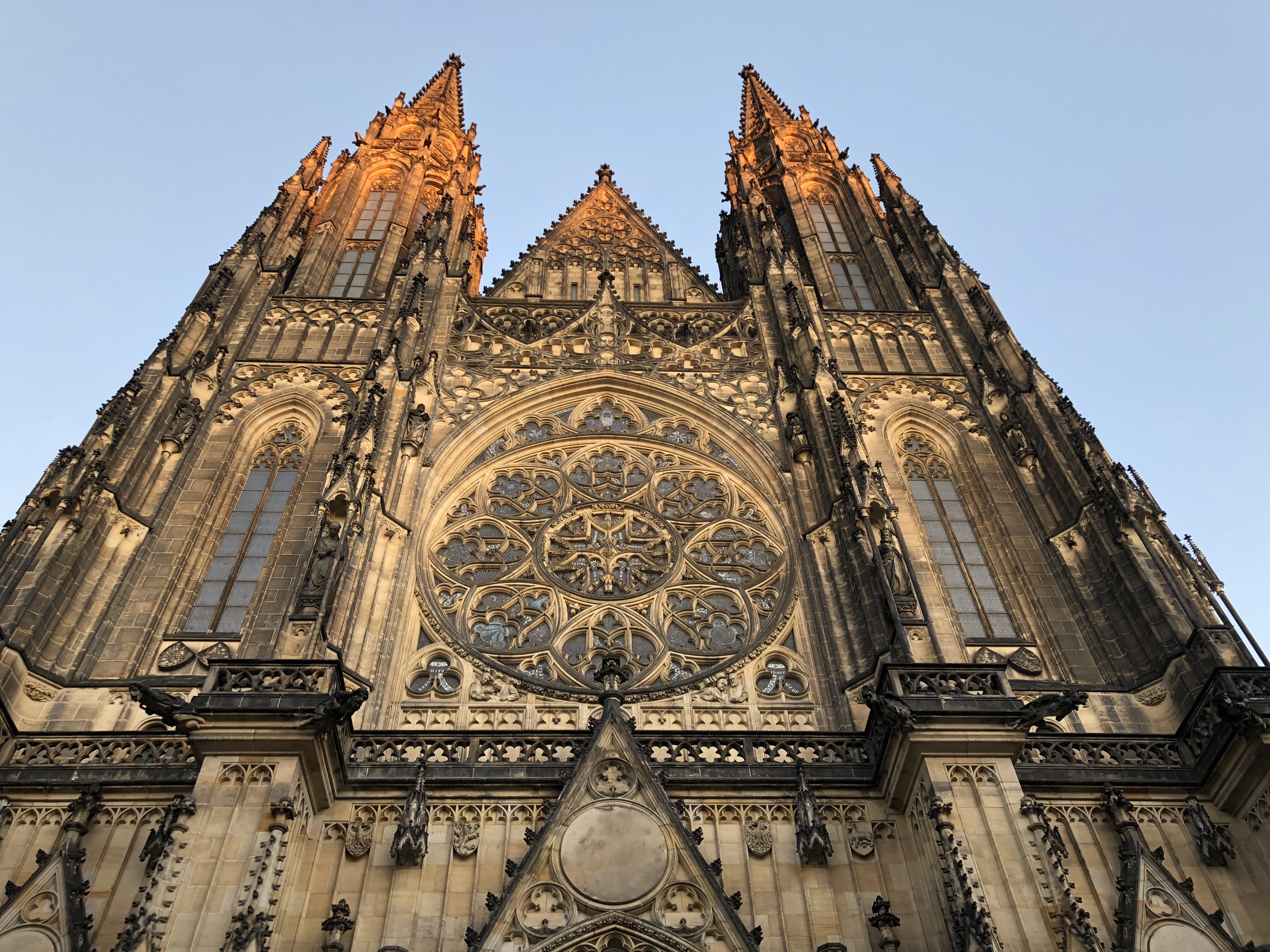
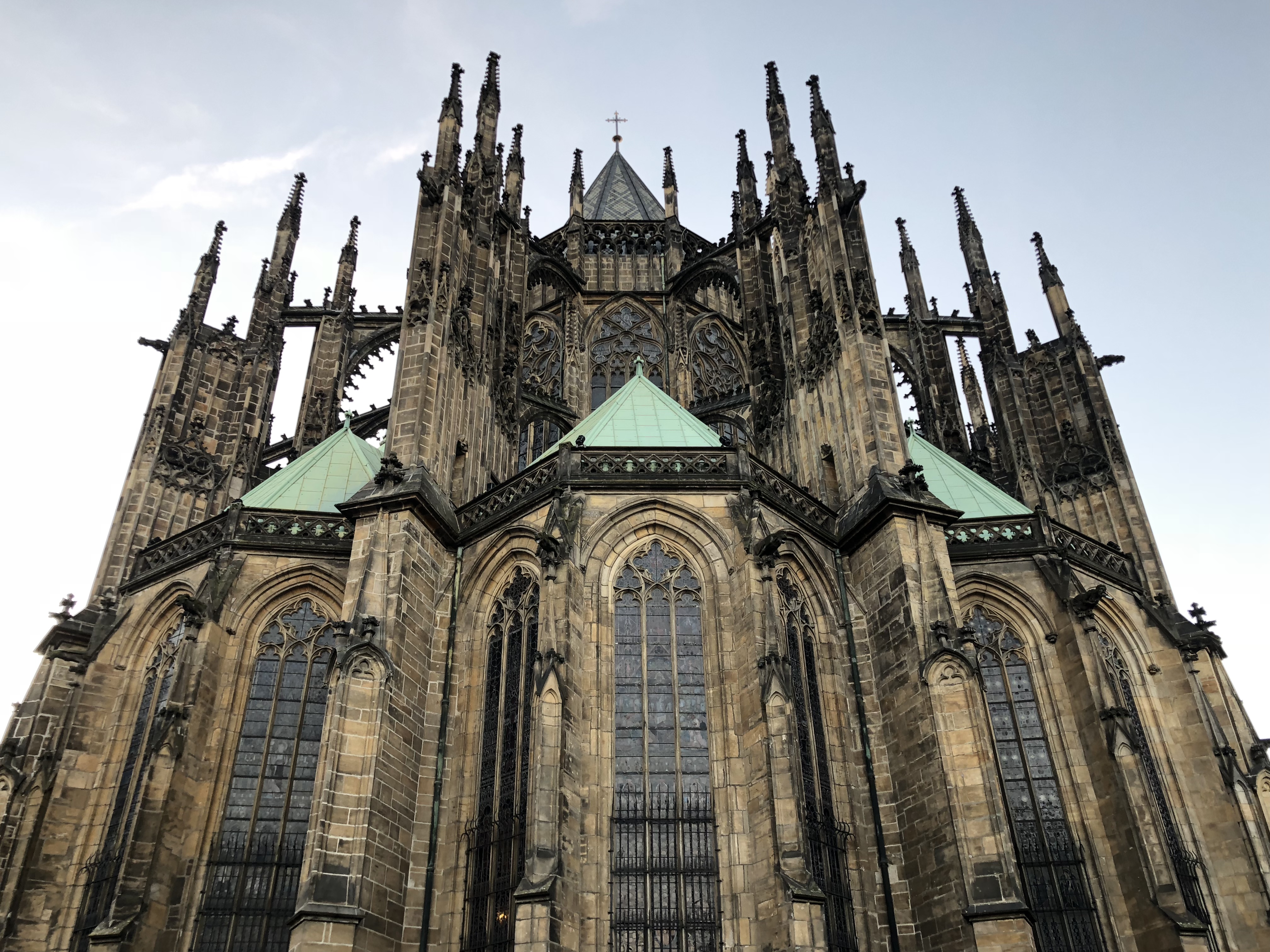
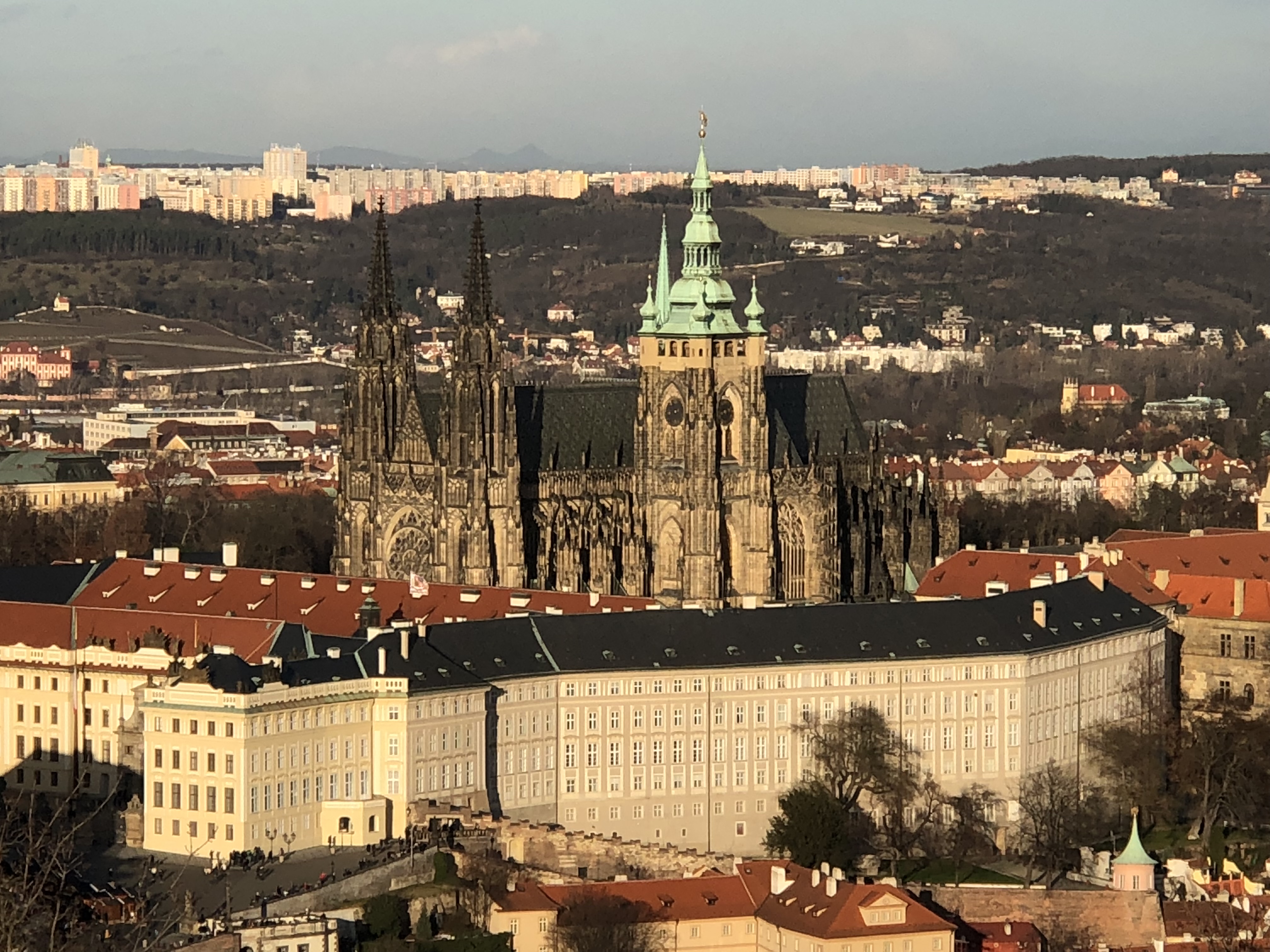
The next morning we got off to a late start, due to me and another friend sleeping much later than normal. We got a late breakfast which turned into lunch at Den Noc, and it wasn’t until nearly 2 p.m. that we mdae our way outta there. At my insistence, we stopped by the John Lennon wall, which was a very quick stop and gawk spot. We walked over to the Prague castle complex next, hoping to get tickets into St. Vittus cathedral and some other palace buildings. However, the ticket office told me that they were sold out for the day. Since we were due to leave on a 5:30 a.m. bus to Nuremberg the next morning, we were left to just wander around the castle grounds and take photographs from the outside. We also got some mulled wine at a Christmas market there, and a drink called Grog which is a disgusting water-rum-sugar mixture. Heading out from there to the castle ramparts, we were met with a blessing in disguise. The sun was low, casting golden-hour lighting all over the old town and riverbank. We each positioned ourselves at a “window” of the rampart, and spent something like a half hour just admiring the changing of colors over the city. One by one, the golden light of the sun was replaced with that of lights that flickered on as the day’s light continued to fade. We were all so glad to get this opportunity to observe the city in peace, and each reflect to ourselves before joining back with the throngs of tourists.
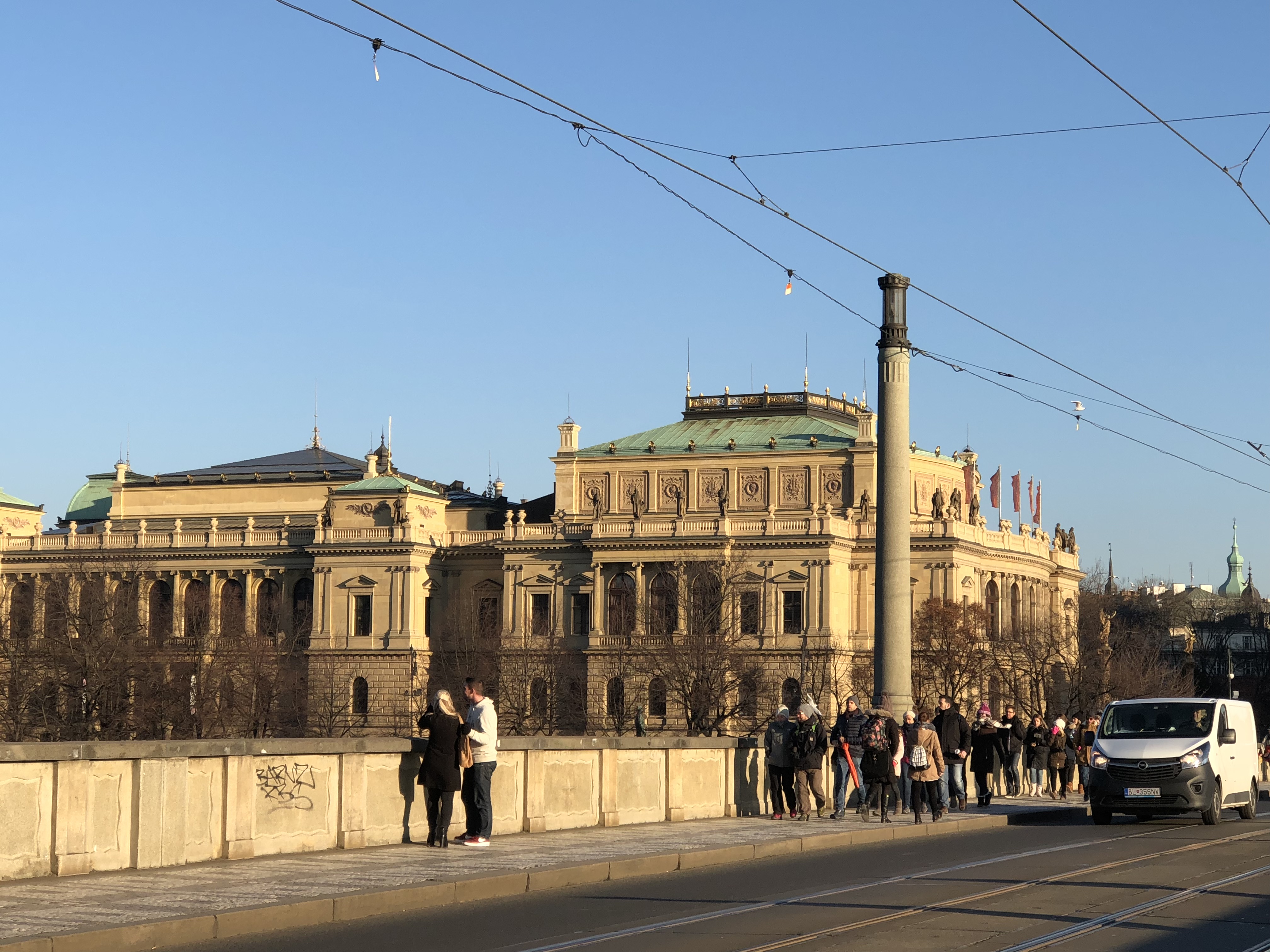
State concert hall of Prague. Photograph colors are actually sharper in the winter John Lennon Wall. More stars on Yelp than minutes it takes to observe The Golden Hour contrast across the river vs. the shadows already fallen on our side Close up of the state Opera House of Prague, with the golden light even more intense Full sunset colors over this sleepy city The lights come on, and the light finally fades Full frontal of the St. Vittus cathedral. This is as close as we got this trip Back of the cathedral, which we admired much more than the Christmas market Grog The Prague Castle buildings surrounding St. Vittus
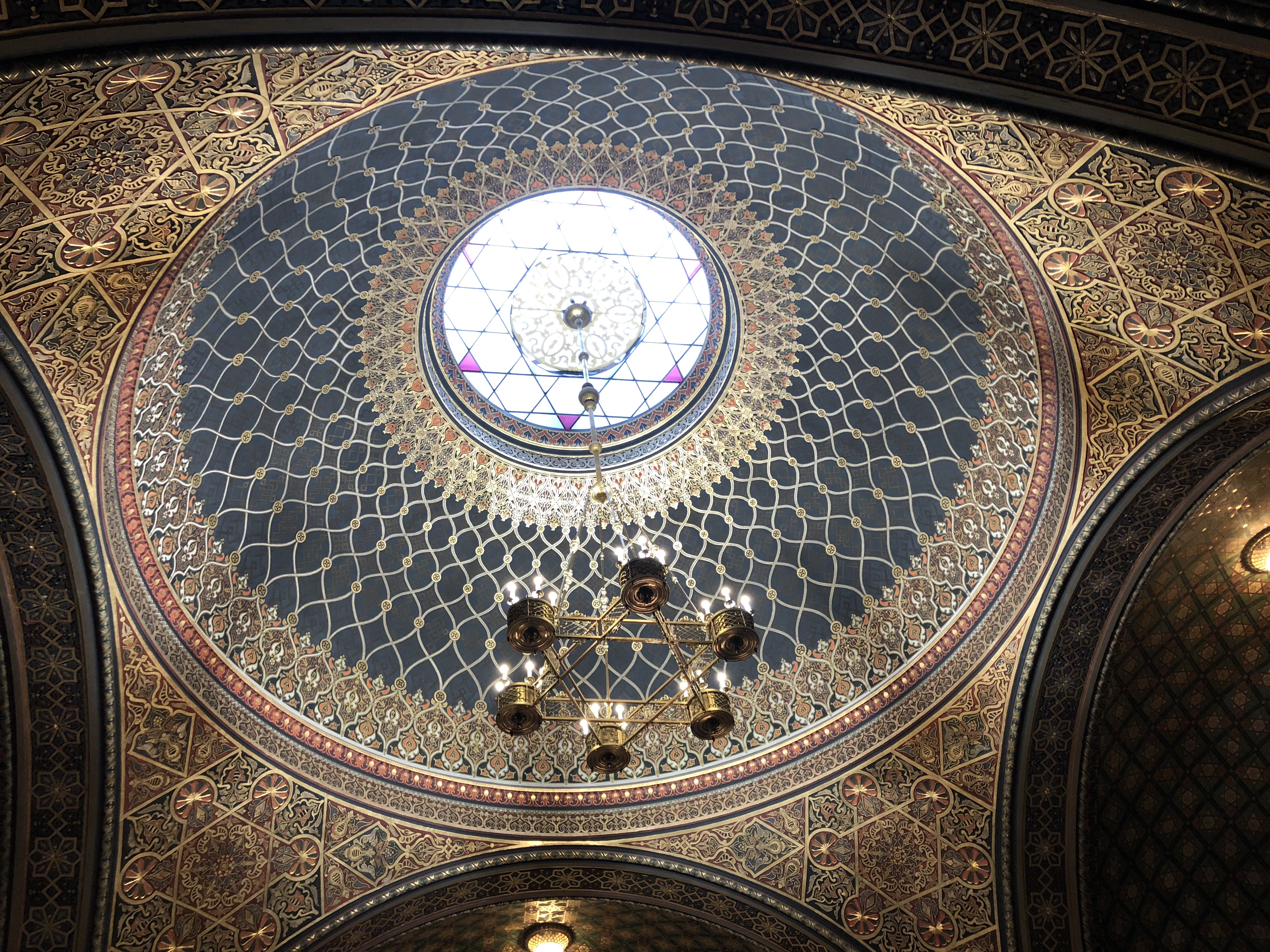
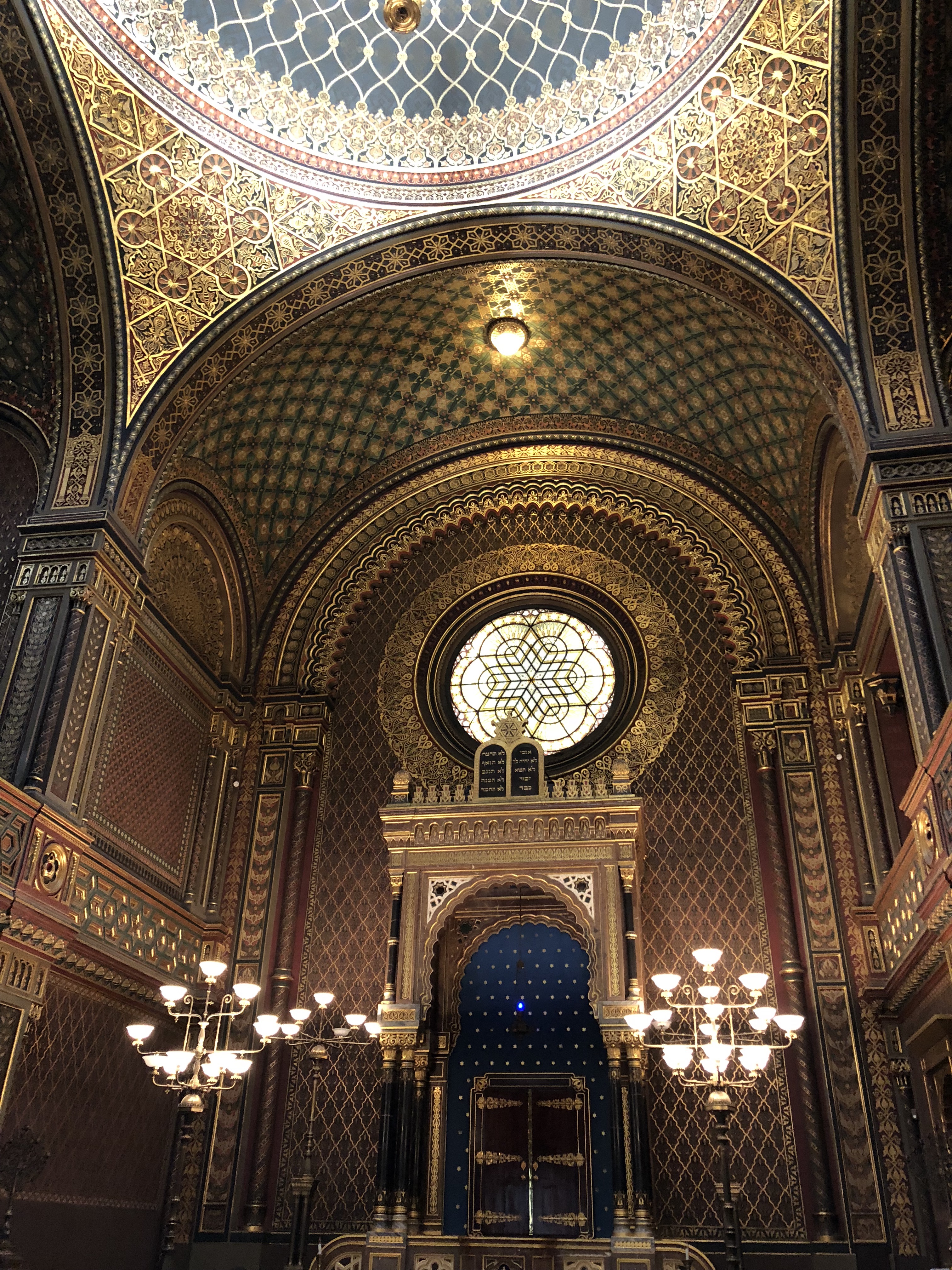
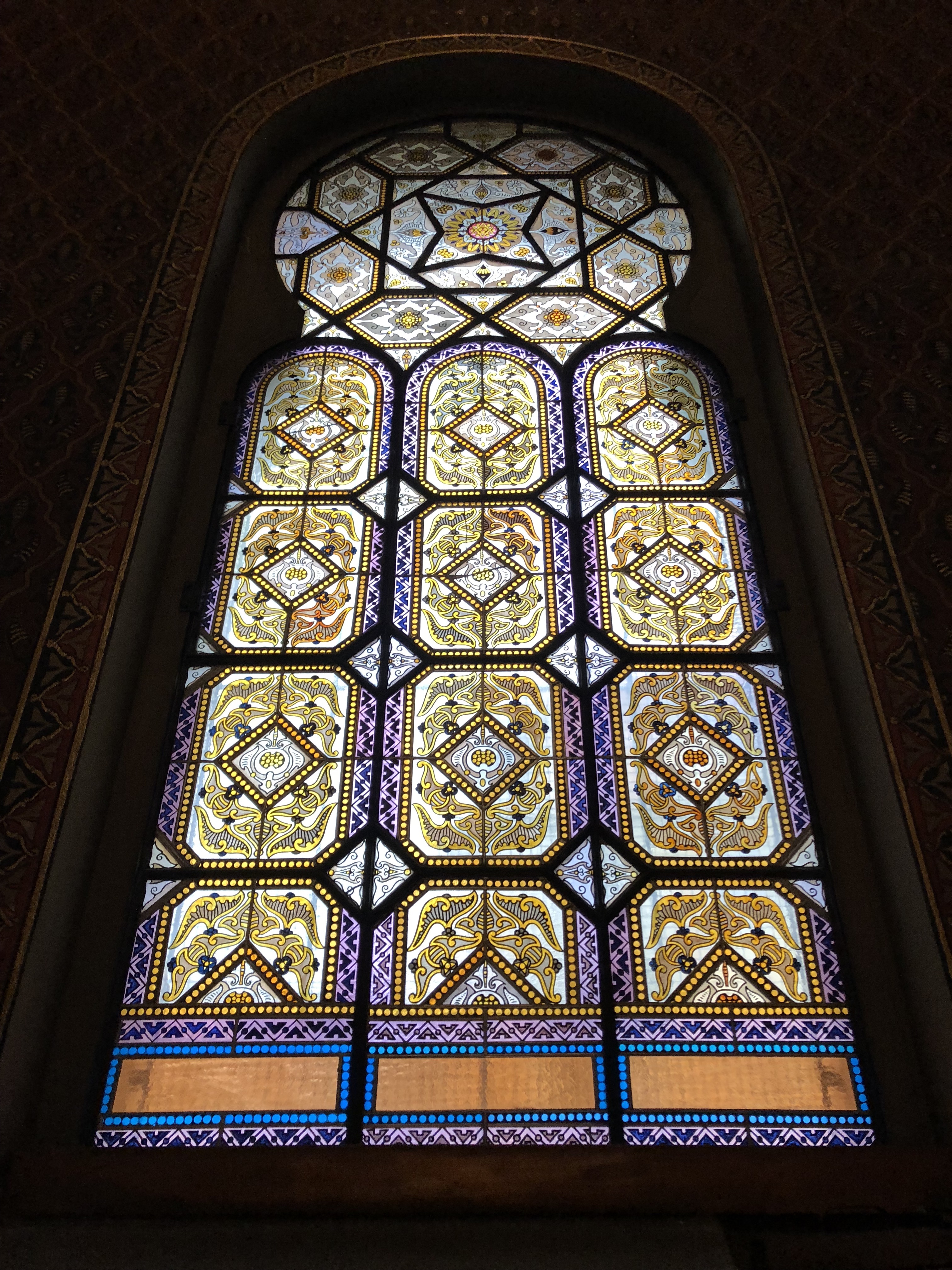
The rest of that night was dedicated to getting paperwork ready for our friend who had lost his passport. Our two other friends pushed ahead with the 5:30 a.m. bus to Nuremberg to meet our other two friends, who were taking an early train down from Berlin. I volunteered to stay behind and vouch at the American Embassy in case my friend needed backup to get his emergency passport. Waking up at 8 a.m. for this task was a godsend compared to that earlier bus ride. After we were done filing the paperwork, we were told that the agency would need time and that we should come back in the afternoon. After checking out of the AirBnB and dropping luggage temporarily at the Prague bus terminal, we had a bit of time to kill. Despite our earlier struggles at Den Noc, the pancakes were good enough that we decided to go back. We followed that up with a visit to the Jewish quarter and synagogue, partially because we hoped the entrance fee would reduce the crowd size (which it did). The synagogue itself was intricately decorated and stunning, but it still had a more homely feel to me than most churches do. Geometric patterning was the focus of the decor, which I really admired. The stained glass was especially captivating, too. I personally thought it was really meaningful that a place could convey its holiness by just the shapes that appear in mathematics and nature. The rest of our visit led us through a graveyard, and texts from the Holocaust which had hit then-Czechoslovakia very hard. After we finished our somber reflections there, my friend went back to the American embassy to check on his passport, while I continued to wander around and take photos nearby. It was a good thing he went to inquire, because they told him that their computer had malfunctioned and they hadn’t been able to make the passport yet. He prompted them to try restarting the system, which worked and allowed them to process his passport right away. Once he had it in hand, he texted me to come back to meet him and share an Uber back to the bus terminal. We ended up making it on a 3:30 p.m. bus to Nuremberg, with a new emergency passport and relief that we would see our study abroad friends after all!
Ceiling dome of the Prague synagogue. I love the patterns and styling of this part More decor of the synagogue One of the crisp stained glass panels within the cathedral
Let me spend one last paragraph addressing the crowds we experience in Prague, and how they affected our visit. My stance here and in other places is that crowds shouldn’t be a major deterrence to visiting a place unless it becomes impossible to navigate or plan around them. Although they had bought up all tickets into the Prague Castle buildings, we could have prevented that by planning ahead and buying our tickets that morning, or online. Despite not having them, we still managed to enter the castle and enjoy a lovely sunset. We managed to avoid lengthy waits for restaurants by going to ones off the beaten path near our AirBnB, or eating at off hours (almost 10 p.m. for dinner our second night). Crowds dissipated in the paid area of the Jewish quarter and synagogue, so it was possible to get a reprieve that way. During the daylight hours, crowds on the Charles Bridge across the Vlatta river did get thick enough that we had to slow down our walking pace to that of the traffic flow. But the crowd still moved, and although unpleasant the delay was at most something like 5 minutes. So I personally didn’t find the crowds here to be a reason to avoid visiting. They would have to swell to the level of Venice or Dubrovnik in the summer, volumes where traffic at chokepoints is so thick that you’re left unable to move for several minutes, for me to reconsider a visit. Like with most places, these crowds are seasonal and can be circumvented by visiting Prague in say, January through March or Venice and Dubrovnik in the winter season. So Prague certainly wasn’t too crowded for me to have a good time, and for those of you who are more bothered by crowds, I hope the data points I gave will help you gauge for yourself if these crowd levels are acceptable enough for a visit.
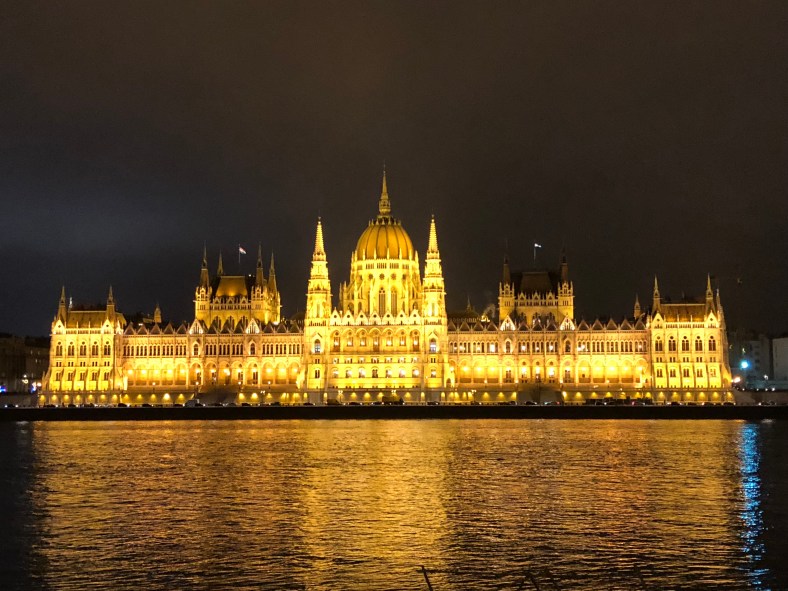
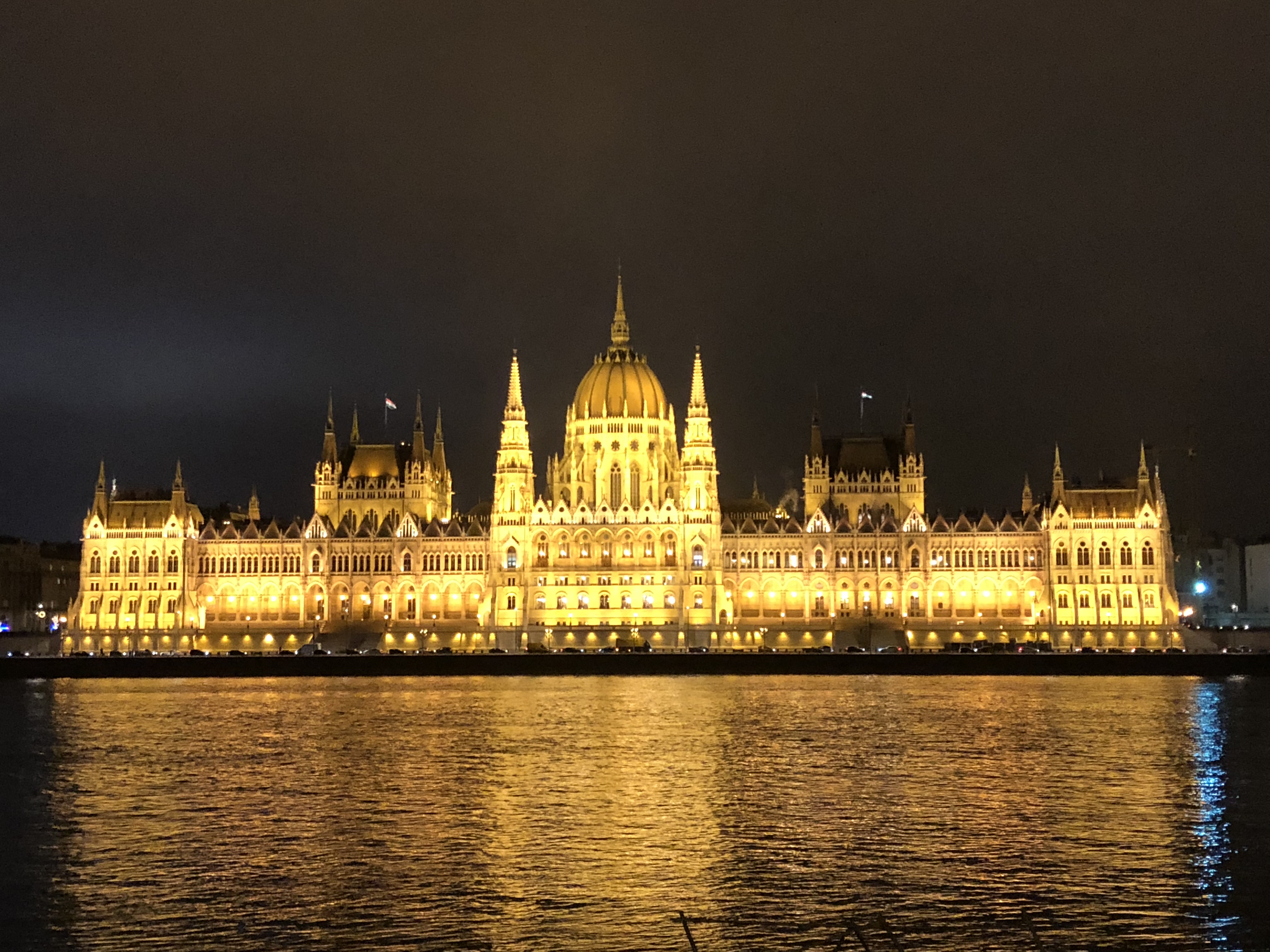
The riveting Hungarian Parliament building, bathed in golden light across the Danube River
I admit, I wasn’t sure what to expect when I picked Budapest for my semester abroad. My decision was entirely based on the math program I was going to attend, which featured my favorite subjects of probability, combinatorics, and graph theory all prominently. So going in I knew virtually nothing about the Hungarian country or its capital city. But once I’d arrived I was quickly thankful for the chance to completely revamp my daily routine and try new things. Best of all, there was a half marathon later in the semester that I signed up and trained for. I took to running along the bank of the Danube in the evenings, and was always glad for the mental space that gave me. When my friends and I were planning this trip, I was thrilled that we snuck Budapest into the itinerary and that we could revisit some of my favorite places and restaurants. However, it’s always our home cities that we seem to find the least time to be a tourist in, and Budapest wasn’t entirely spared. There were a couple items since leaving that I was convinced to cover this time. Even though it was the only city I would be revisiting this trip, it was still the one I was the most excited for.
We arrived into Budapest around 2:30 p.m., shortly after the city had received another dusting of snow. We had to get from Kelenföld Vasutallomas on the city’s western edge to the Opera House in the center, which involved transfers on 3 of Budapest’s 4 metro lines. It ended up being the perfect opportunity to showcase the different train types used between the lines. We started with the modern 4 line, which had art installations and mosaics at most stations and sleek, modern, Asia-style metro cars. We transferred at Kalvin ter station to the 3 line, which was built far underground during the city’s Soviet occupation. These trains were painted solid gray, and much more clunky and loud than the ones on the city’s more modern lines. To add to the confusion, at Deak Ferenc Ter we transferred to the 1 “Millenium” line, which was finished in 1896 and was actually continental Europe’s first underground railway. Although the cars were renovated in the 1970s, they were cramped replicas of the city’s overground trams and they made lots of annoying ringing and dinging sounds as they traveled. Needless to say, my friends had suffered enough transit culture shock after that experience and elected for the modern 2 and 4 lines whenever possible after that. Since our visit, all trains on the 3 line were also modernized, leaving the 1 line with the only outdated experience in the system.
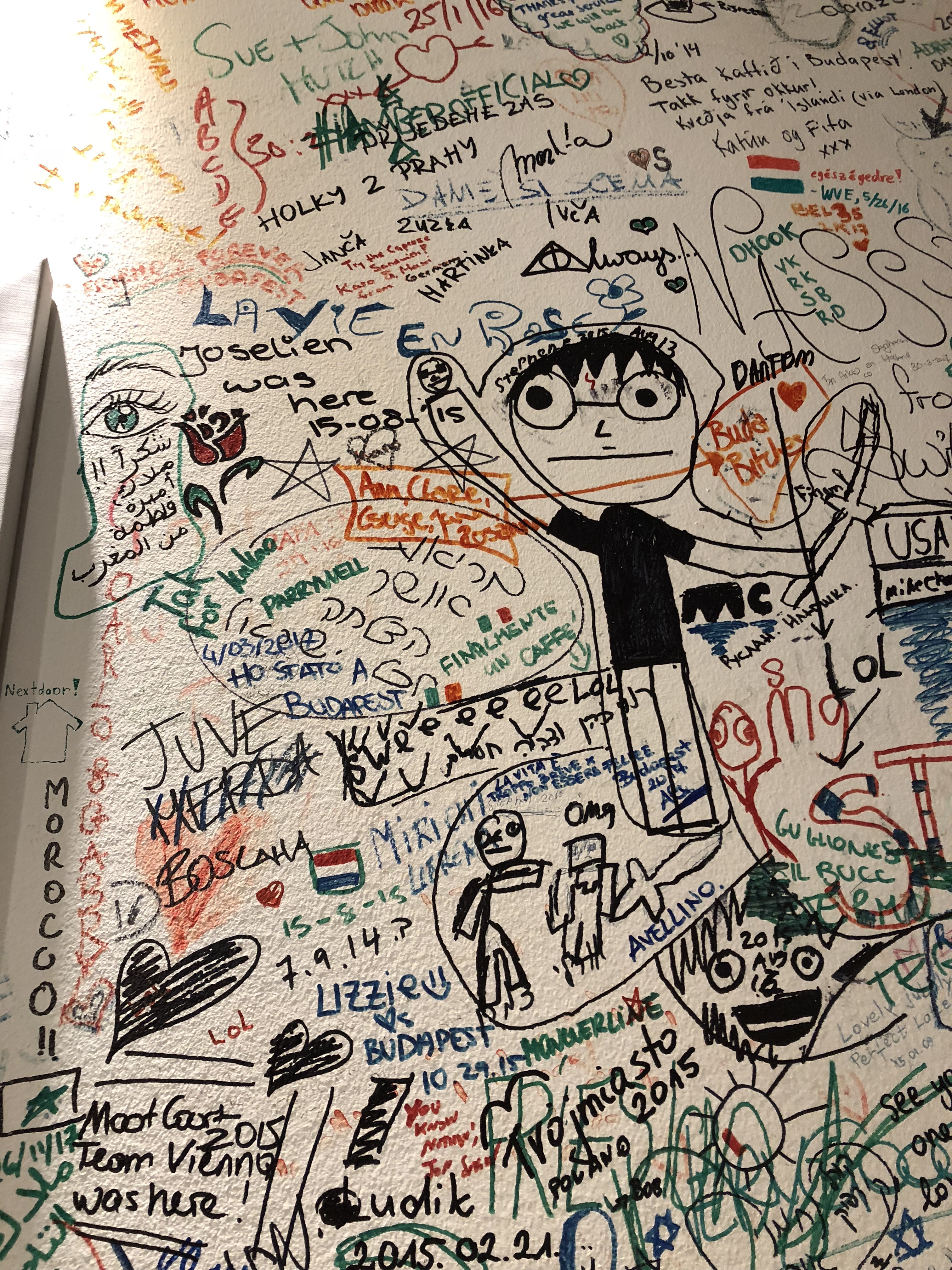
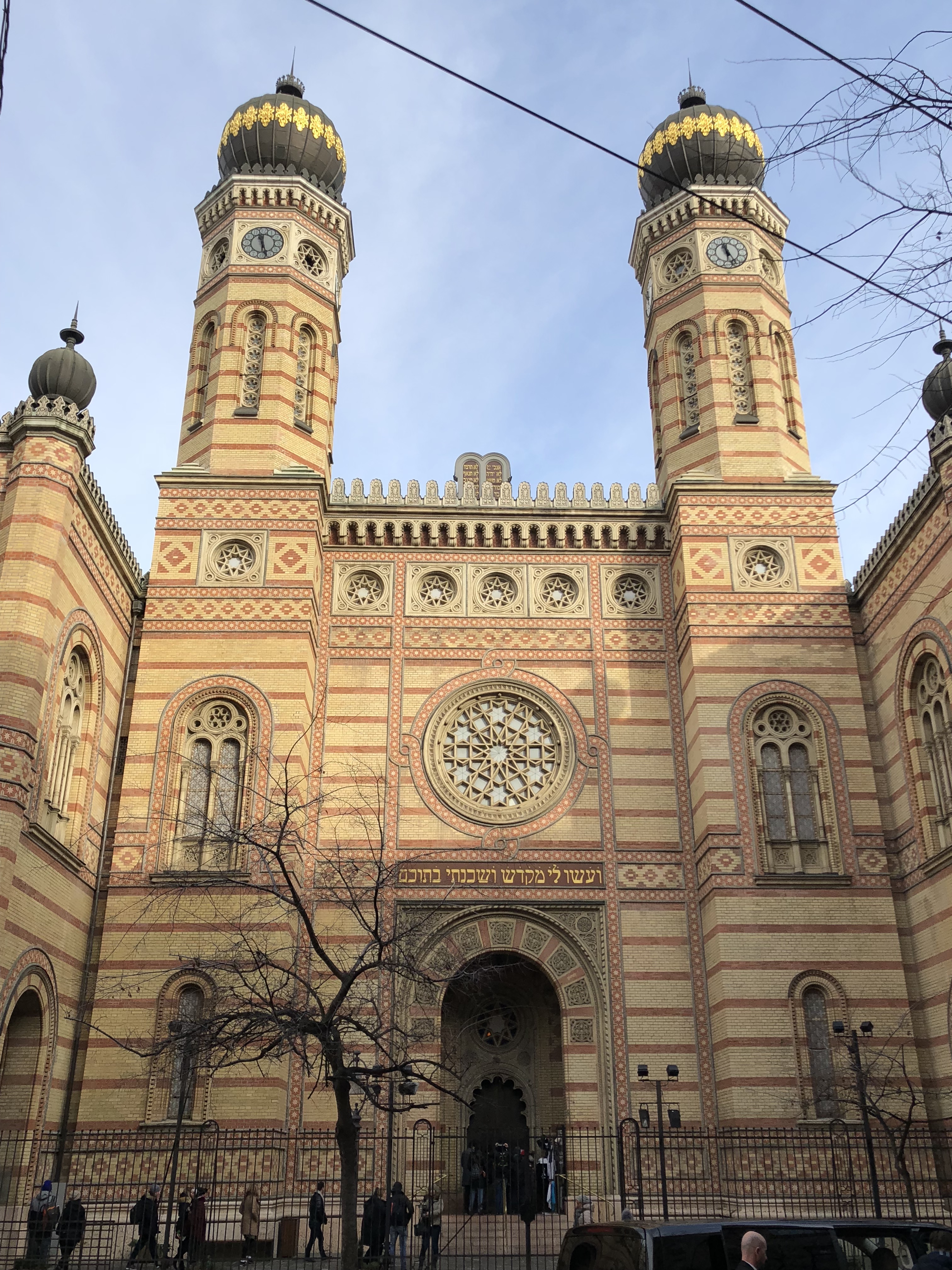
After a visit to a Christmas market and dinner at Getto Gulyas, my group was exhausted from the day of travel so we turned in without visiting any bars. The next morning I woke up fairly early with my friend Joel, and we both went down to the city’s Grand Market near Fovam Ter station. I bought juice, challah bread and fresh jam for our group’s breakfast as I’d done for myself countless times while studying abroad. Nevertheless, we still needed coffee and that was the perfect opportunity to repeat a visit to Socks coffee, right across from the Dohany street synagogue and my favorite in Budapest. It was a short walk from my apartment and right on the bus line to my school, meaning that it was an ideal location to work either before or after classes. I’d order a cappuccino for around $1.50 and squat there for however many hours I needed to. They also had sandwiches and cakes that were enough food for the time I sat there. One special part of that cafe is customers’ ability to leave inscriptions on their wall. I left a message right before I left my semester abroad that I challenged my friends to find. After that, I left another of my own. And when I return next, I will leave behind yet another…
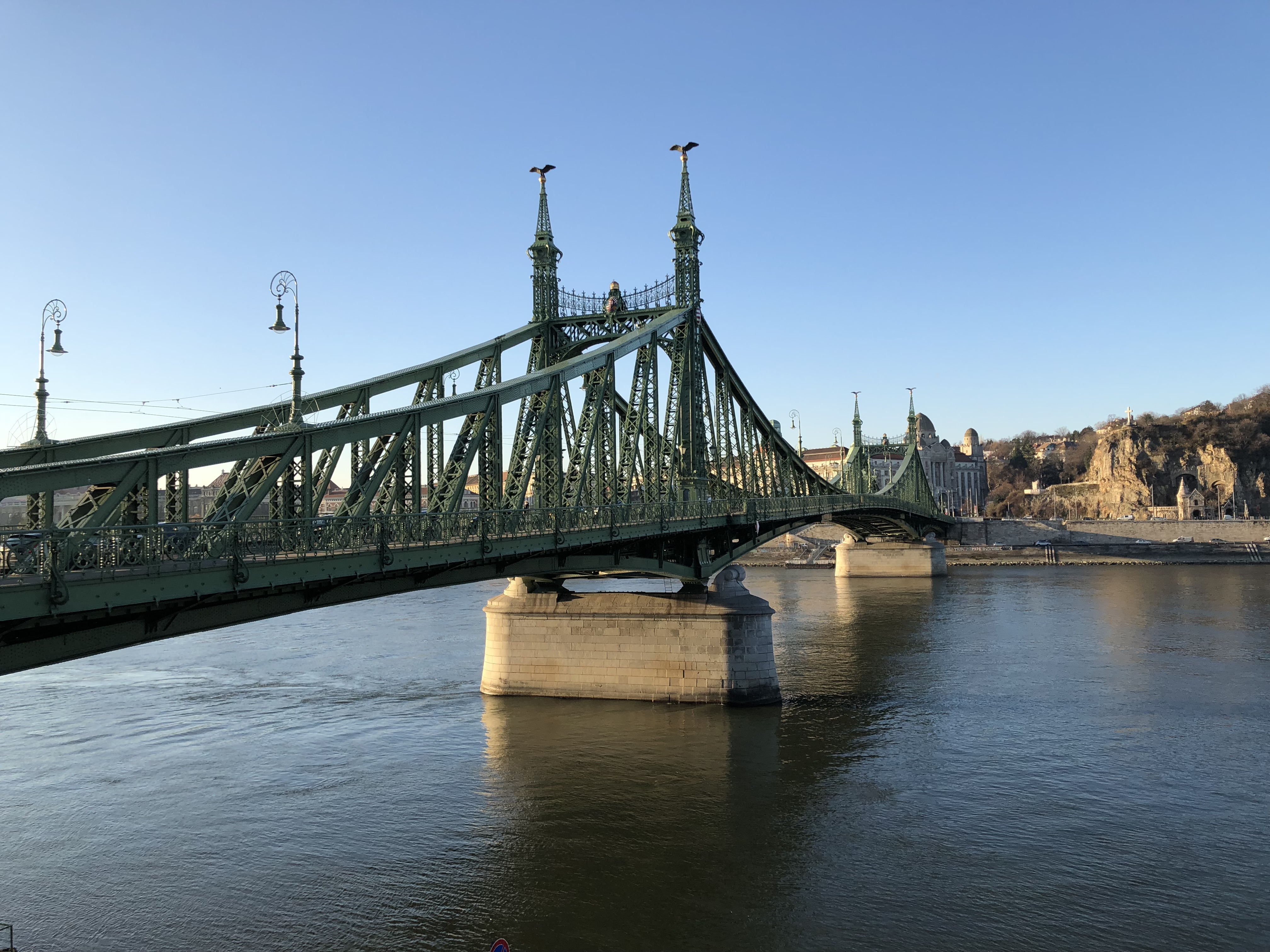
The cast-iron Liberty Bridge, right outside the Grand Market near Fovam Ter station See if you, dear reader, can find my two inscriptions Dohany street synagogue, across from Socks coffee
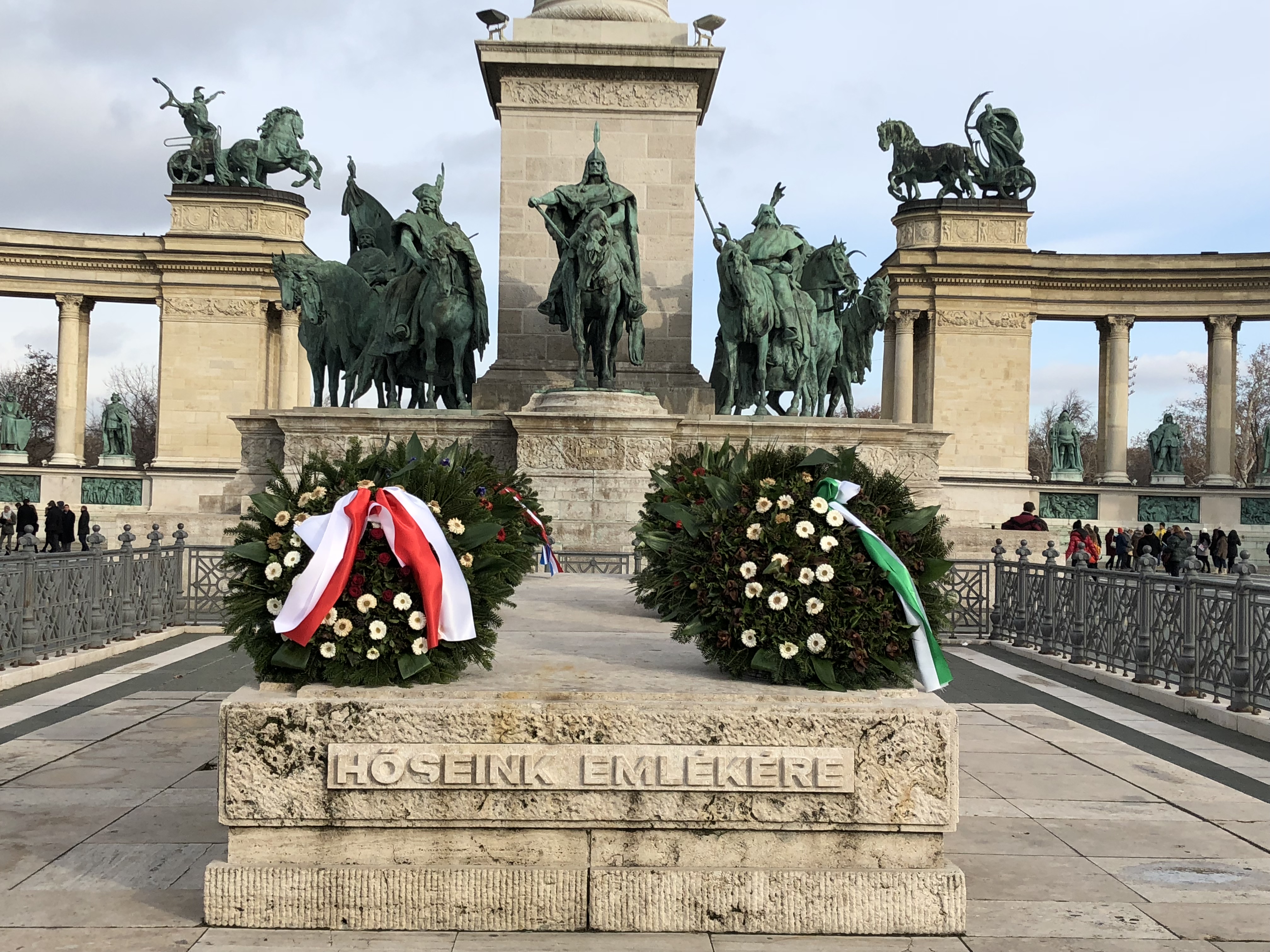
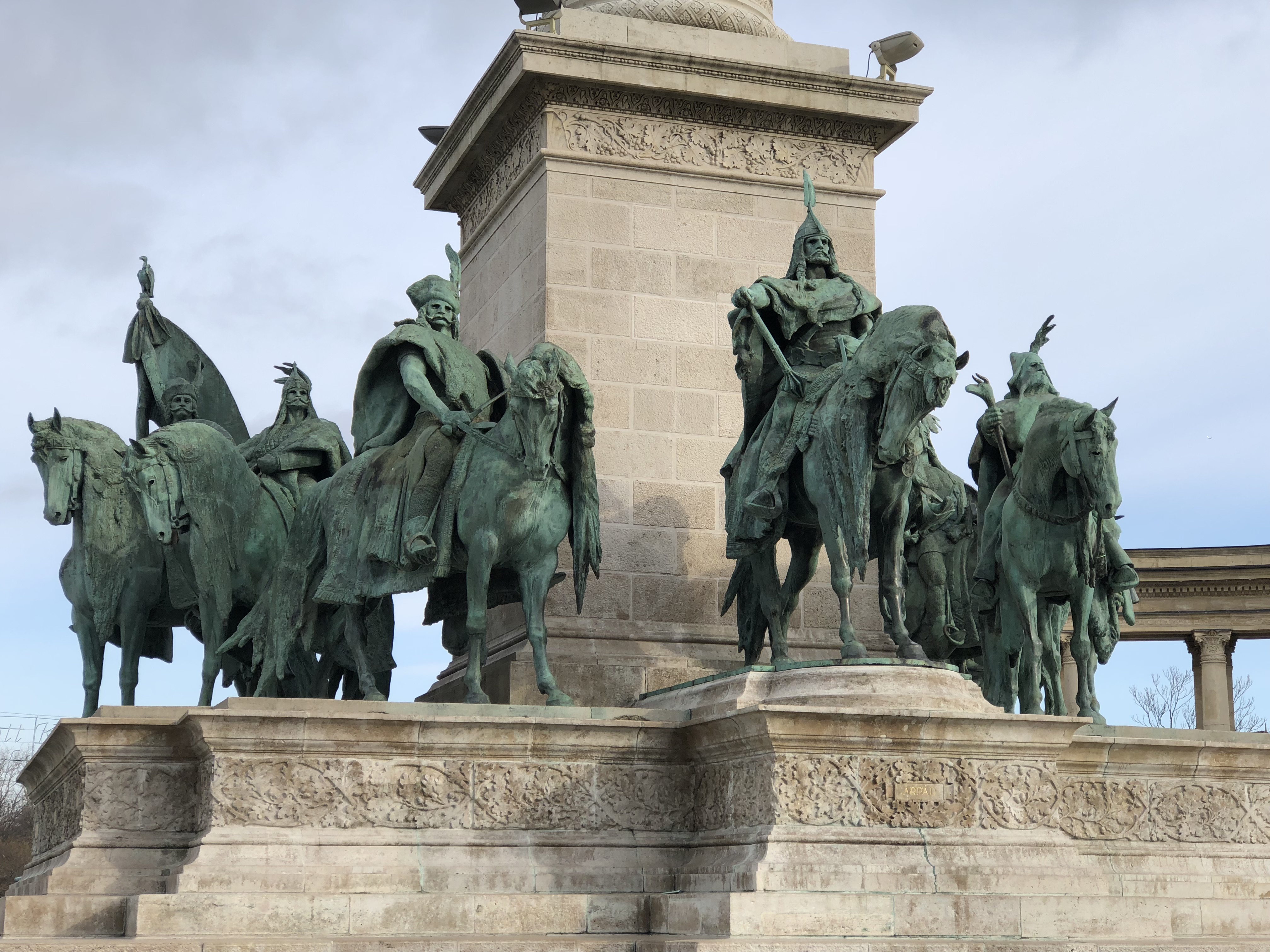
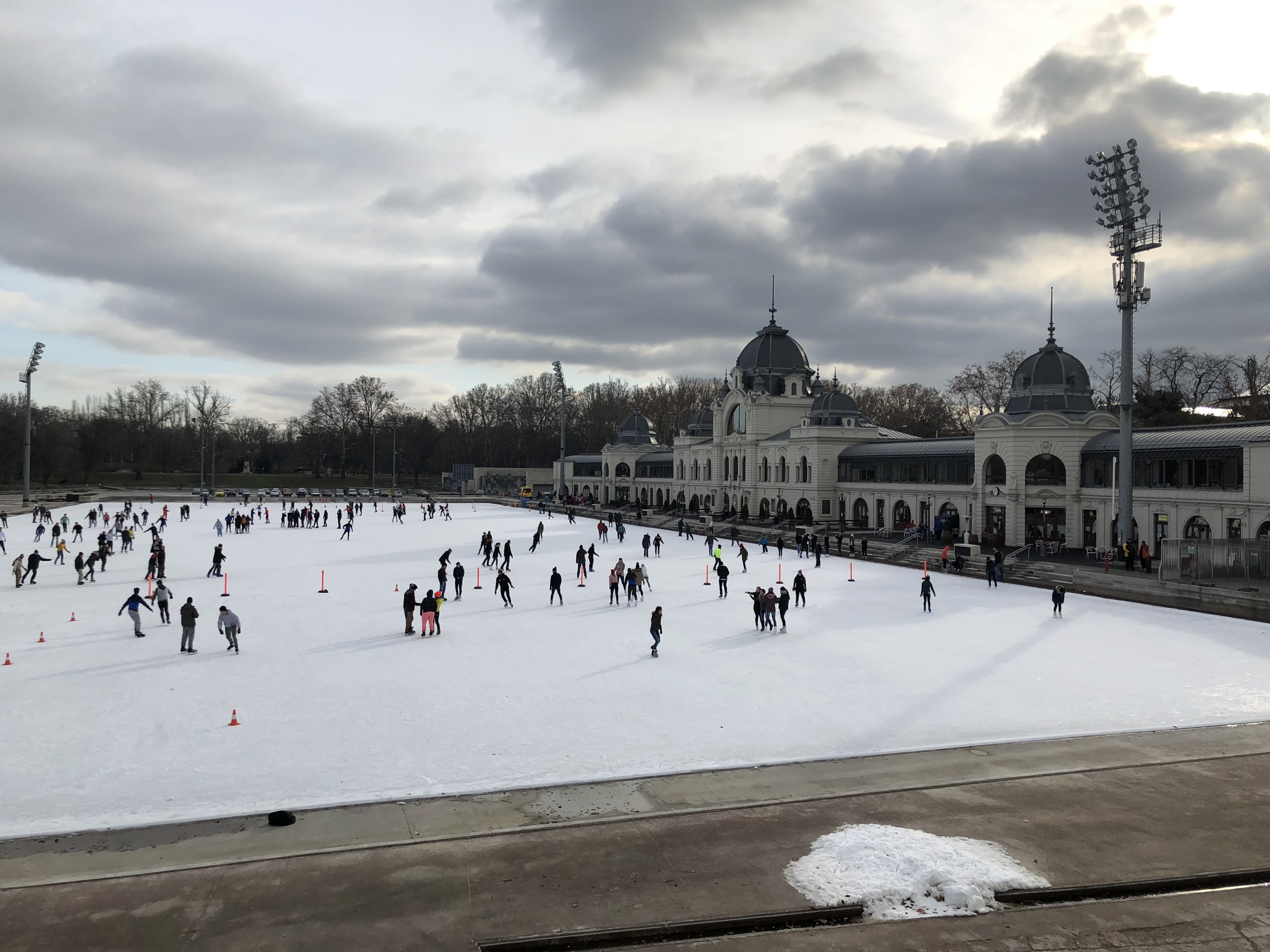
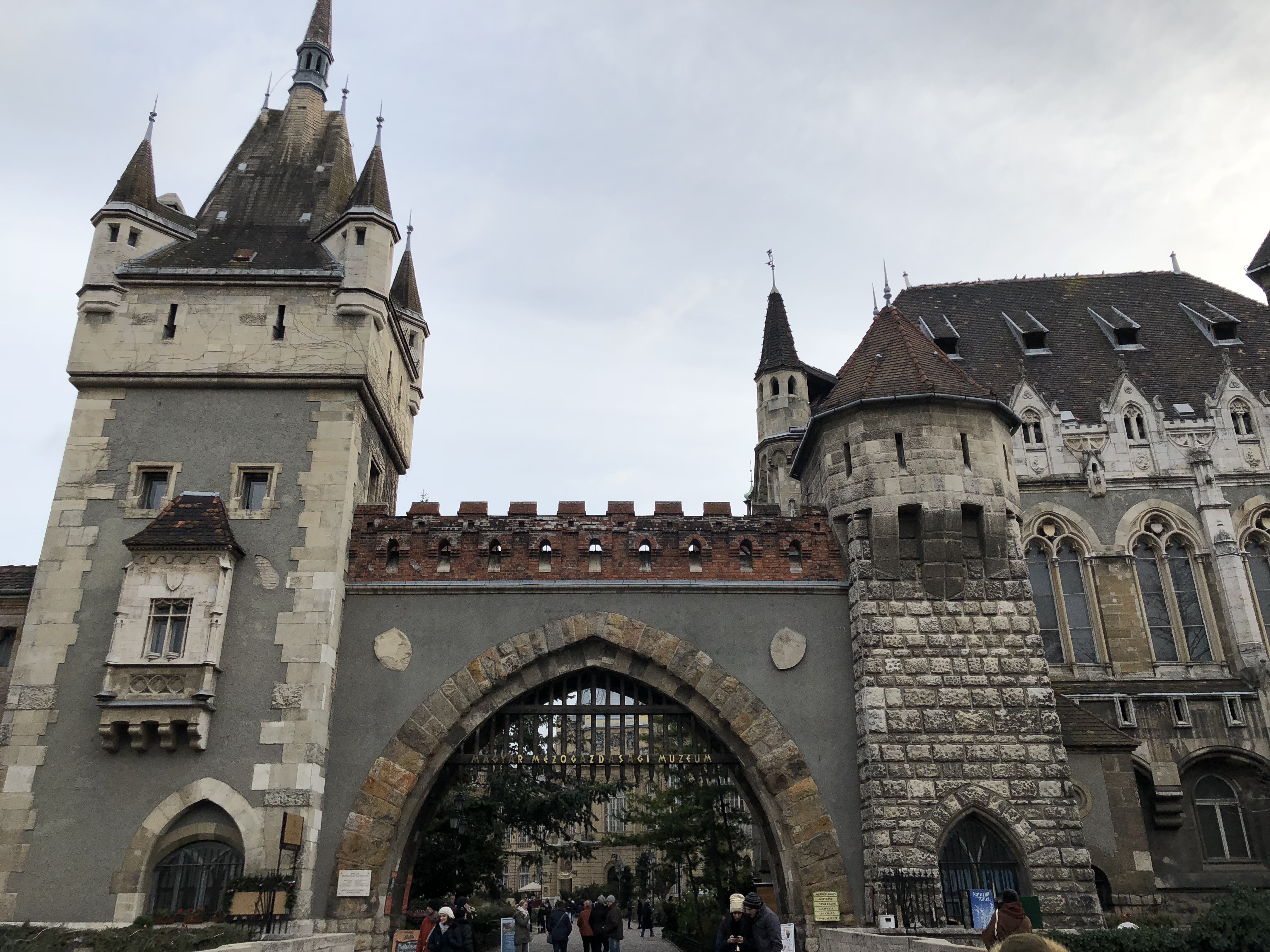
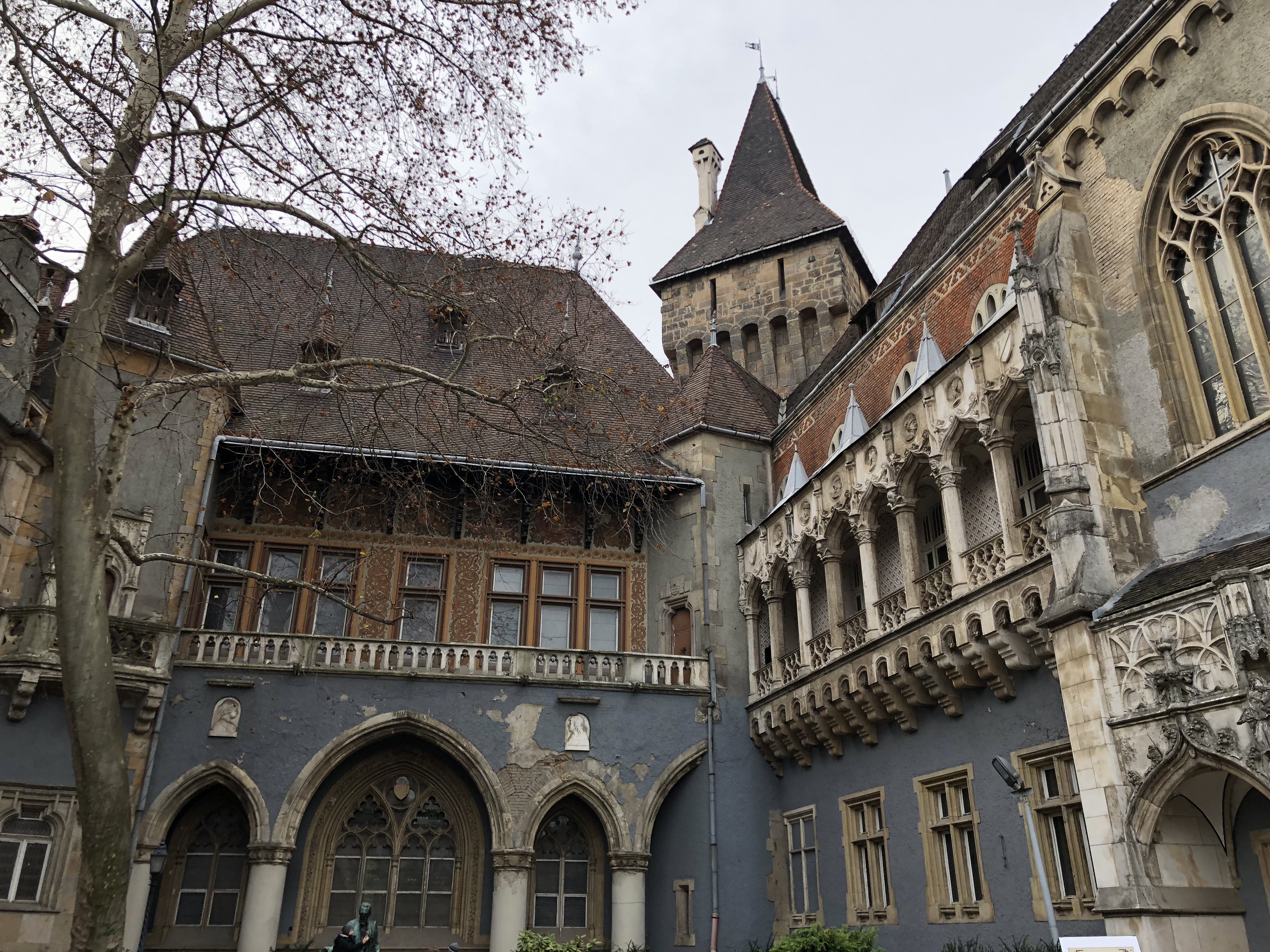
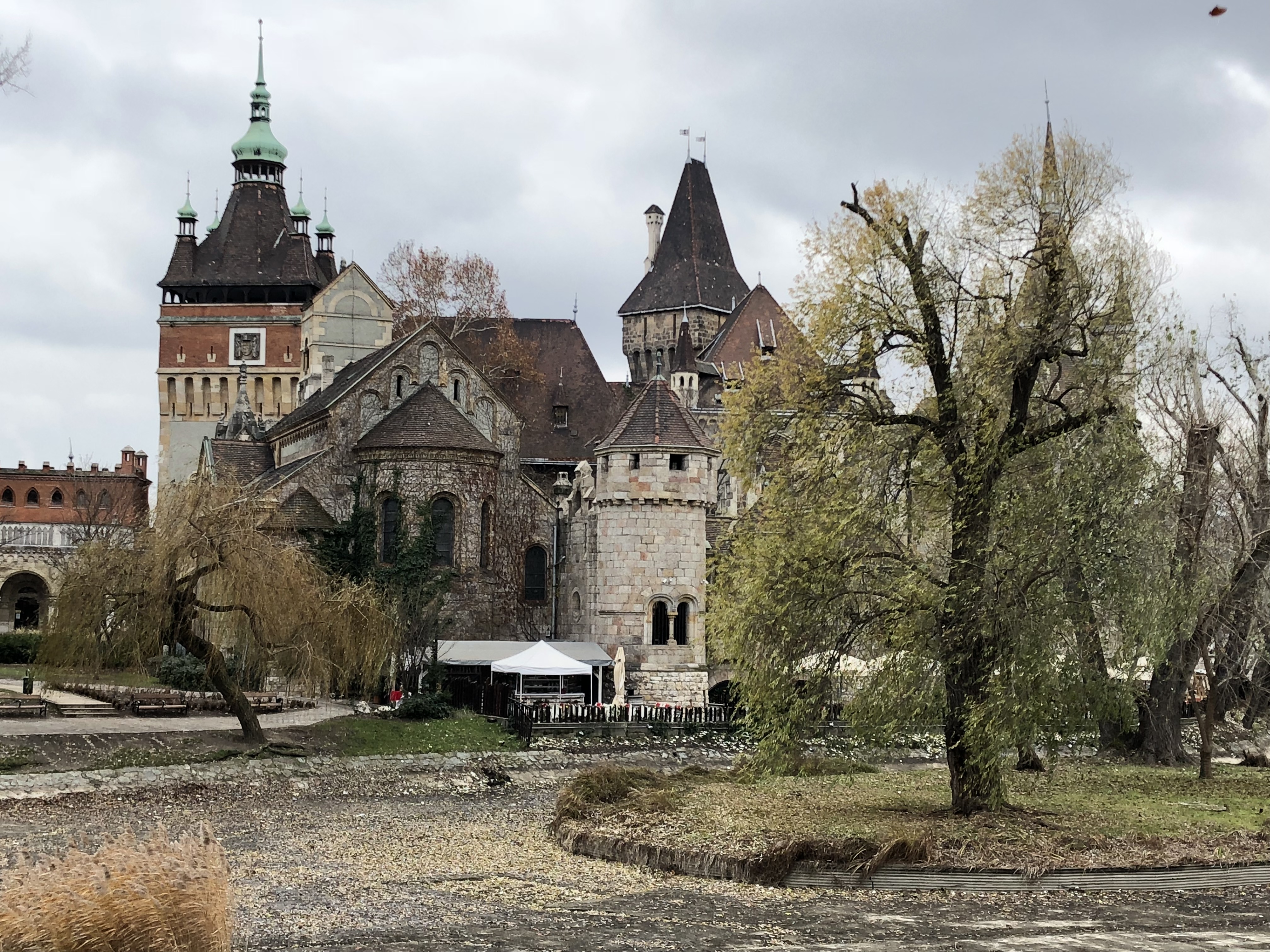
Our next stop was somewhere I’d never visited before: Hosok Tere which translates to Heroes’ Square. It’s home to a set of large, imposing statues of Magyar heroes of the past, most of whom are on horseback. Hungarians were renowned as Europe’s best horsemen, and were fearsome warriors. Which makes it puzzling that they were defeated in virtually every war they ever participated in… Behind Hosok Tere is Budapest’s largest park: Varosliget. This is where you’ll find the Szechenyi thermal baths, famous for both its raging pool parties and poolside chess games. We decided to stick with the park itself this time, especially since we wandered upon the castle-like buildings of Vajdahunyad Vara. With the leaves fallen off the trees and the faded but not dilapidated colors, the place looked a little haunted. I loved walking around this park, and I couldn’t believe I’d never gone out to visit it before. Maybe I was also none too thrilled about taking the city’s old 1 metro line there and back at the time, just like my friends now.
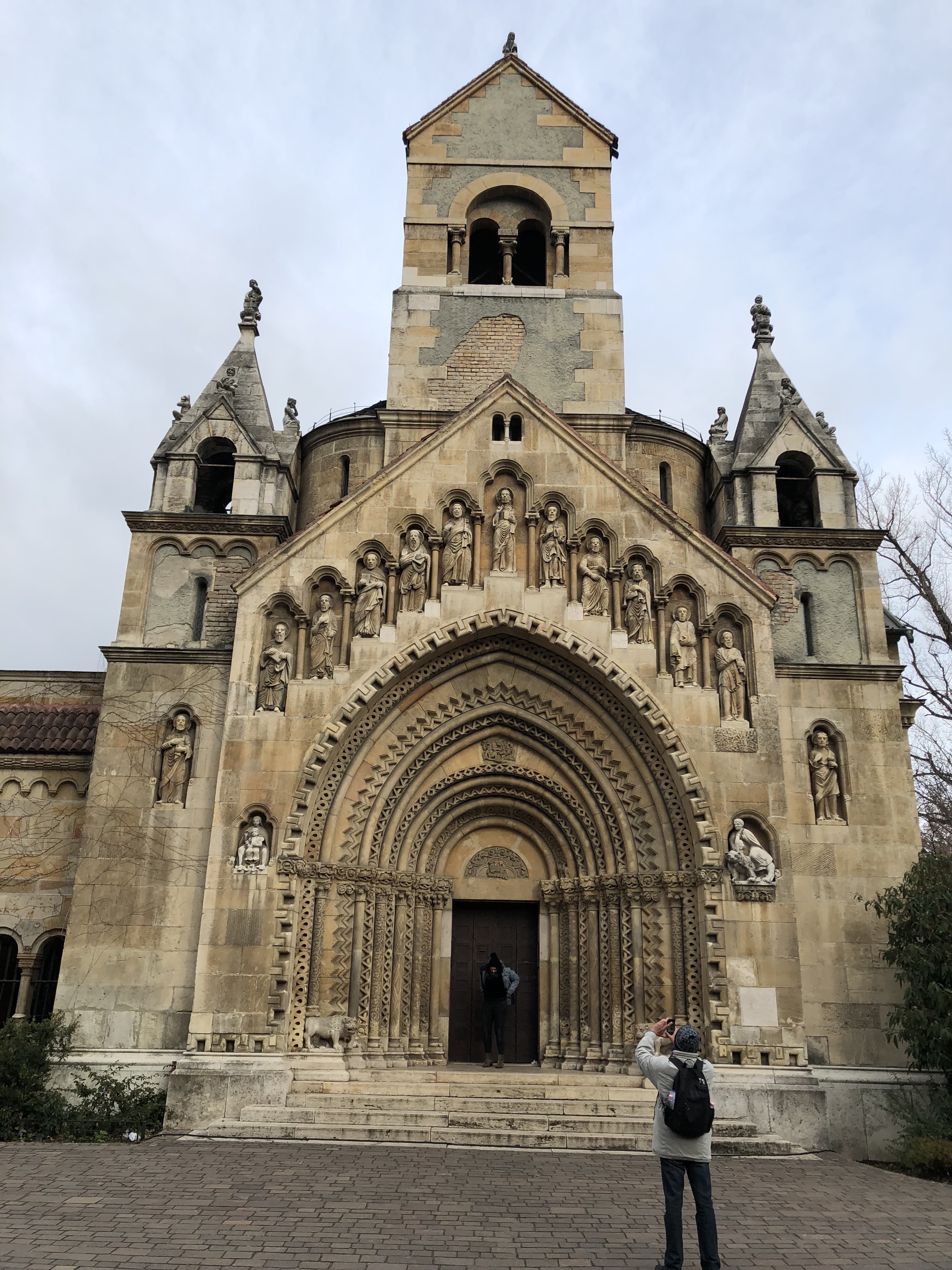
Hosok Tere’s bronze statues, and wreaths honoring the lives of Hungary’s fallen soldiers The guy furthest to the right looks just like Gandalf… A fancy ice skating rink had been set up outside, now that the weather turned frosty The castle-esque buildings of Vajdahunyad, complete with a spiky drawdown gate A church building within the complex One of the more spooky courtyards we came across. Wouldn’t want to be here at night! The whole complex across a dried-up lake. Spooky but still stately!
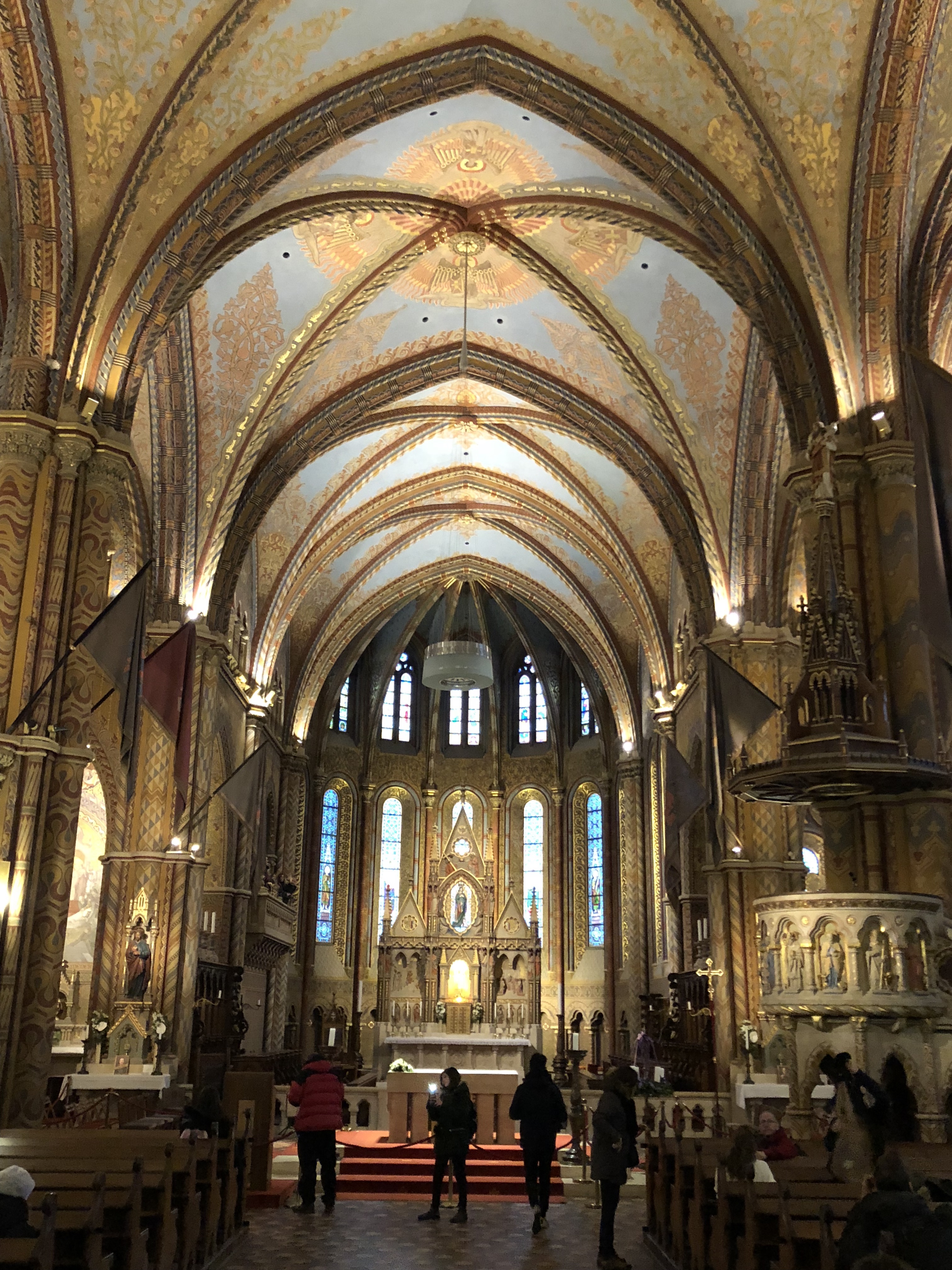
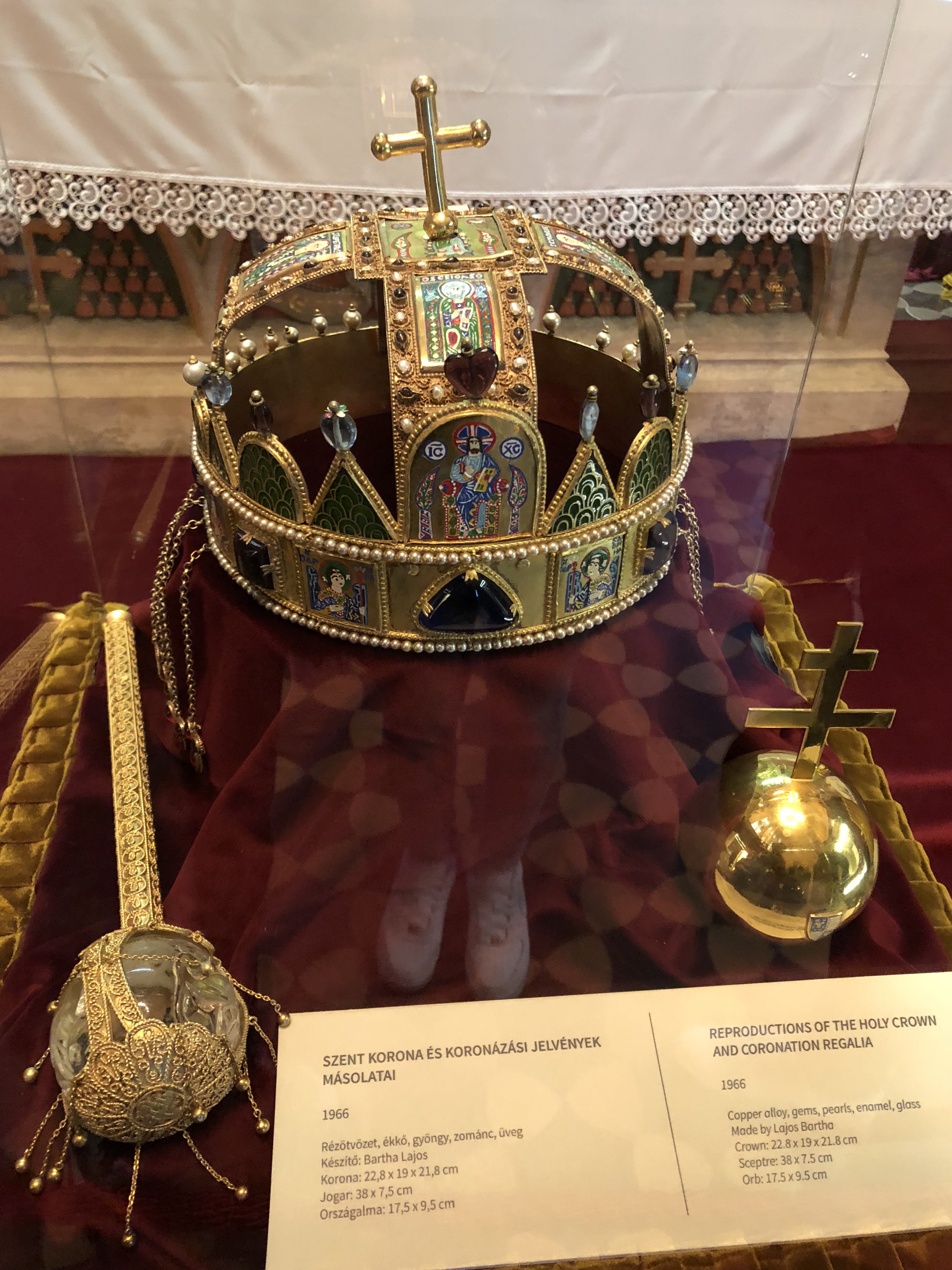
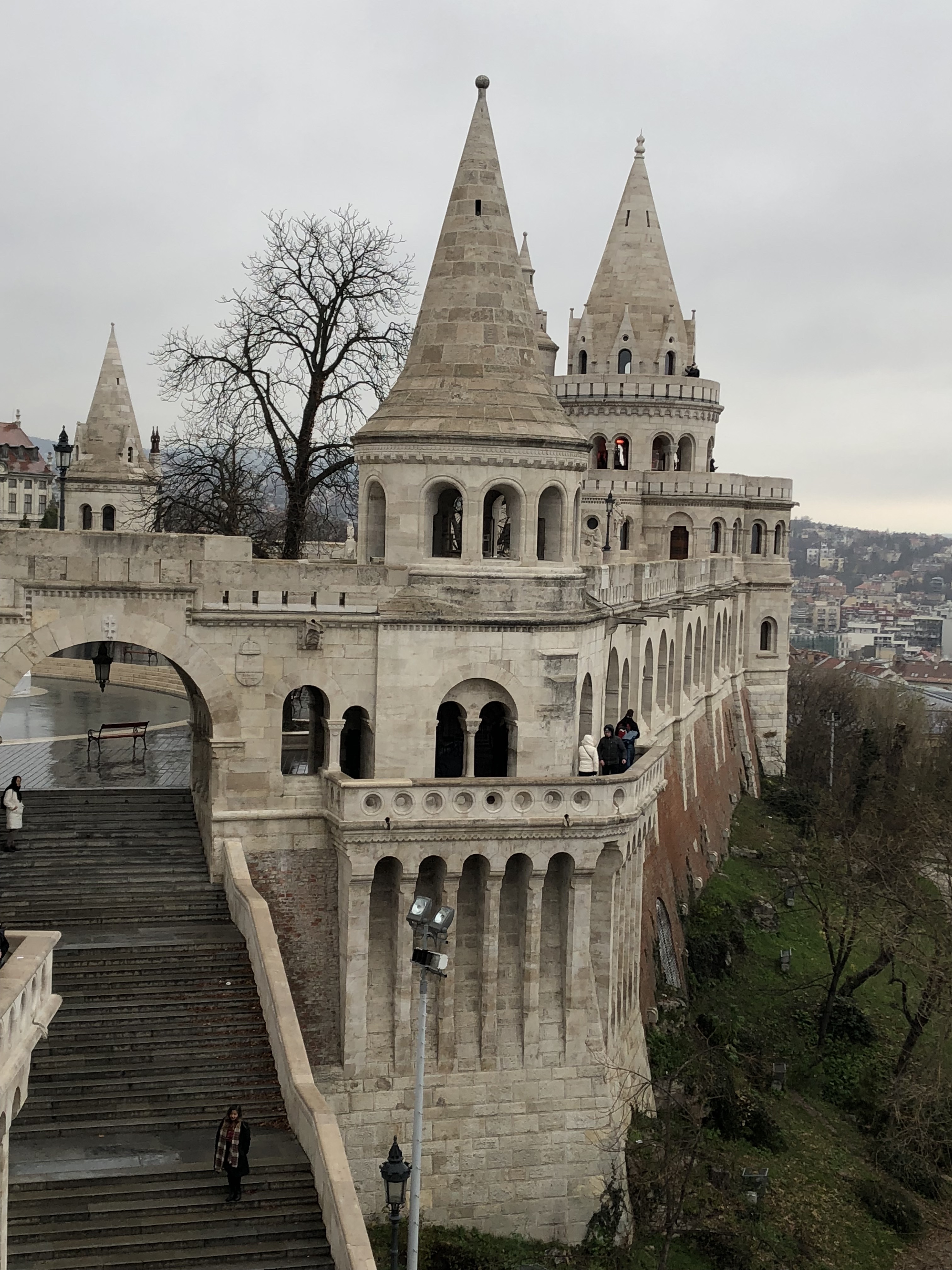
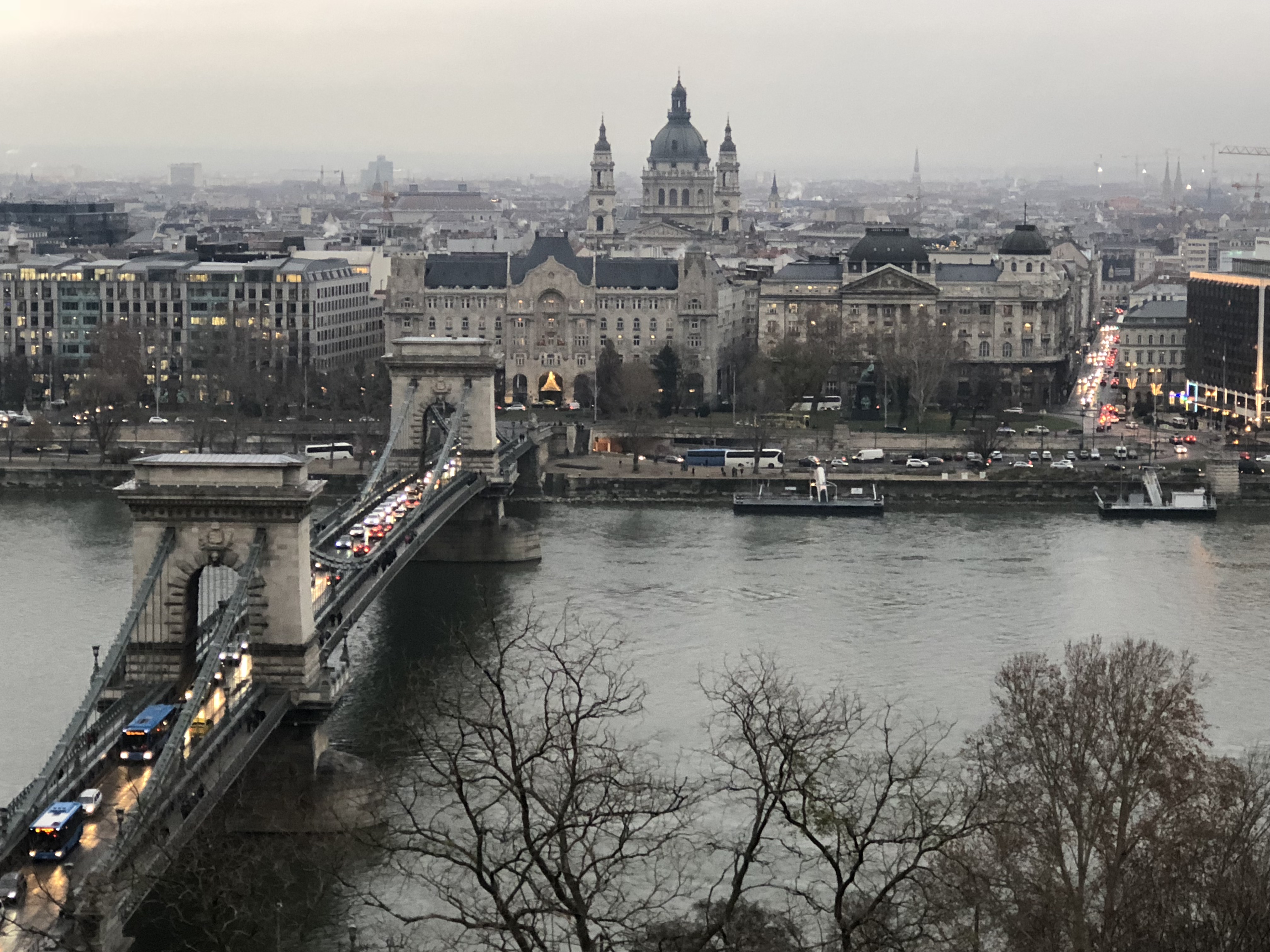
My friends had to endure one last ride on the ancient 1 metro on our way to Szell Kalman ter, the station closest to the Buda Hill area. The escalator out of the station takes 2 whole minutes, which is especially surprising given the rapid pace that Budapest’s escalators are known for! Afterwards we arrived at the Matthias church and Fisherman’s bastion area, which is the only one that ended up being a repeat visit for me this trip. One of my friends declined to pay the admission fee and admired the bastion instead, stating that “Once you’ve seen one church you’ve seen them all”. Anyway, what’s most striking about this church from the outside is the colorful tiling that you’ll see on Vienna’s Stephensplatz cathedral. The interior is elegant and honestly looks pretty recently painted. A replica of Hungary’s royal regalia are also kept here, as the real ones are kept in the Parliament building itself. My friend’s choice to admire the view from the bastion shouldn’t be critisized however, as it’s a thrilling panorama of the Danube riverside and the layout of the eastern Pest side. The bastion itself is a gorgeous granite construction. During my days abroad I loved the few times I came up here to just watch the pulse of the city and life within it moving around. On the way back, we crossed Budapest’s iconic chain-link bridge, the first across the Danube river, and Buda Castle which is also perched on the hill. Both were lovely in the fading light of the day.
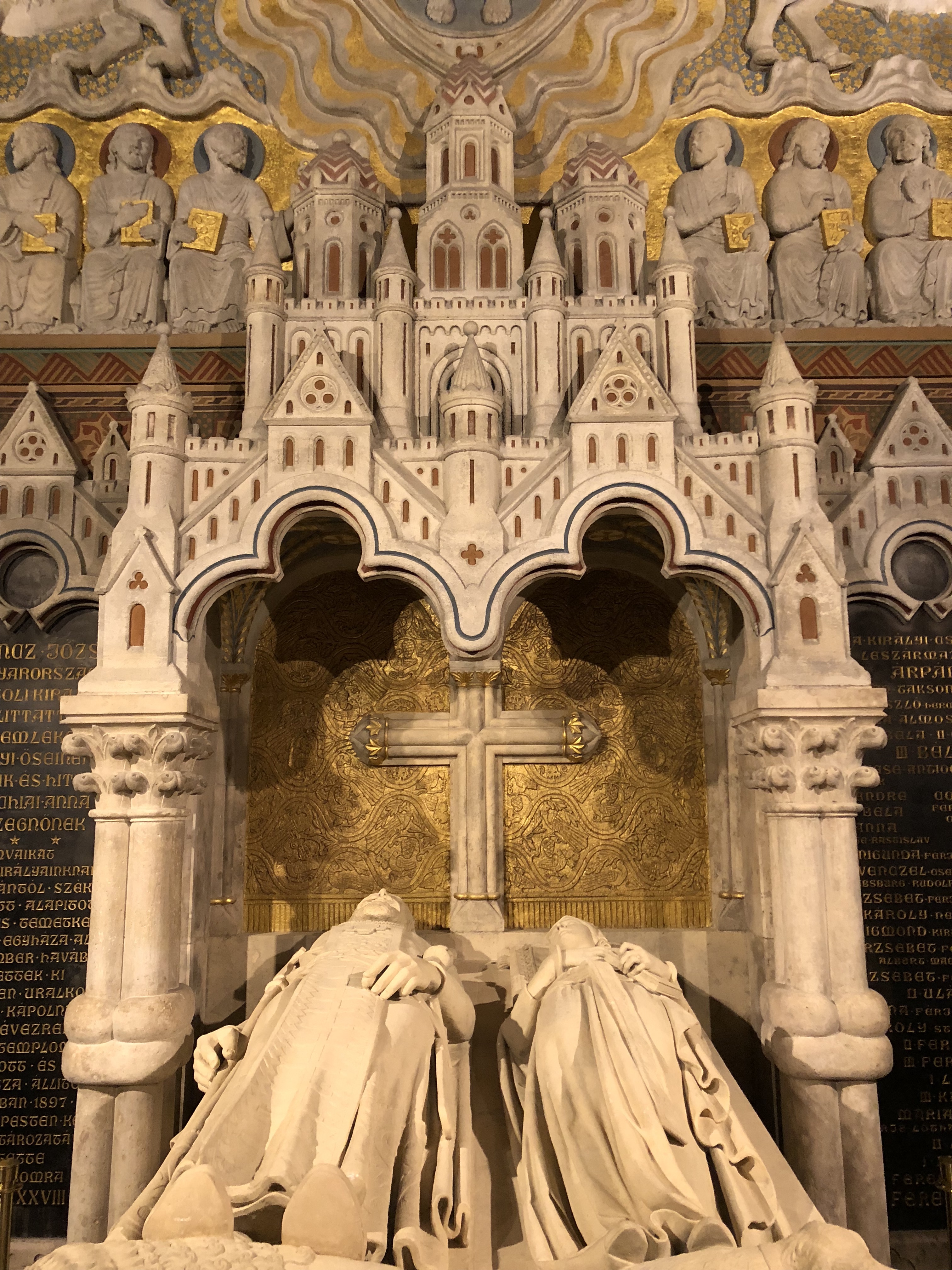
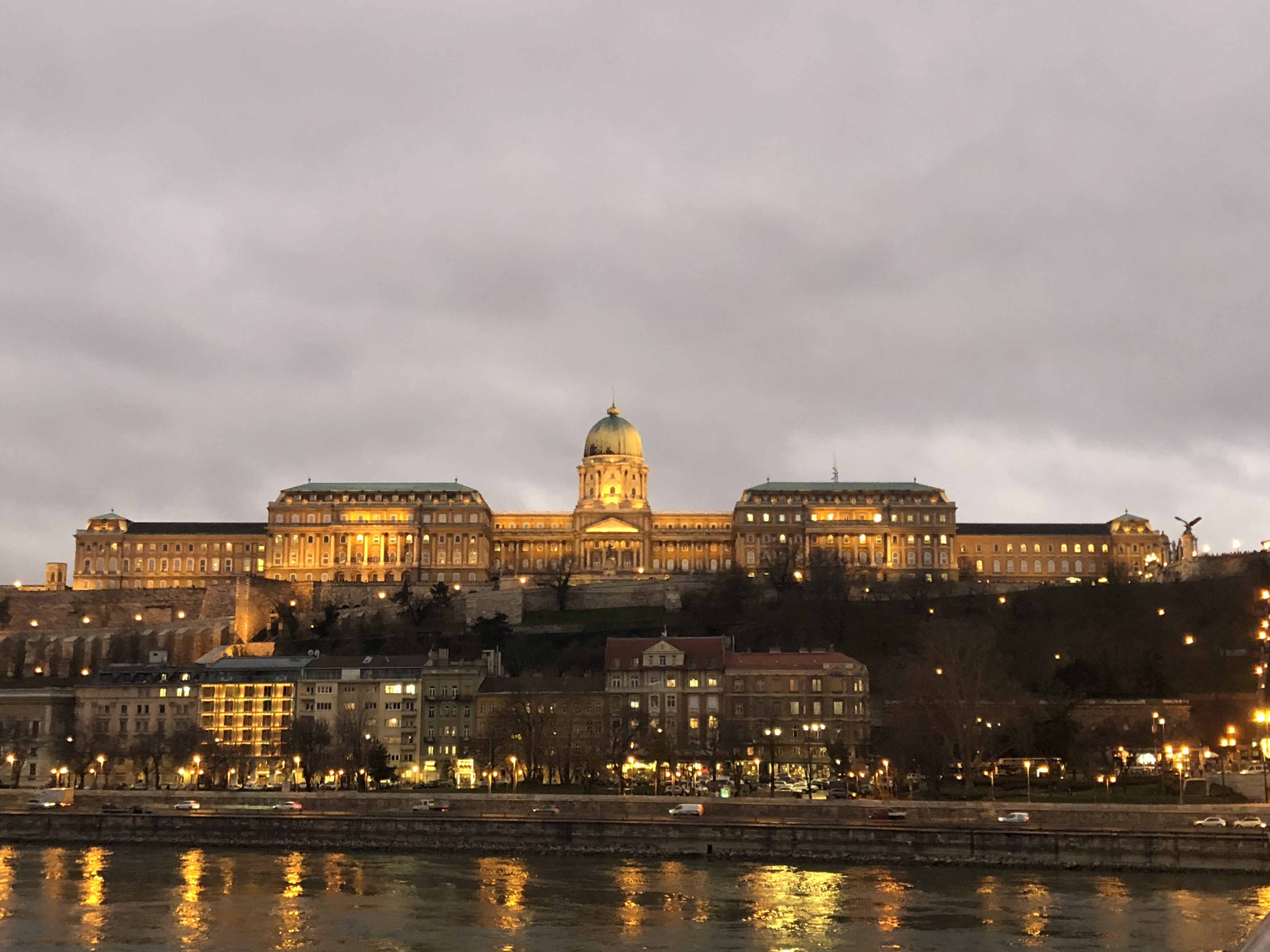
The exterior of Matthias Church on Buda Hill, the oldest section of the city The elegant church interior Sculpture of the city’s bastion above a church grave Hungarian replicas of the royal regalia. Definitely less fancy than the Holy Roman Empire’s Buda Hill’s majestic Fisherman’s Bastion, the city’s best overlook Budapest’s chain link bridge, with the Four Seasons hotel and St. Istvan cathedral behind it Buda castle bathed in golden light, reflected in the Danube river
Our plan after that was for everyone else to rest at the AirBnB, while I went to purchase swim trunks that I’d forgotten to bring. We were going to head to a thermal bath afterwards, but I returned to our lodging to find everyone else fast asleep. Since I was feeling exhausted myself, I took a nap myself as well. We didn’t wake up until around 10 p.m., after most restaurants had closed. But we managed to remedy this by getting Doner Kebab, which is a favorite late-night snack. Now that we were awake, we went across the street to Szimpla Kert, possibly the city’s most famous “ruin pub”. These pubs were built in the ruins of buildings that were bombed out in WWII, and got to get a lot more creative with their architectural decisions in the process. Szimpla designed an upper level with themed rooms, many with graffiti art on the walls. The back of the lower level was a massive open space, and it’s here that we settled with beers to chat and relax. On our way out though, I convinced us to all get a shot of Palinka, the vodka-esque spirit made from apricots that is the national pride. So much so that when the Soviets invaded, a bunch of young Hungarians huddled together and memorized the recipe before burning it and handing over a fake one. After Communism ended in 1989, the now-old men got back together and revealed that the recipe under the Soviets had been fake all along! Now that’s dedication to a cause. Anyway, it was just as unpleasant to drink as I remembered. We all settled in to sleep back at the AirBnB soon thereafter.
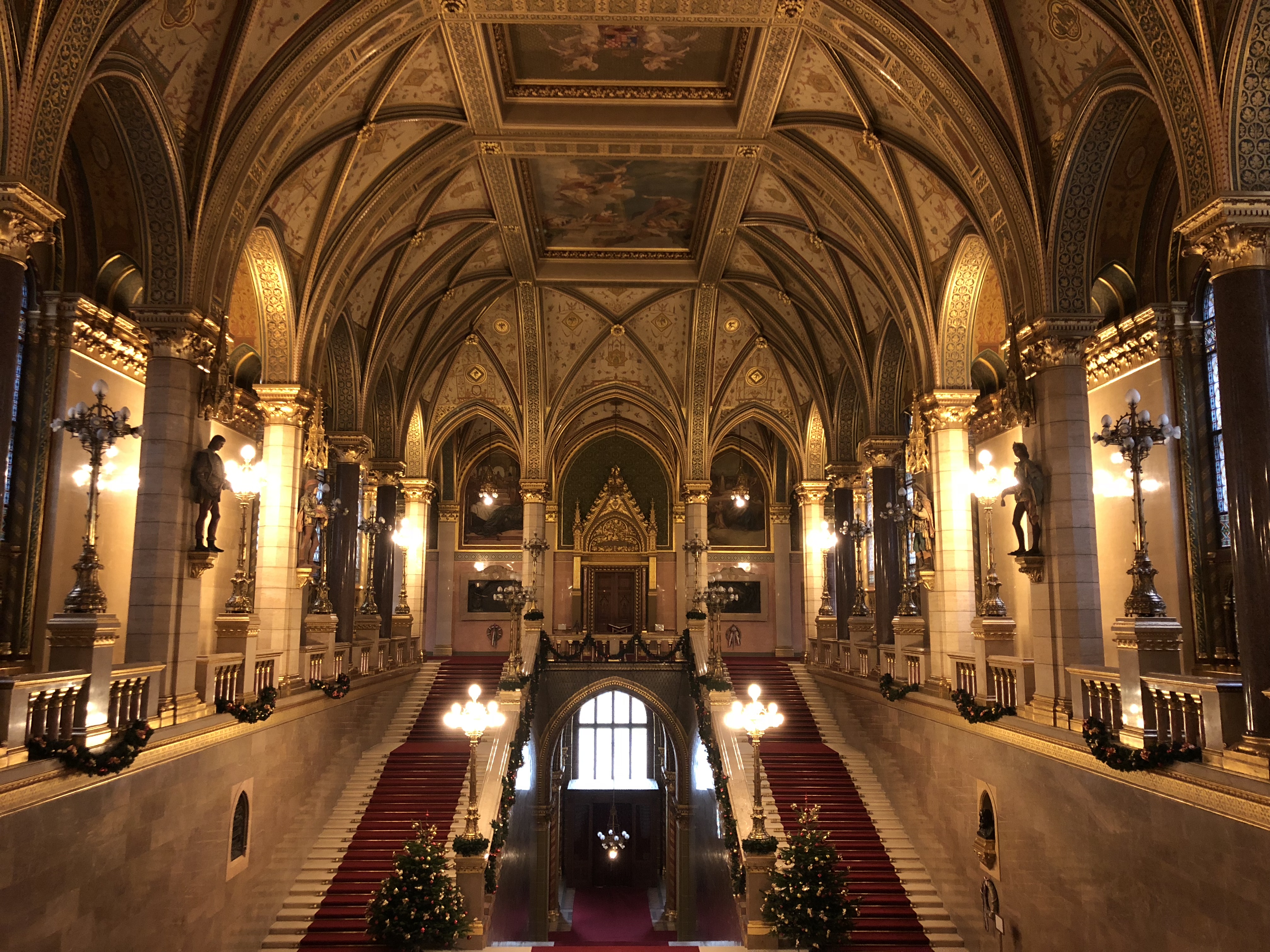
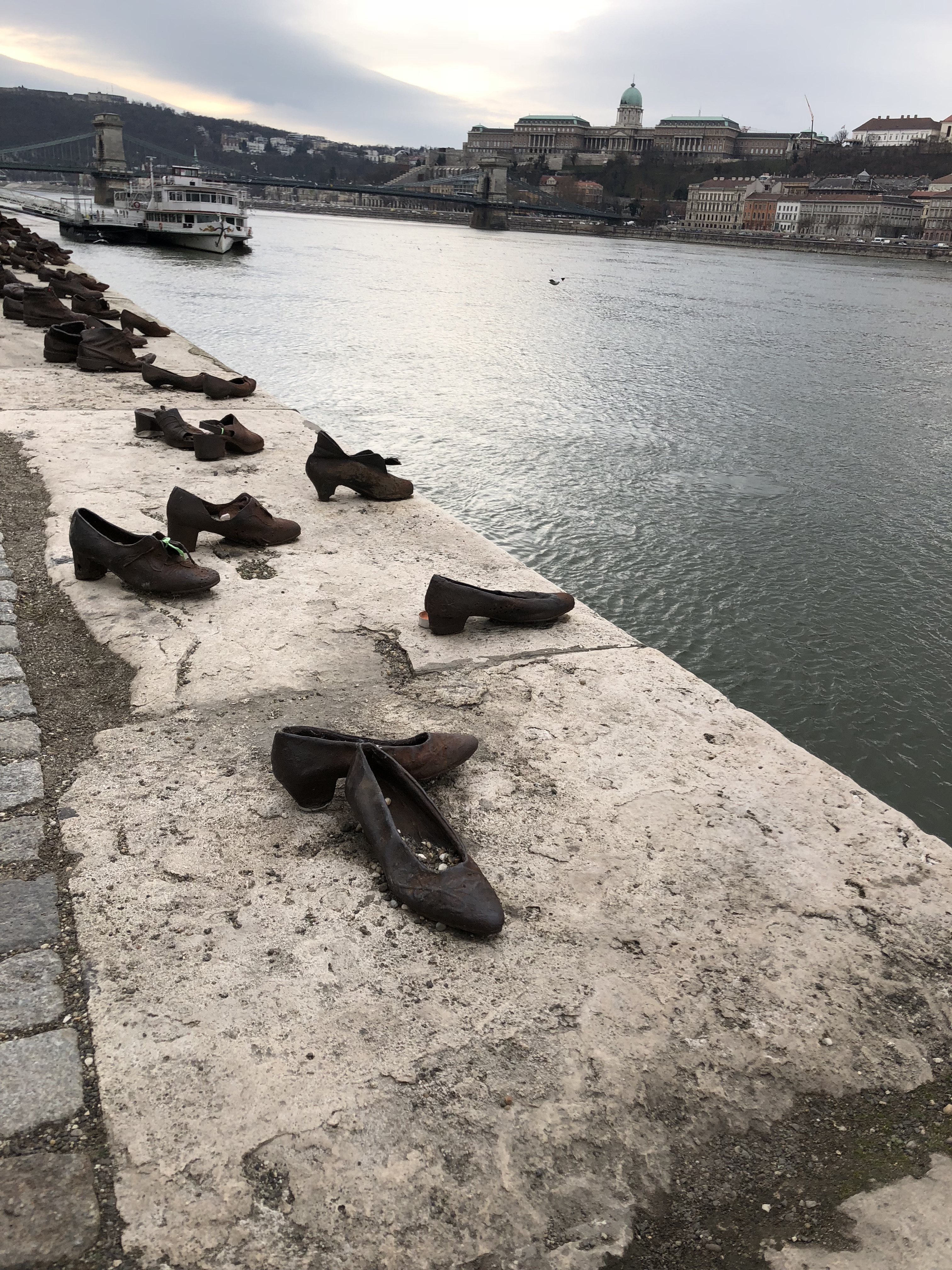
Although the rest of my group slept in, I woke up purposefully early to attend an 8:30 a.m. tour of Hungary’s parliament building, in English. It was the only timing slot by the time I’d checked the night before, and I was determined to see the inside of Hungary’s seat of government, which I’d passed up while studying abroad. Well, let me be the first to say that the visit was absolutely worthwhile. The tour enters through a side staircase, and leads down a long hallway before you reach the official entrance reserved for heads of state. It’s a massive, massive hallway composed of a grand staircase, velvety red carpeting, and a vaulted ceiling with paintings hanging overhead. It was honestly one of the most breathtaking spaces I’ve ever seen inside a government building. From the entrance hall we proceeded to the building’s central dome, where the true Hungarian regalia are kept. Looking is allowed, but pictures are forbidden. The spire on the dome rises to 96 meters, which is significant because Hungary was founded by the Magyars in the year 896. Its height is tied with that of St. Istvan’s basilica, and there’s an official ordinance that no building in all of Hungary can be taller than these two. Our visit continued into a couple parliamentary chambers that had fallen out of use, and down more grand hallways. Many windows overlooked the Danube, which is a view I’m sure the politicians appreciate as they go to and from their meetings in the building. Lastly, the tour exits upon the bank of the Danube. It was here that Budapest chose to put an outdoors Holocaust memorial, in the form of empty metal shoes of all shapes and sizes that represent the ones left behind by victims of that tragedy. It’s a memory to the state that they must never again be complicit in the kind of genocide that they aided the Nazis in when they arrived in the Hungarian capital in 1944.
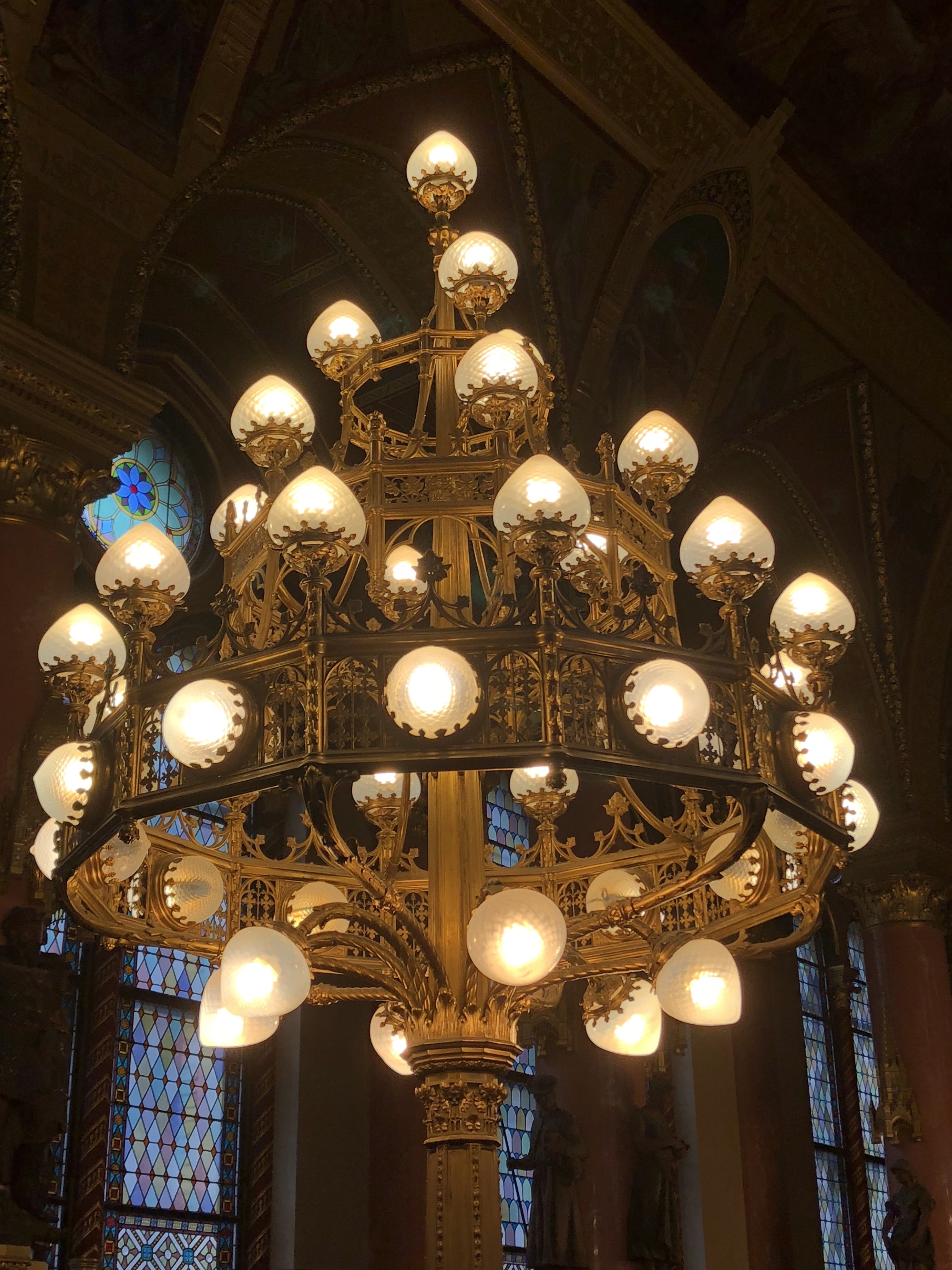
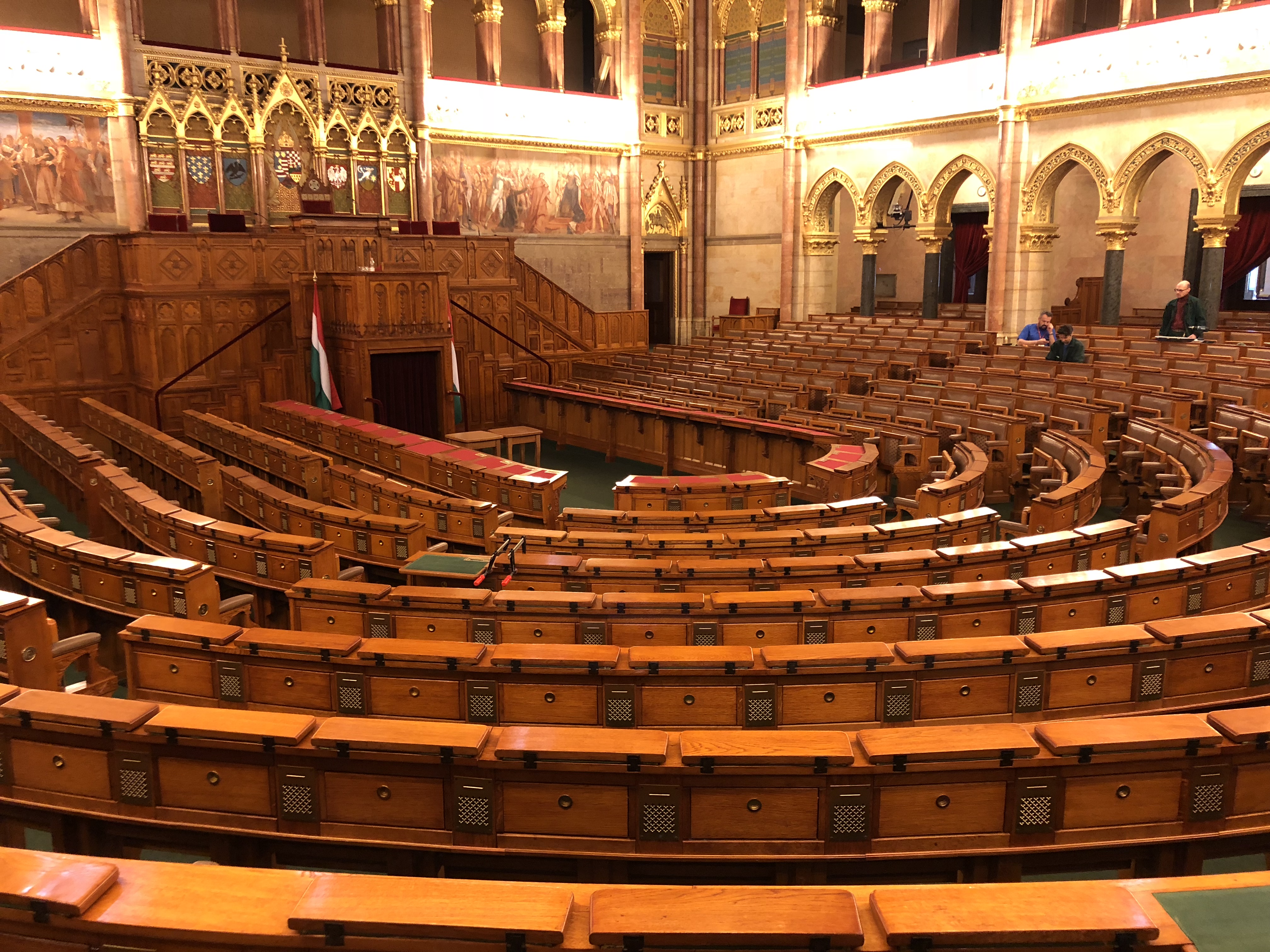
The massive official state entrance of the parliamentary buildings. Reserved for heads of state One of the beautiful chandeliers, and simple stained glass windows in the background An unused section of parliament. Looks kind of like a university lecture hall The monument of shoes by the Danube River, just outside parliament
Unfortunately we have to end on a less pleasant anecdote. After I returned from Parliament the rest of my party was awake, and we had to grab a meal before heading to the airport for our Ryanair flight to Prague. (Yes, I insisted that no trip to Europe was complete without the Ryanair Experience. I did this for my family too). Joel and I picked the Grand Market, since it also gave us an opportunity to pick up a few bottles of Hungary’s famed Tokaj wine as souvenirs to take home to our families. Anyway, we decided to split up for lunch and I handed my friends a wad of cash, perhaps 6,000 Forints or so (~$20). Well, I’d just finished ordering my food when Joel comes running up to me apologizing profusely, and saying that he and the others had been scammed at another stall. He quoted the price of their order at 90,000 Forints. That translates to nearly $300 USD! I was worried but pretty certain that couldn’t possibly be true. I walked over to the stall, and the owner clarified that the total due was 9,000 Forints, equal instead to ~$30. The price was so high (relatively) because my friends had been offered a bunch of different side dishes as additions, thinking they were all free. That was not the case and they had to pay for everything. Thankfully, I had enough cash on hand and we were all relieved that there wouldn’t be any last minute trouble. We ate our last meals in peace, and headed to the airport soon thereafter.
It goes without saying that I was absolutely thrilled to return to Budapest, especially with friends in tow. I had left enough things off of the usual Budapest tourist checklist that our group was able to fill our time with fascinating places that I hadn’t been to before. I was on my own waking up for the Parliament building tour, and it was absolutely worth it. And adding the magic of the city’s Christmas markets, especially near St. Istvan’s cathedral, made the trip unique and very special from my previous time there. Still, one of my favorite parts about returning was getting to revisit the old cafes, restaurants, and bars that I’d spent so much time in as a student. Favorites which I talk about in the food installment of this trip include Gelato Rosa, Socks coffee and Getto Gulyas. I know it’s not light to say this but I’m pretty sure Budapest will feature in my honeymoon, or at least in a trip I take while engaged. It’s cemented itself as a city that will be special to me forever.
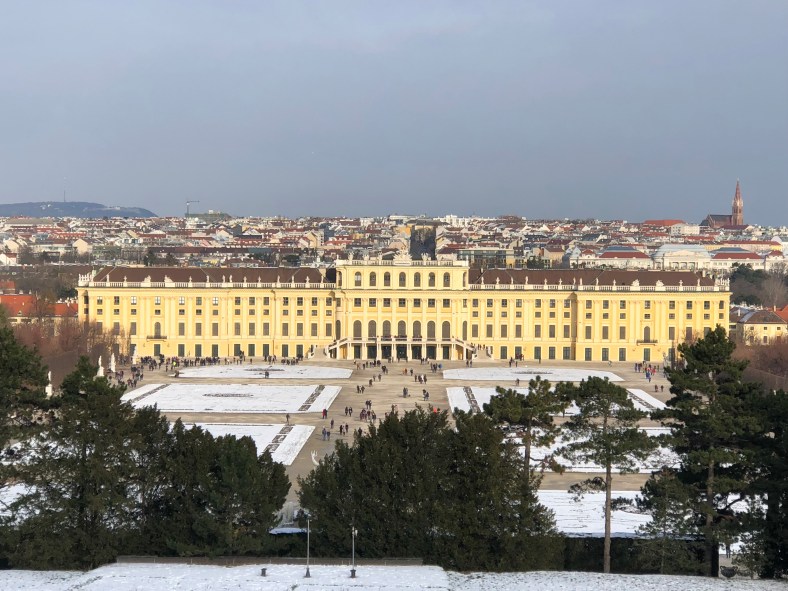
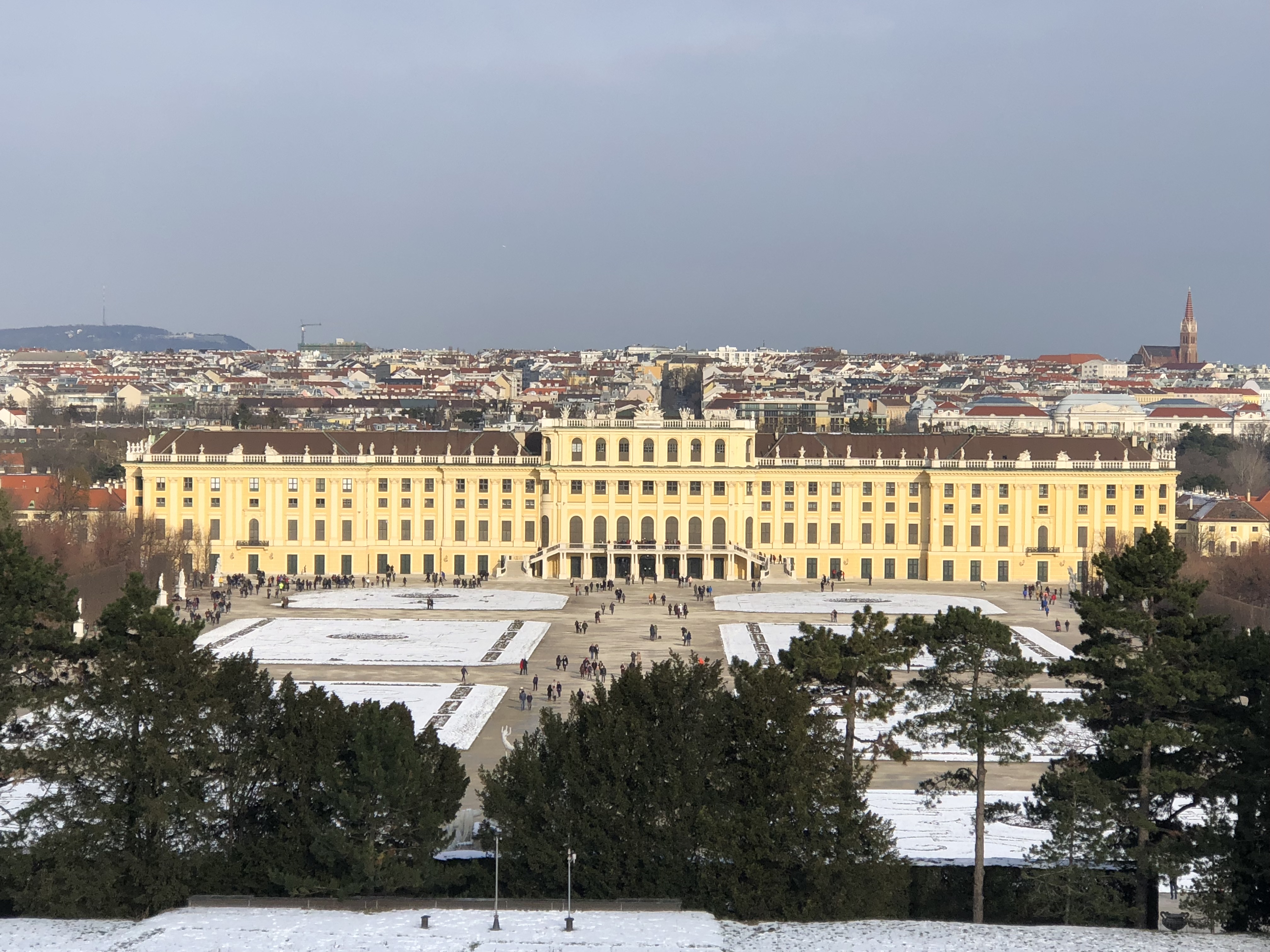
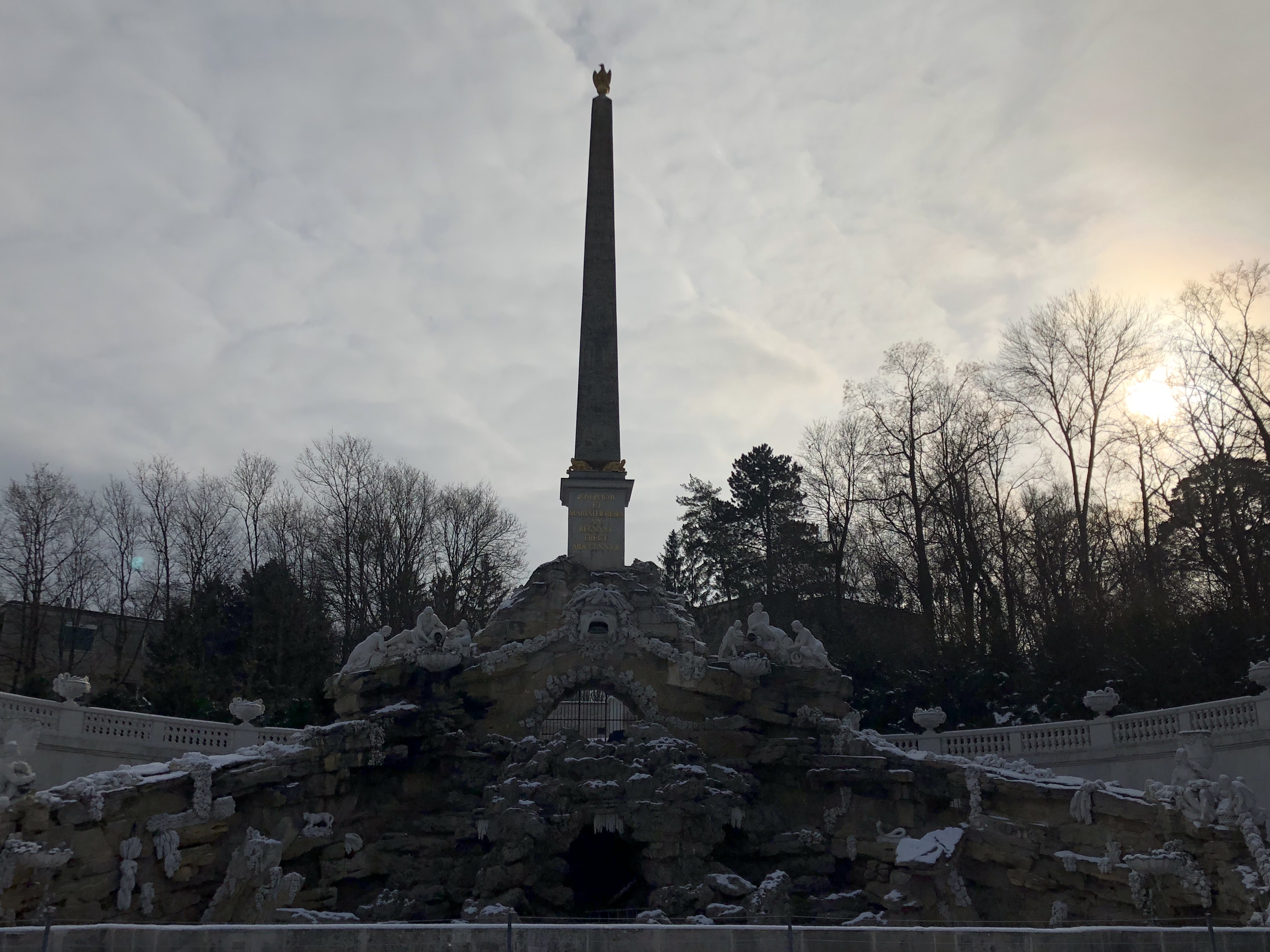
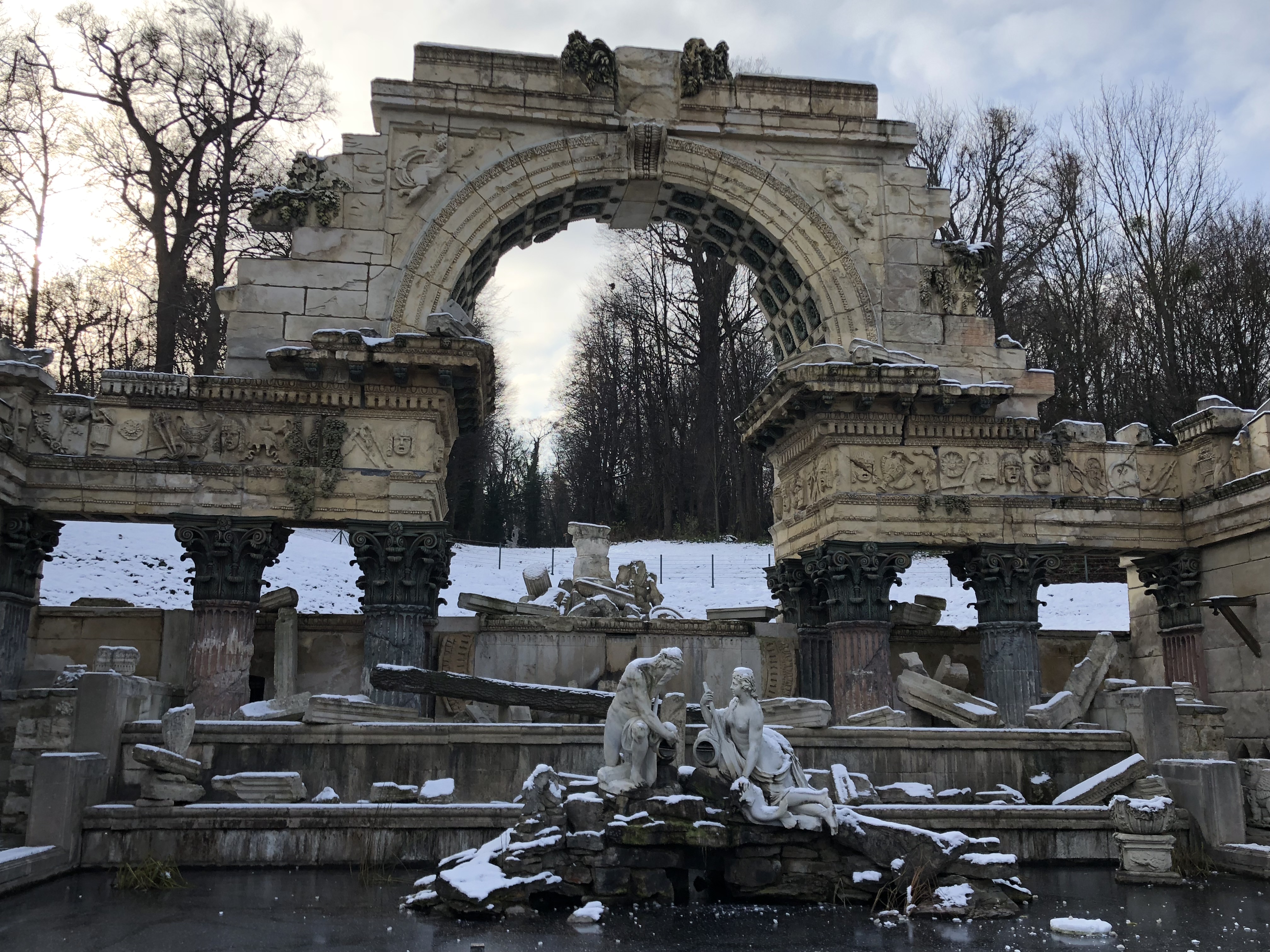
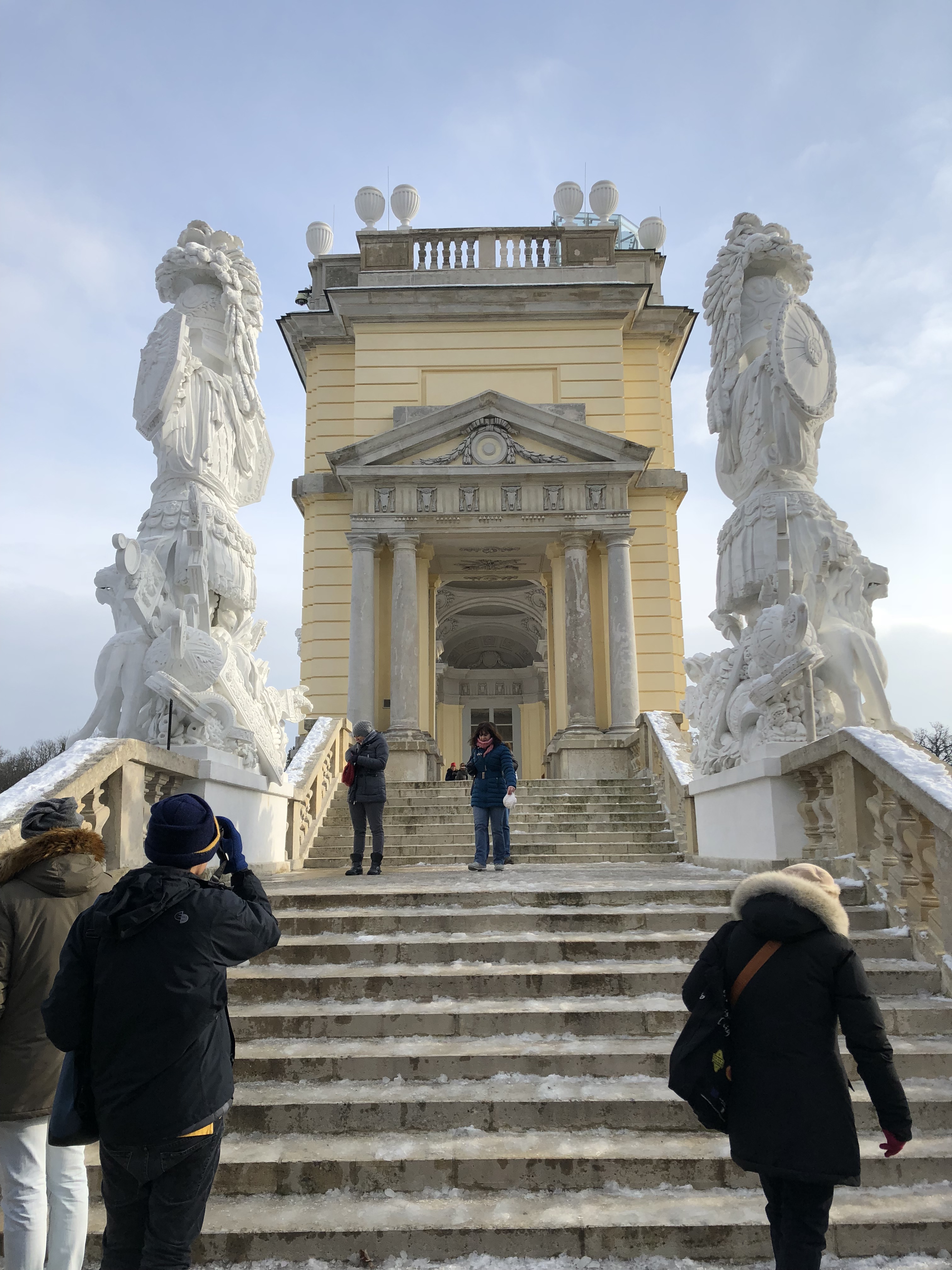
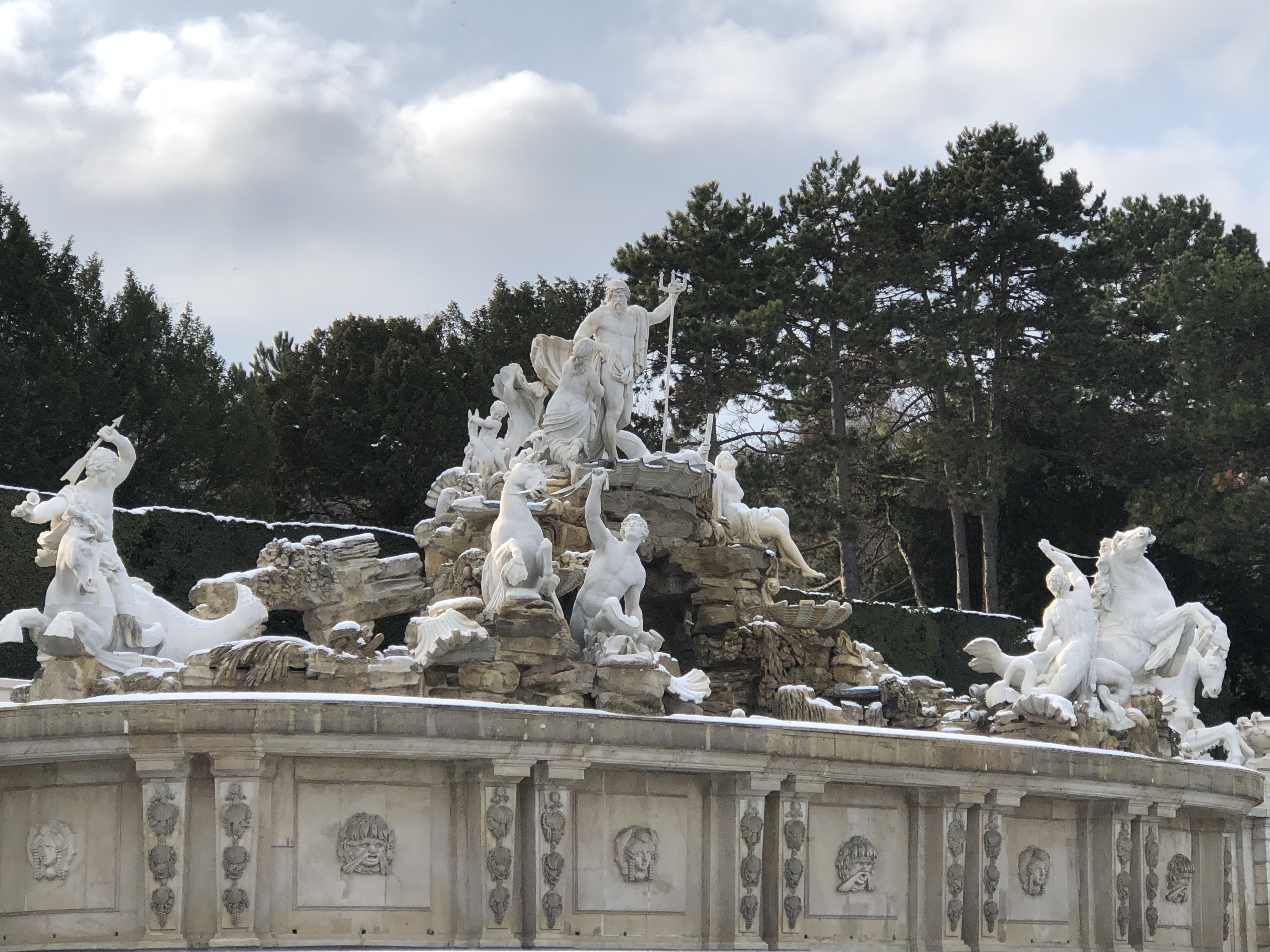
We flew into Vienna at around 4:30 p.m. on a Saturday, and were due to take a train out at 11:30 a.m. two days later. The day we landed, we didn’t have much time or energy to do anything other than get dinner and visit a nighttime Christmas market, which I’ll be writing about later. Thankfully, none of us were plagued by jetlag this time and we all slept a full 8 hours, and we managed to start our day around 9 a.m. Our group left the planning for Vienna to Joel, who was the most excited about visiting due to both the imperial and musical history of the city. After a quick breakfast near our AirBnB, we took the U-Bahn metro system to the Schonnbrunn palace. Even though it is reached by the metro now, in imperial times it took hours to travel the few miles from the city to the palace and that distance made it the family’s summer retreat. We were hoping to get entry tickets on arrival, but the tours were timed and the next one was 4 hours into the future. We decided that was too long, and spent time wandering around the monuments and gardens in back of the palace instead. They take up a massive amount of space, easily over a square kilometer. The ground and most statues were dressed in a fresh coat of snow, while the ponds all had a thin and transparent layer of ice. After about an hour and a half wandering through this snowy expanse, we took the U-bahn back towards the city center.
Schonnbrunn Palace exterior, framed with the city of Vienna in the background. Hard to believe that this place was used by a single (admittedly large) family and their guests One of the many monuments around the gardens. This one’s an obelisk The pool here is frozen over, while the rest of these preserved ruins are covered in snow Staircase to a veranda near the back of the palace grounds. The steps were slippery! One last statue-pond, presided over by Poseidon
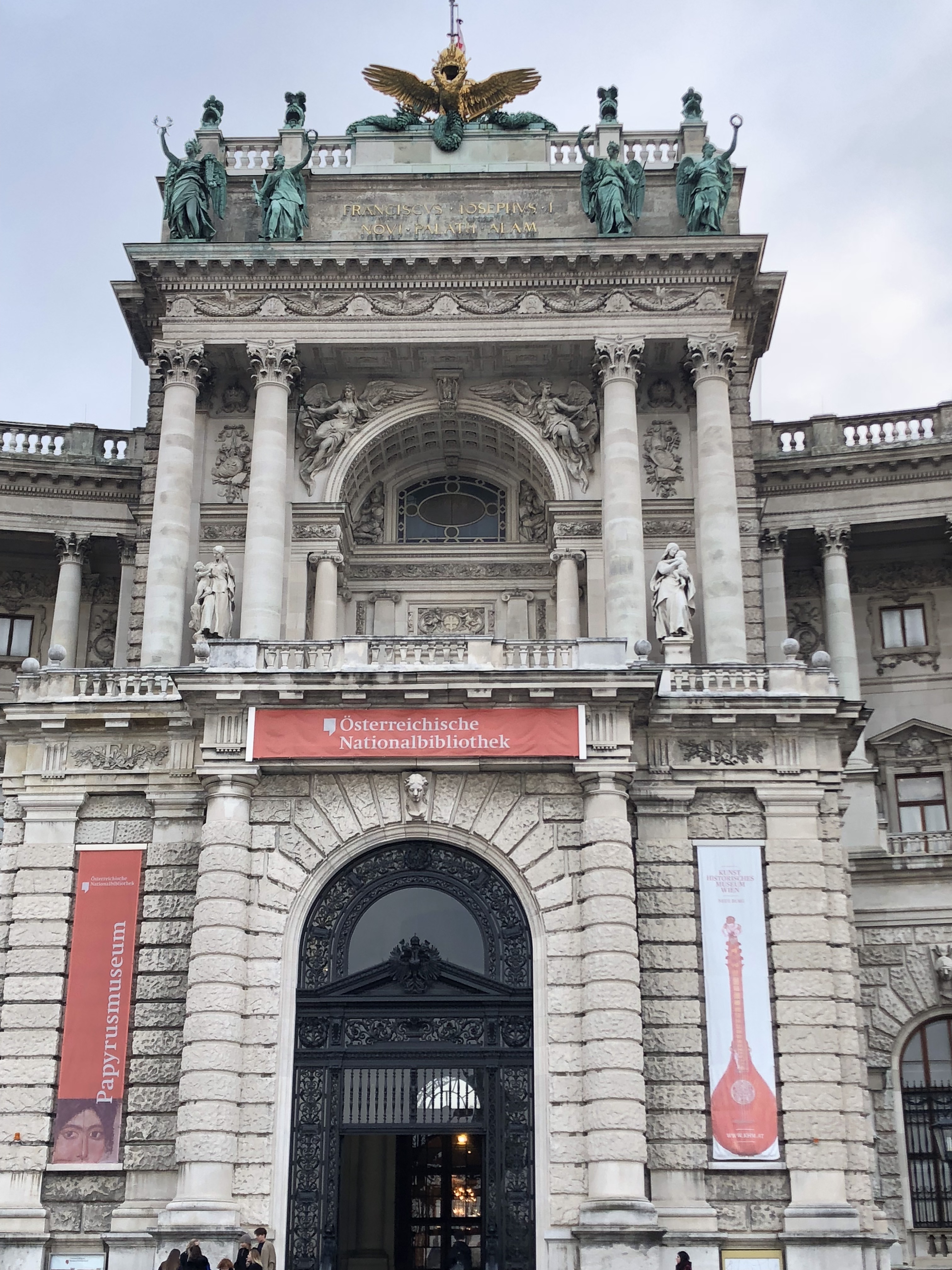
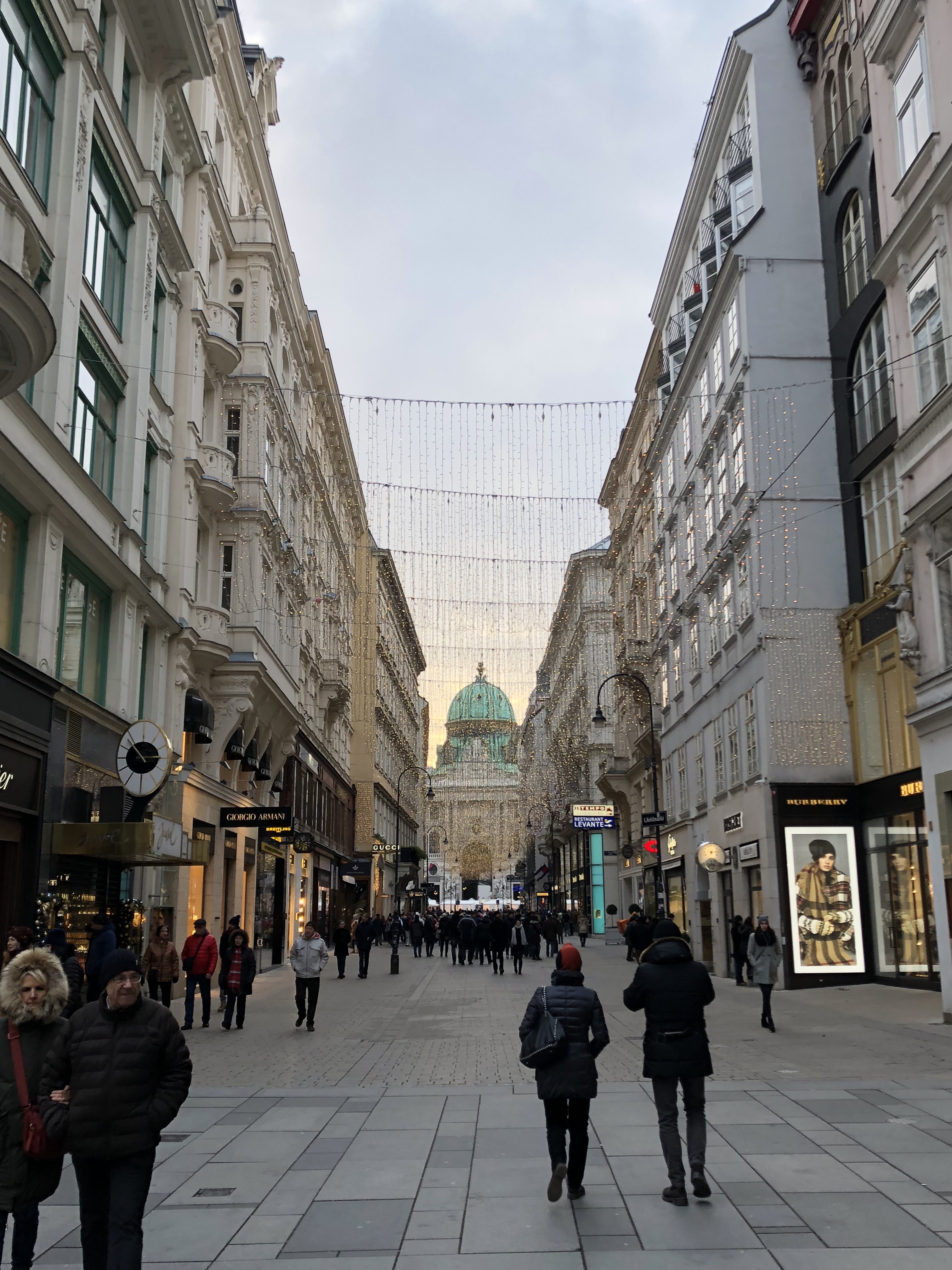
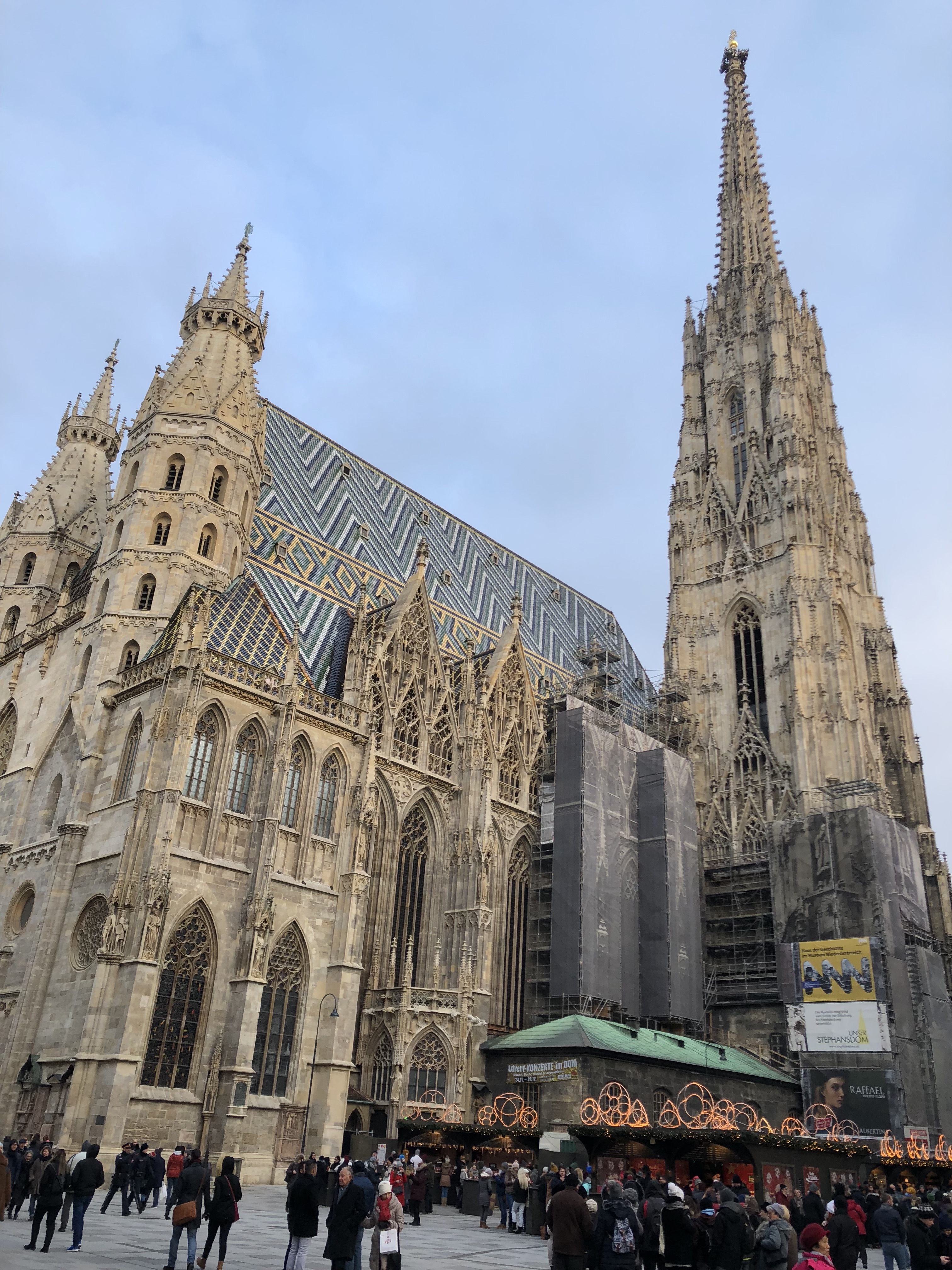
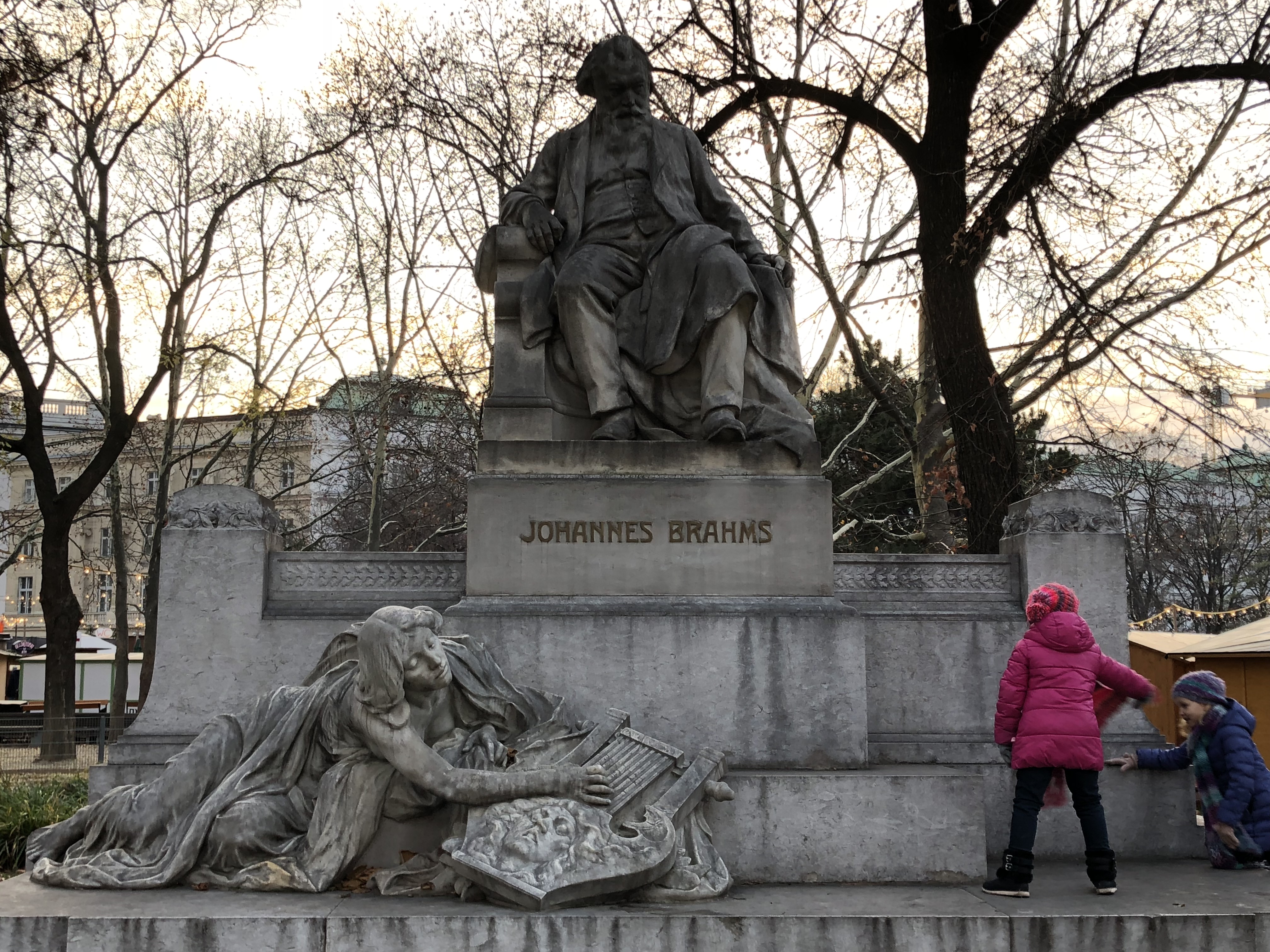
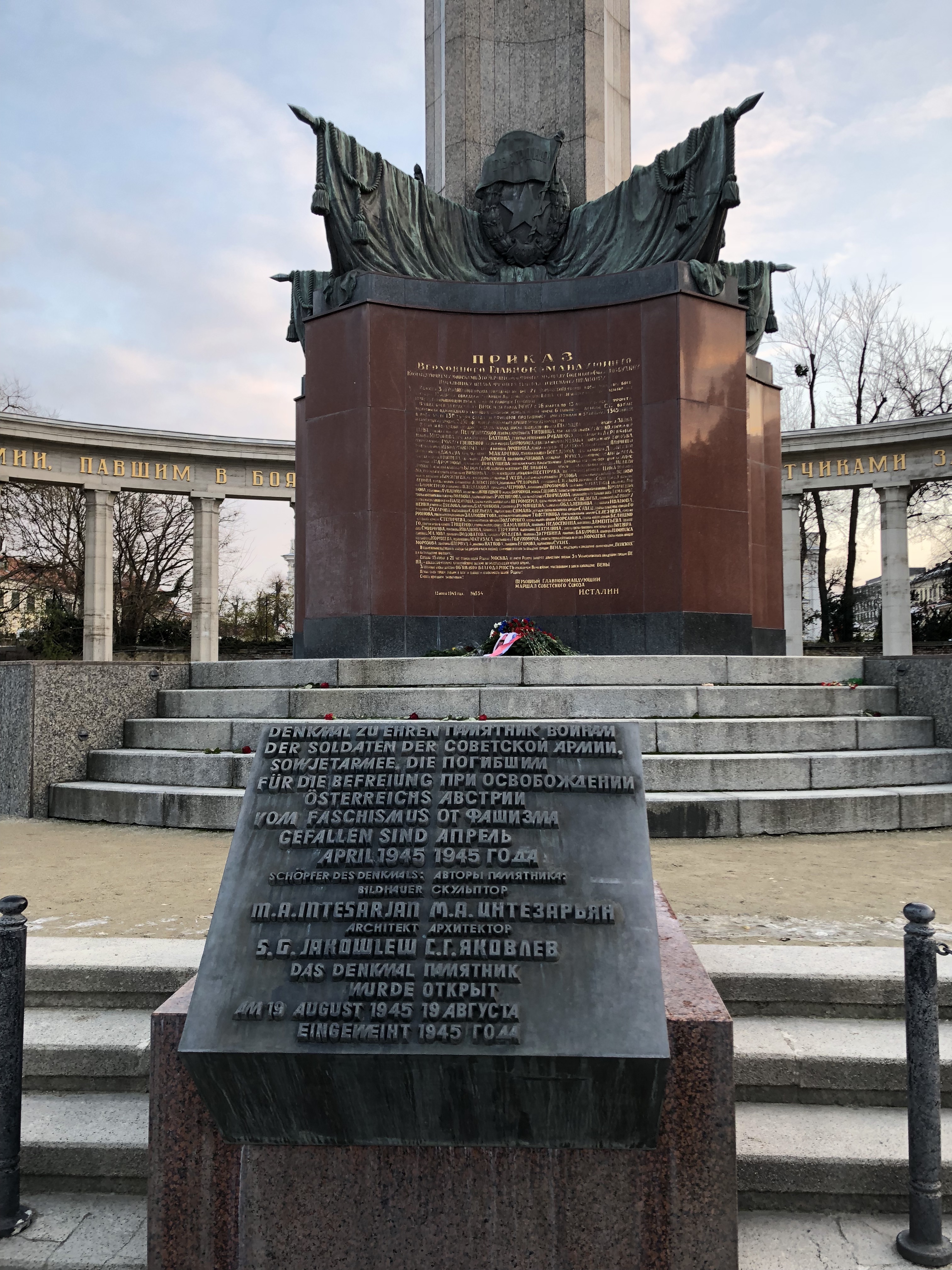
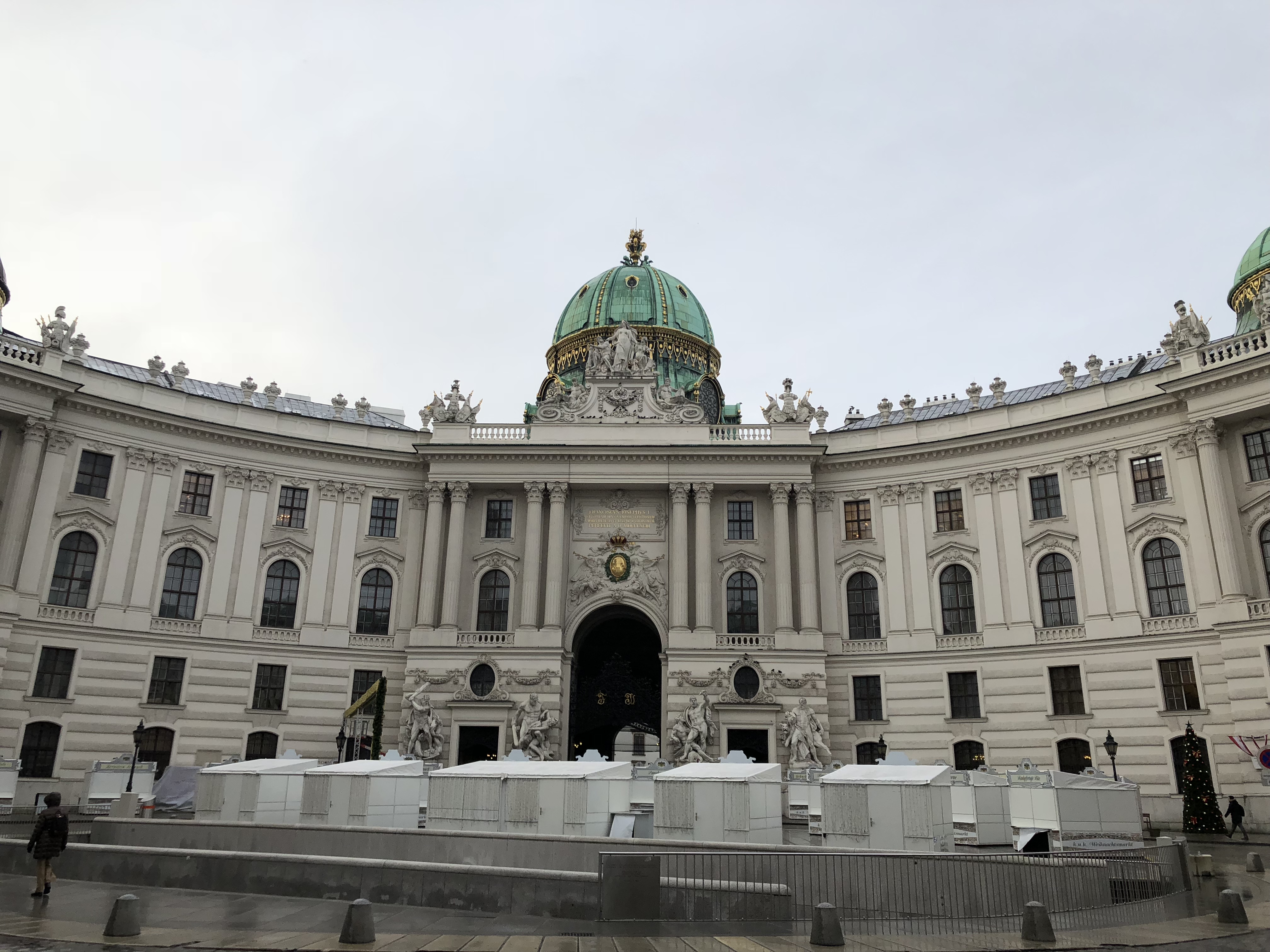
For lunch from 1-2 p.m., we stopped by a place called Cafe Landtmann, a place that was reportedly Sigmund Freud’s favorite place for a morning coffee. We actually ended up mostly getting sweets instead of a filling meal though, and I’ll cover that in another installment. They gave us the energy we needed to meander through the old town part of Vienna. Like most European old towns, this was a section of pedestrian-only streets surrounded by older architectured buildings. Though the rows of buildings were similar in height and grandeur to the ones in say, Paris, they also looked much newer. I’m not sure whether this is because most of the old town was destroyed by WWII bombing raids, or more recent renovations. First we passed by the Hapsburg palace, the imperial family’s usual residence. It was huge, but because it was integrated into the city it didn’t give the same imposing presence that the Schonnbrunn did. Also of note was the St. Stephens cathedral in the very heart of old town: Stephensplatz. The colorful tiling on the church’s roof is what makes it distinctive, countering our other friend’s claim that “once you’ve seen one church, you’ve seen ‘em all”. Since we weren’t able to enter the Schonnbrunn or Hapsburg palaces, we eventually headed instead to the Belvedere palace, on the eastern edge of the city center. Along the way, we passed a Brahms statue that was getting attention from some kids. Soon thereafter was a Soviet war memorial, which I didn’t expect to see because of how the Iron Curtain fell. It made more sense when I learned that the Soviets had in fact been the ones to drive the defending Axis army out of Vienna in April, 1945.
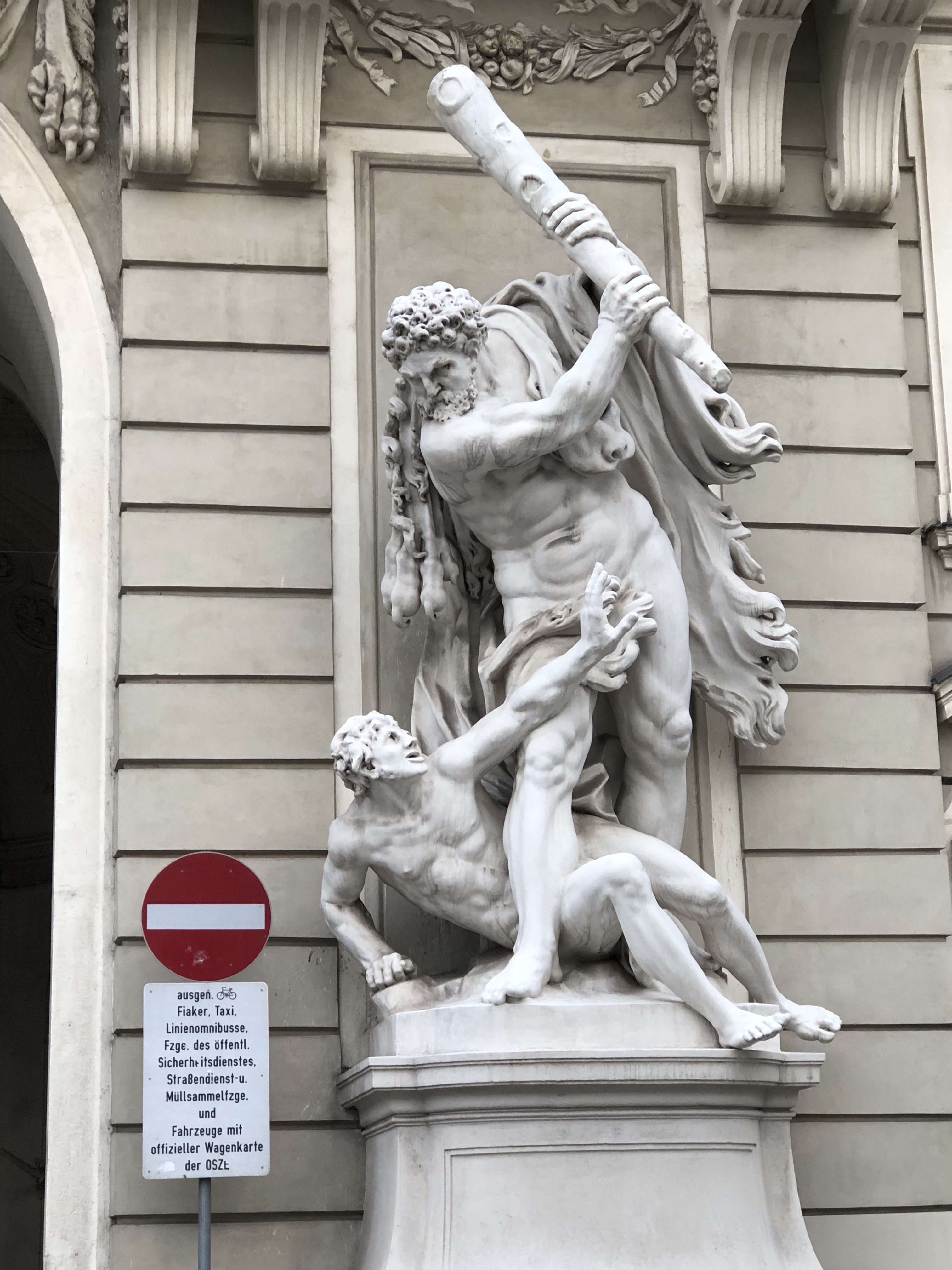
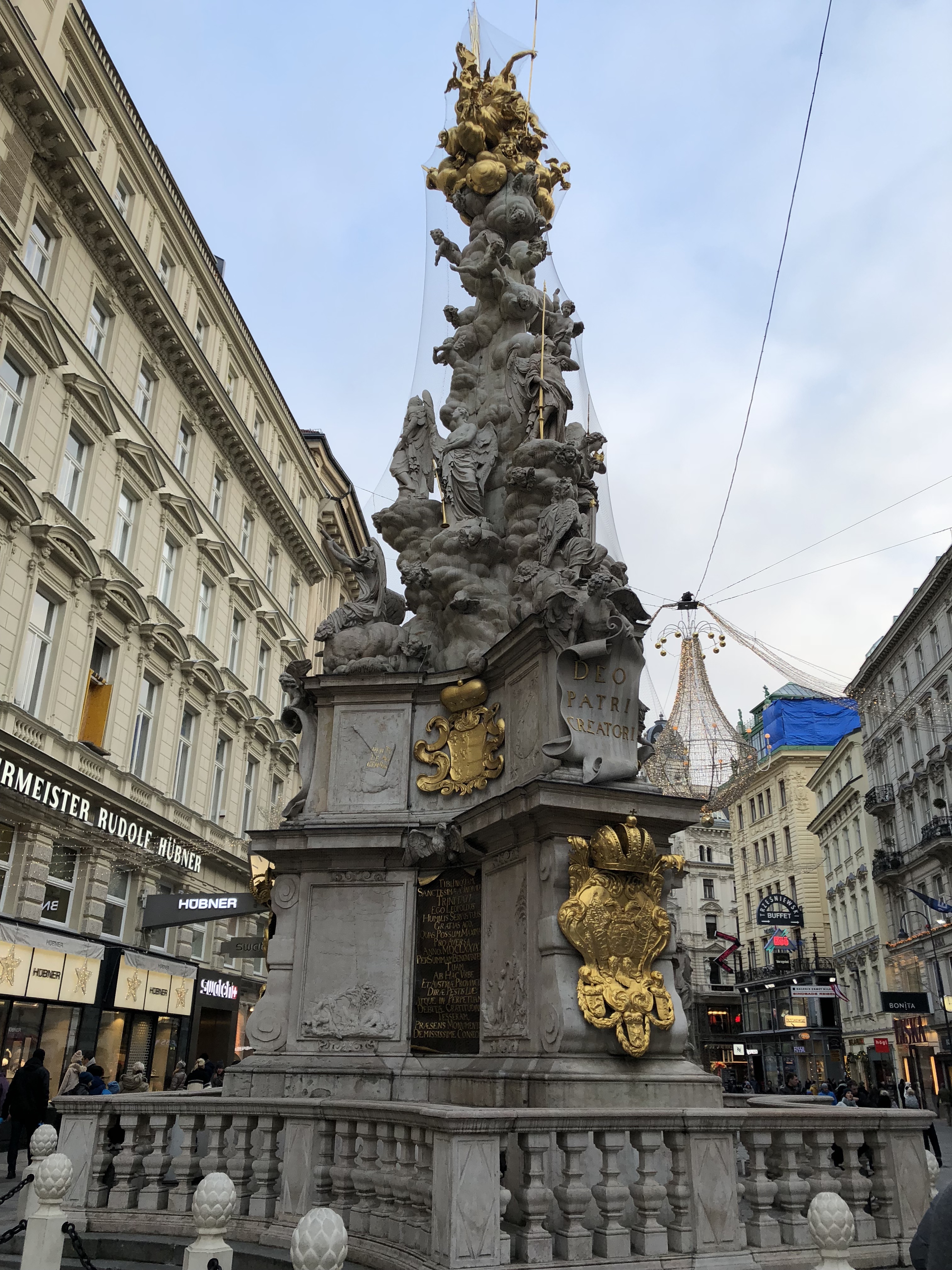
The onerous entrance to the National Library, right next to the Hapsburg palace A rather violent looking statue. The “batter” sort of reminds me of Bryce Harper… Christmas lights dangling above the pedestrian boulevards of Vienna’s old town One of the more ornate old town statues Stephensplatz and its cathedral Prominent statue of Johannes Brahms War memorial honoring the Soviet dead invading this city in April of 1945
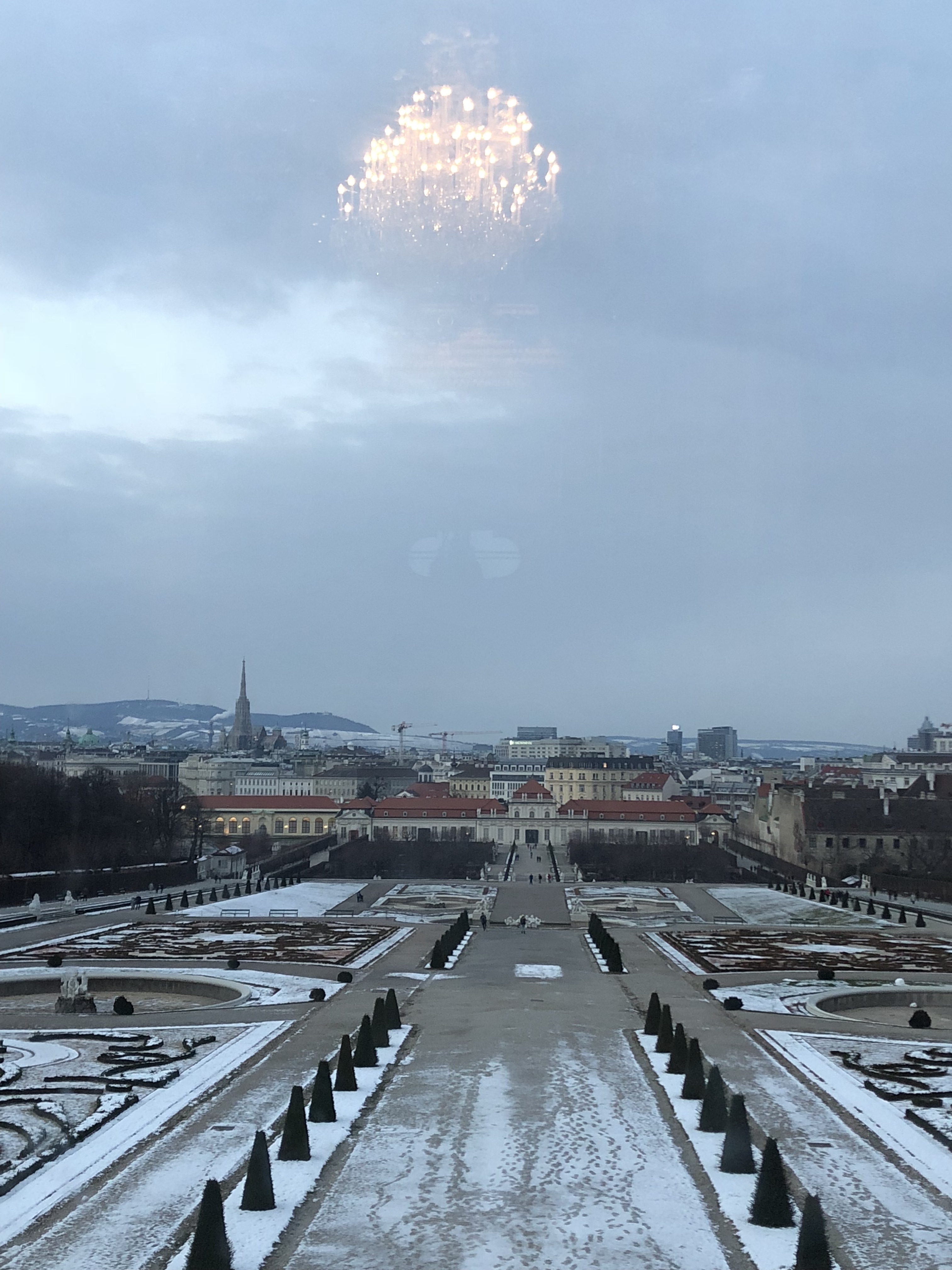
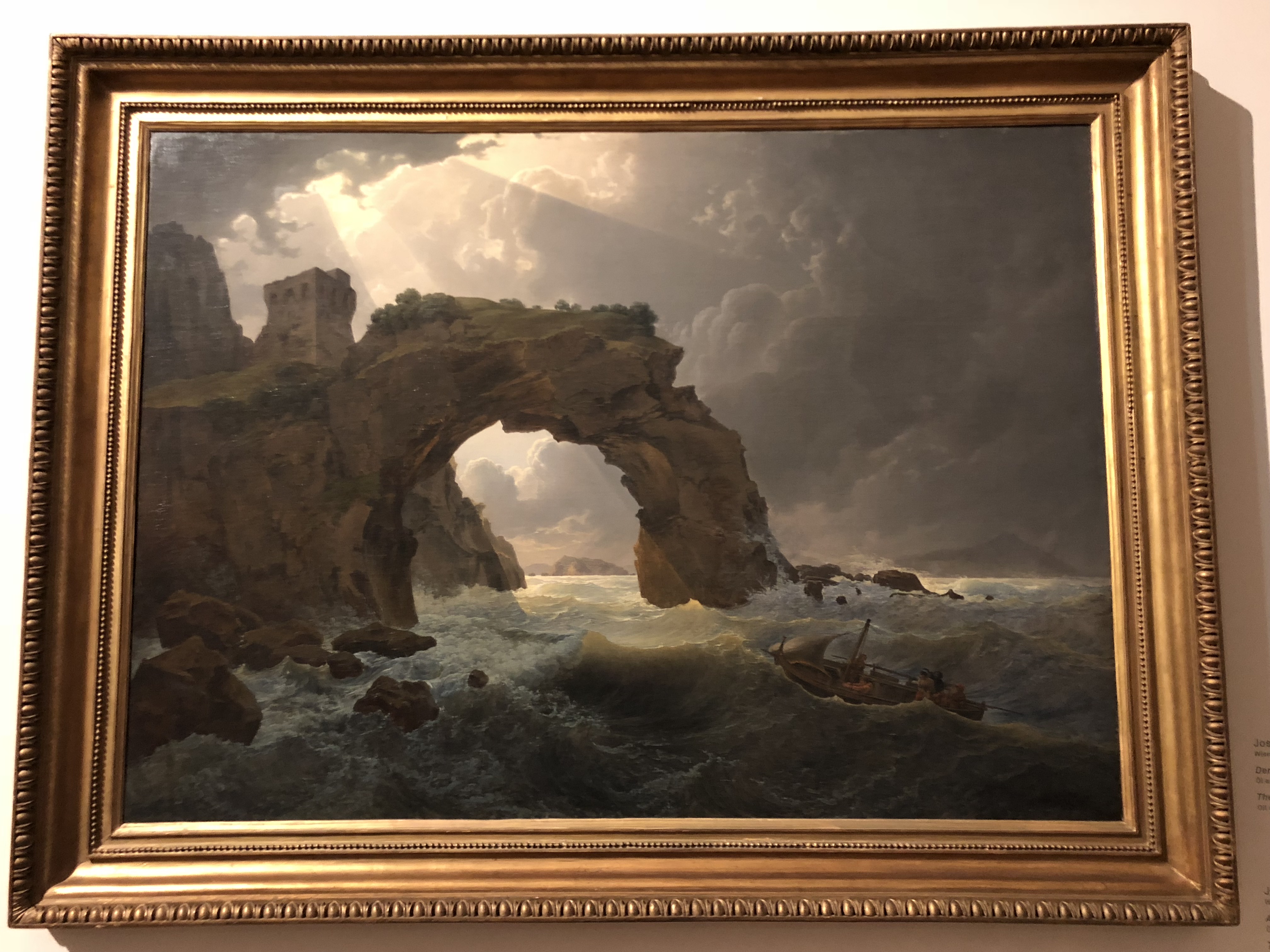
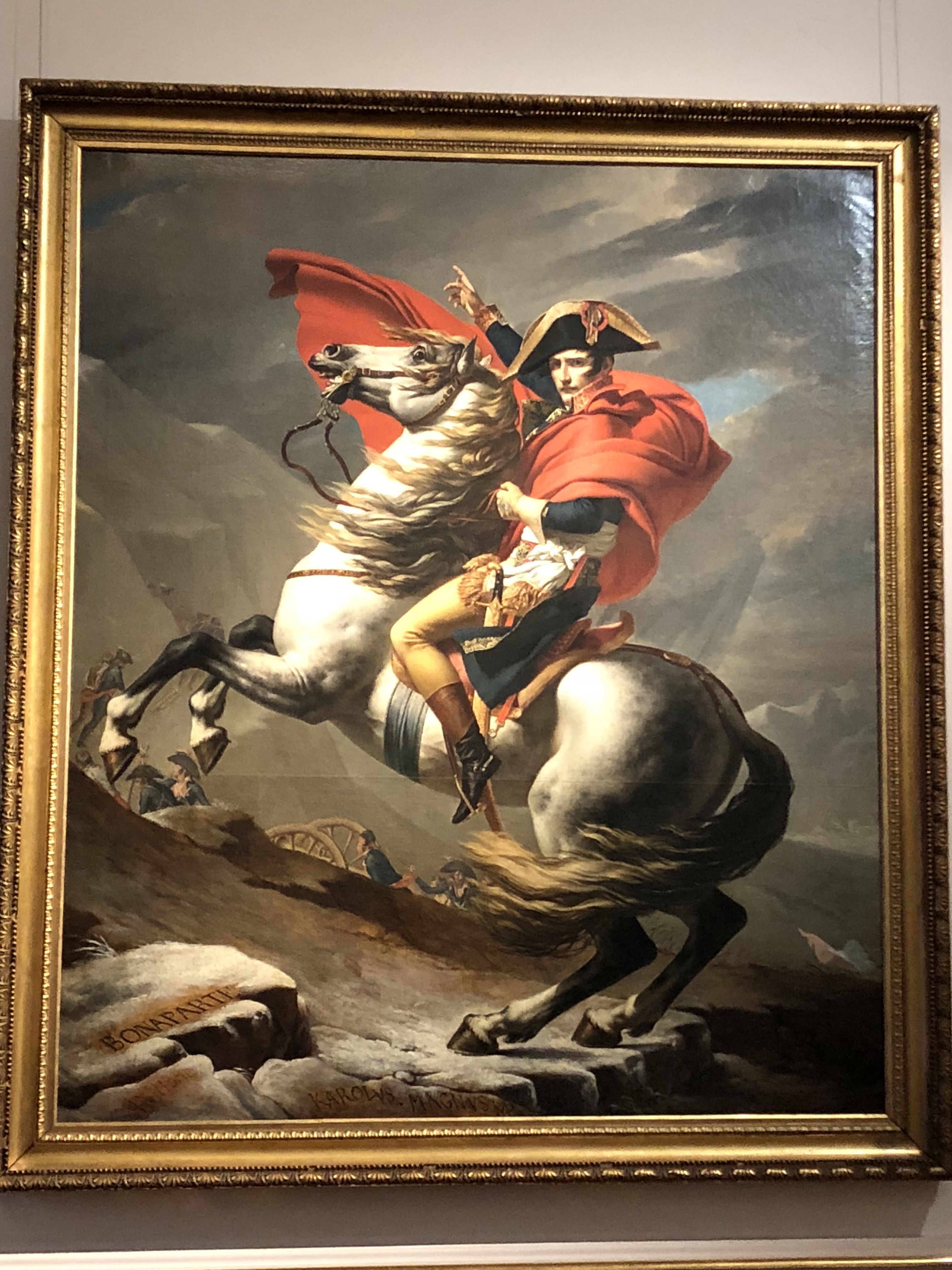
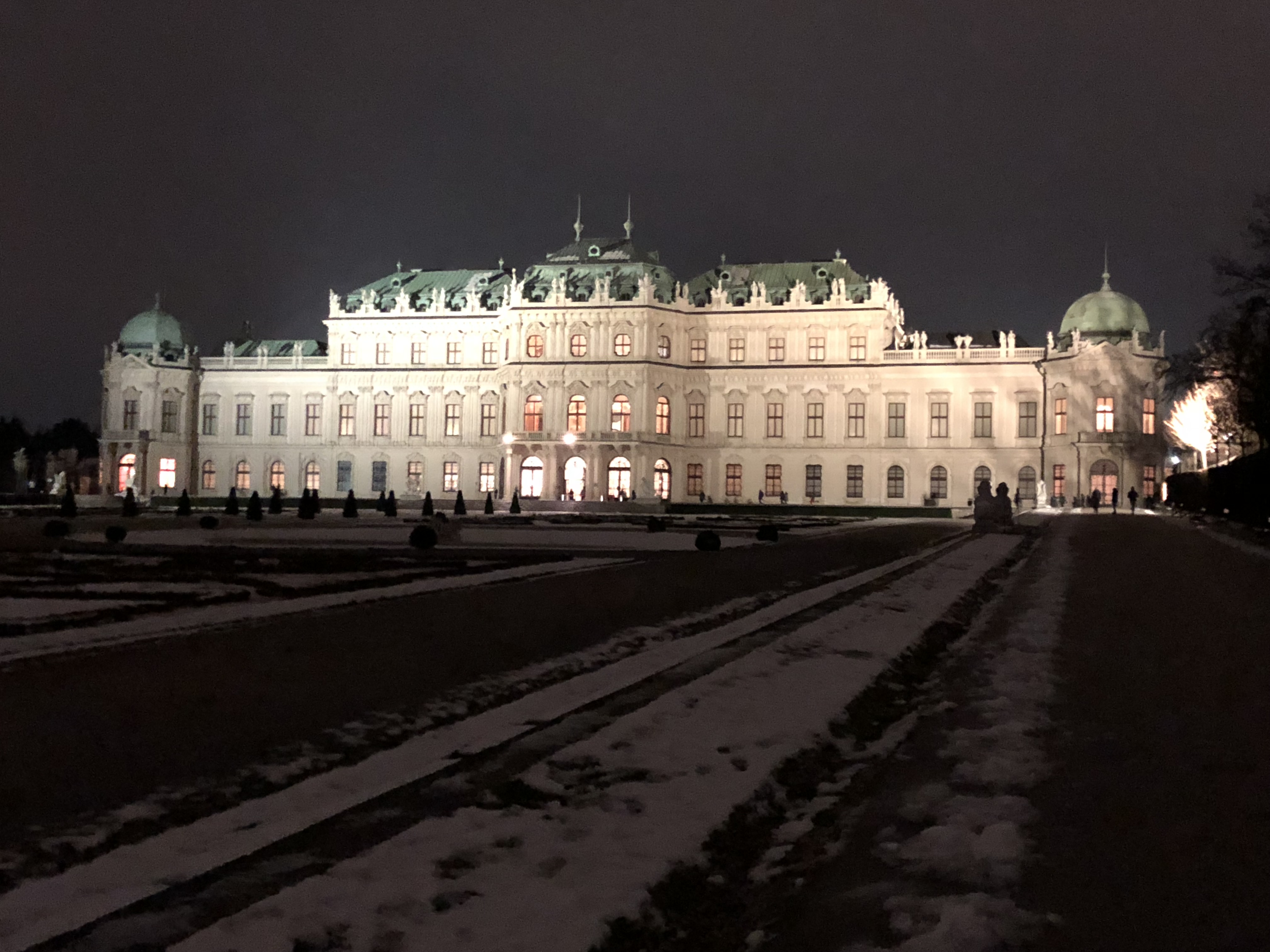
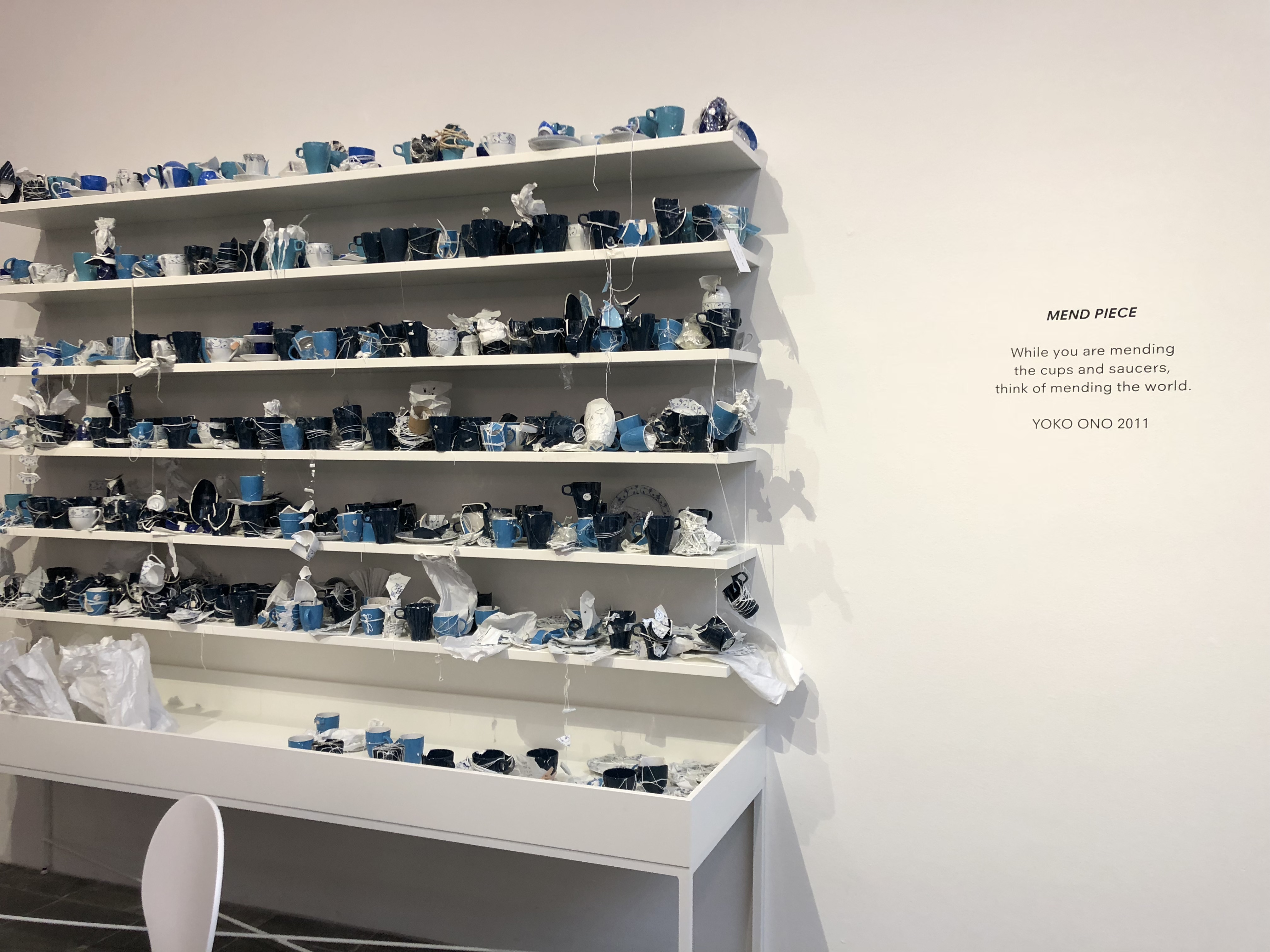
The daylight hours are not long in European Decembers, and the sun was already starting to fade as we reached the Belvedere palace around 4:30 p.m. It was elegant without being flashy, and definitely less opulent than the other two palaces we saw. An entry ticket gave us access to the palace itself, and a museum of paintings on the opposite side of a wide garden. The rooms of the palace were filled with paintings rather than the original furnishings, so it was hard to imagine what it would have been like if someone actually lived there. Another surprise for me was that Napolean’s portrait was featured prominently in one room. As an enemy of the Hapsburgs and the one who decimated their armies at the battle of Austerlitz, I would’ve thought they’d opt to leave him out. On our way out we saw a modern art installation nearby and decided to do a quick visit. It featured a lot of Yoko Ono art pieces, and even a set of ping pong tables. That was our last stop before continuing on to get dinner, which is covered in the food installment.
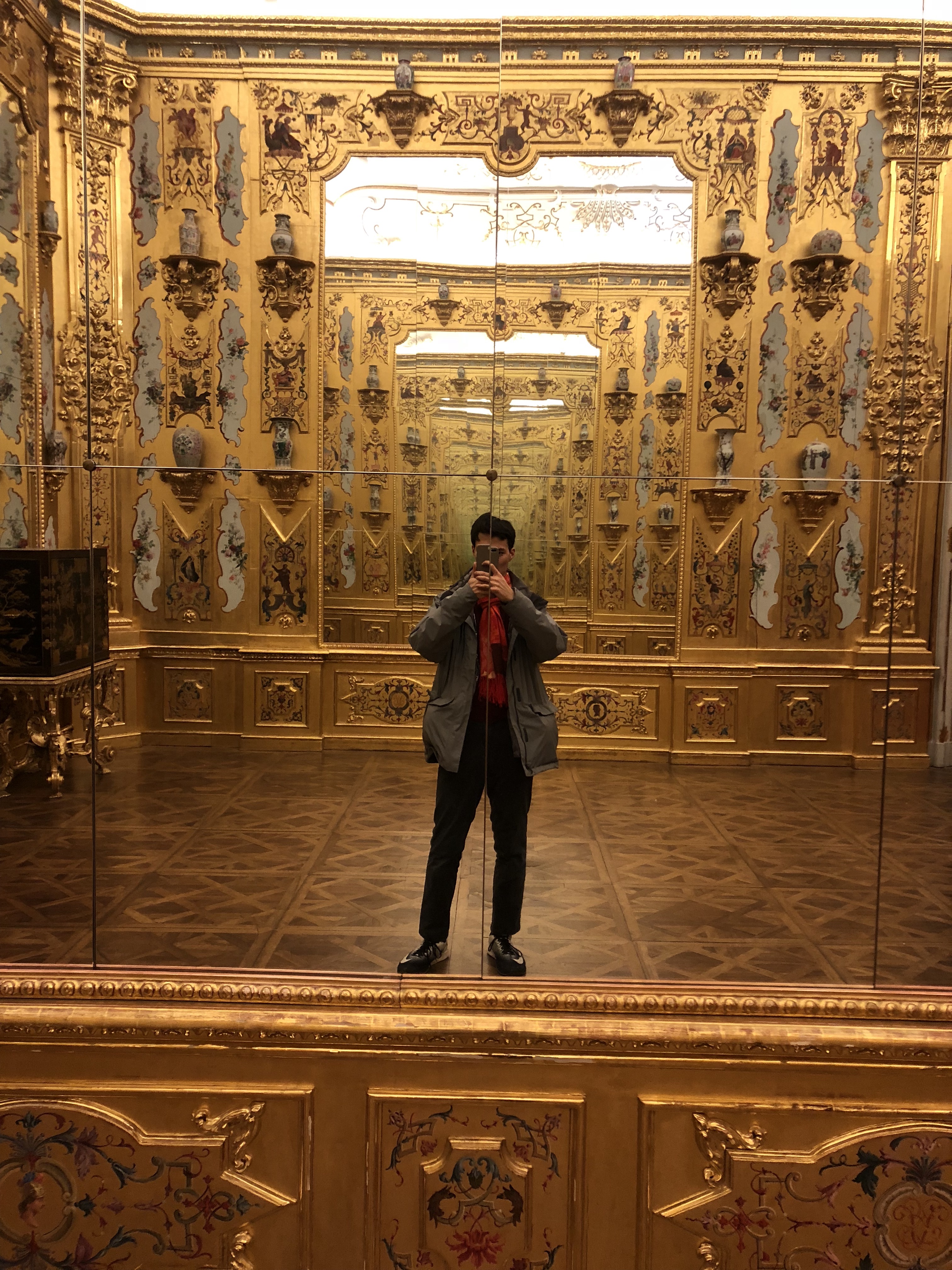
View of the gardens from Belvedere Palace itself Painting of a natural arch within the Belvedere Paul Revere this ain’t! Wondering how Napoleon earned a spot in his enemy’s art gallery Many mirror on the wall… how many reflections are there in all? The Belvedere flooded with light after sunset Yoko Ono art piece. The world sure could use some mending right now…
After dinner, our group split so that I could do some souvenir shopping at the Christmas market, and my friends could visit a Mozart music museum. I ran out of time while shopping so I never actually made it there, so I’ll have to ask my friends if they remember how that was. Anyway, we all got back to the AirBnB at about 11 p.m. and were straight exhausted. We’d been going full throttle in freezing weather since 9 a.m., and covered over 15 miles of walking. Being a sturdy traveler, I commended Joel for planning such a fun and packed day in this city. However, our companion who was less used to such a heavy schedule never quite recovered, and required 10 hours of sleep per night plus a 3 hour afternoon nap most days. So, it’s worth noting that our plan may not be for the faint of heart.
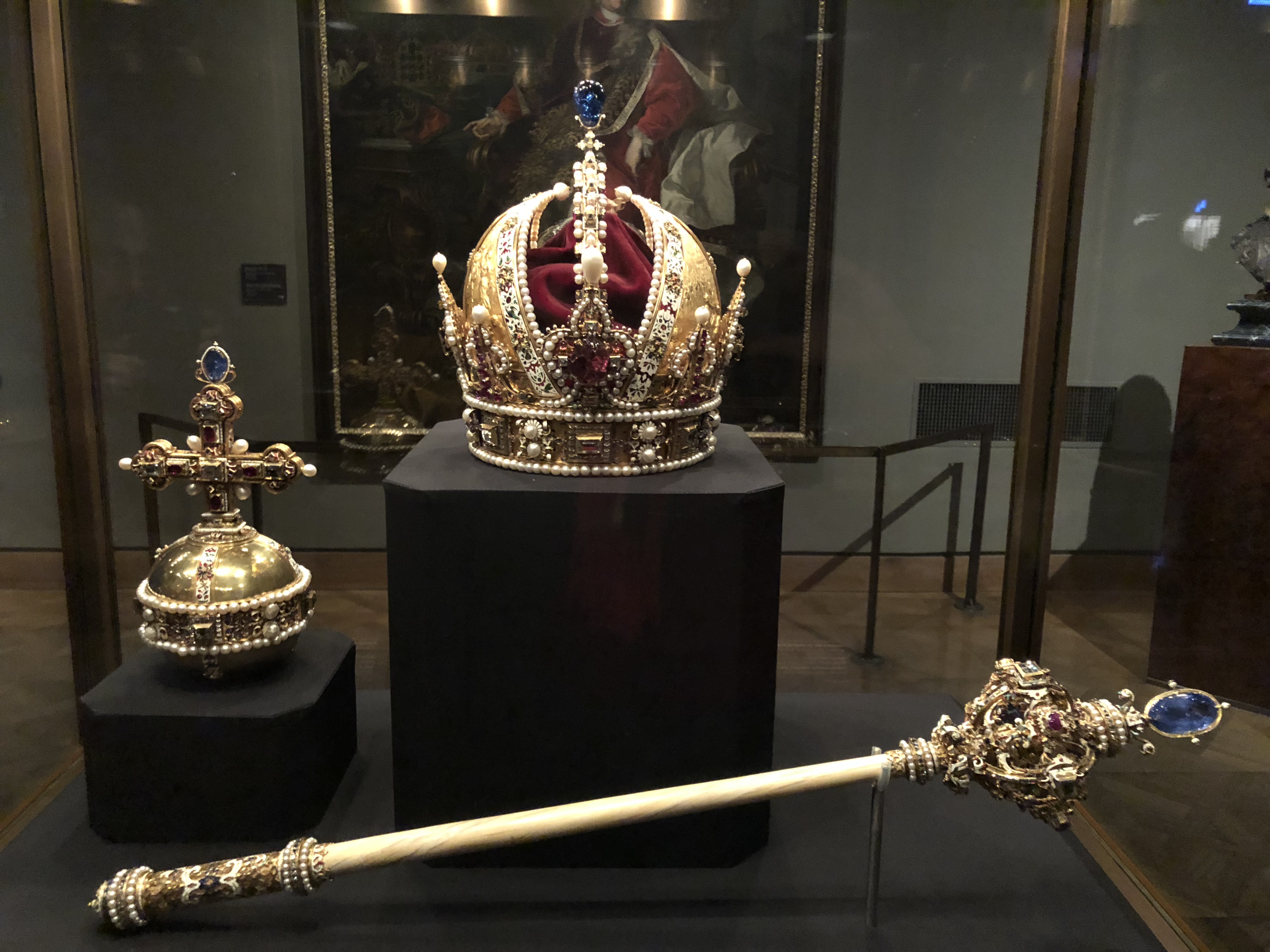
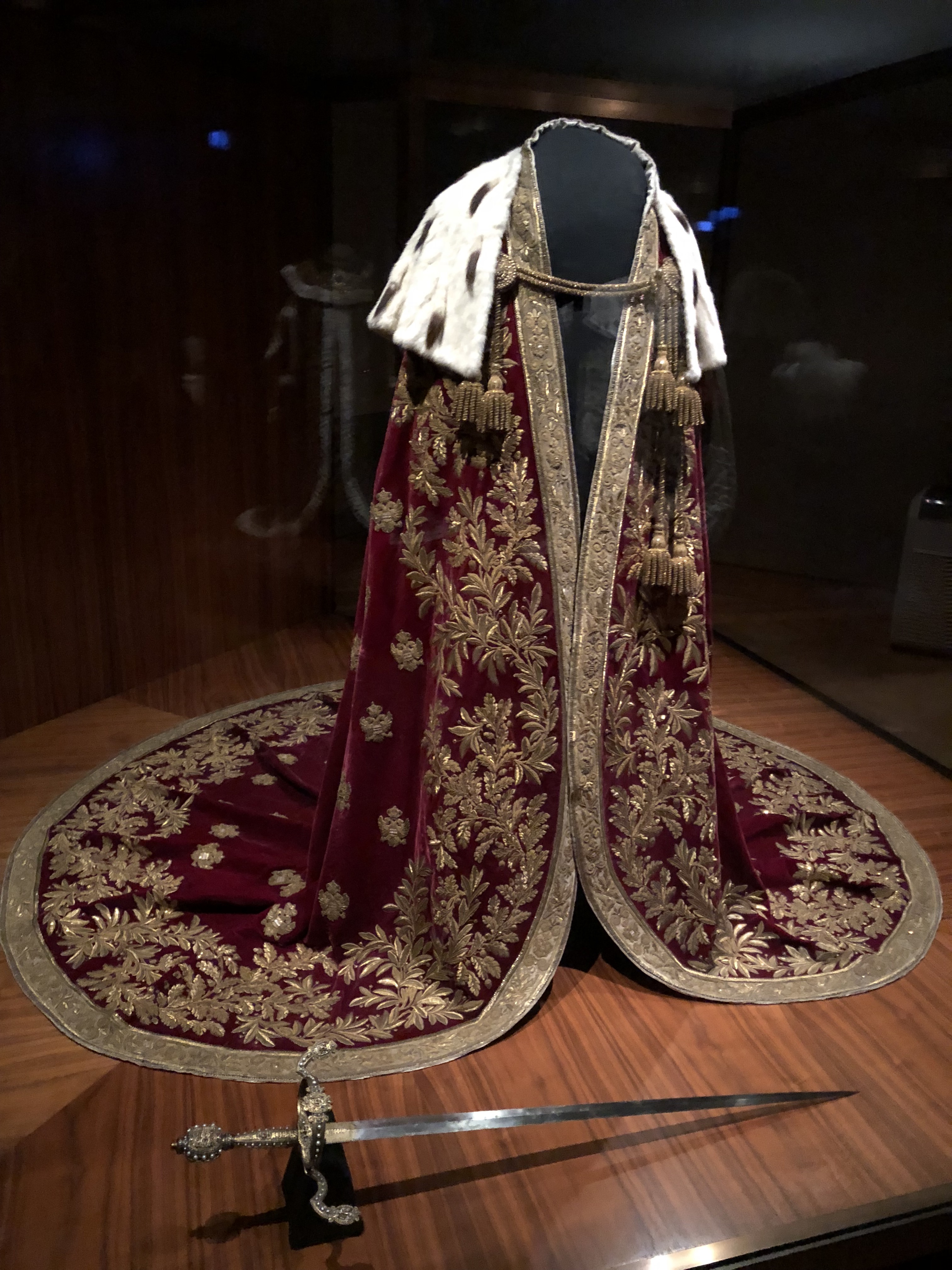
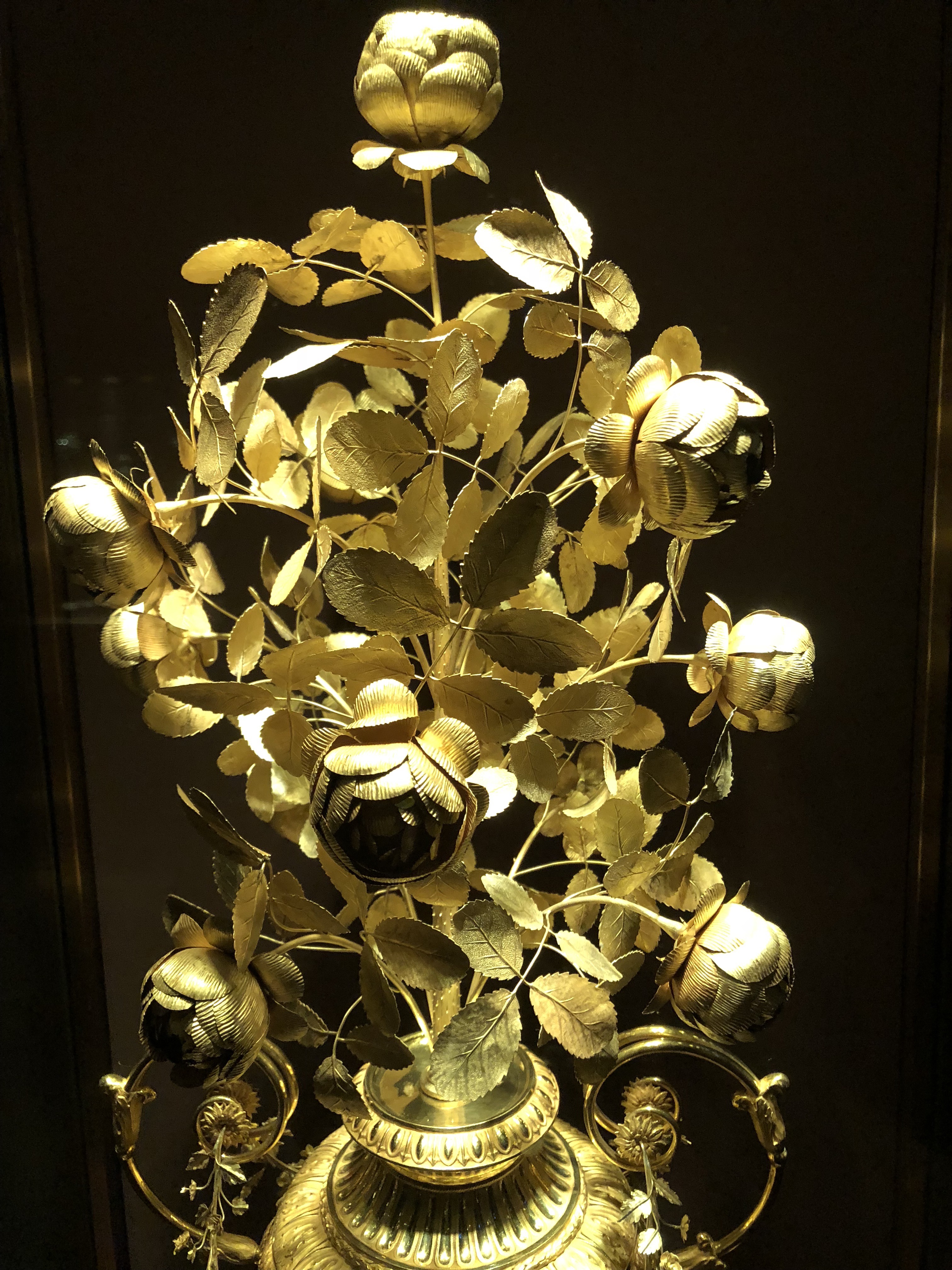
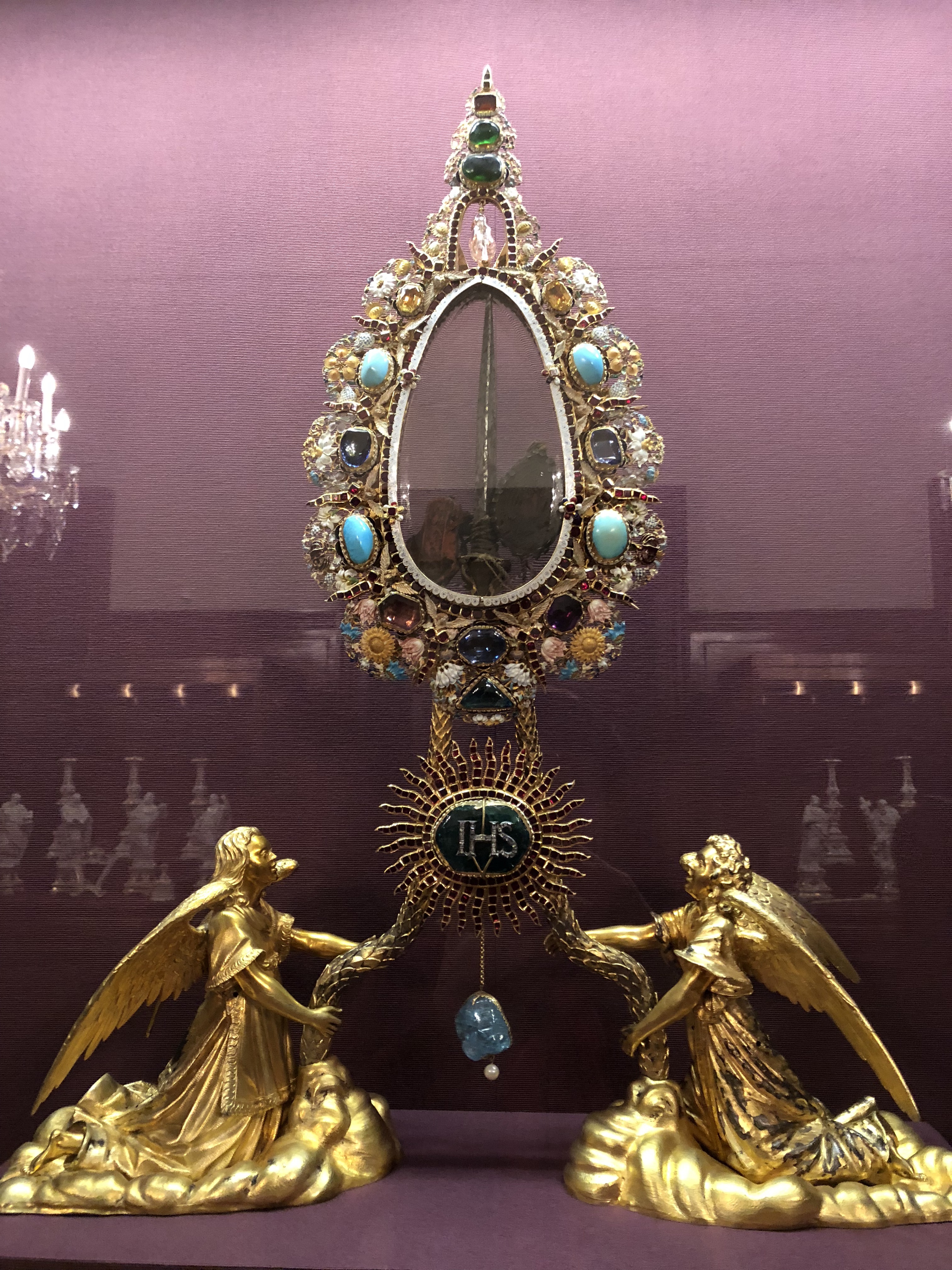
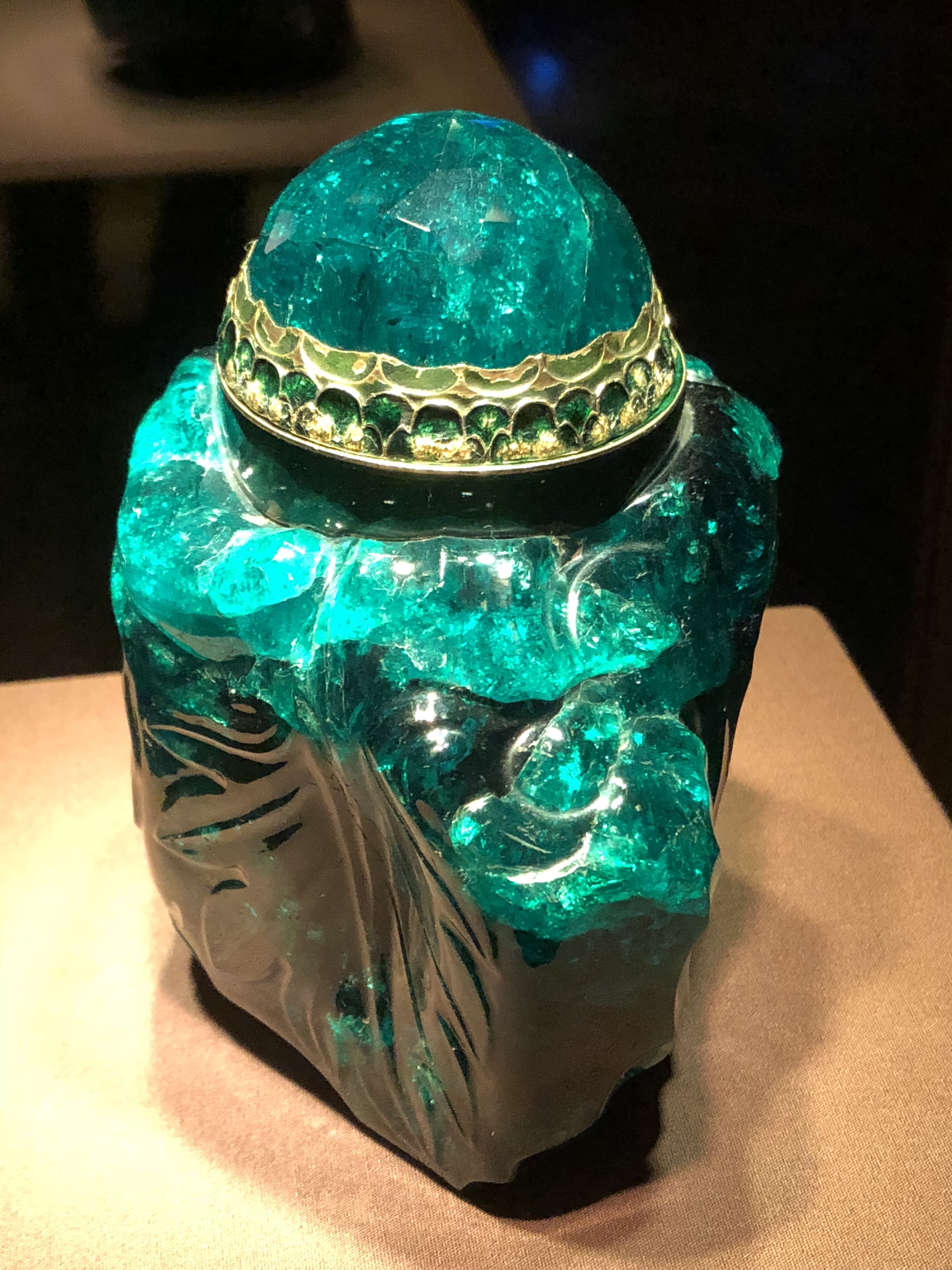
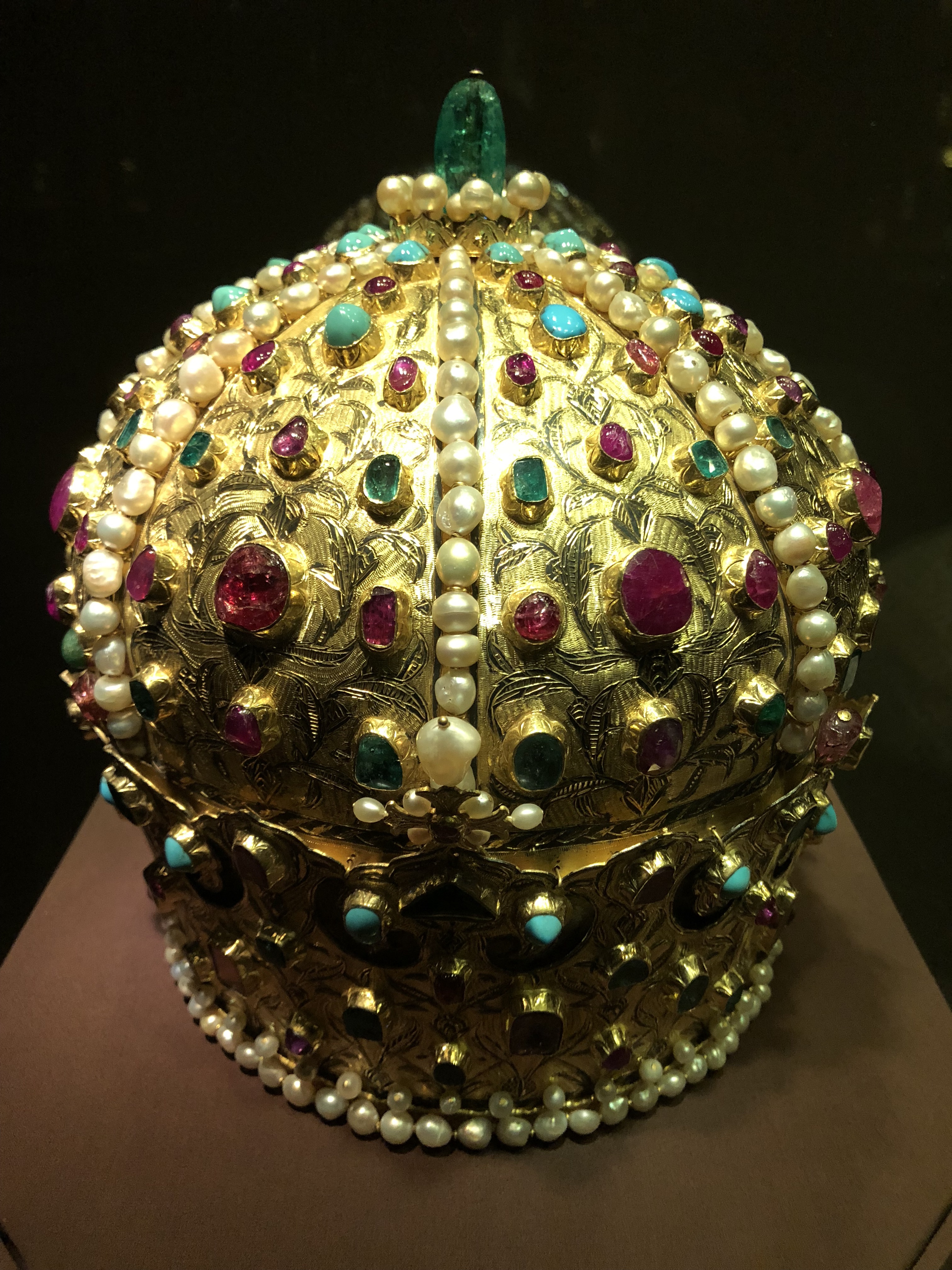
Although the rest of my party slept in ahead of our train ride to Budapest, I woke up early enough to spend an hour at the Imperial Treasury museum the next morning. I was interested in visiting because of Vienna’s status as the former head of the Holy Roman Empire. And I must say, its collection did not disappoint. Featured near the beginning were the scepter and orb, as well as the emperor’s crown. Whenever I see regalia like this, I’m still in awe that a relic reserved for a select few for so long is now accessible for someone like me to see for just $10. There was a collection of robes, including the ones Napolean wore at his coronation in Notre Dame as the new emperor. Most impressive to me though was the craftsmanship for large gems, or pieces of gold leaf. The world’s largest full emerald was a set piece in this exhibit. Imagine being the fellow tasked by the nobility with handling that, and what the consequences would be if you messed up. An assortment of roses sculpted in gold leaf also caught my eye. They were so intricate as to even be adorned with thorns. Last was an enshrinement of a nail said to have been part of the crucifixion of Christ. But it had only been traced back to the Crusades, making me skeptical that they could’ve just picked any old nail… Anyway, after about an hour it was time for me to meet my friends at the AirBnB and catch our train to Budapest!
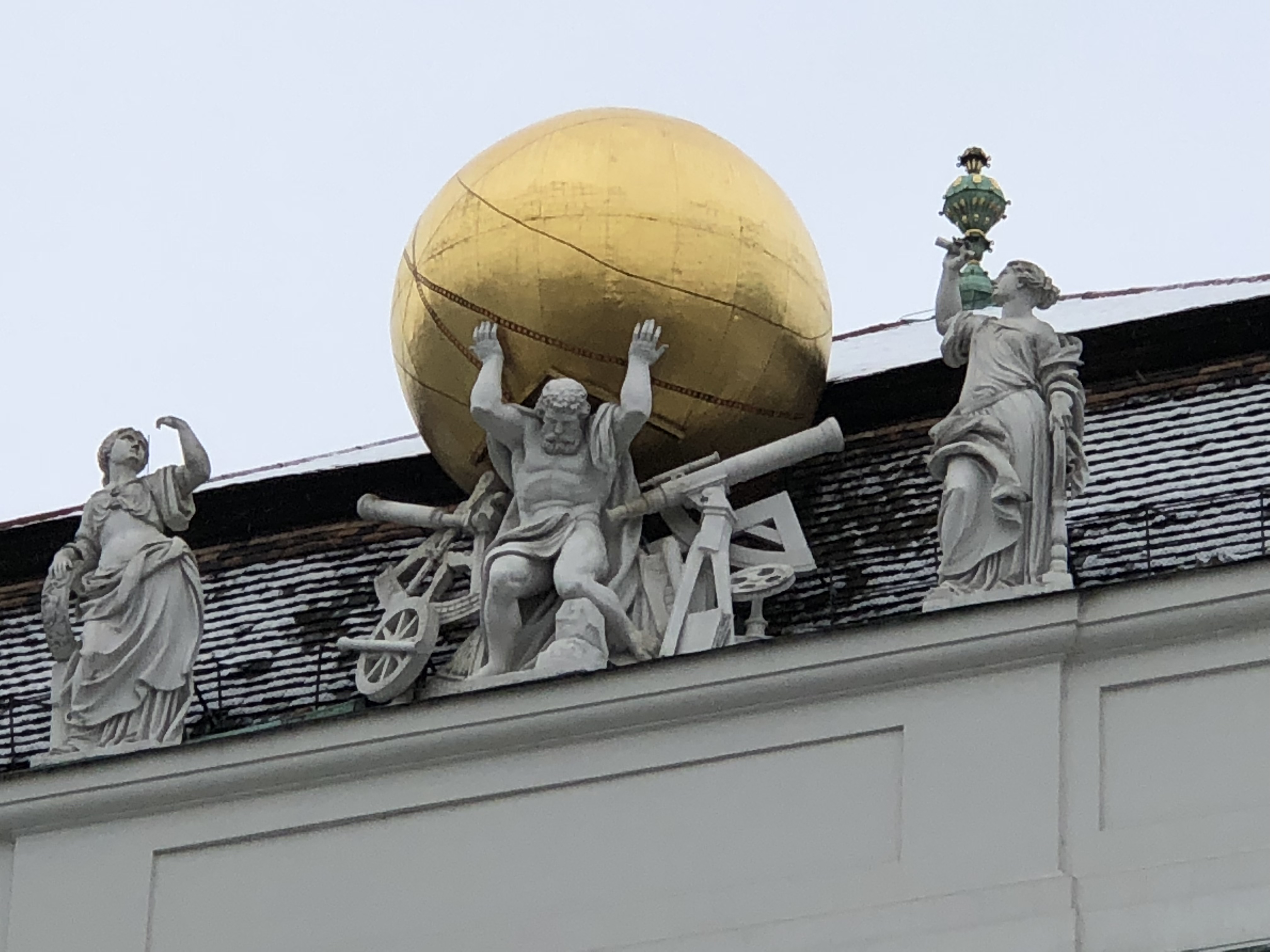
Dome of the Hapsburg Palace, which is adjacent to the treasury museum Atlas sculptures near the entrance. A real heavyweight of himself! Scepter, Orb, and Crown of the Holy Roman Emperor Coronation out for Napolean. I wonder if they were Robes-pierre’s hand-me-downs? How’s this for Rose Gold? Nail that they claim crucified Christ. Tall claim if you ask me… Largest carved emerald in the world, believe it or not Some other crown I stumbled across that I couldn’t believe had all these gems





 Miles Down the Aisle