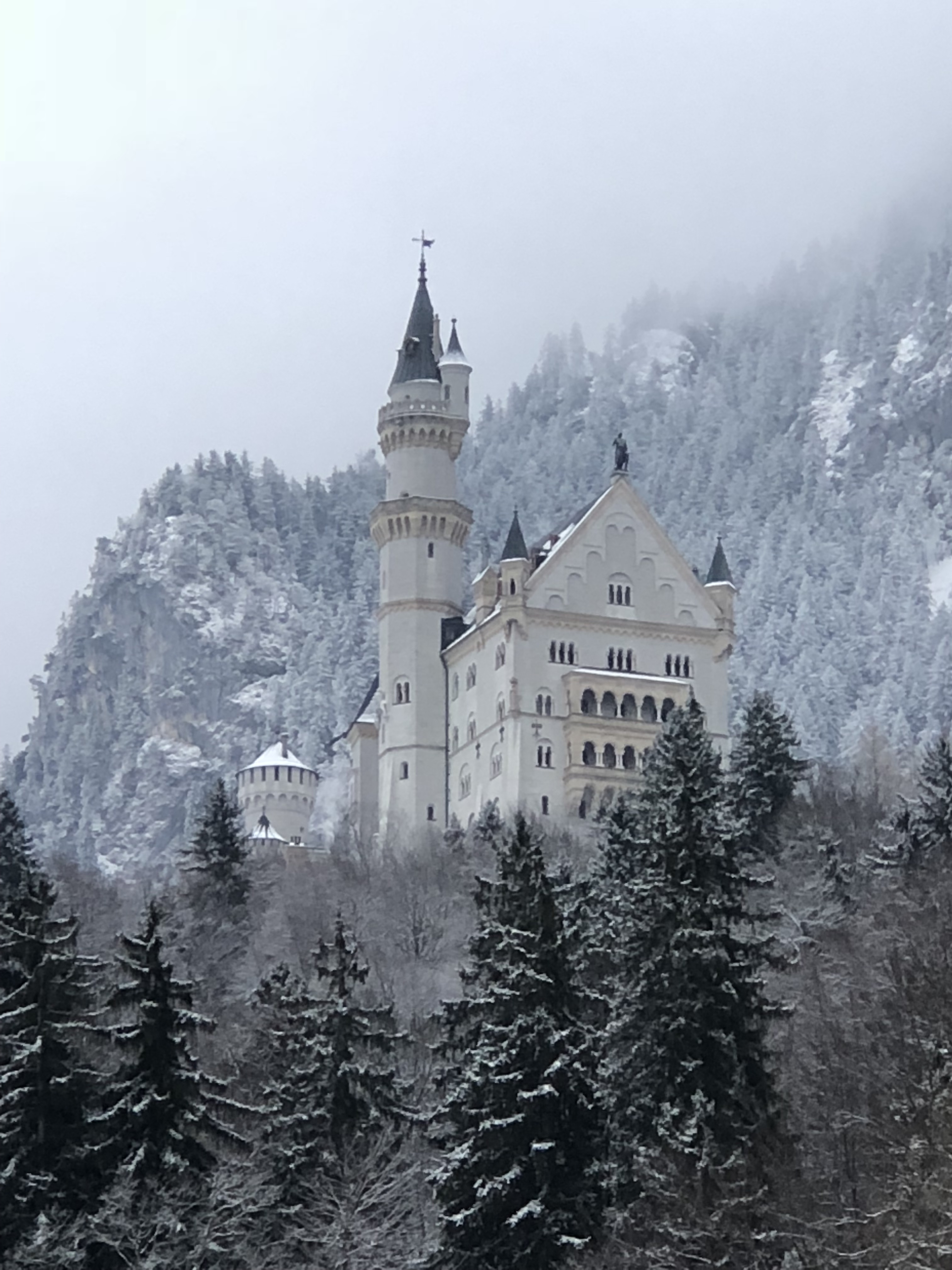
“You were in Munich for 1 full day, and you didn’t even spend it in Munich”? That was the incredulous question I got asked by many a coworker when I returned from this trip. It’s true that didn’t see much of Munich itself this trip, but going to Neuschwanstien, especially when it was covered with a blanket of snow, was a must for me. It’s pretty easy to get from the Munich airport to the city center if I wanted to spend a few hours on a future layover there, but Neuschwanstein required a full day to make the trip out. I also love snowy landscapes, and would much rather see the snowy mountains and evergreen forests by the castle than anything within Munich. So after an early morning stroll through Munich’s massive Englisher garden, I headed to their main train station and purchased my roundtrip ticket to Fussen. It’s a 2 hour journey out there and you have to transfer trains, but that gave me plenty of time to read and take a quick nap once I made the transfer. At about 10:45 a.m. that morning my train pulled into Fussen, and I headed straight for the ticketing office to find out my entry times to the two palaces.
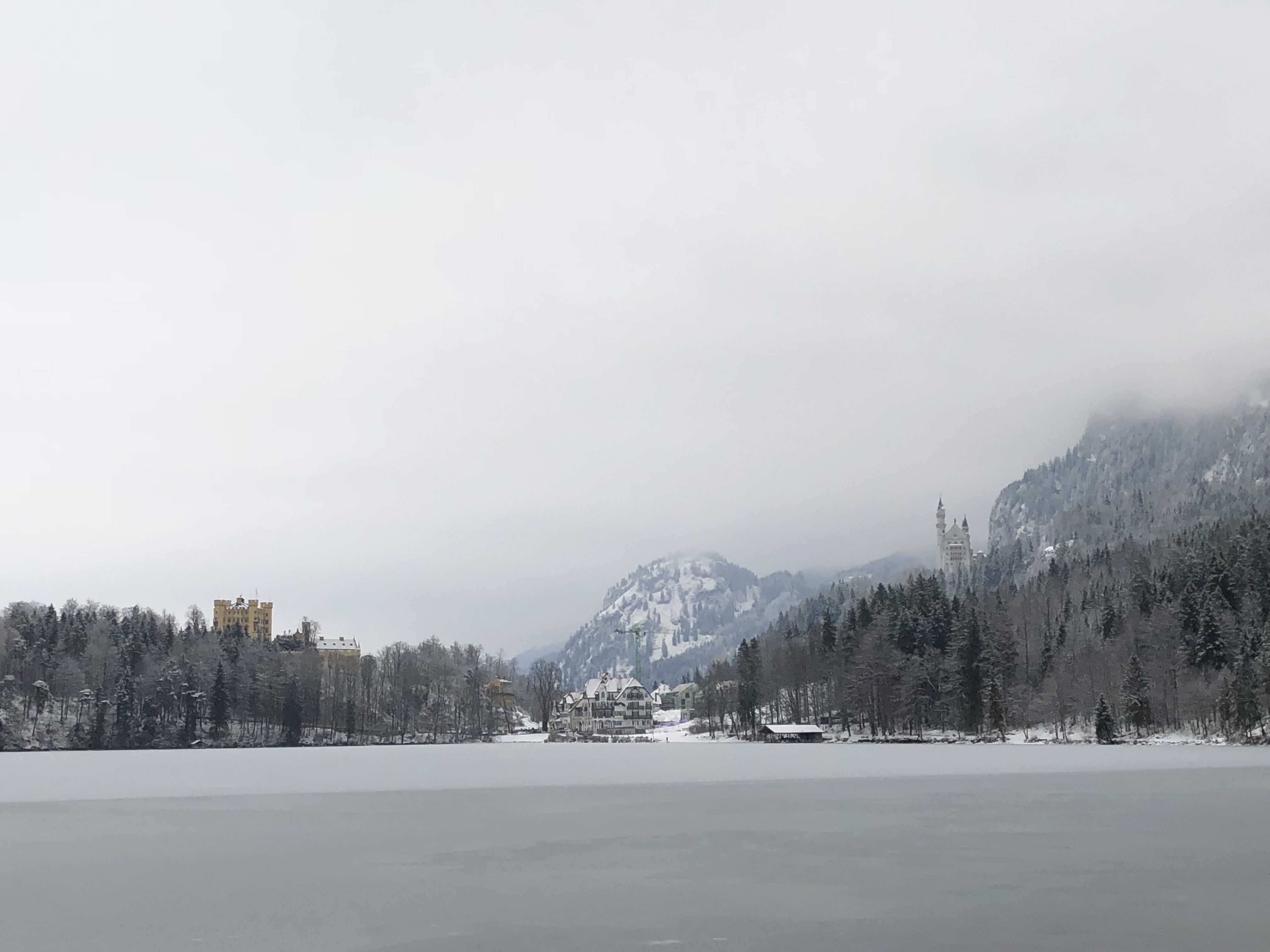
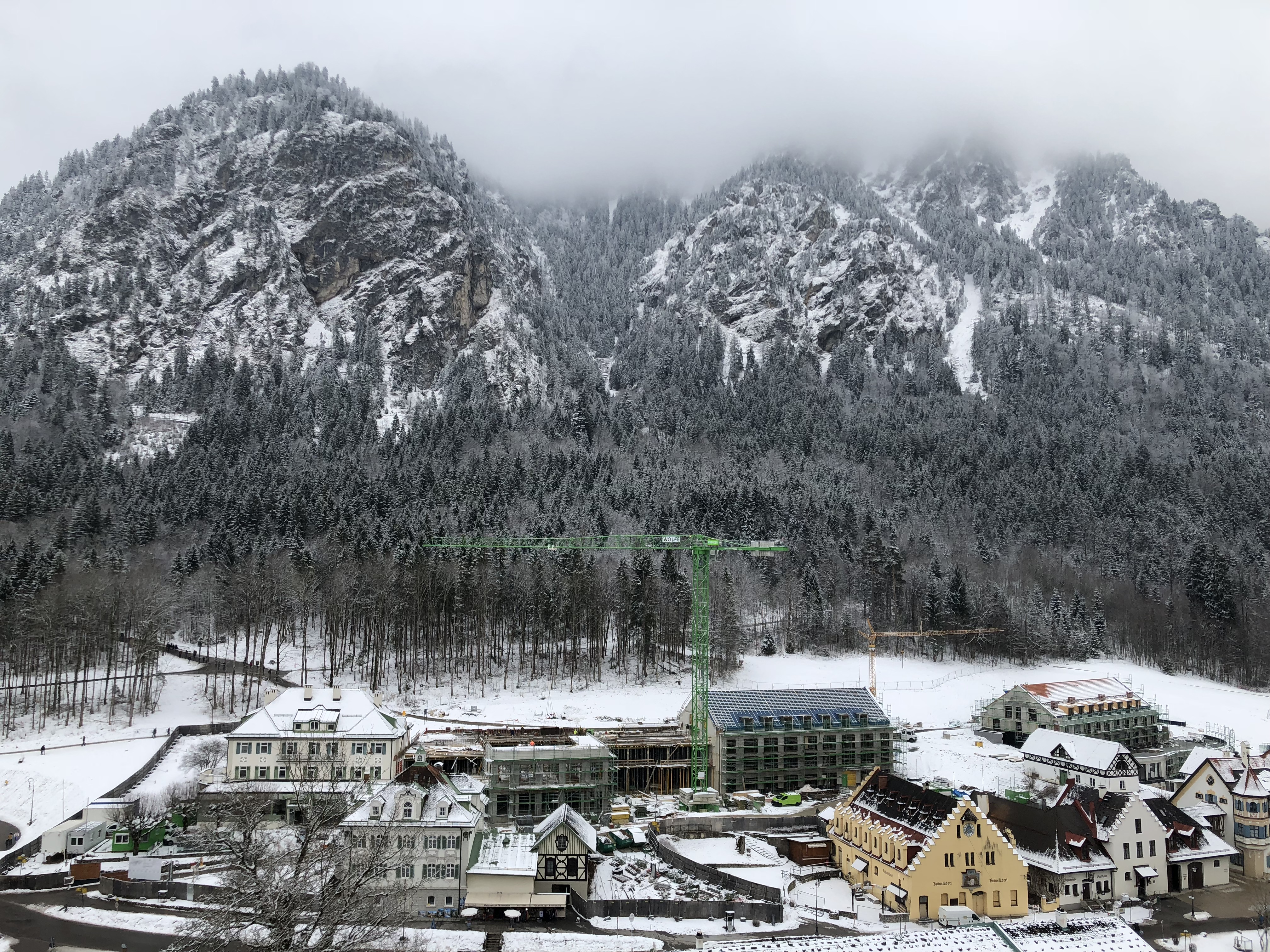
Unfortunately, the slots I ended up with for both castles were already towards the end of the day. I wouldn’t get into Hohenschwangau until nearly 3 hours later, and Neuschwanstein 2 hours after that (to allow me time to walk uphill to the castle after my entry to Hohenschwangau). Normally, this would be a good time for a leisurely lunch and a quick stroll around. However, it was so deep into the off season that hardly any restaurants were operating and none of them looked good. Fortunately, I had some foresignt to pack some sandwiches and that ended up just having to tide me over until dinner that night. I still had to find some way to preoccupy myself while I waited, though. A lake a couple miles long sits at the base of the lower, yellow castle of Hohenschwangau with a path down its left side, so I started down it. I was only equipped with my running shoes, but the snow wasn’t deep enough at that point for me to worry. I set out and just decided to see where I’d end up.
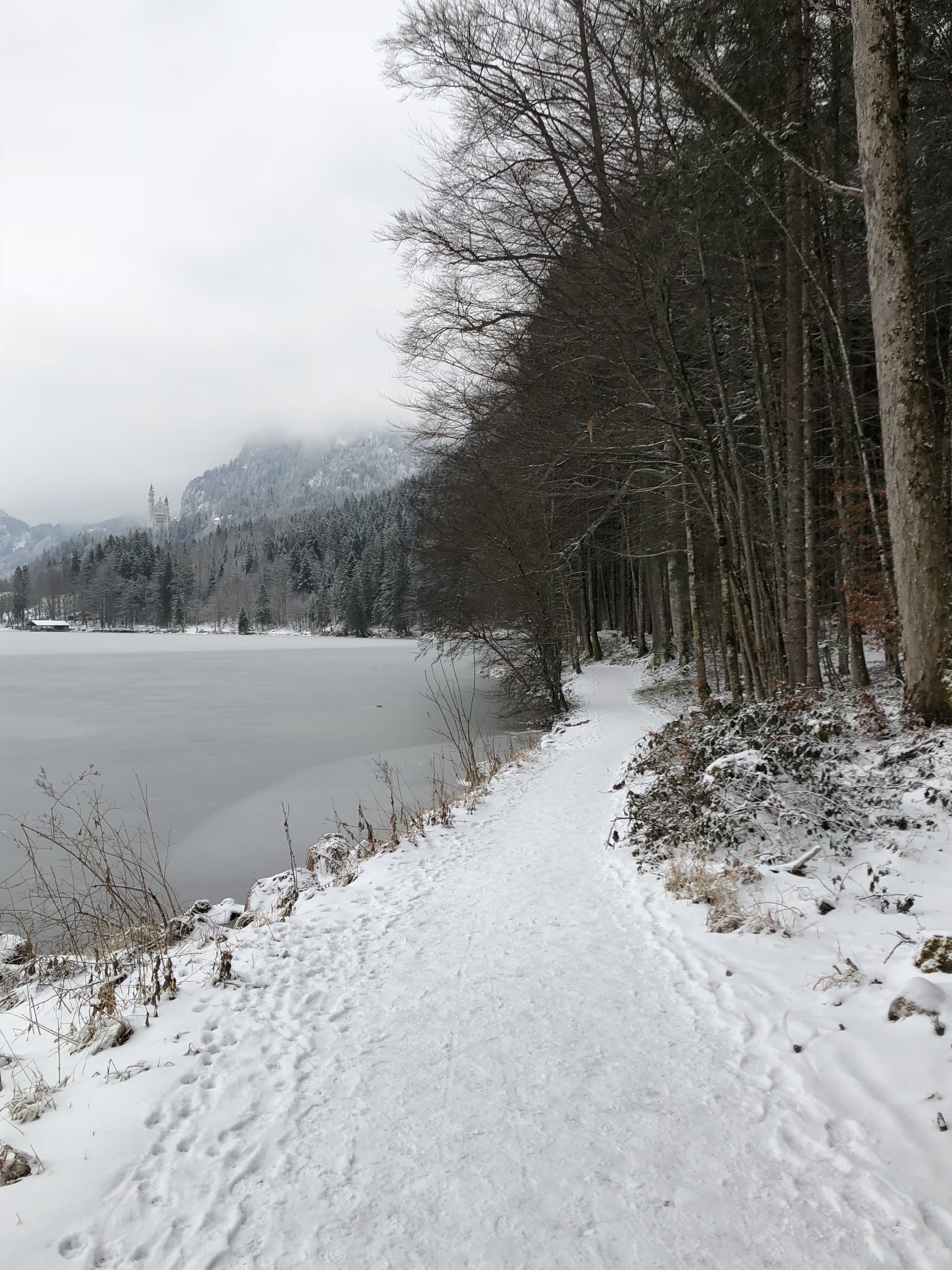
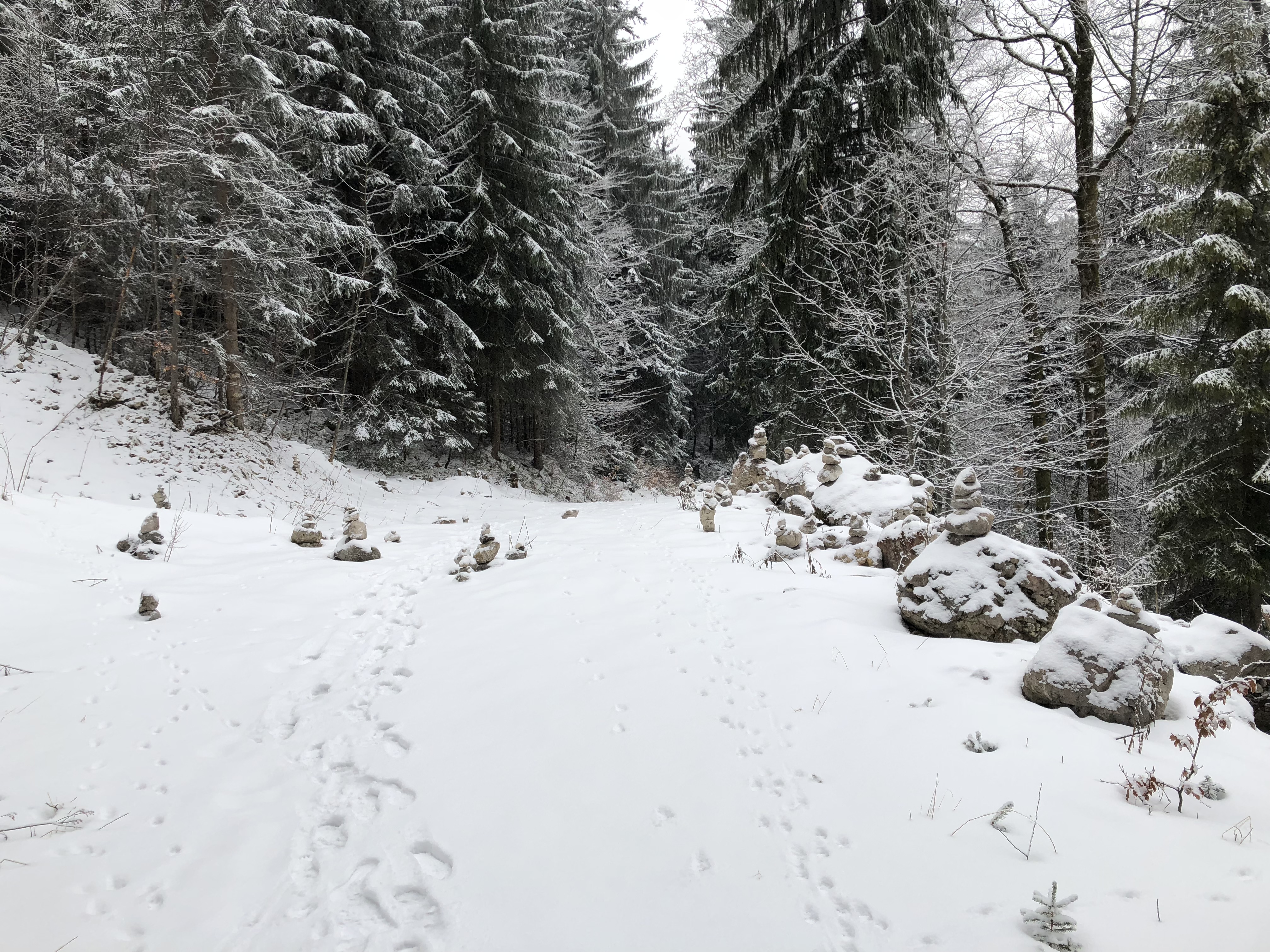
It was only a few degrees Celsius below freezing, so I was surprised that this entire lake ended up frozen. The ice didn’t look that thick, but it was enough to support some of the ducks that were walking along the surface. I also tossed a couple snowfalls onto the surface to no effect. There wasn’t a trace of a breeze, and once I started walking I got total silence. That can actually be a bit unnerving, though. Every sound no matter how small drew my attention out there, and eventually it gets hard to imagine that a fall of snow off of a tree aren’t the sneaky footsteps of a wolf. That was more pronounced when the trail turned uphill from the lake into the mountains. The snow got a little deeper, but the scenery and the challenge got a lot more exciting. The trail wound up through evergreen trees and started providing better views of the lake below. Even though I was alone, there were still a few sets of feet (and paws!) I could follow. It was the furthest I’d been in solitude for months, and it was refreshing to be like that. I still had to budget time though, and after a bit over an hour I had to turn around and hike back. It helped that around now I heard something that I took to be a howl, and headed downhill a little faster than I would have normally. I even spent some time on my way down thinking about what I’d do if I did encounter a wolf, but came up pretty empty.
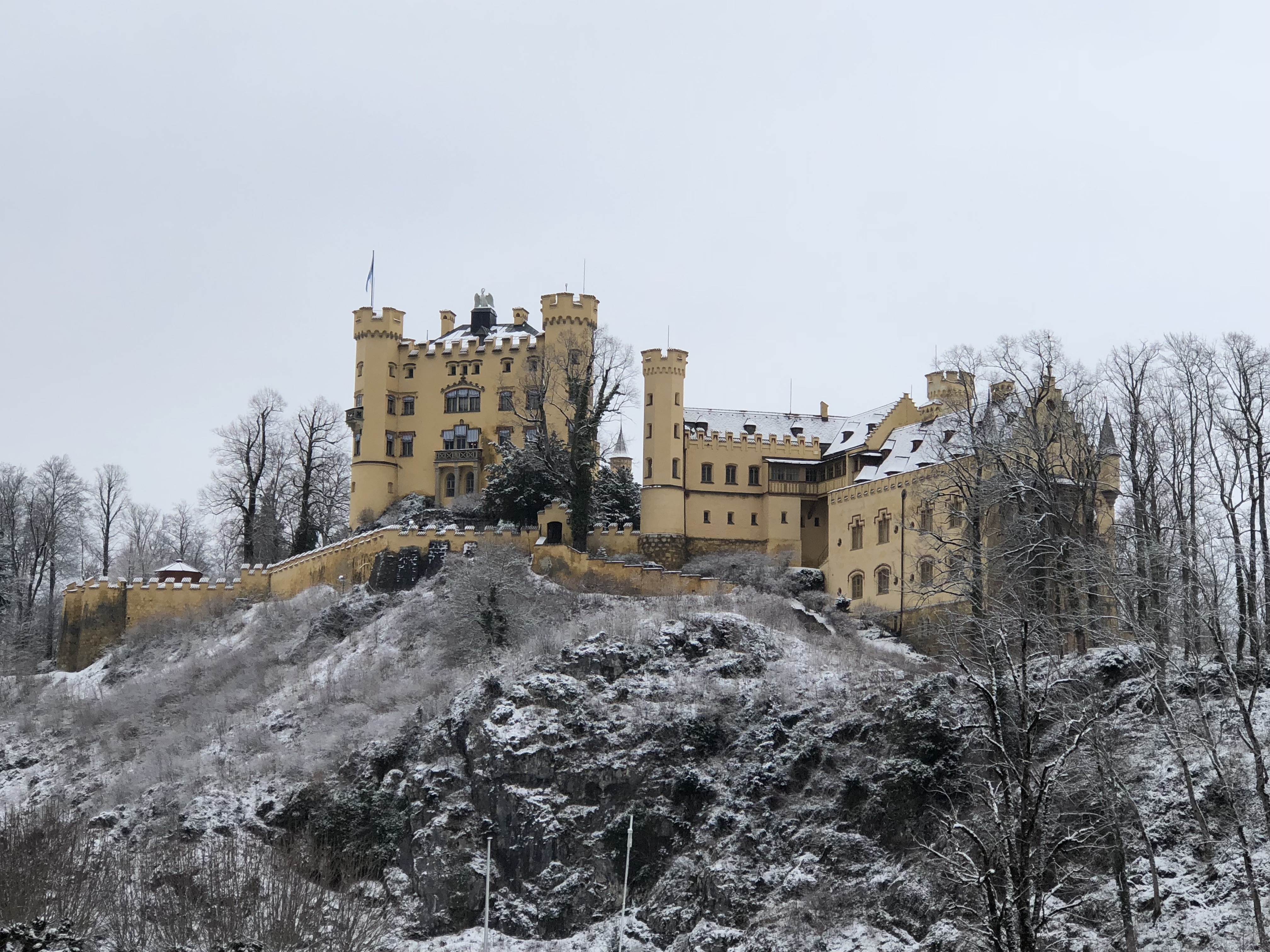
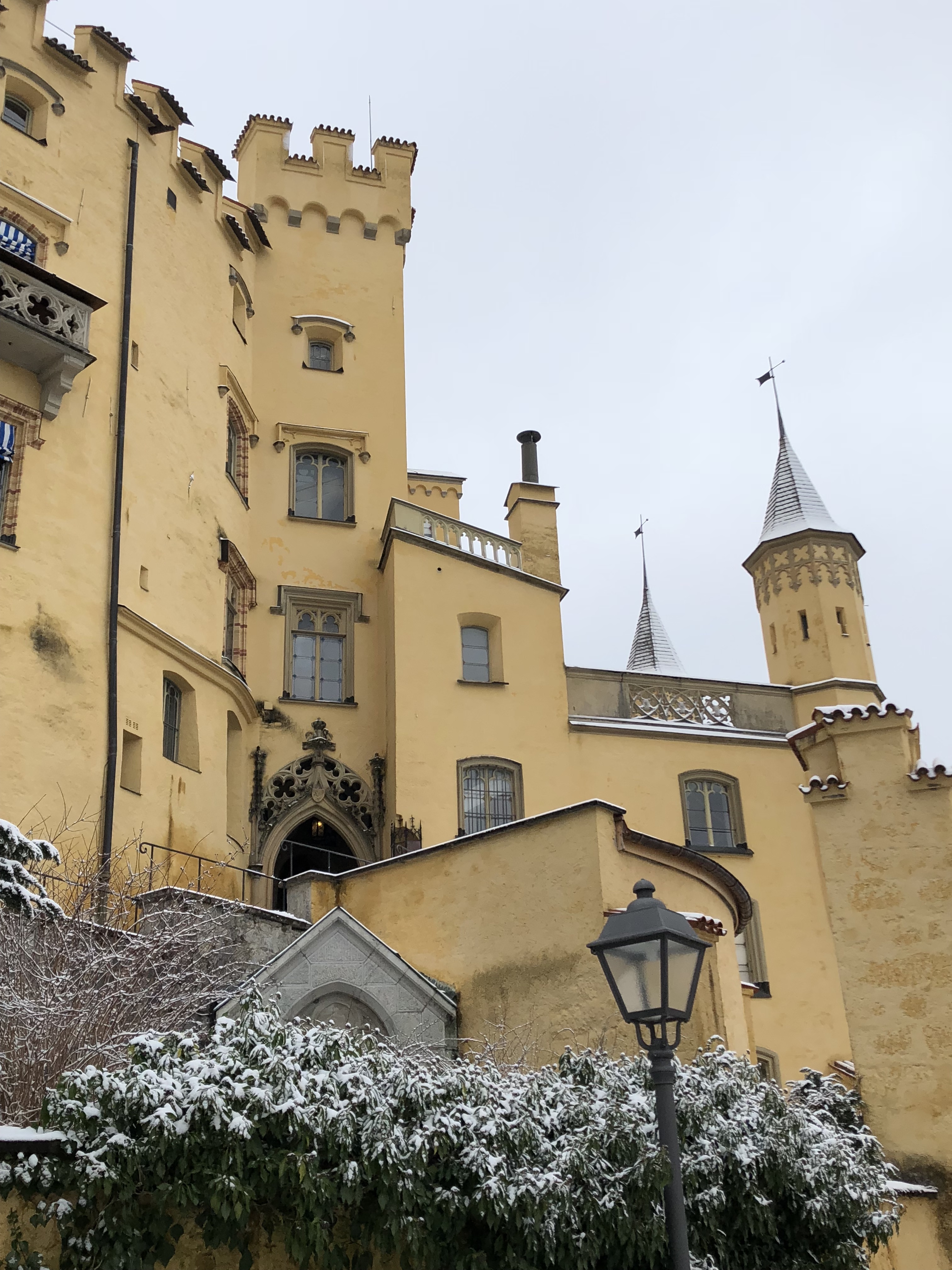
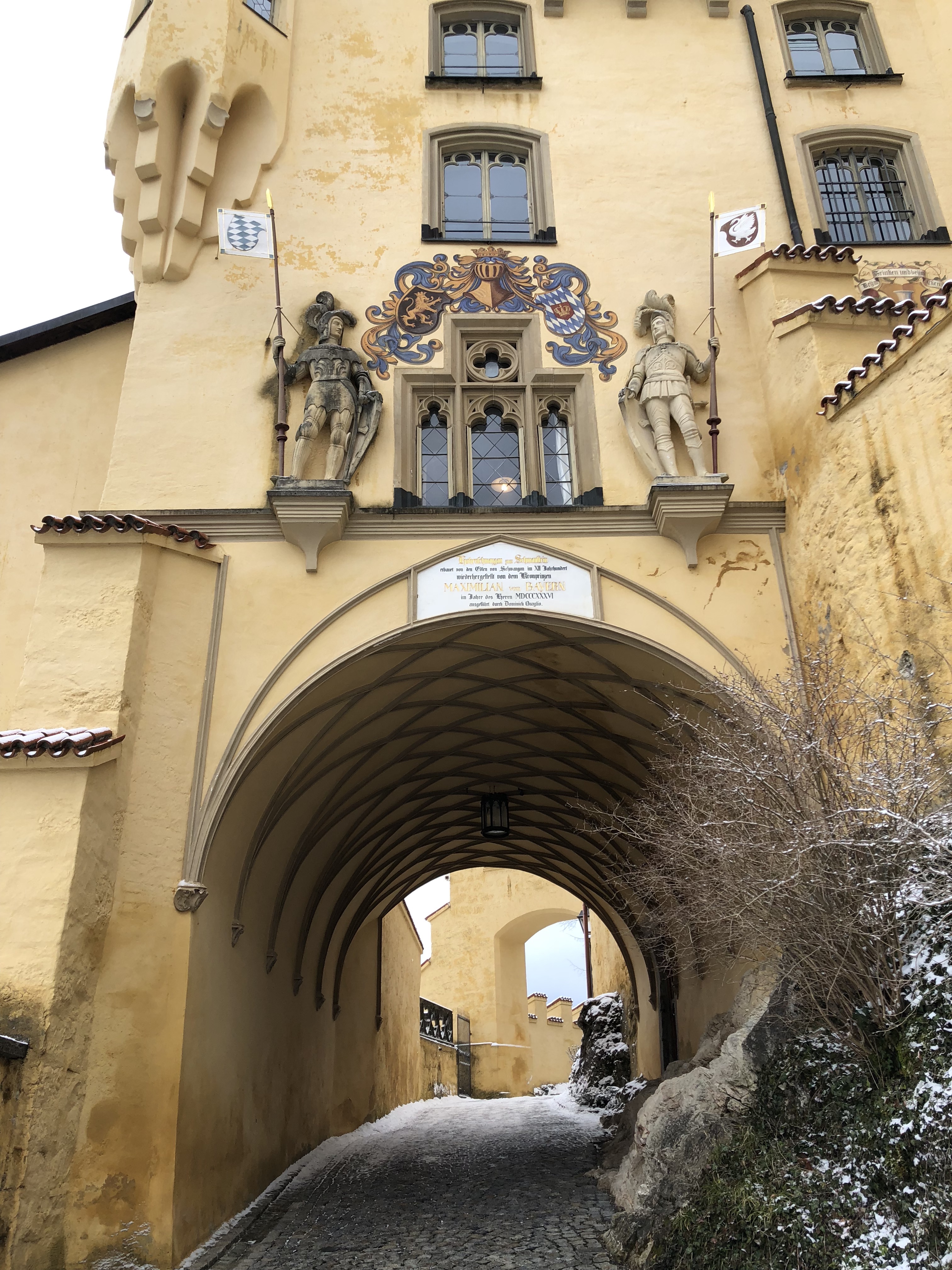
I got to Hohenschwangau about 10 minutes before my allotted entry slot, and gathered in a lobby with the other guests. We were told that photos weren’t allowed inside, which actually didn’t bother me at all because I needed to save the battery on my phone. When it’s below freezing my phone’s battery is strained, and I didn’t have a way to charge it midway in my trip. The interior of the palace was redecorated with 19th century furniture, and was much warmer than the outdoors. In actuality though, the palace wasn’t regularly used through much of its history. For most of its existence it was just used as a summer palace. The lighter yellow color of the exterior isn’t my favorite, but there’s no denying it’s a nice palace. After the tour, I took some more time to take pictures of the exterior before moving on.
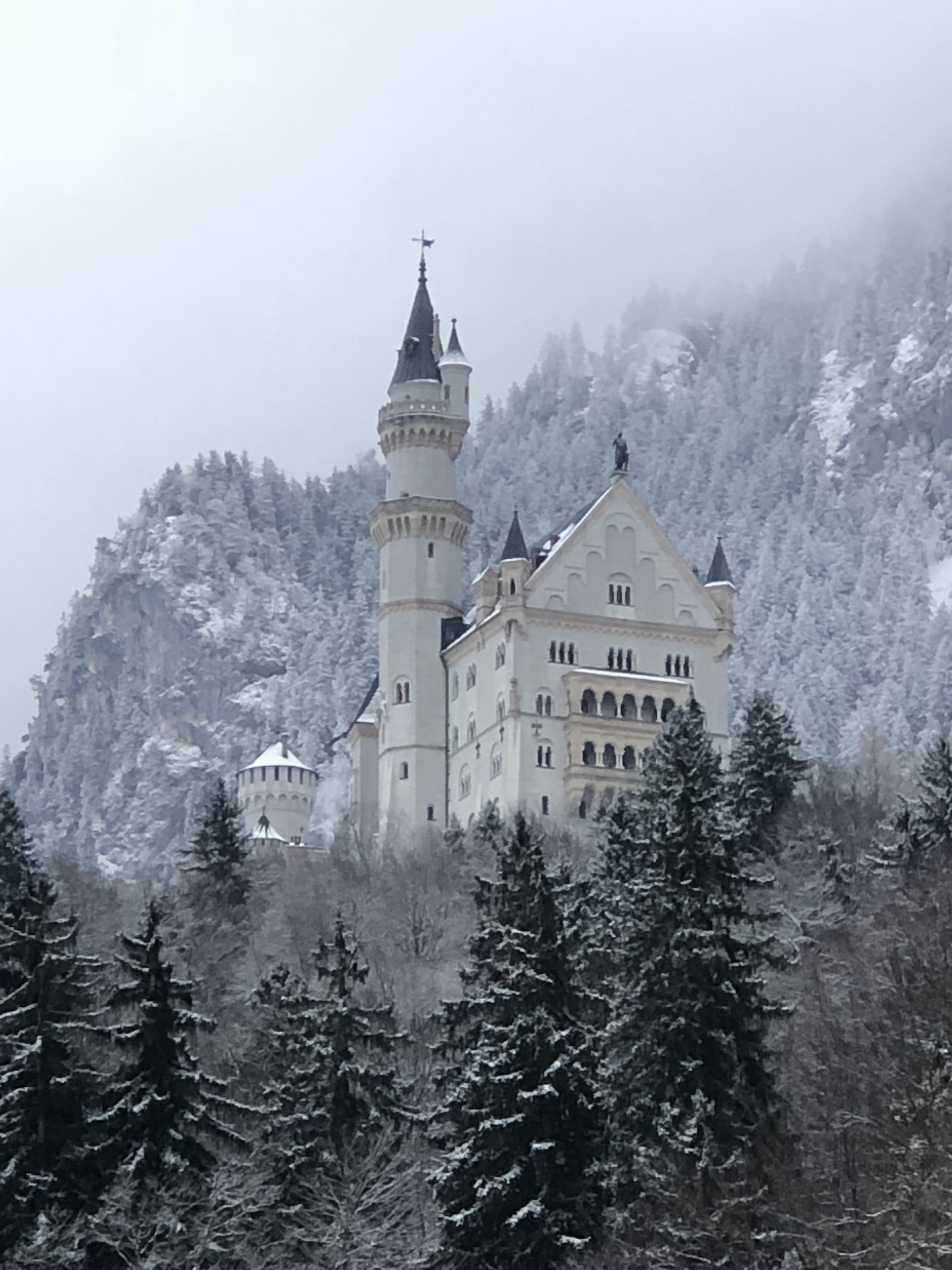
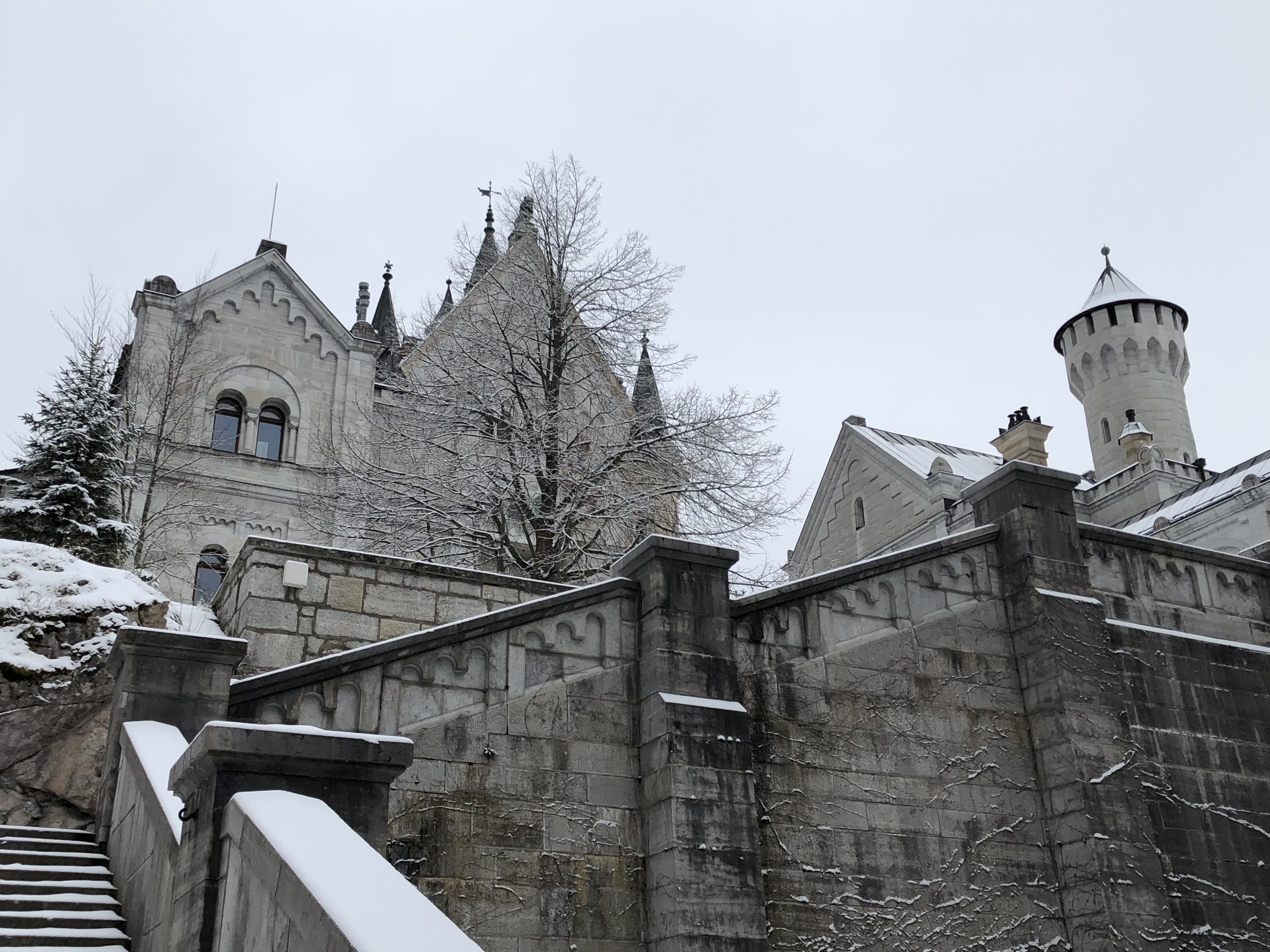
I still had about an hour after my tour to walk up to Neuschwanstein, but it was a steep uphill segment on a road that was slippery with melting snow. Even after blitzing through my earlier snowy hike, I found this climb to be tough and I was breathing hard on my trip up. One part I really appreciated though, is that the castle seemed to rise out of the surrounding mountain as I got closer. On a bright summer day I think it would stand out from afar, but against the cloudy backdrop of winter it almost blended into the sky from afar. It’s only when you get closer that the blue paneling of the rooftop and spires stands out and the castle with it. This is the castle that’s known for being the inspiration behind the castles built at the center of each Disneyland park. While those are more symmetrical than Neuschwenstein, they definitely borrow their highest central spires from the one here. Even though it’s on the castle’s exterior it’s the visual focal point, and the tip narrows like it could pierce the sky. It was clearly a castle that was built for beauty over defense, which made sense in the more peaceful 19th century atmosphere of Bavaria. As I approached it, there was no question in my mind that I’d made the right choice to come all the way out here to see it. I think anyone who hopes it will look exactly like the Disney castles could be a little disappointed, though.
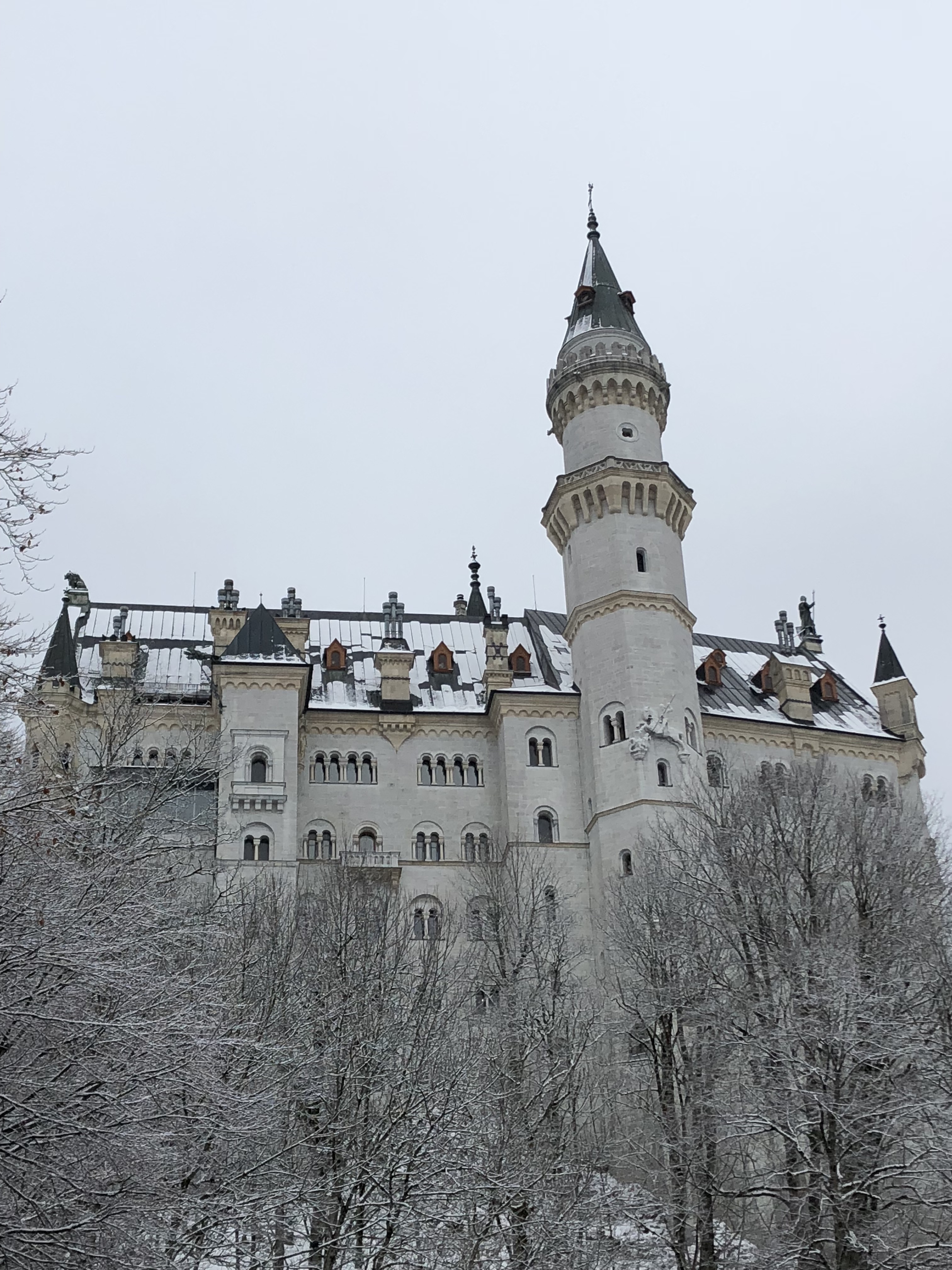
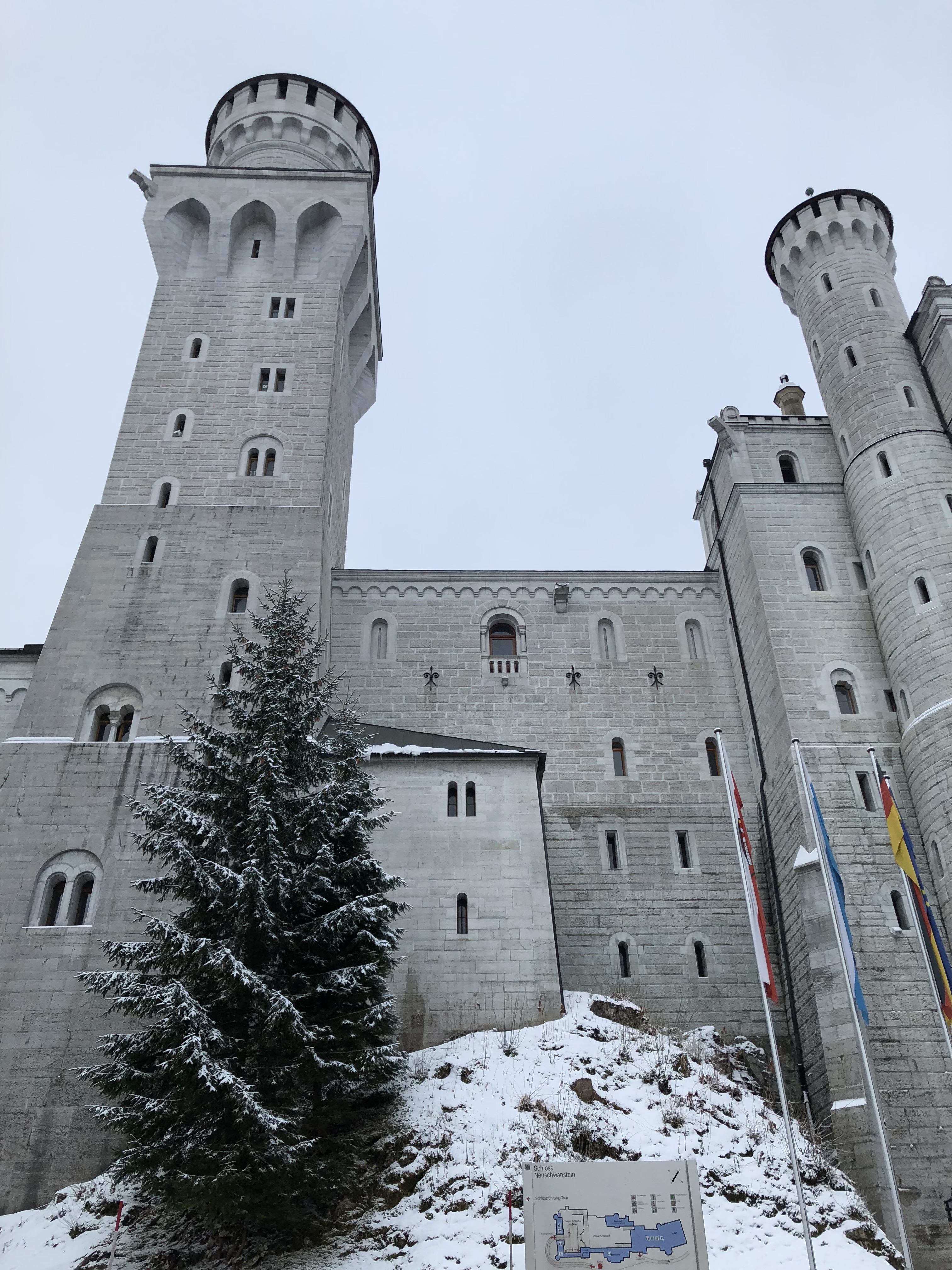
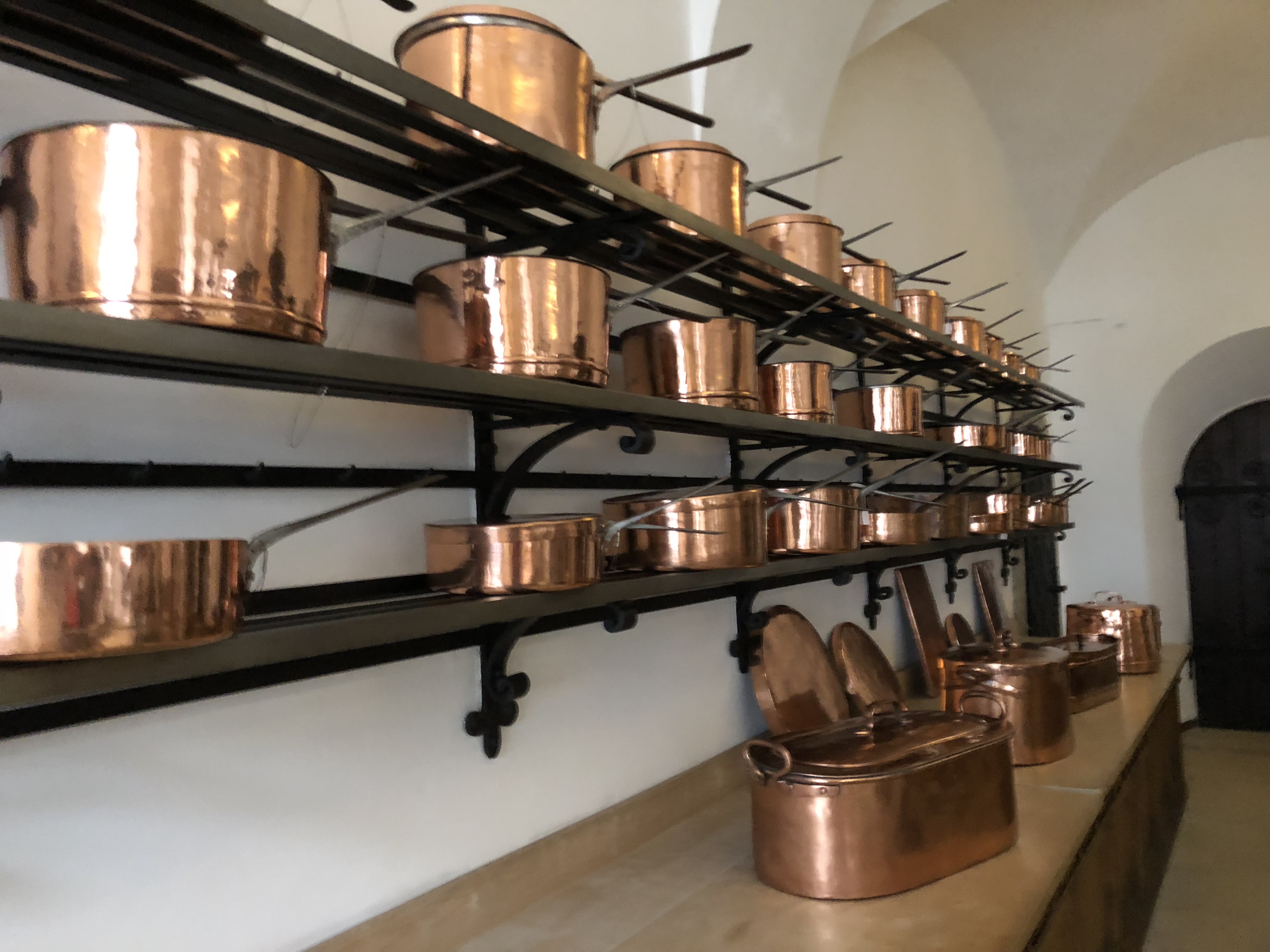
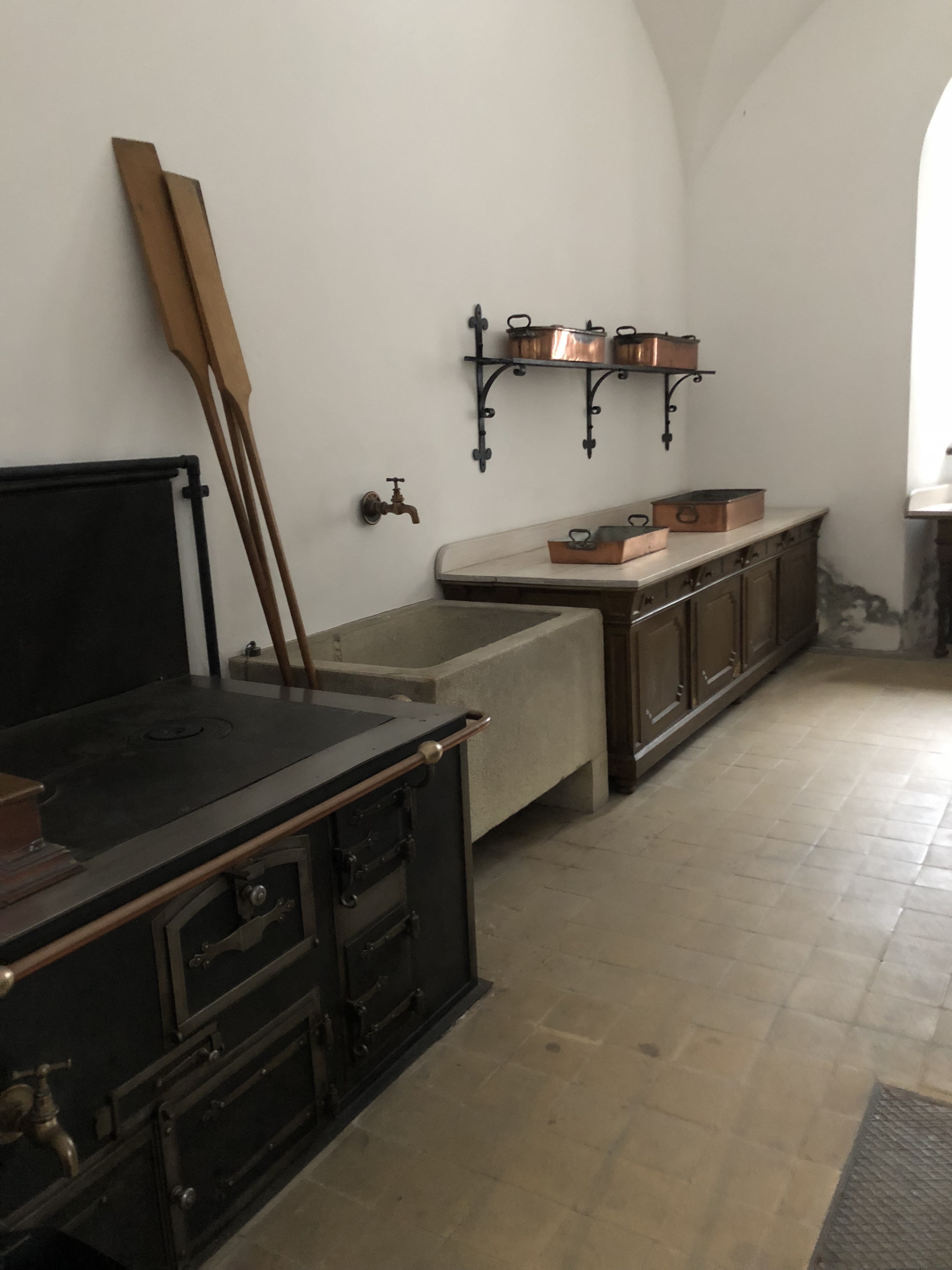
Like Hohenschwangau, photography wasn’t allowed within the castle itself. This rule was relaxed for the kitchen areas, however. Despite its reputation for being the inspiration for a Disney castle, I found its interior to be decorated much more darkly than Hohenschwangau. There was a lot less emphasis on flooding room with natural light through windows, and most rooms were decorated with darker wood paneling and deep blue carpeting. The gloomy weather outdoors probably influenced my perspective, but it seemed like a pretty foreboding place to live. Still, I’m very glad that Germany has decided to restore these castles’ interiors and treated the general public to a glimpse at what life may have been like there.
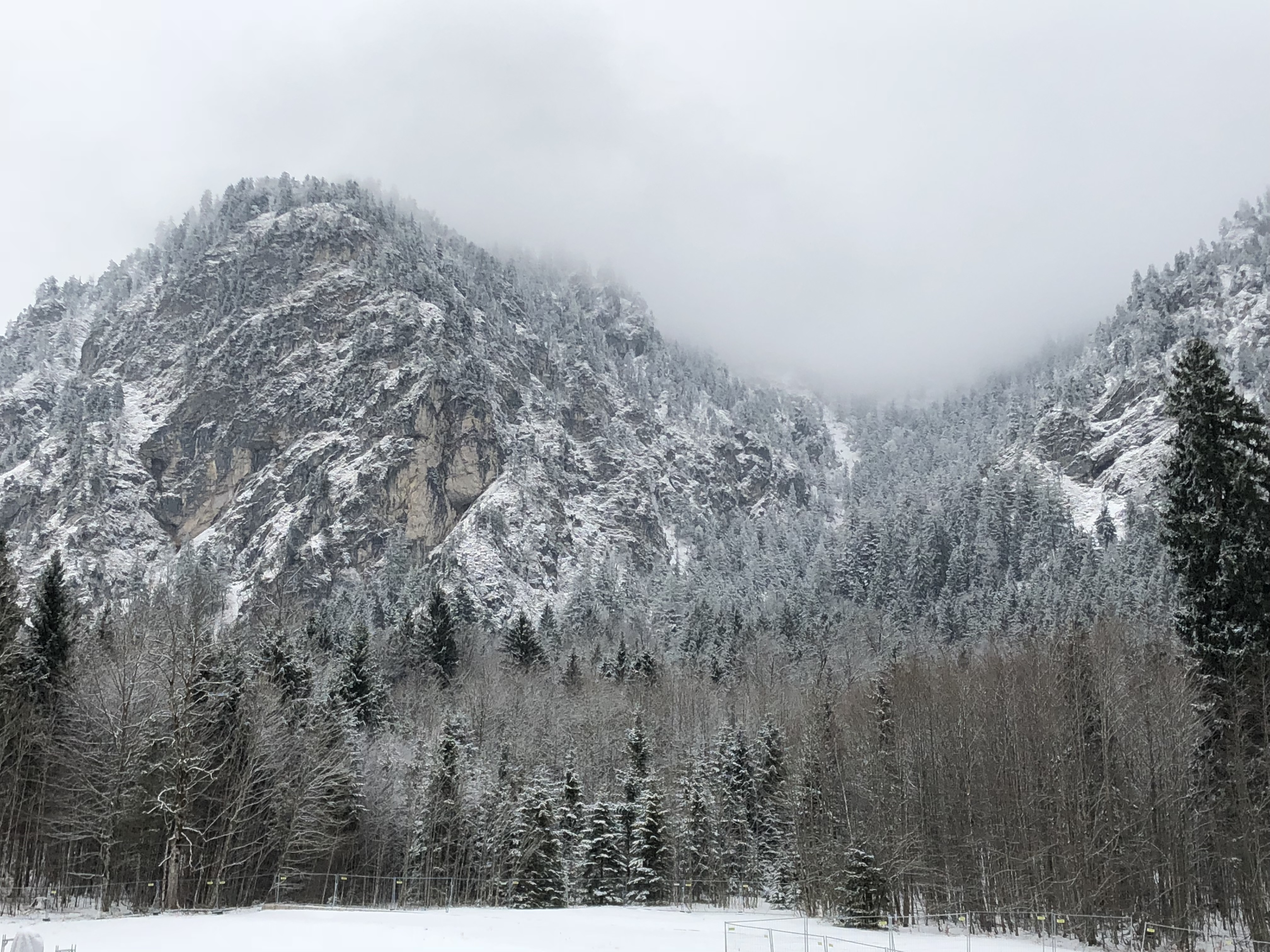
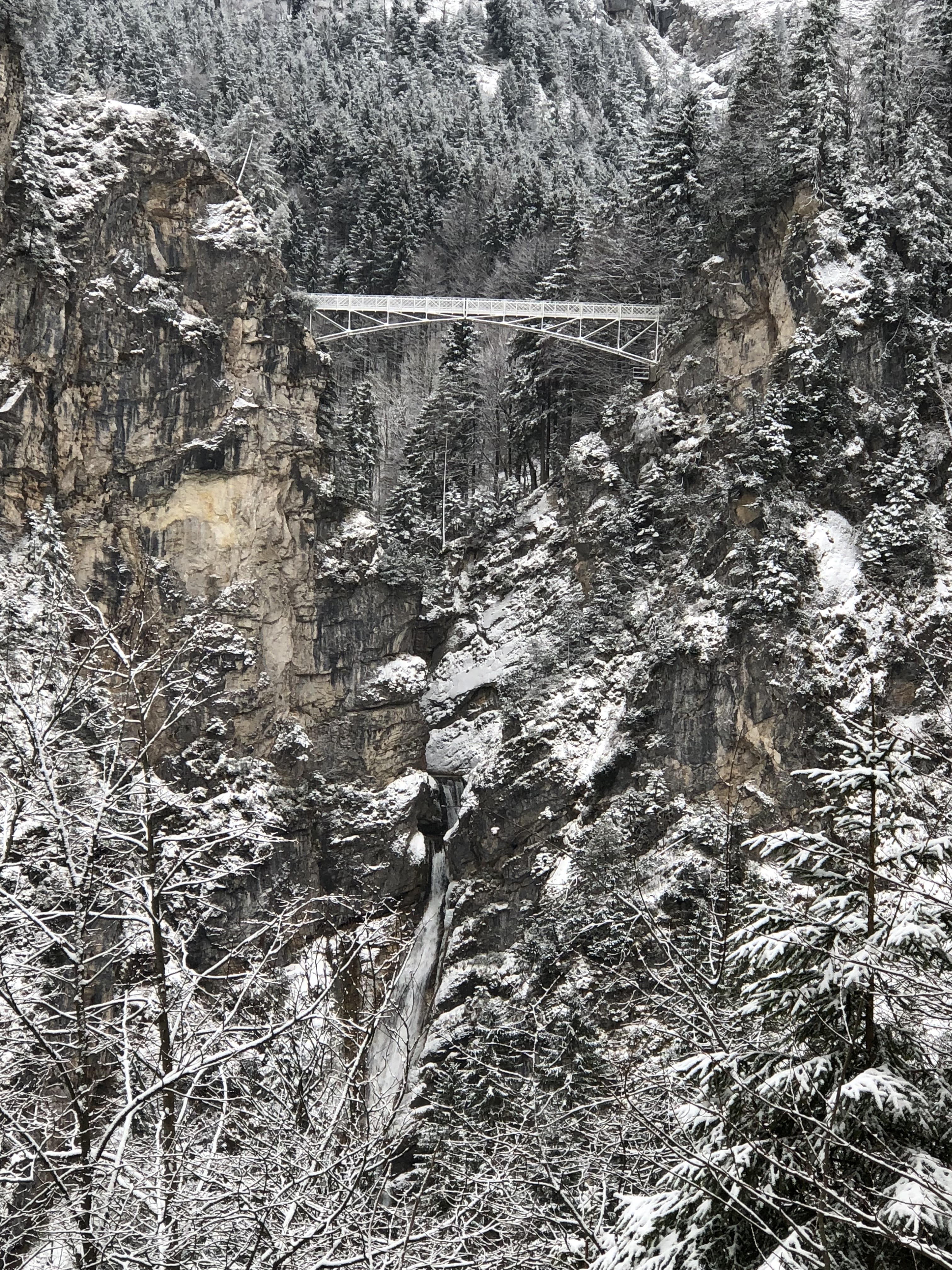
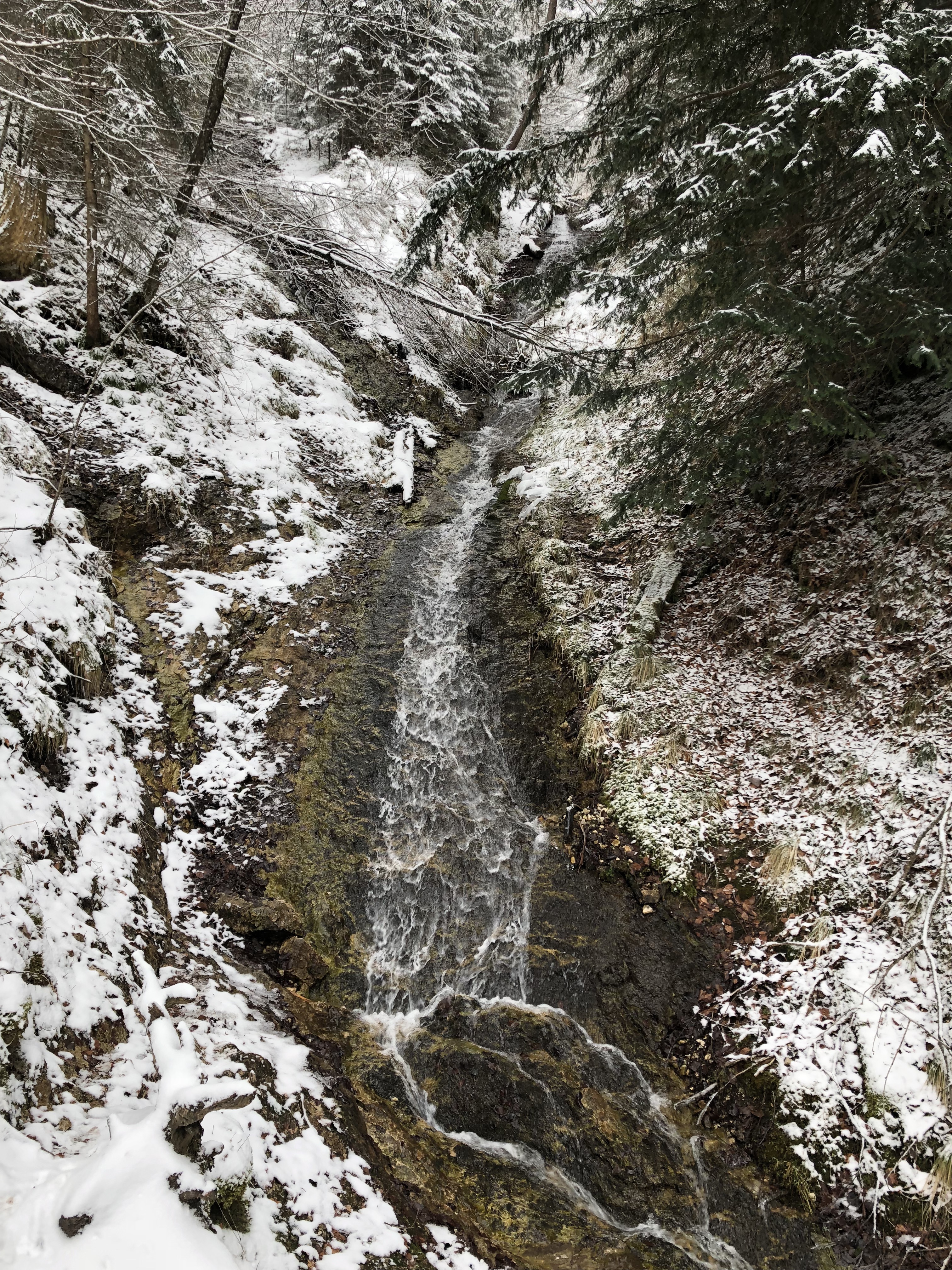
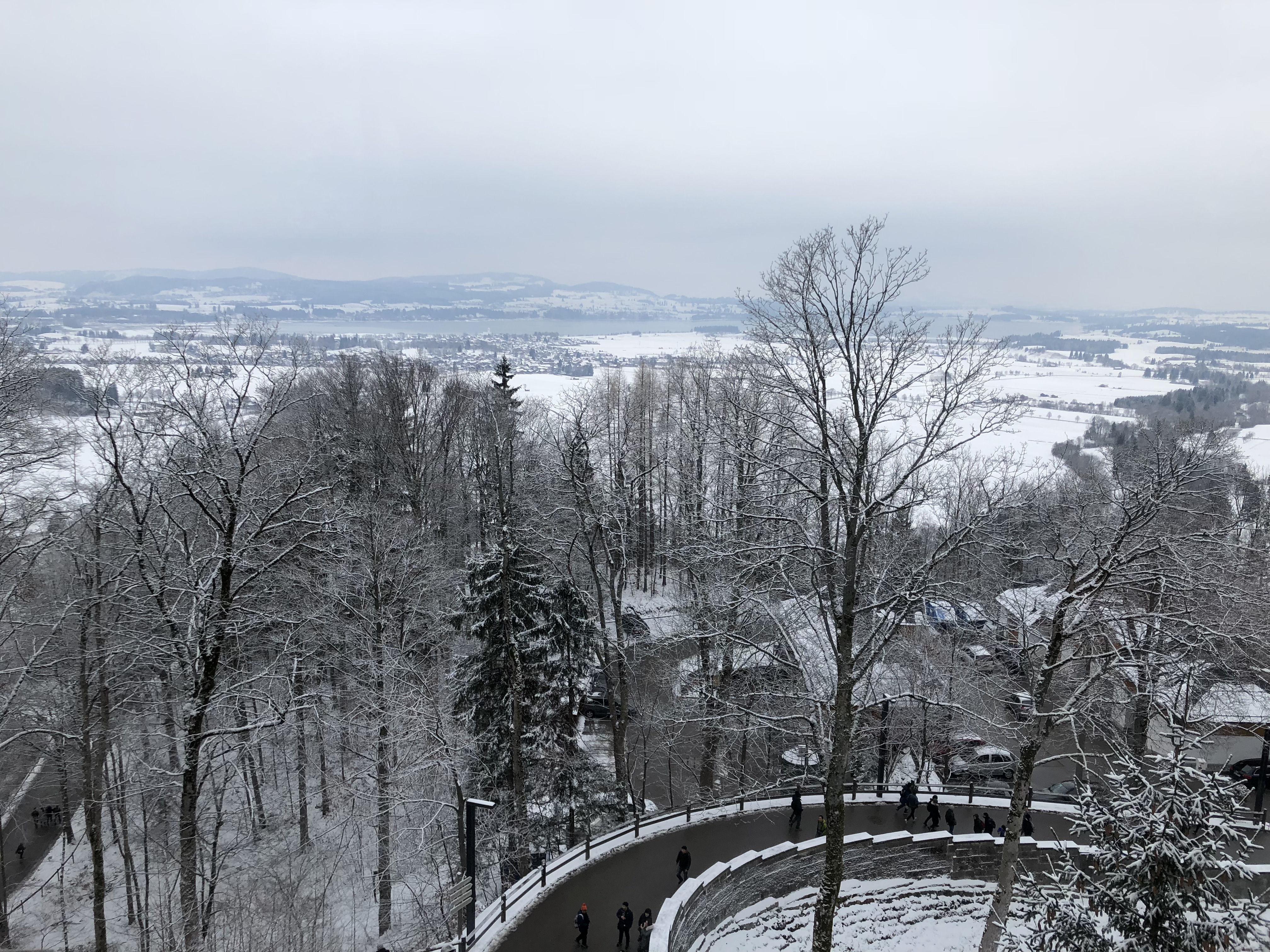
My last time budgeting exercise of the day was making sure that I caught my 5 p.m. train home from Fussen, as they only left on the hour. That still left me with some time for the gorgeous snowy mountain scenery that made the backdrop of Neuschwanstien. The most notable part is probably the waterfall that careens down the mountainside behind the castle, and despite the cold weather it wasn’t frozen over. There’s also a bridge over those waterfalls, but it closes in winter because the hike to it gets too dangerous and slippery. I had to observe it from afar, too. The evergreens were coated with fresh snow from the day before, which gave the mountain a tranquil and slumbering feeling. Of course, from the heights of the castle grounds you could also see far and away across the plains stretching back towards Munich. I took it all in for as long as I was able to before time eventually mandated that I start hurrying back towards the train station to go back to Munich.
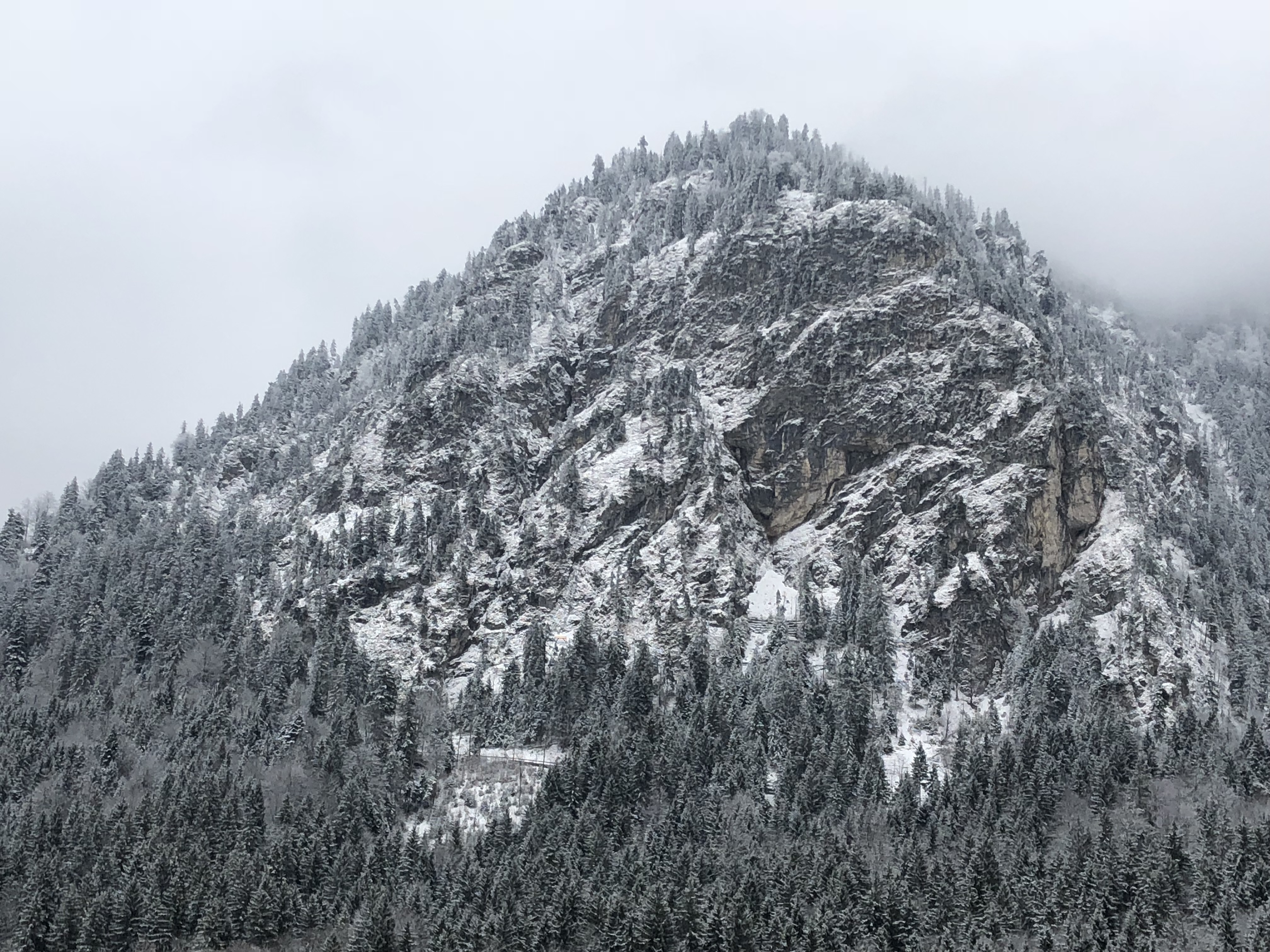
Visiting Neuschwanstein isn’t as easy as a spontaneous day trip from Munich, as you do have to make a reservation ahead of time and the train trip from Munich is 2 hours each way. On top of that, you’ll hardly be the only tourist coming, as the tours were full even in the depths of February when I went. I do think that a first time visit is absolutely worthwhile, however. The castles are both amazingly well preserved, and I enjoyed that they were furnished in more subtle ways than the grand palaces of European capitals. Neuschwanstein in particular is set against such a beautiful mountain. My favorite season to visit was in winter with the snow, but the most popular time to visit is in summer when the trees have filled out and the skies are likely to be a pearly blue. Either way, absolutely budget a day to visit these two castles if you have the time to do so from Munich, but make sure to plan it at least a few days in advance!

