Asiana A350-900 Flight from San Francisco to Seoul Incheon
Scheduled Departure: 11:30 p.m. on Wednesday, February 13th 2019
Scheduled Arrival: 5:30 a.m. on Friday, February 15th 2019
Flight Duration: 13 hours
Class of Service: Business

By the time I’d finished dinner in the United Polaris lounge, my Asiana flight to Seoul had started boarding. The other priority passengers had finished boarding by the time I got to the gate, so I walked straight through the line and onboard Asiana’s new A350-900! It was my first time ever flying Asiana airlines, and I was certainly excited to be flying them in business class. This is especially true since the flight was a redeye, and getting sleep would be much easier because the seat could be converted into a flat bed. But I was interested to see how the rest of their service stacked up against other transpacific airlines, and how they tried to stand out from that crowd.
Let’s start with the cabin and the seat. The business class cabin on the A350 is relatively small, at 28 seats total. In order to conserve space, the seats are staggered so that they are alternatingly closer to or further from the aisle. Since I was traveling alone, I chose seat 4A on the lefthand window side, further from the aisle. The seat itself faces forward and is tucked up right against the window. The seat itself had more padding than an economy seat to be more comfortable, but didn’t have any special plushness or texture. Because of the privacy shield I had to lean forward a bit to get clear views out of my windows, but this was fine by me. To my right was a countertop that I used to store my book and headphones, among other things during the flight. It also created a buffer between me and the aisle, while for a seat against the aisle that countertop would be nestled against the window. If I’d had a traveling companion, we could have selected a pair of seats in the center that are adjacent to each other. The fixed privacy shield for those seats doesn’t extend out far enough to prevent us from looking at each other and we could hold hands together either on the armrest or in front of it. Because the configuration still needs to be able to provide privacy if the two people in these “couple seats” are strangers, they’re not perfectly intimate but they’re good enough. Each seat also has a high resolution screen straight ahead of the seat, making it easy to focus on if need be. Below it is an ottoman that the seat extends to when it’s flattened into a bed, but can also be a place for propping up feet or for storing things. So while the seat is not the most stylish I’ve seen, it served all the basic functionality I needed quite well. My takeaway is that it’s the most businesslike of the business class I’ve traveled in.
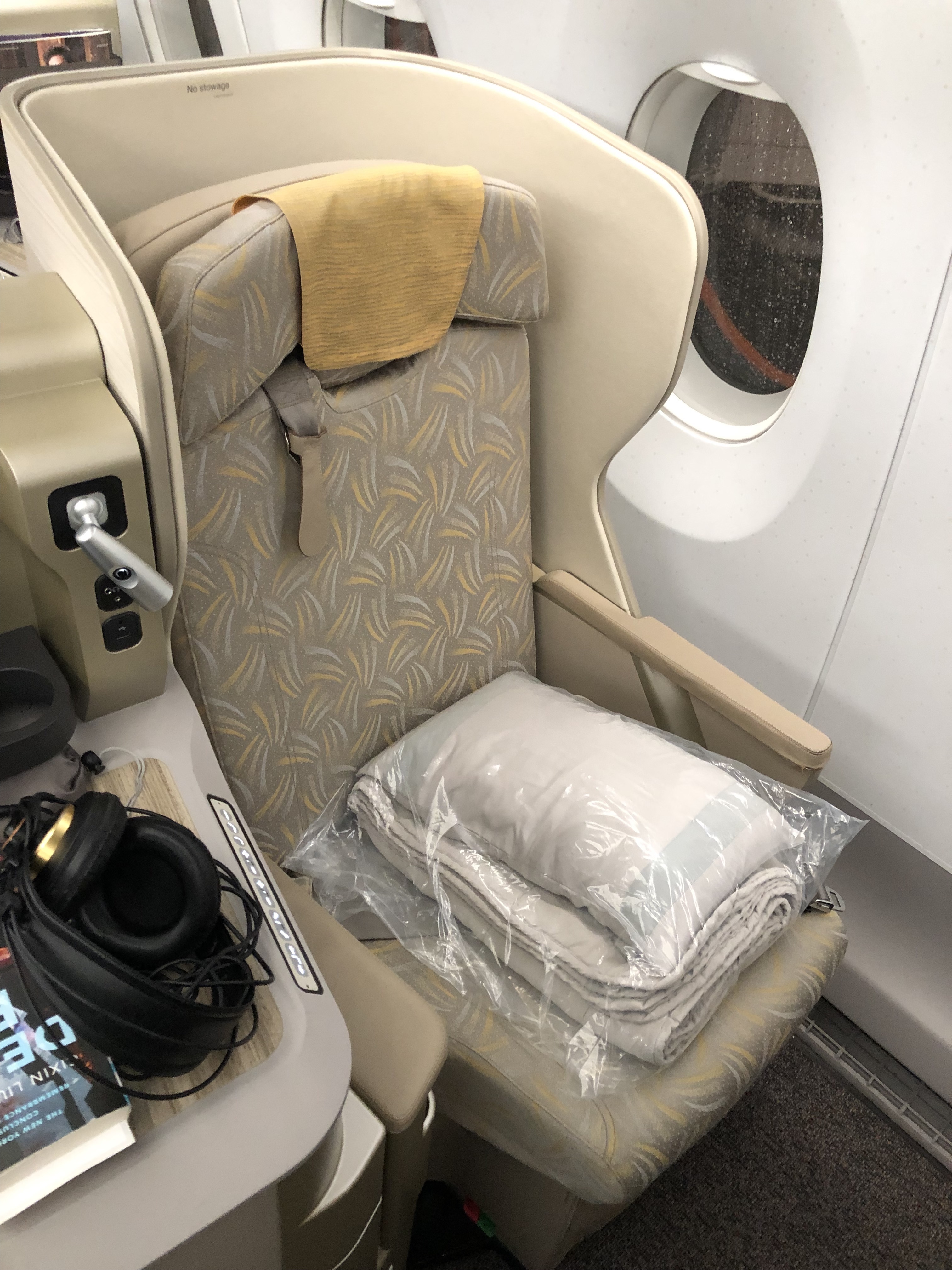


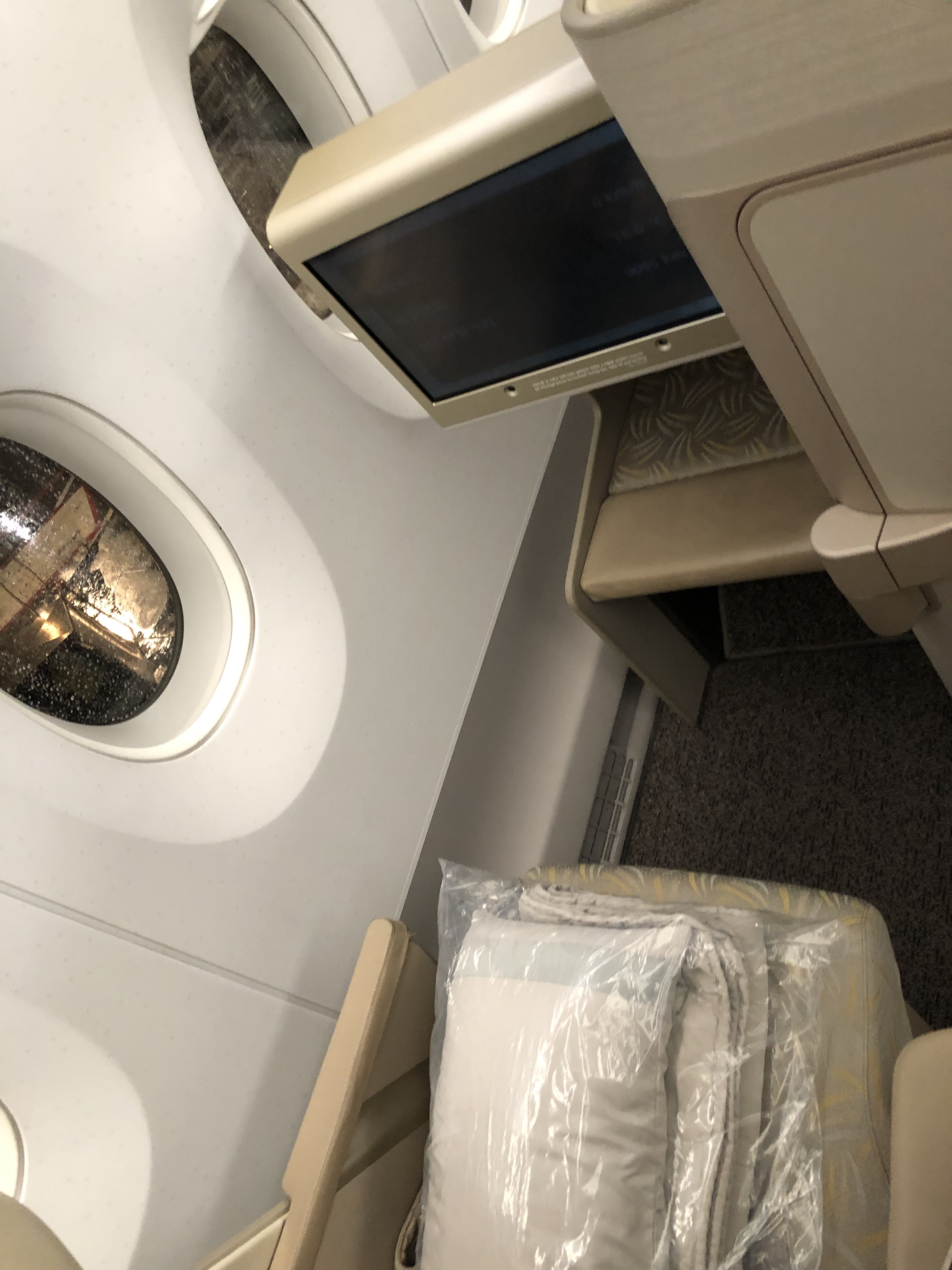

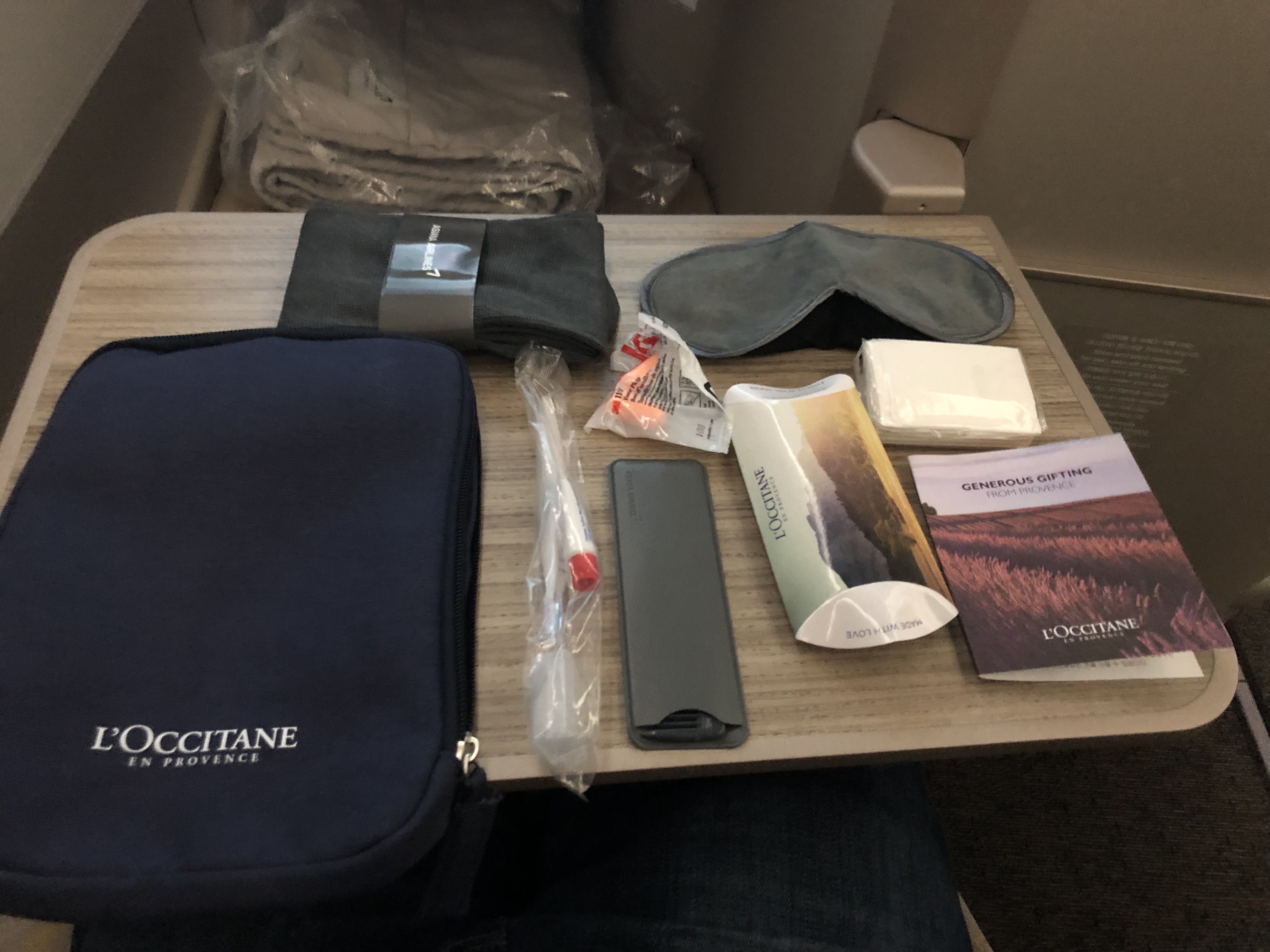
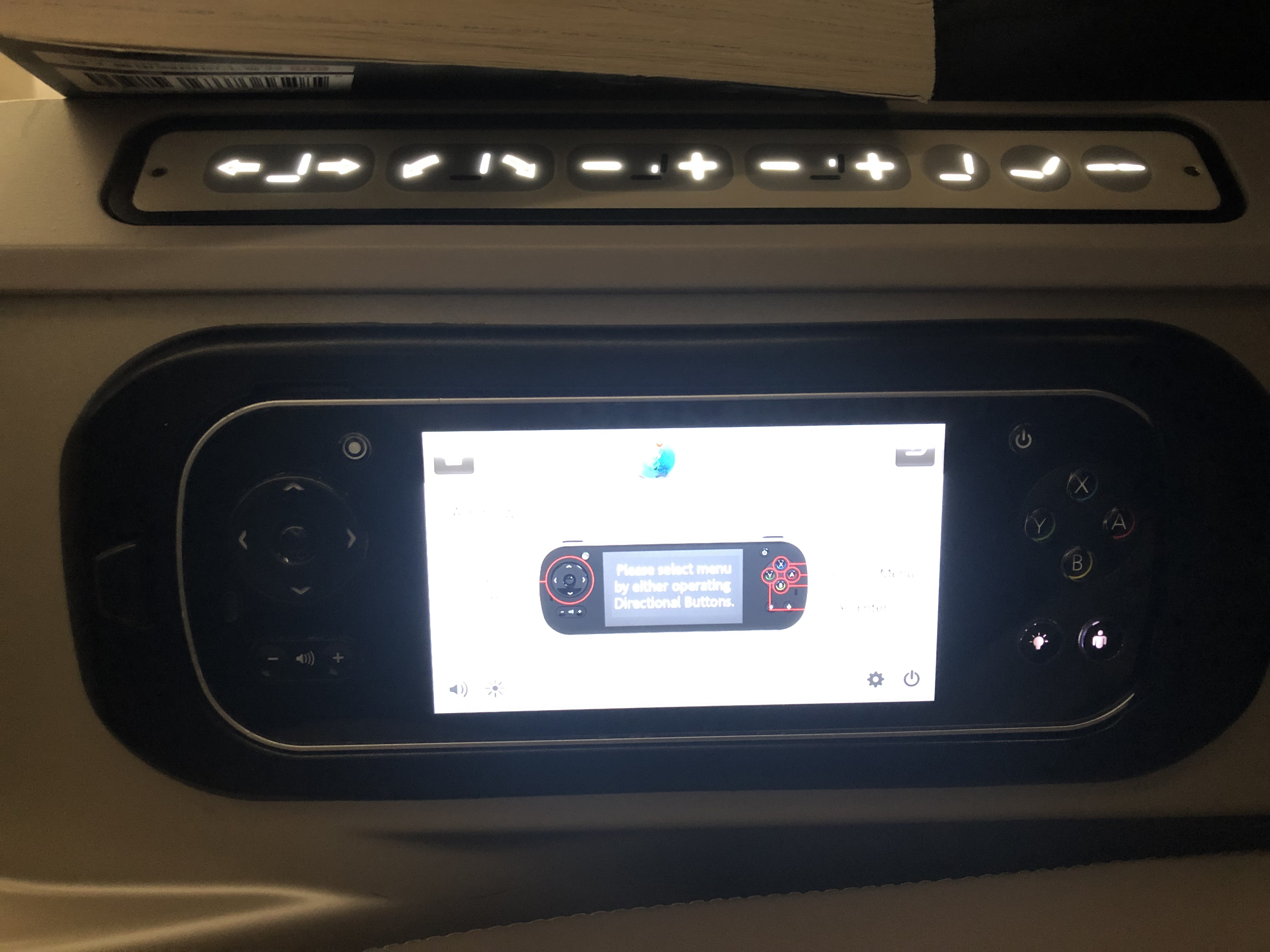
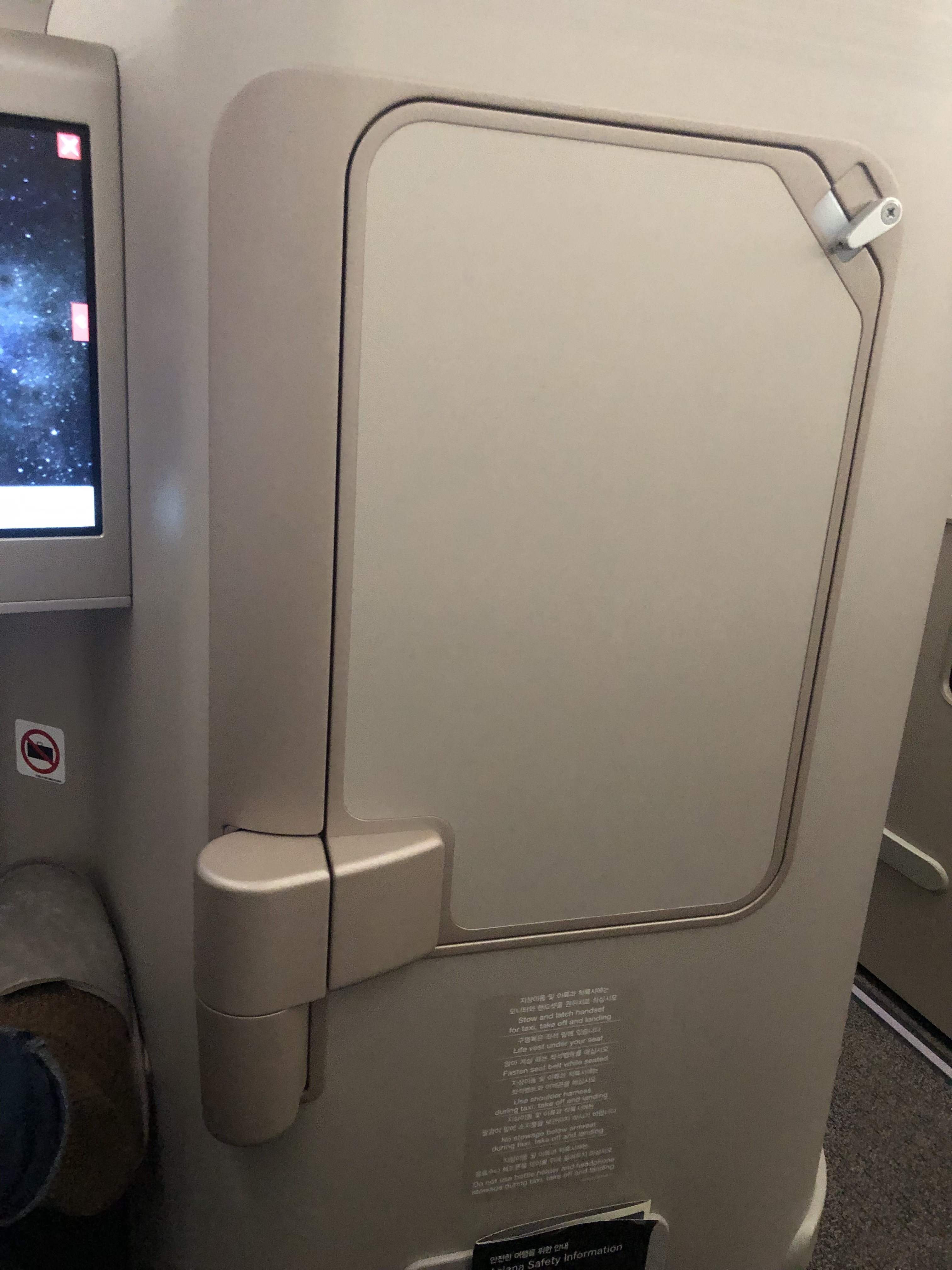
Going into the seat details a little more, most of the features that you’ll use are between the seat itself and the countertop. The top panel features the seat controls, which are used to move the seat to recline or stretch fully into bed mode. Below that is a handheld console for the entertainment screen, since it’s too far away to reach comfortably. Up on the wall is an adjustable light which is helpful for reading a book or the menu, with headphone jacks and a USB charging port below it. Further away is a cupholder, which is where my amenity kit was placed when I got to my seat. The kit was from L’Occitane, and was a flimsy, scratchy pouch. Its innards didn’t redeem it, it had mostly just the bare essentials and low quality ones at that. I unfortunately had forgotten my personal eyemask though, so the one they provided came in clutch on this flight. Lastly, the tray table was cleverly locked against a panel in front of my seat’s countertop, making it easy to operate on my own.
This may be surprising to many, but between eastbound transcontinental redeyes and westbound redeyes to Asia, SFO actually has a glut of flights departing between 11 p.m. and 1 a.m. each night. This meant my aircraft had to queue up on the taxiiway, and we didn’t get airbourne until slightly after midnight. That was fine by me, since it put more time between my 10:30 p.m. dinner in the Polaris lounge and my onboard meal. My flight’s dinner service got started pretty quickly, with the first round of drinks being offered about a half hour after takeoff at 12:30 a.m. local time. I selected champagne as always, which was Laurent Perrier today. The menu itself is fairly compact, typically with one Korean option and two or three International ones. Tonight the Korean option was bibimbap, which looked like the most healthy choice ahead of my half marathon. I also perused the wine list so that I’d be ready with my pairing choices when I was asked for them.

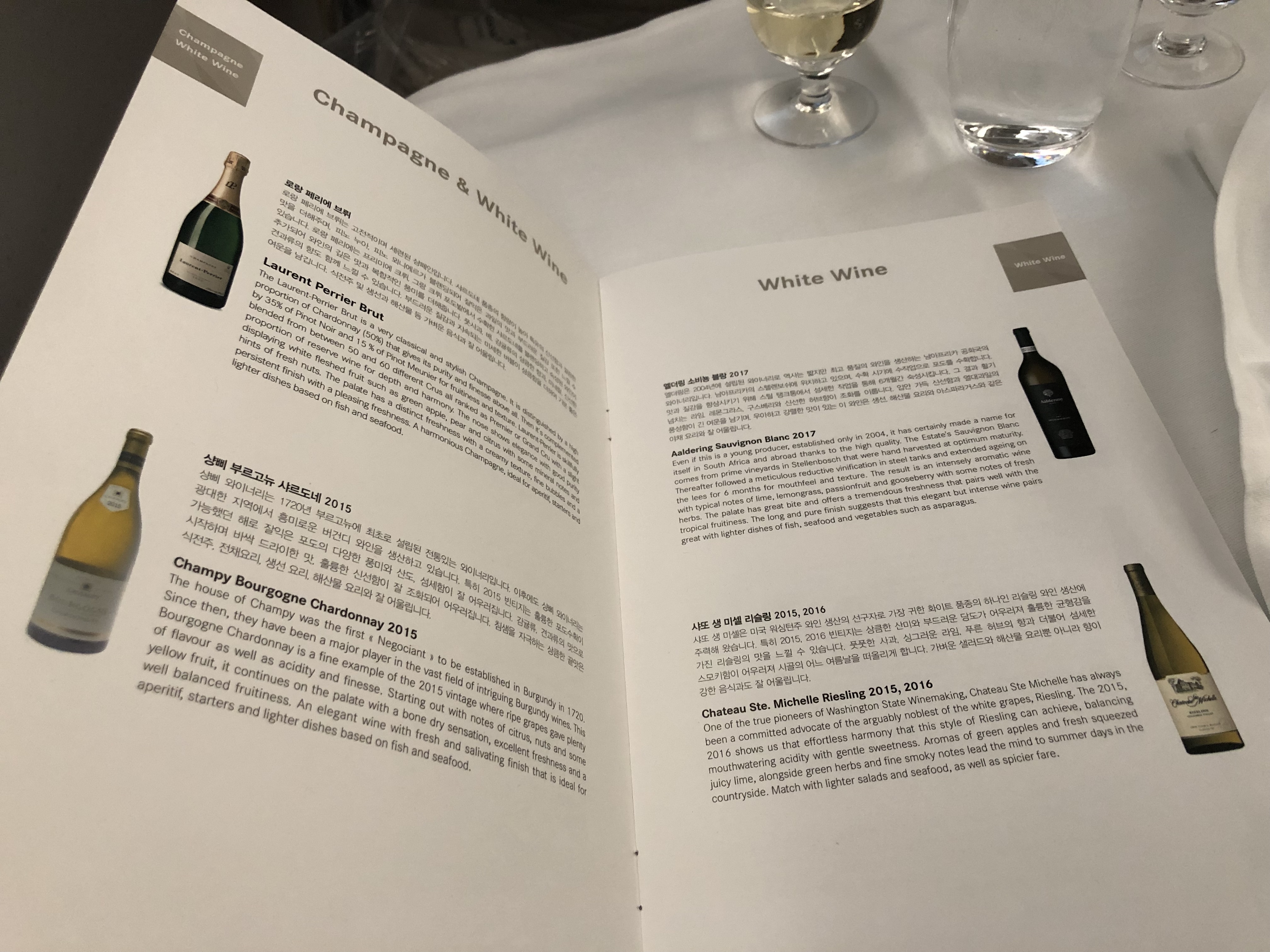
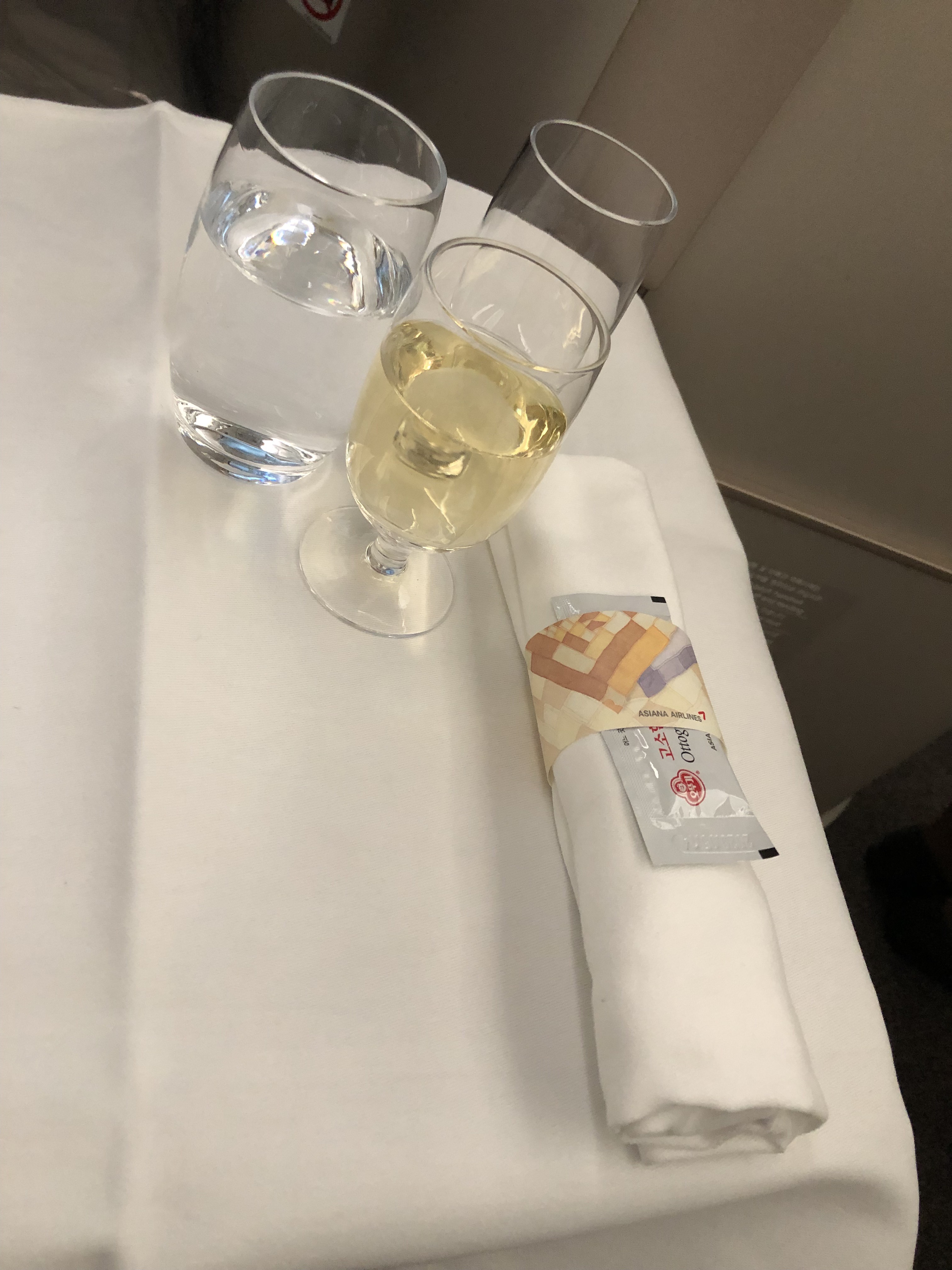
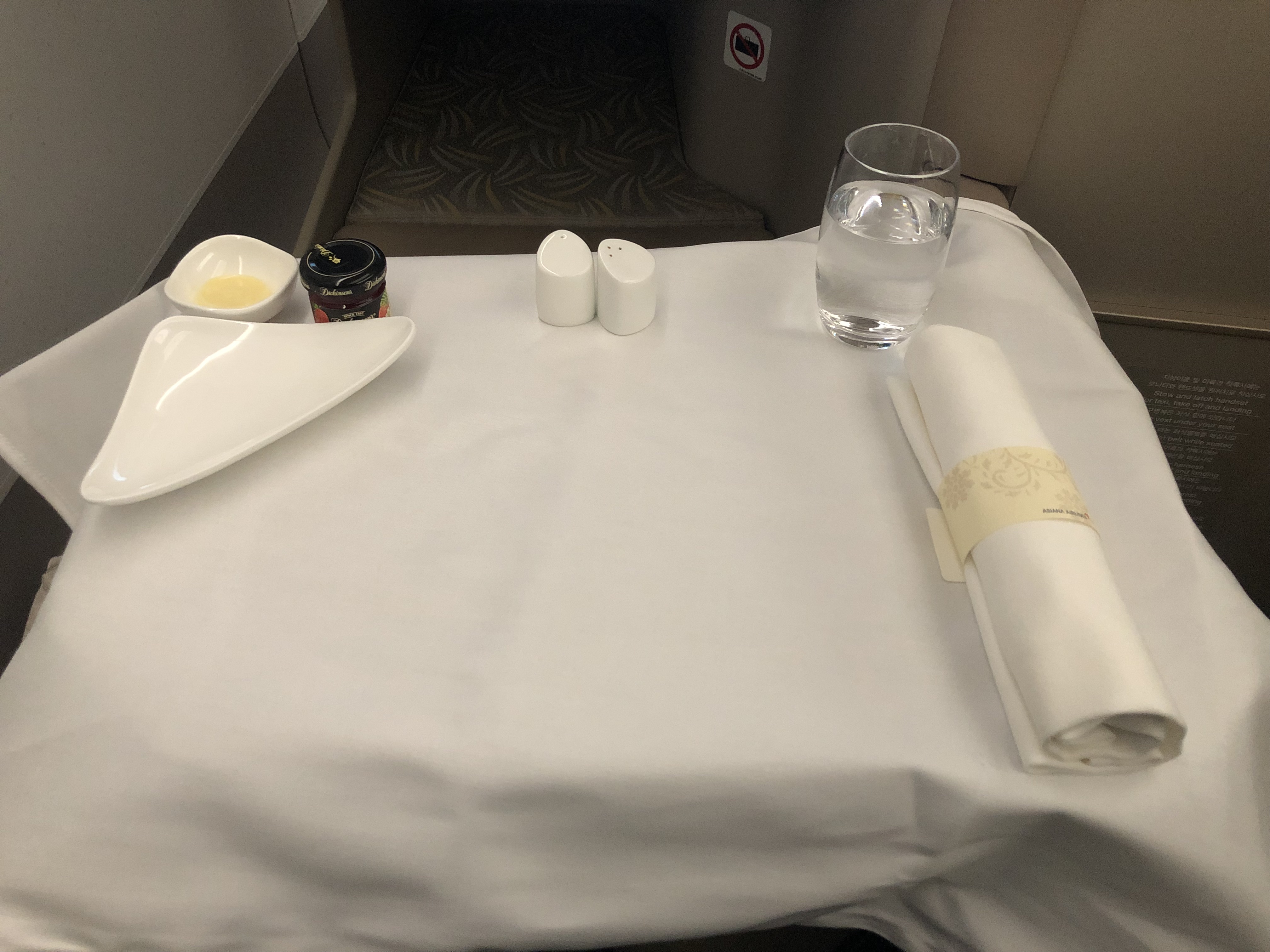
The appetizer was pretty tame. It consisted of a couple chilled rolls of roast beef, with sprouts and radishes tucked inside. There was also a stray tomato with some dressing. Honestly, I’m drawn more to the beauty of the plate than the goodness of that appetizer. They were unmemorable and gone in a few bites. Next was the bibimbap, which is a staple as the Korean option on most Asiana flights. There were fewer side dishes than normal so that there’d be enough space to keep them on the tray table, with only kimchi, anchovies, and spicy paste making the cut. The rice was pretty dry and crumbly, which was a bit of a disappointment for the dish. The vegetables were a little soggy but not enough to make the dish unpleasant. And the spicy paste helped to cover them up anyway. The seaweed soup on the side was hearty, and helpful at dispelling the spicyness of the paste that I used. The meal was good and healthy, but it isn’t something that would cost more than $10 at most restaurants and doesn’t have much of a premium feel to it, save the beautiful dishes. I downed a glass of the South African sauvingnon blanc with this one. Dessert was simple, a packaged savory ricecracker and a raspberry tart. If I had to pick a best part of this unremarkable meal, it would be the tart. The Riesling I chose to go with them was sweet and delicious, too. The meal was pretty quick, and I was able to start getting ready to sleep by about 1:30 a.m., just 90 minutes after takeoff.


For sleeping, Asiana only provides a pillow and a plush blanket. The pillow is pretty small, and doesn’t quite cover the width of the seat. It was warm enough in the cabin that I didn’t need the blanket, so I laid it over my seat once I’d flattened it and slept on top of it. There’s enough space to move around so that I didn’t bump against anything while moving around to get comfortable. I went to sleep just hoping that I’d stay that way for awhile. And thankfully, I did! I didn’t wake up until about 2 hours before landing, which meant I had slept for nearly 9 straight hours! Since the breakfast service was due to start soon, I’d slept almost the entire length in between and maxed out the sleeping value of the flight! I know some travelers, especially those who use miles like I usually do, forego some sleep so that they can dedicate more time to enjoying the experience. But after the meal service, the only things to really do are reading, watching a movie on the entertainment screen, or purchasing the wifi and hopping on. None of those are nearly as important as sleep on a redeye, in my opinion. I’d much rather be awake for only 4 of the 13 hours and arrive well rested and energized, than stay up to enjoy more of the flight but be exhausted at my destination in return.

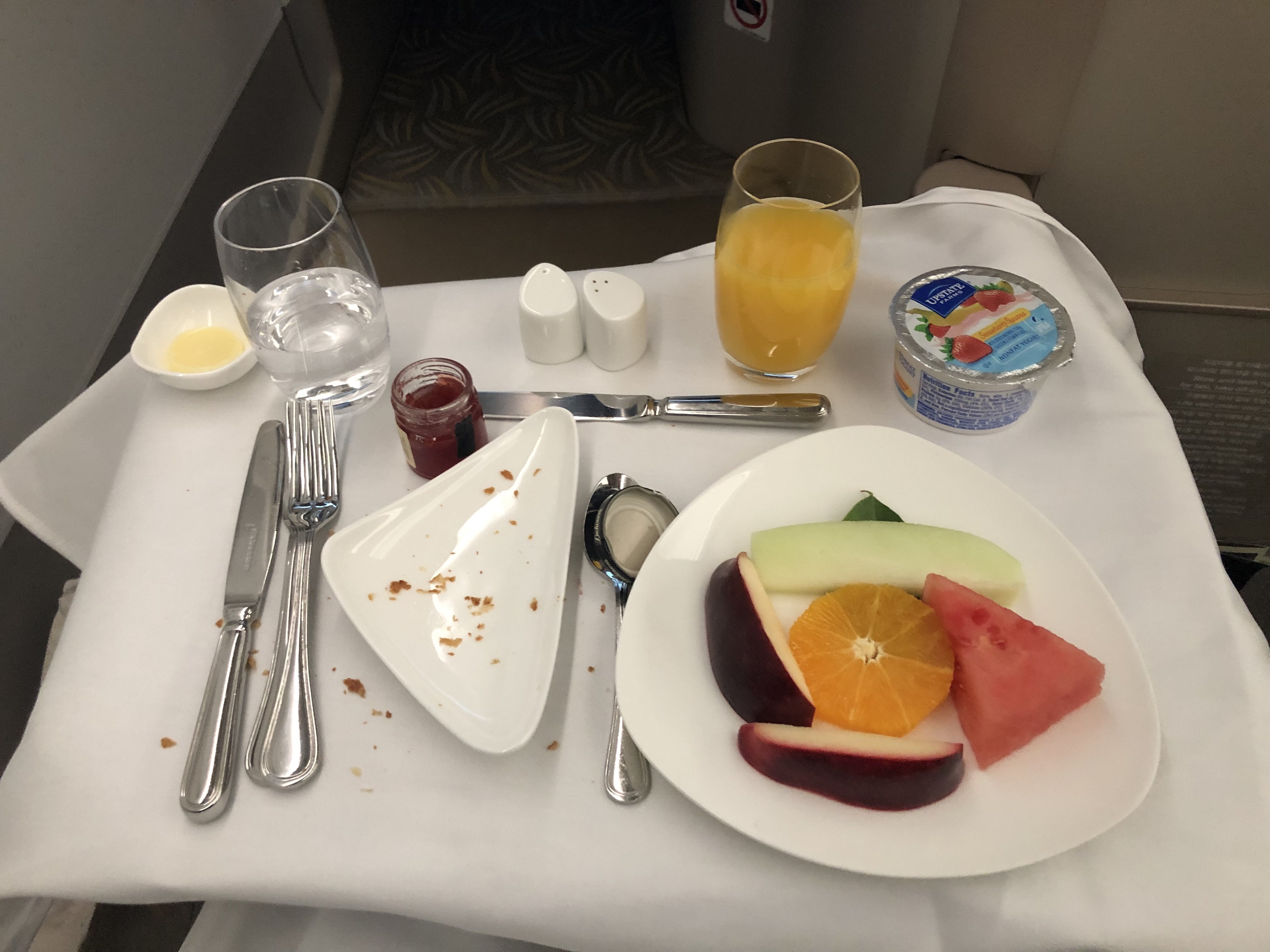
A flight attendant came by after I looked fully awake and offered to start the breakfast service, which I was happy to do. Like dinner, breakfast was a relatively simple affair. I started with water, orange juice, and a glass of Earl Grey to start. The first part was a fruit plate, yogurt, and a warm croissant that I was too excited to eat before taking a picture. Strawberry jam and butter were available for the croissant too. I followed it up with the breakfast platter, which consisted of bacon, mushy eggs, a boiled tomato, and blueberry pancakes slathered in blueberry sauce. I just ate the tomato and pancakes, but the pancakes hadn’t gone soggy and the sauce was rich and flavorful. I also used the last of my butter and jam to cover any surfaces that the blueberry sauce wasn’t enough for. Despite being about as simple as the dinner, the parts I ate were kept fresh a lot better than the dinner ingredients.

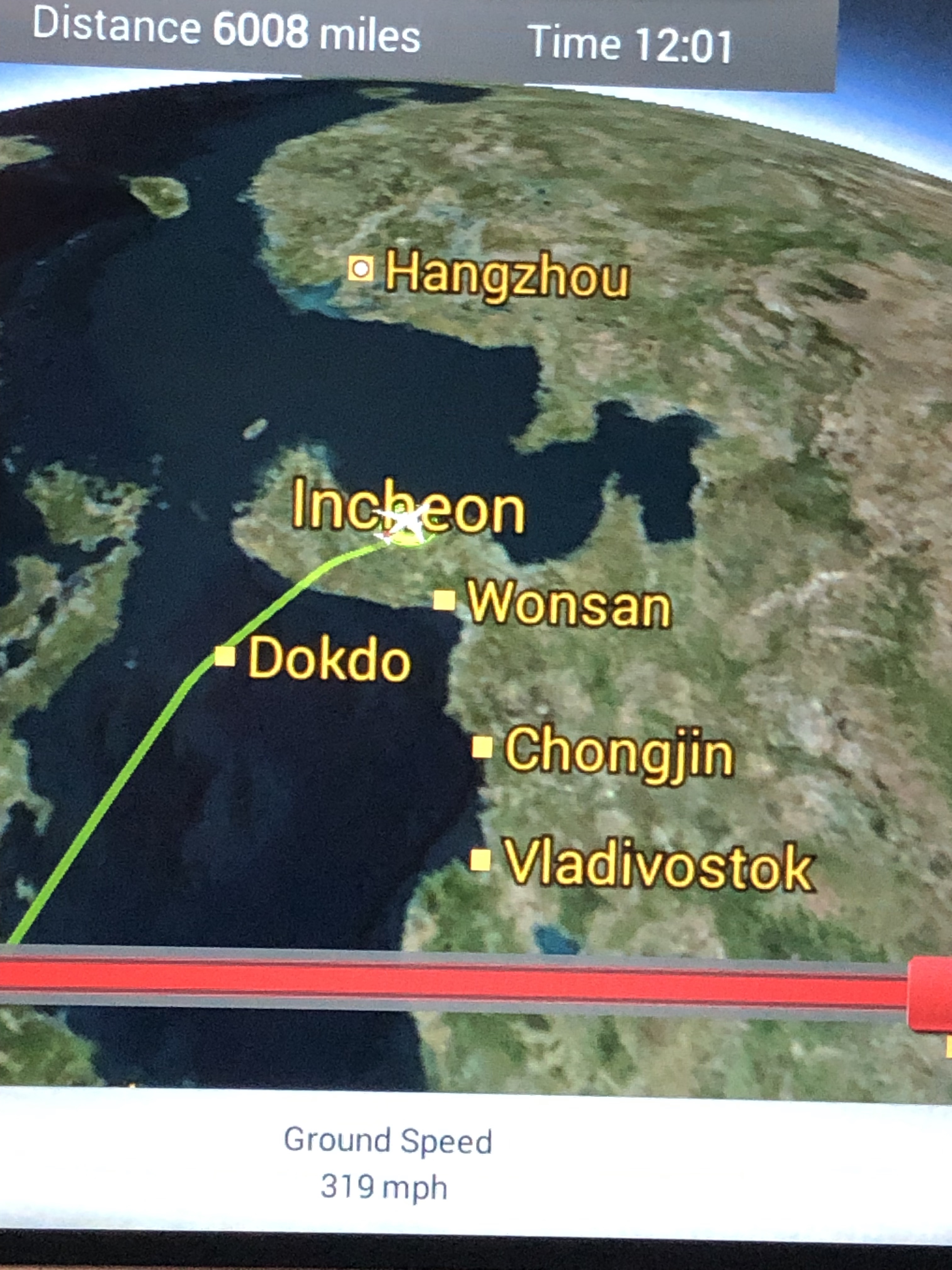
There was just under an hour left to Seoul after I finished eating, so I spent the rest of the flight flicking through the entertaiment selection and deciding what I might watch on my connecting flight to Hong Kong. After that I swapped to the infilght map, which is what I default to looking at if I don’t feel like or have enough time to watch a movie. As a last interesting feature of the flight, I noticed the inflight map made some interesting choices about what to include. Wonsan, a North Korean city, features on the map. So does Dokdo, which you might notice is an island midway between Korea and Japan. That it’s included above larger cities of say, Busan or Daegu, may be strange to an average joe but makes a lot of sense to any Korean citizen. I’ll leave its backstory for the reader to research themselves…
Let’s wrap up by going over the important points of the Asiana business class experience. Between the excellent rest I got, simple but filling meals, and practical but boring layout and coloring scheme of the seats, Asiana strikes me as being the best business class for a passenger who only cares about the functionality of the experience. If you’re looking for a meal on either side of a full night of sleep for convenience, leaving time to have productive work and meetings on the days on either side of this flight, Asiana’s product hits on everything you need. But for someone hoping for a special or memorable experience, particularly couples or honeymooners traveling for fun, I would recommend another option if it’s available. The inflght experience, food, or comfort of my experience wasn’t above average for business class in any category, but nothing was sorely lacking either. So I think it would be a letdown for anyone looking for something special, while its normalcy is well suited for regular business travelers. If they were my only option I would’t hesitate to fly Asiana again in business class, but I’d even prefer a one-stop routing on EVA Air or ANA to a nonstop on Asiana given the choice.
 Miles Down the Aisle