I admit, I wasn’t sure what to expect when I picked Budapest for my semester abroad. My decision was entirely based on the math program I was going to attend, which featured my favorite subjects of probability, combinatorics, and graph theory all prominently. So going in I knew virtually nothing about the Hungarian country or its capital city. But once I’d arrived I was quickly thankful for the chance to completely revamp my daily routine and try new things. Best of all, there was a half marathon later in the semester that I signed up and trained for. I took to running along the bank of the Danube in the evenings, and was always glad for the mental space that gave me. When my friends and I were planning this trip, I was thrilled that we snuck Budapest into the itinerary and that we could revisit some of my favorite places and restaurants. However, it’s always our home cities that we seem to find the least time to be a tourist in, and Budapest wasn’t entirely spared. There were a couple items since leaving that I was convinced to cover this time. Even though it was the only city I would be revisiting this trip, it was still the one I was the most excited for.
We arrived into Budapest around 2:30 p.m., shortly after the city had received another dusting of snow. We had to get from Kelenföld Vasutallomas on the city’s western edge to the Opera House in the center, which involved transfers on 3 of Budapest’s 4 metro lines. It ended up being the perfect opportunity to showcase the different train types used between the lines. We started with the modern 4 line, which had art installations and mosaics at most stations and sleek, modern, Asia-style metro cars. We transferred at Kalvin ter station to the 3 line, which was built far underground during the city’s Soviet occupation. These trains were painted solid gray, and much more clunky and loud than the ones on the city’s more modern lines. To add to the confusion, at Deak Ferenc Ter we transferred to the 1 “Millenium” line, which was finished in 1896 and was actually continental Europe’s first underground railway. Although the cars were renovated in the 1970s, they were cramped replicas of the city’s overground trams and they made lots of annoying ringing and dinging sounds as they traveled. Needless to say, my friends had suffered enough transit culture shock after that experience and elected for the modern 2 and 4 lines whenever possible after that. Since our visit, all trains on the 3 line were also modernized, leaving the 1 line with the only outdated experience in the system.
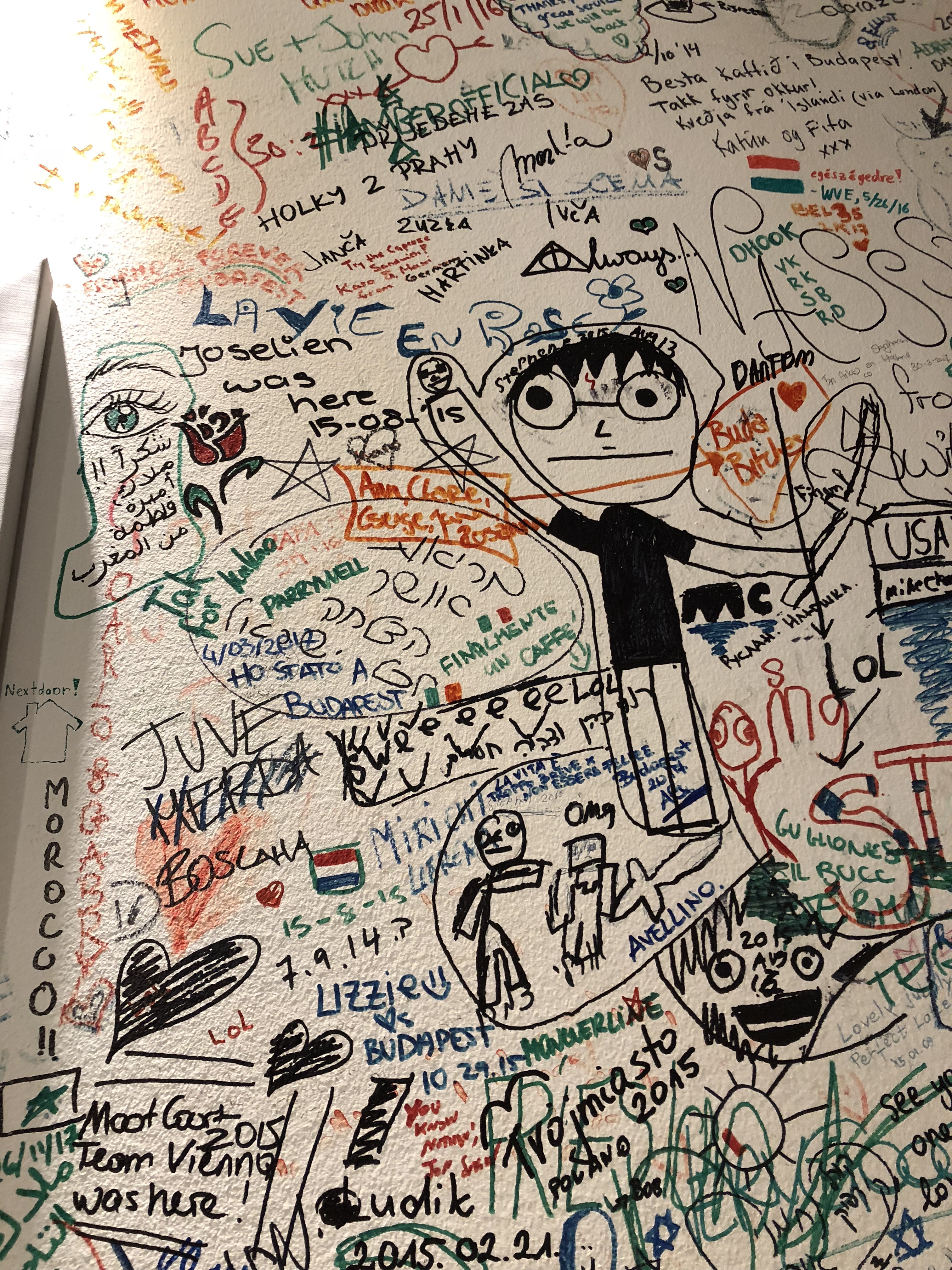
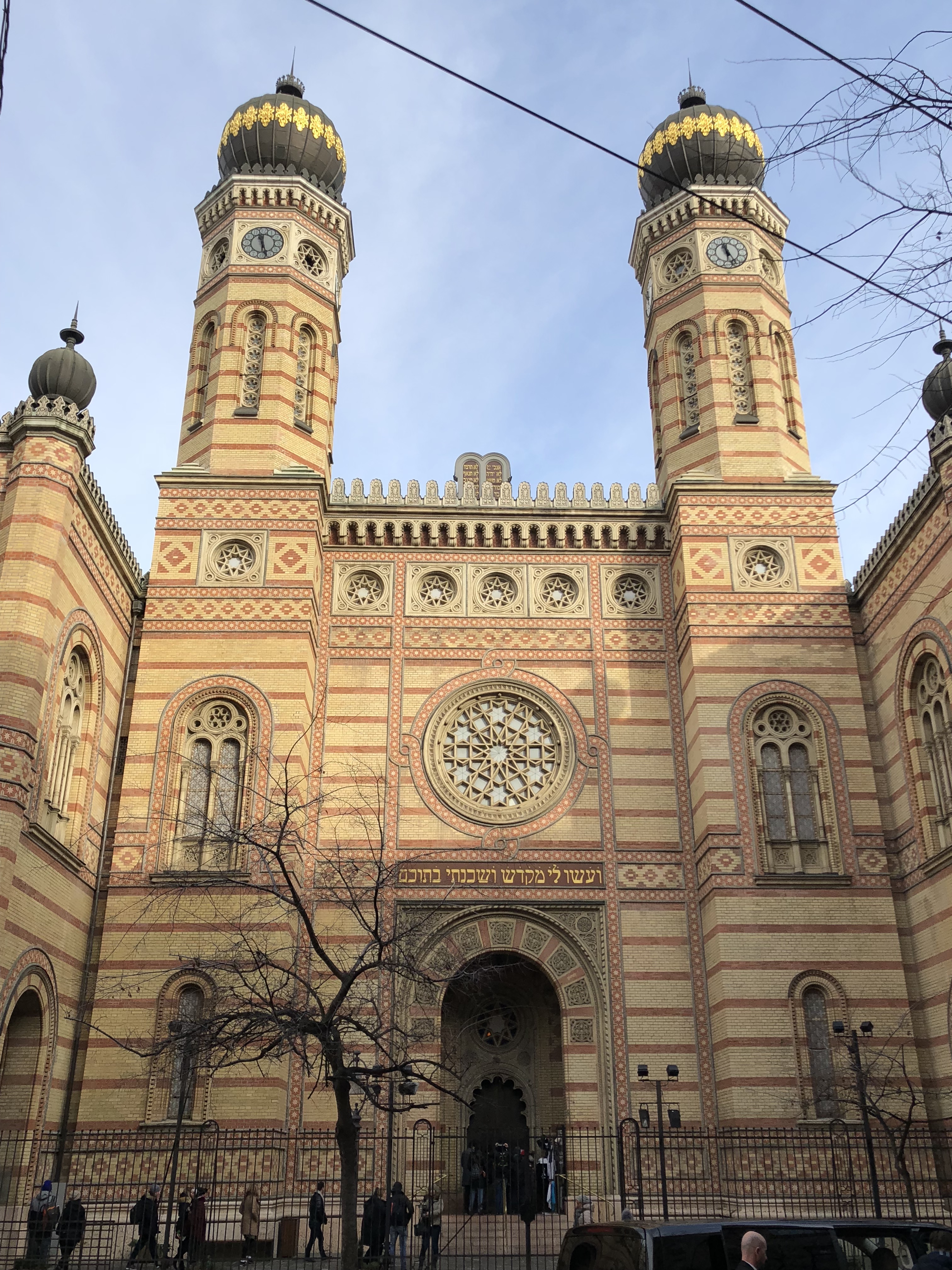
After a visit to a Christmas market and dinner at Getto Gulyas, my group was exhausted from the day of travel so we turned in without visiting any bars. The next morning I woke up fairly early with my friend Joel, and we both went down to the city’s Grand Market near Fovam Ter station. I bought juice, challah bread and fresh jam for our group’s breakfast as I’d done for myself countless times while studying abroad. Nevertheless, we still needed coffee and that was the perfect opportunity to repeat a visit to Socks coffee, right across from the Dohany street synagogue and my favorite in Budapest. It was a short walk from my apartment and right on the bus line to my school, meaning that it was an ideal location to work either before or after classes. I’d order a cappuccino for around $1.50 and squat there for however many hours I needed to. They also had sandwiches and cakes that were enough food for the time I sat there. One special part of that cafe is customers’ ability to leave inscriptions on their wall. I left a message right before I left my semester abroad that I challenged my friends to find. After that, I left another of my own. And when I return next, I will leave behind yet another…
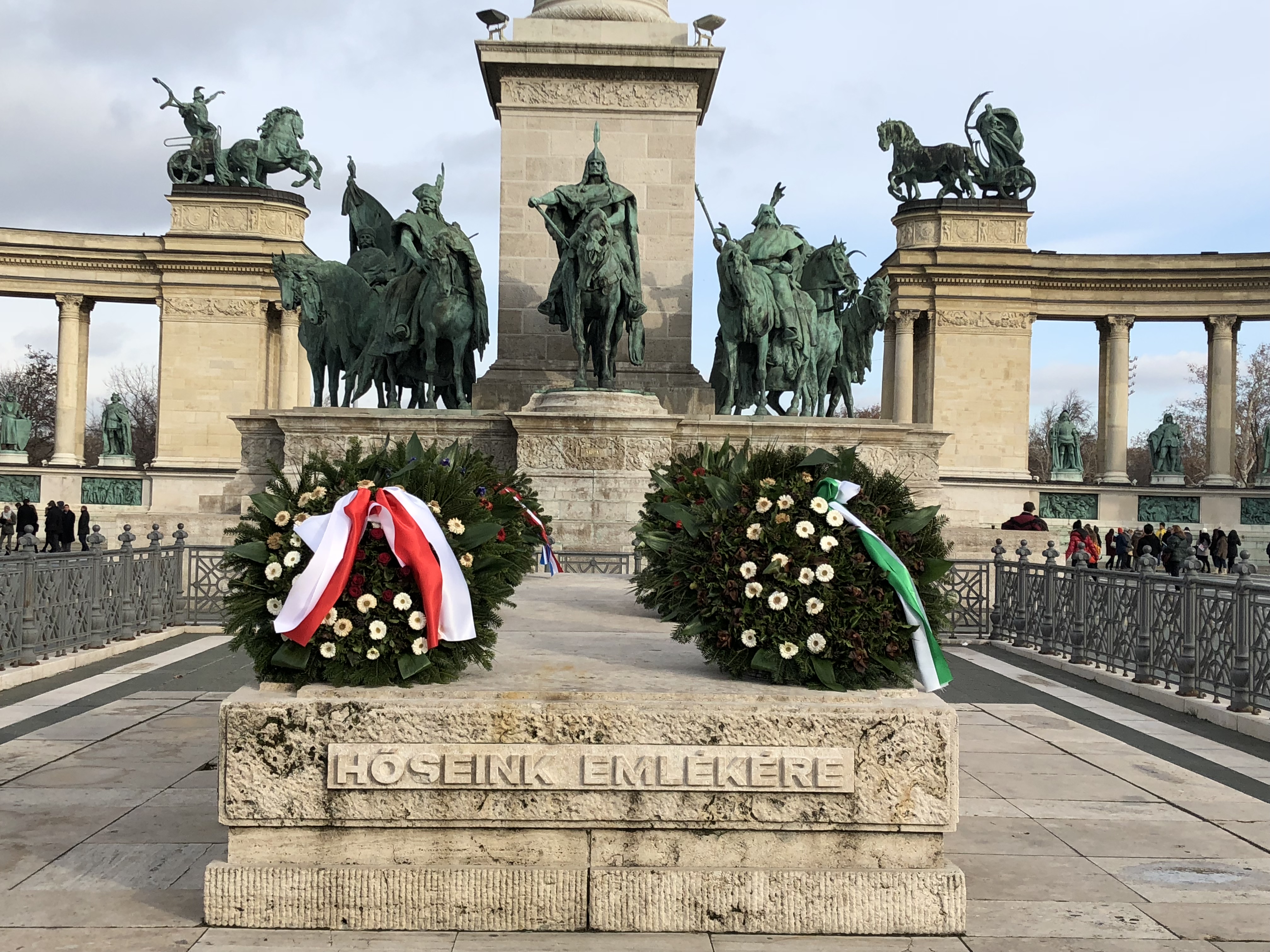
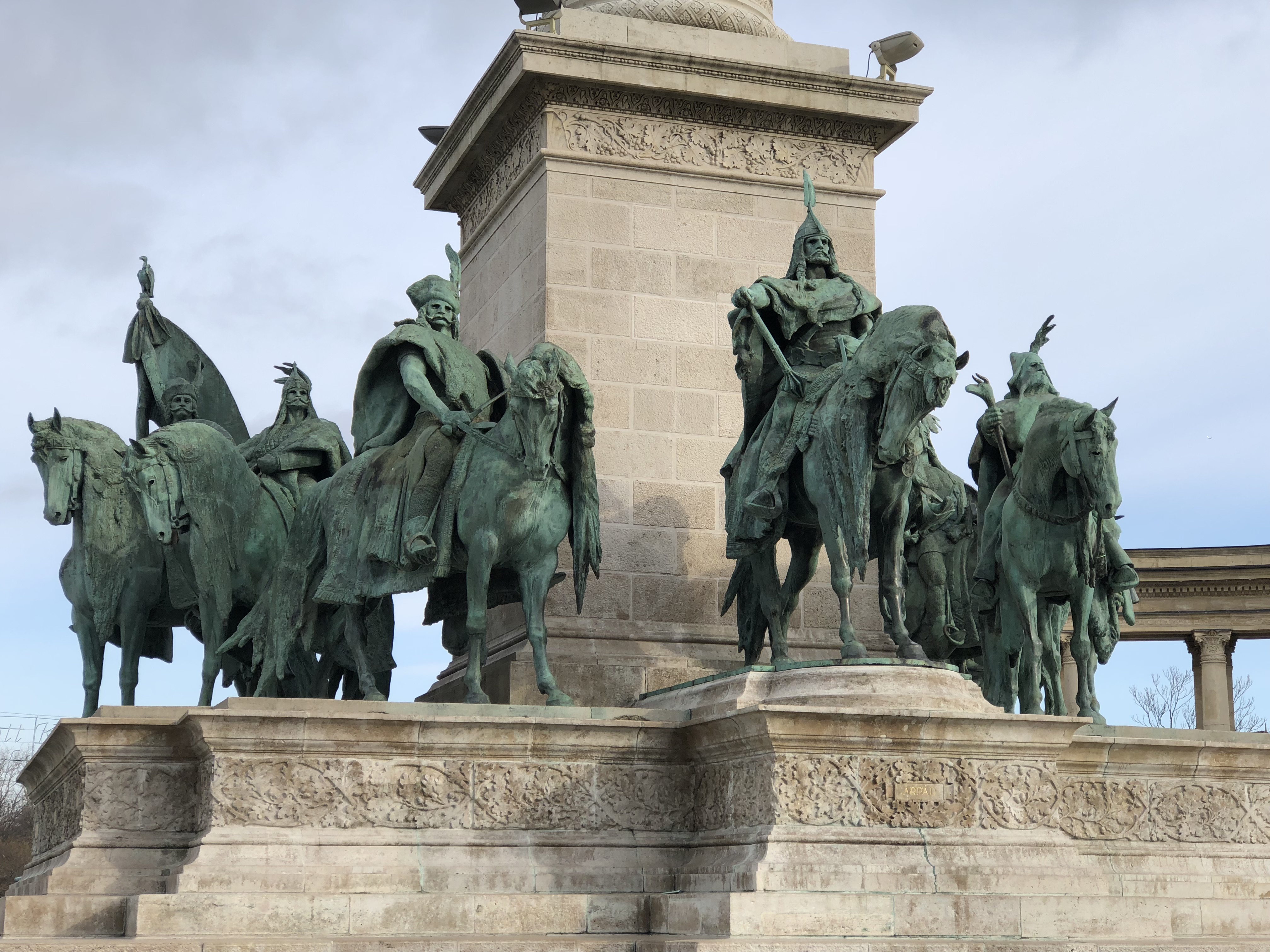
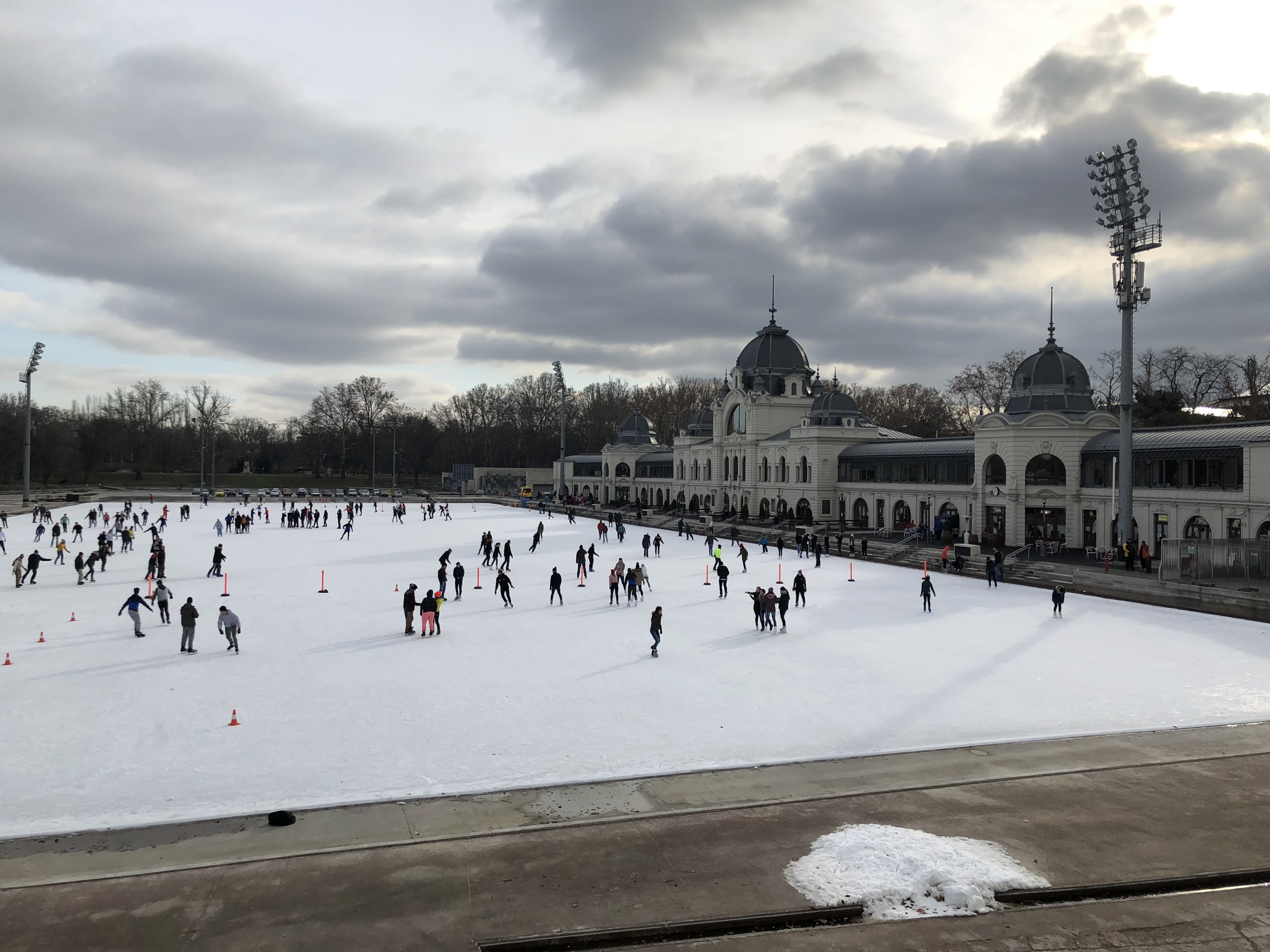
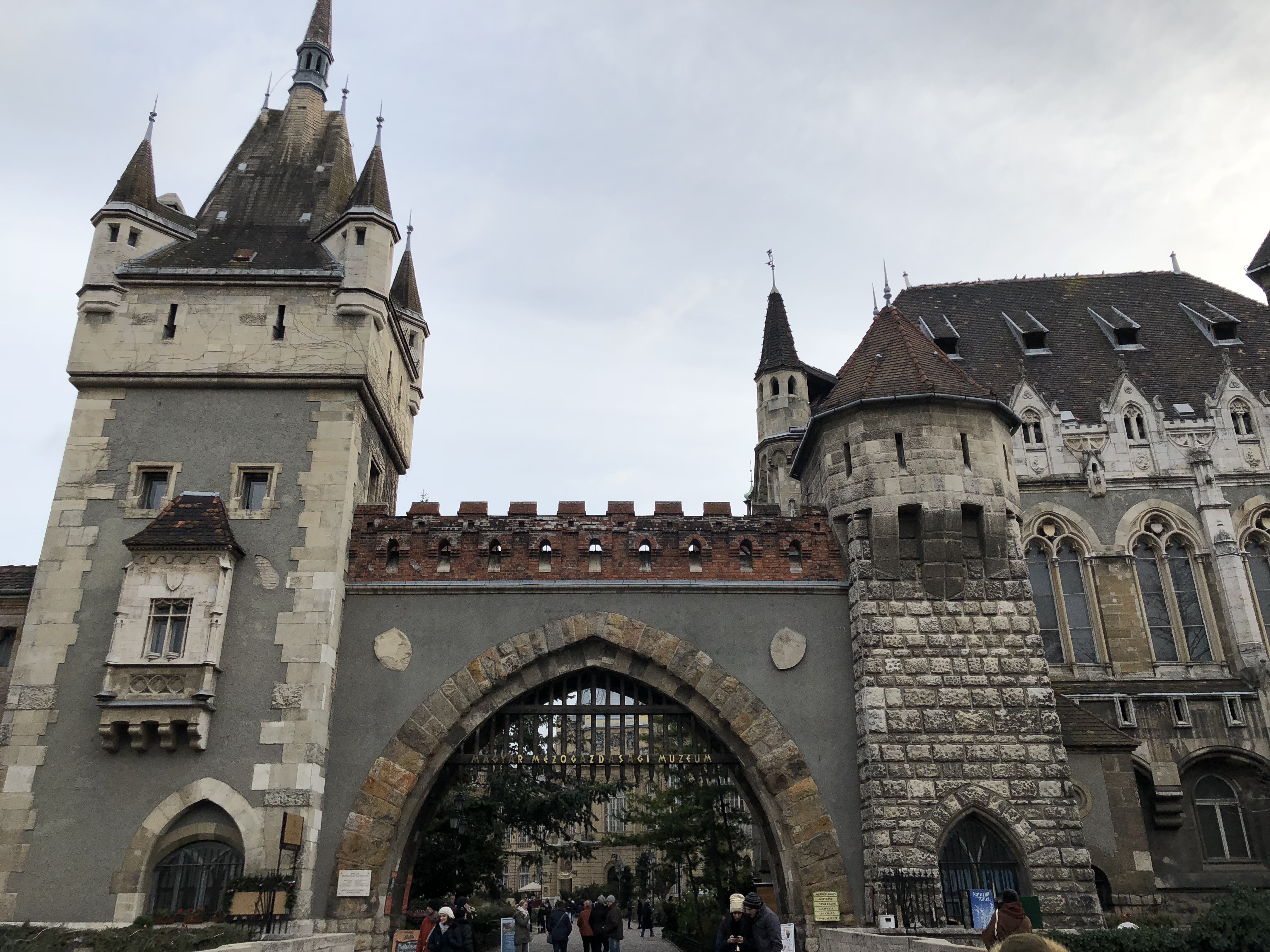
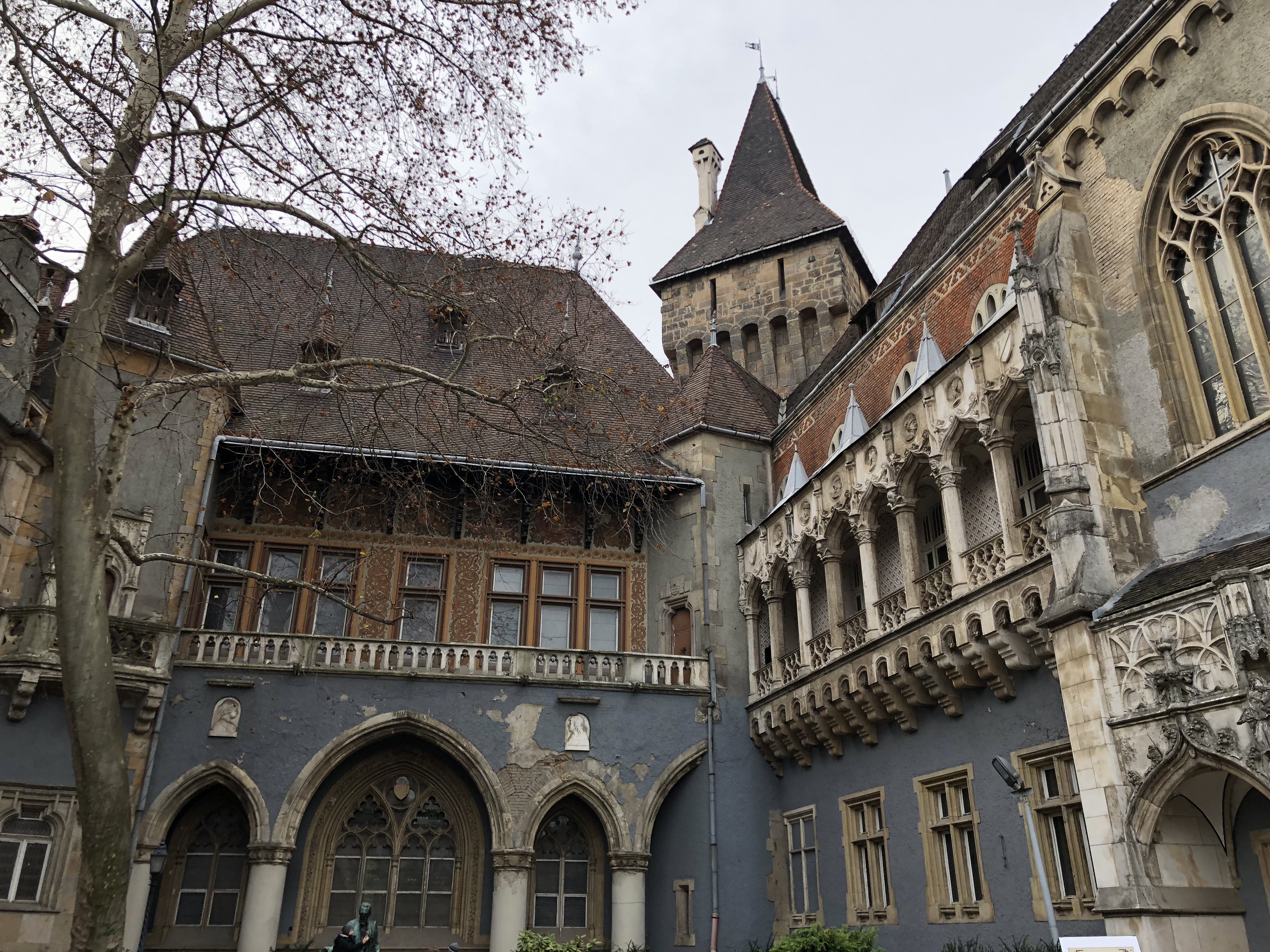
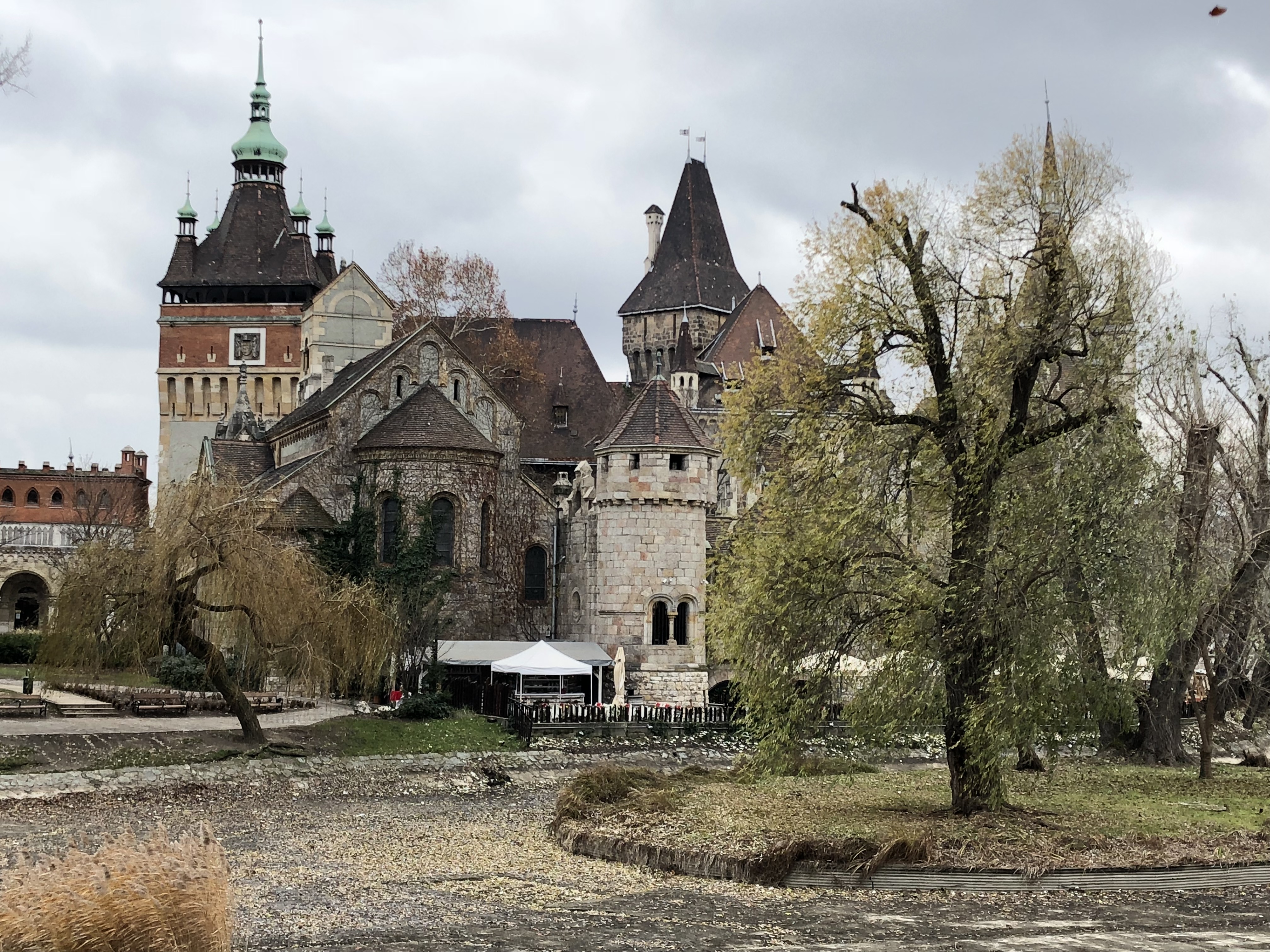
Our next stop was somewhere I’d never visited before: Hosok Tere which translates to Heroes’ Square. It’s home to a set of large, imposing statues of Magyar heroes of the past, most of whom are on horseback. Hungarians were renowned as Europe’s best horsemen, and were fearsome warriors. Which makes it puzzling that they were defeated in virtually every war they ever participated in… Behind Hosok Tere is Budapest’s largest park: Varosliget. This is where you’ll find the Szechenyi thermal baths, famous for both its raging pool parties and poolside chess games. We decided to stick with the park itself this time, especially since we wandered upon the castle-like buildings of Vajdahunyad Vara. With the leaves fallen off the trees and the faded but not dilapidated colors, the place looked a little haunted. I loved walking around this park, and I couldn’t believe I’d never gone out to visit it before. Maybe I was also none too thrilled about taking the city’s old 1 metro line there and back at the time, just like my friends now.
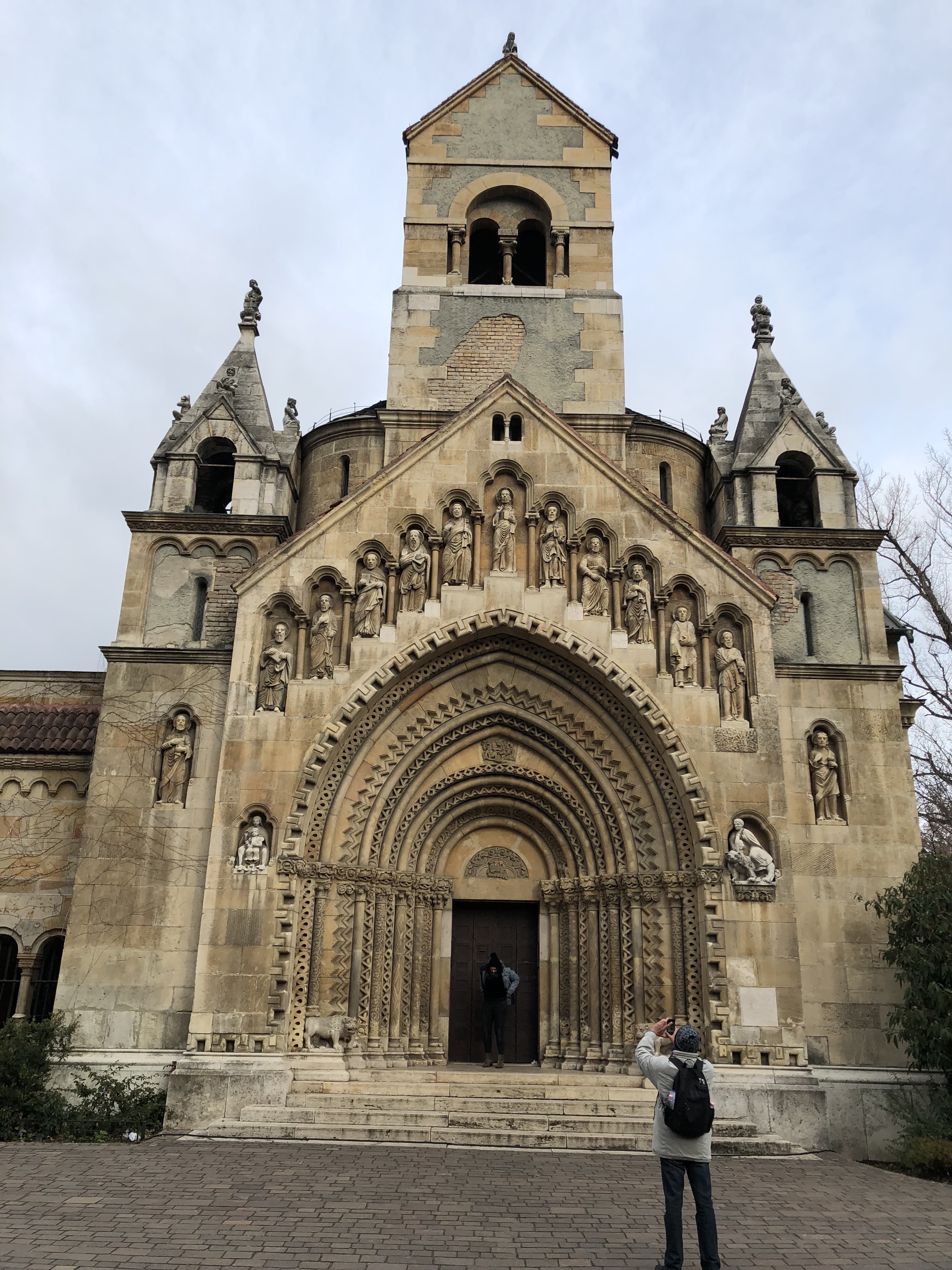
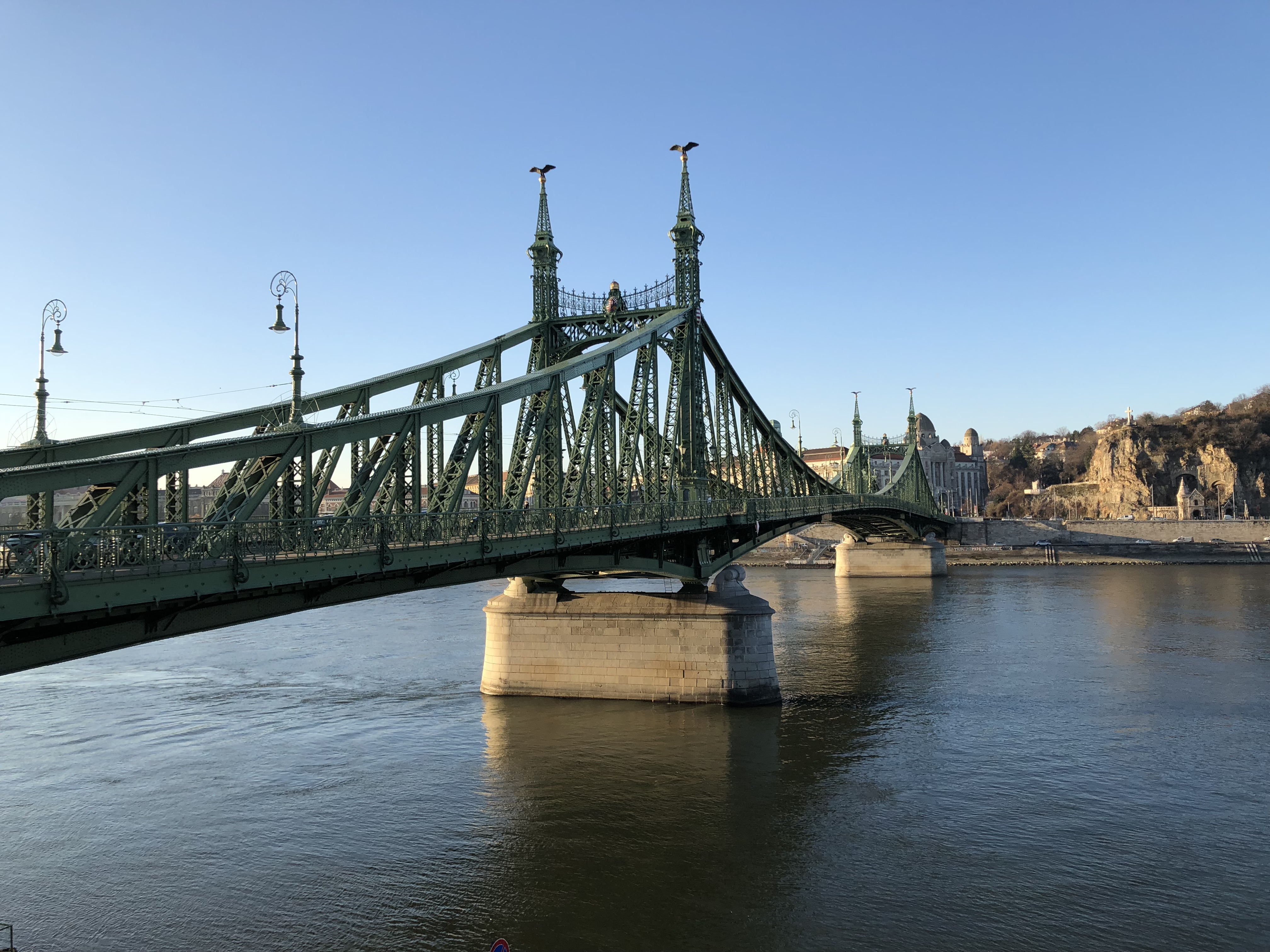
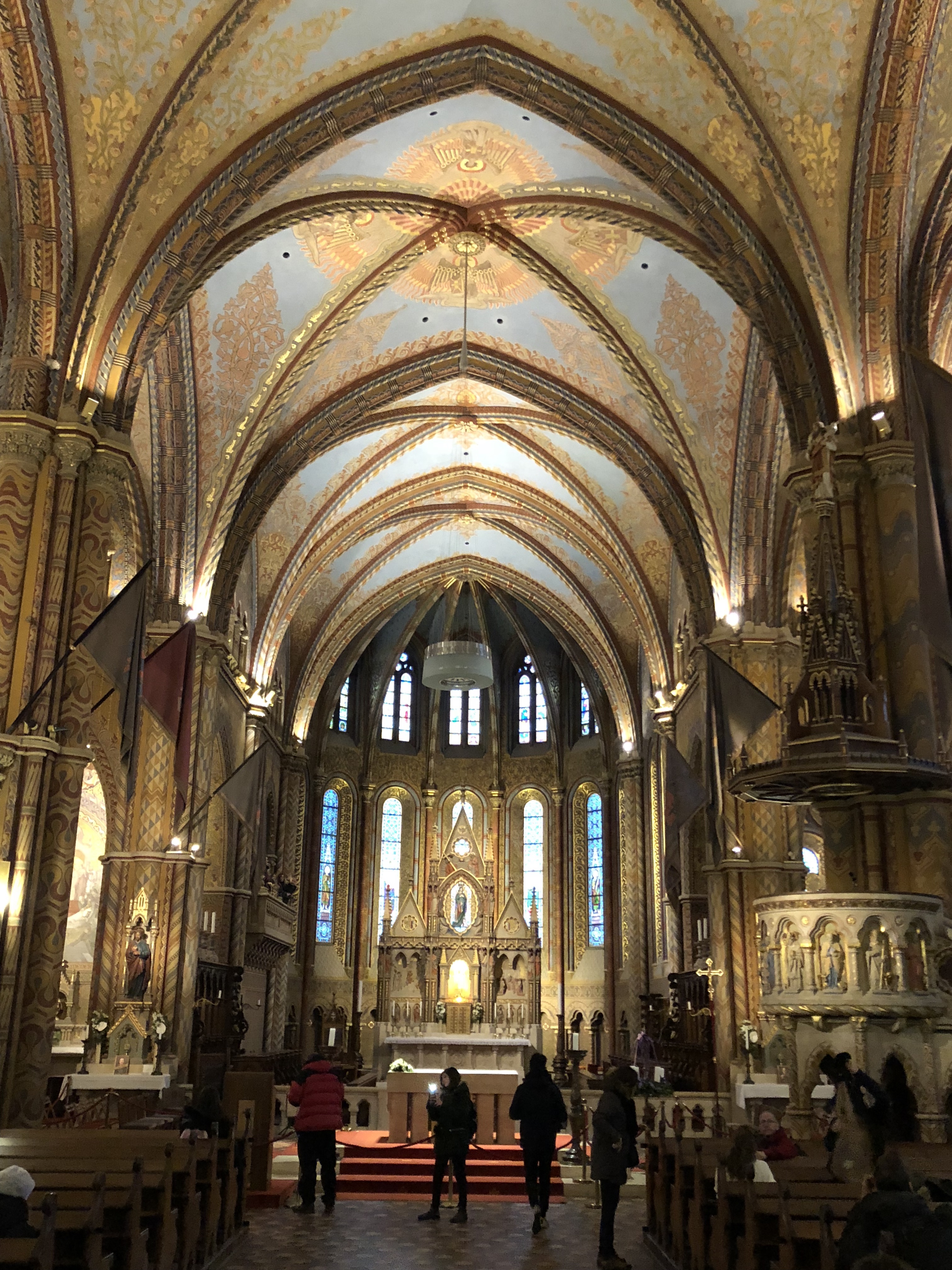
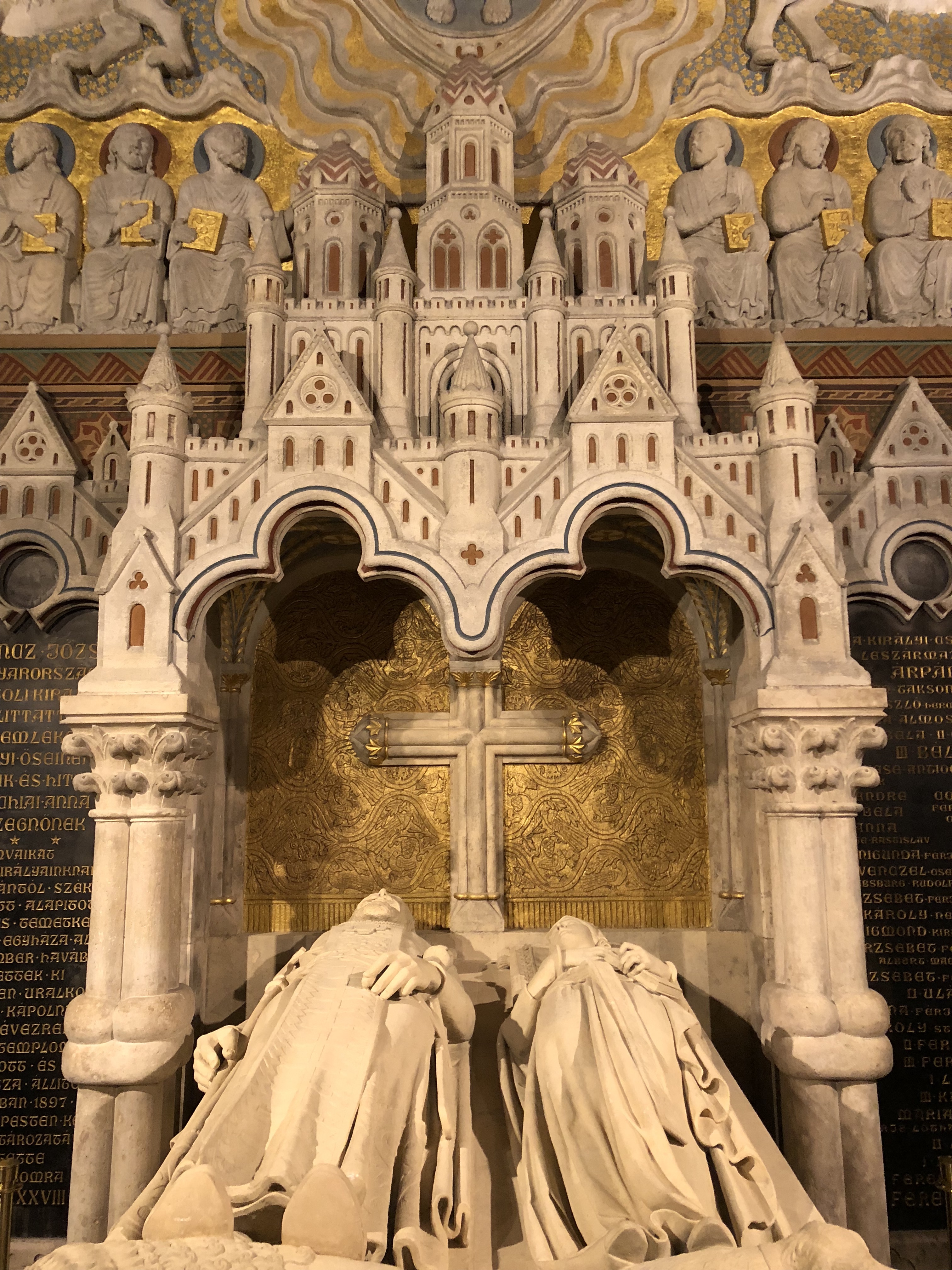
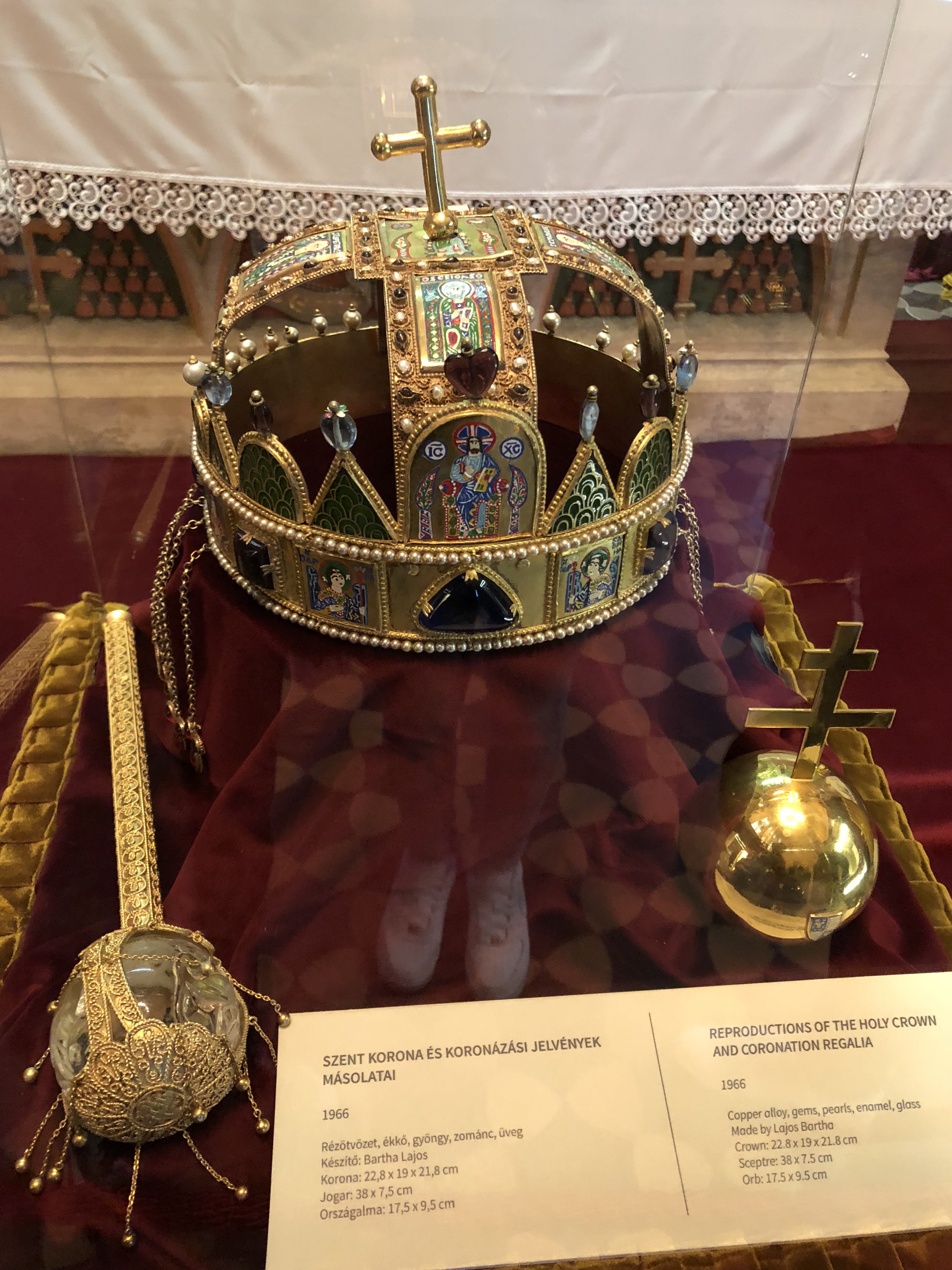
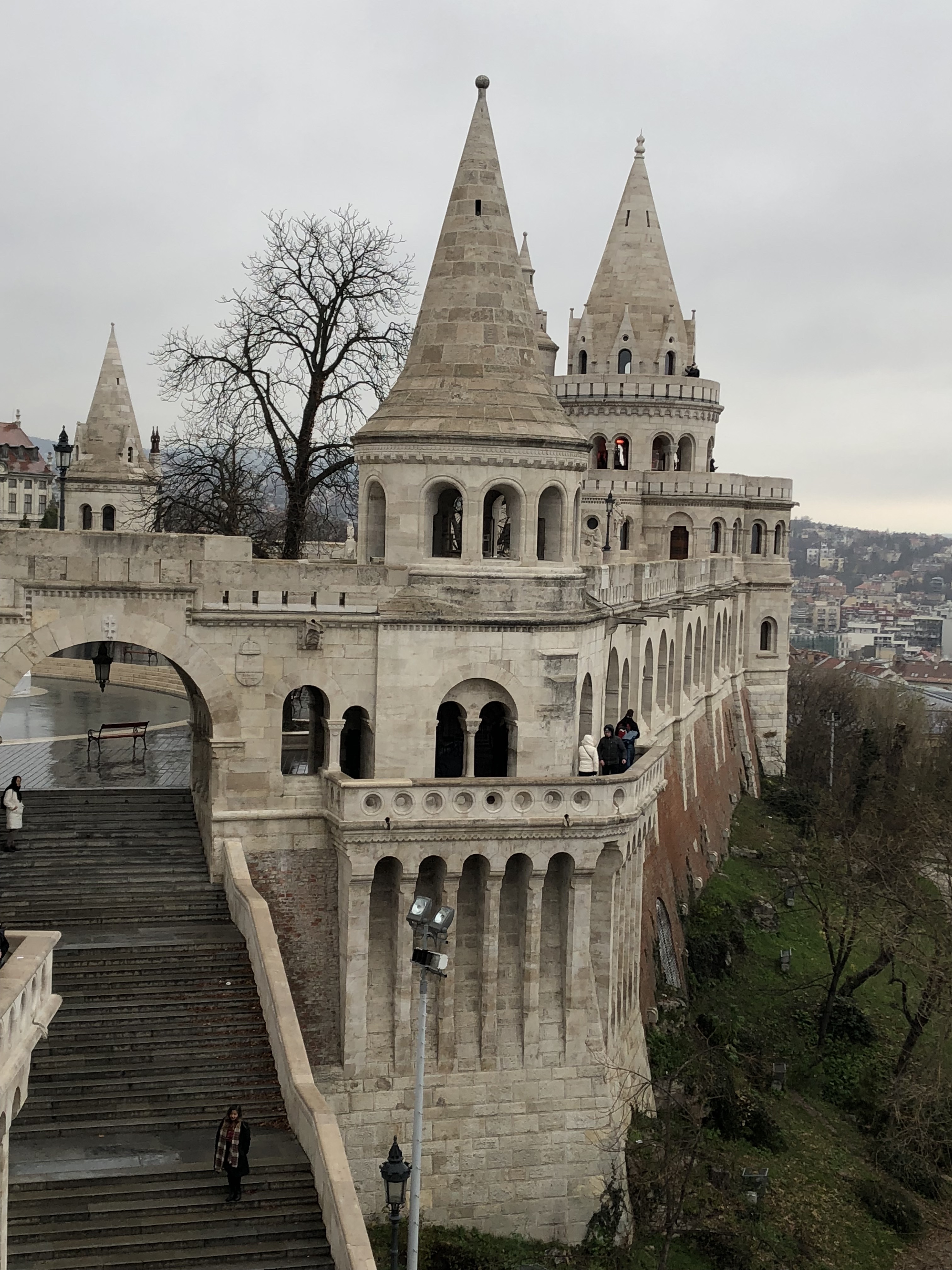
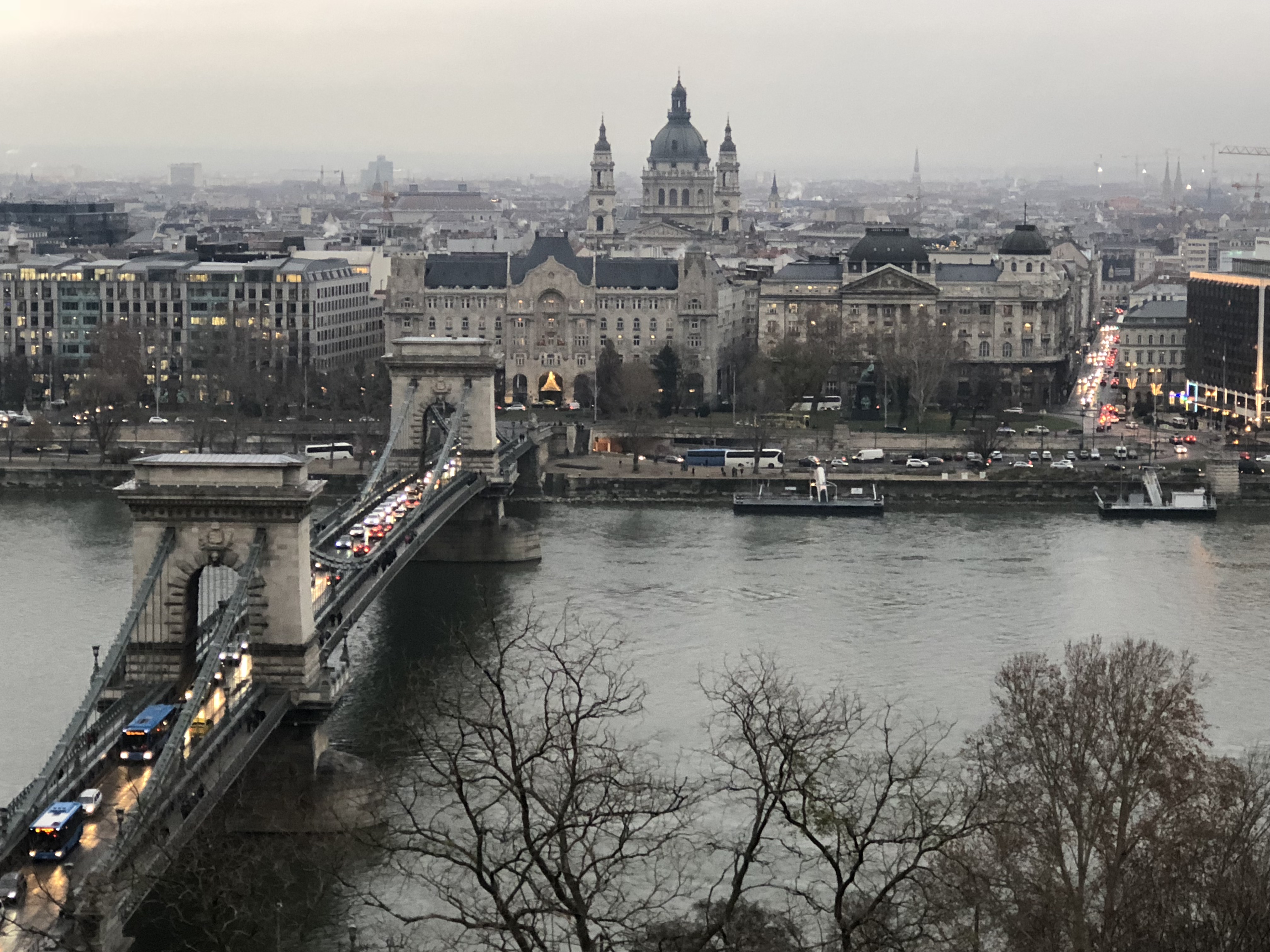
My friends had to endure one last ride on the ancient 1 metro on our way to Szell Kalman ter, the station closest to the Buda Hill area. The escalator out of the station takes 2 whole minutes, which is especially surprising given the rapid pace that Budapest’s escalators are known for! Afterwards we arrived at the Matthias church and Fisherman’s bastion area, which is the only one that ended up being a repeat visit for me this trip. One of my friends declined to pay the admission fee and admired the bastion instead, stating that “Once you’ve seen one church you’ve seen them all”. Anyway, what’s most striking about this church from the outside is the colorful tiling that you’ll see on Vienna’s Stephensplatz cathedral. The interior is elegant and honestly looks pretty recently painted. A replica of Hungary’s royal regalia are also kept here, as the real ones are kept in the Parliament building itself. My friend’s choice to admire the view from the bastion shouldn’t be critisized however, as it’s a thrilling panorama of the Danube riverside and the layout of the eastern Pest side. The bastion itself is a gorgeous granite construction. During my days abroad I loved the few times I came up here to just watch the pulse of the city and life within it moving around. On the way back, we crossed Budapest’s iconic chain-link bridge, the first across the Danube river, and Buda Castle which is also perched on the hill. Both were lovely in the fading light of the day.

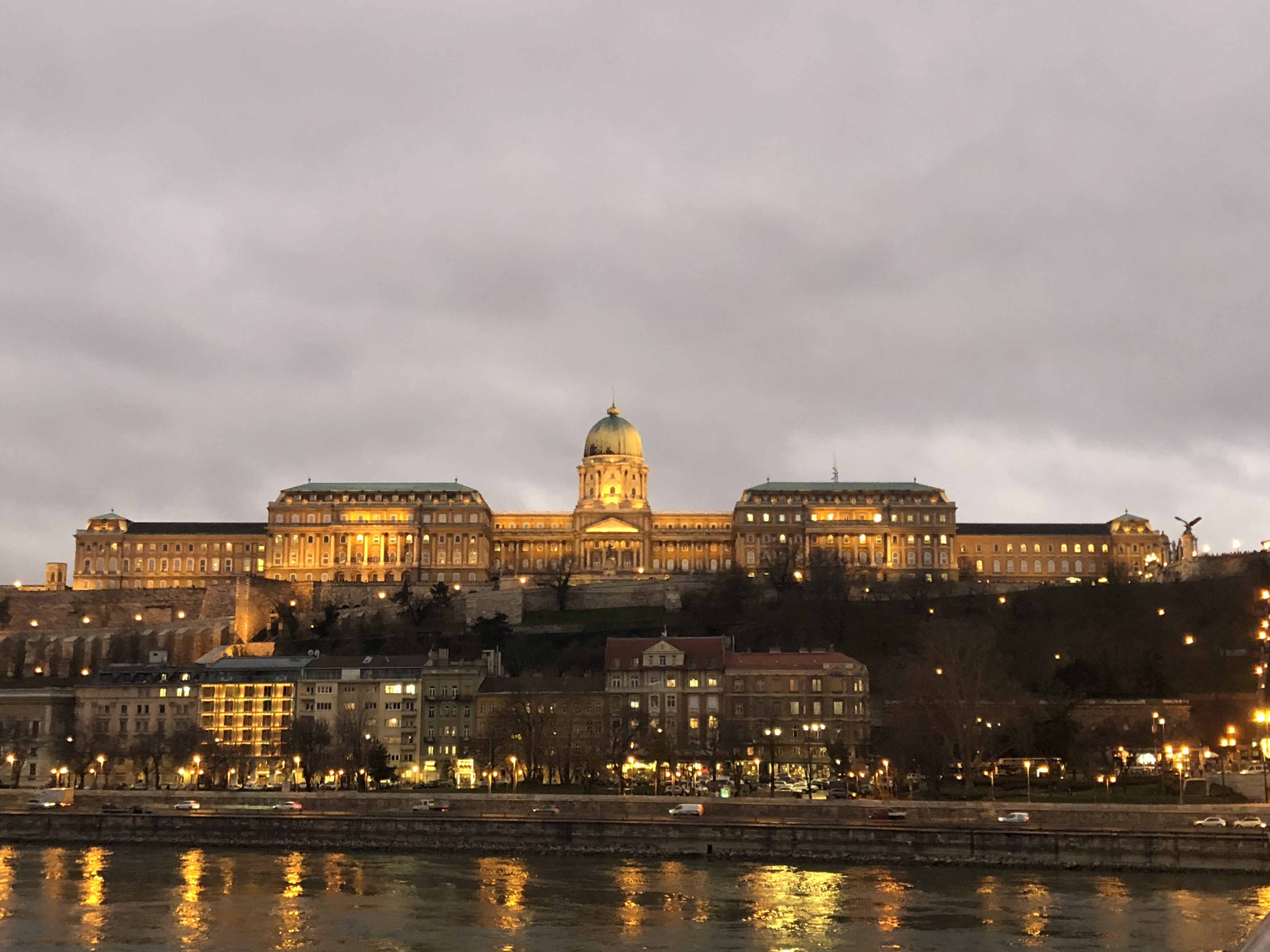
Our plan after that was for everyone else to rest at the AirBnB, while I went to purchase swim trunks that I’d forgotten to bring. We were going to head to a thermal bath afterwards, but I returned to our lodging to find everyone else fast asleep. Since I was feeling exhausted myself, I took a nap myself as well. We didn’t wake up until around 10 p.m., after most restaurants had closed. But we managed to remedy this by getting Doner Kebab, which is a favorite late-night snack. Now that we were awake, we went across the street to Szimpla Kert, possibly the city’s most famous “ruin pub”. These pubs were built in the ruins of buildings that were bombed out in WWII, and got to get a lot more creative with their architectural decisions in the process. Szimpla designed an upper level with themed rooms, many with graffiti art on the walls. The back of the lower level was a massive open space, and it’s here that we settled with beers to chat and relax. On our way out though, I convinced us to all get a shot of Palinka, the vodka-esque spirit made from apricots that is the national pride. So much so that when the Soviets invaded, a bunch of young Hungarians huddled together and memorized the recipe before burning it and handing over a fake one. After Communism ended in 1989, the now-old men got back together and revealed that the recipe under the Soviets had been fake all along! Now that’s dedication to a cause. Anyway, it was just as unpleasant to drink as I remembered. We all settled in to sleep back at the AirBnB soon thereafter.
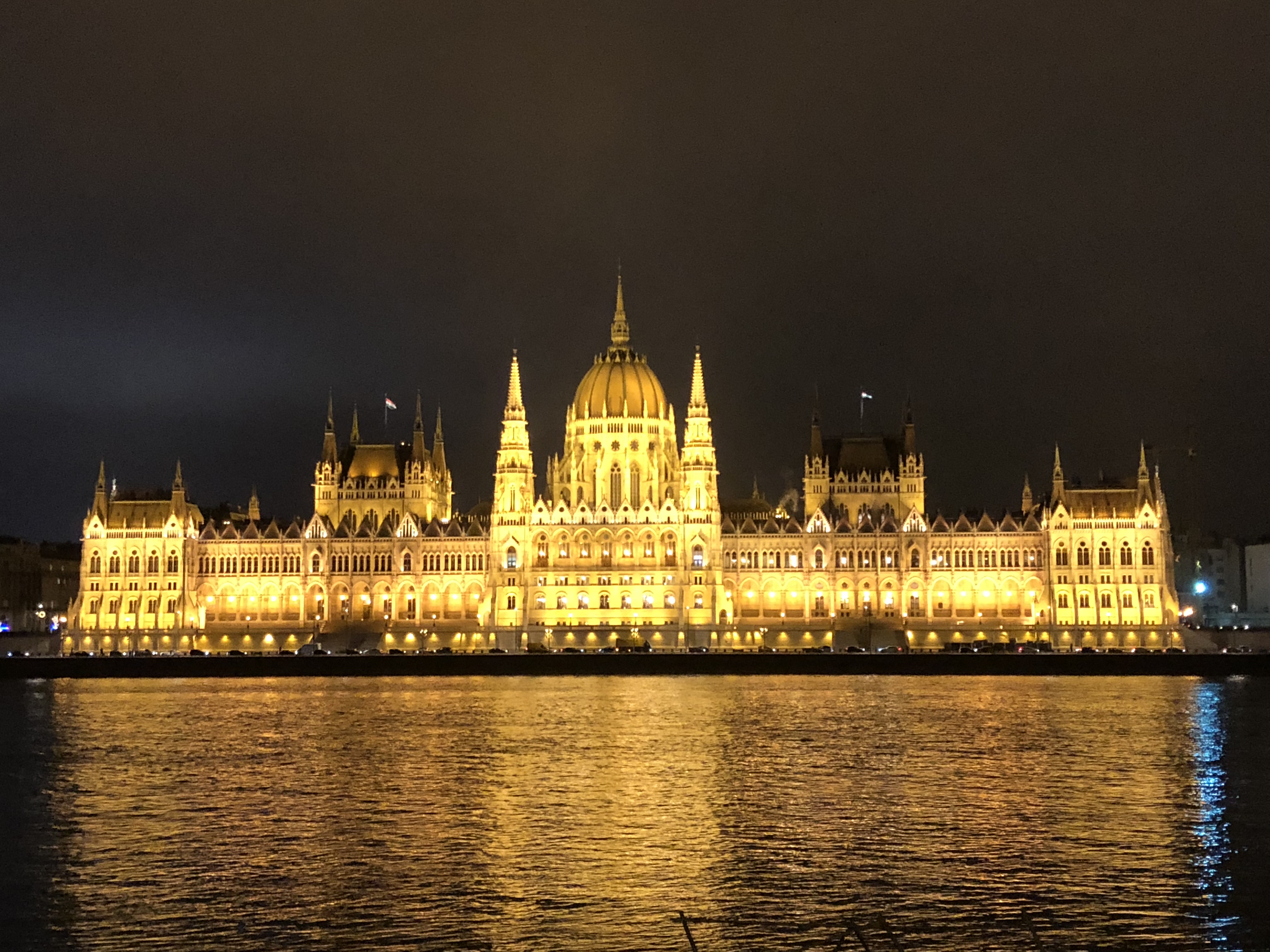
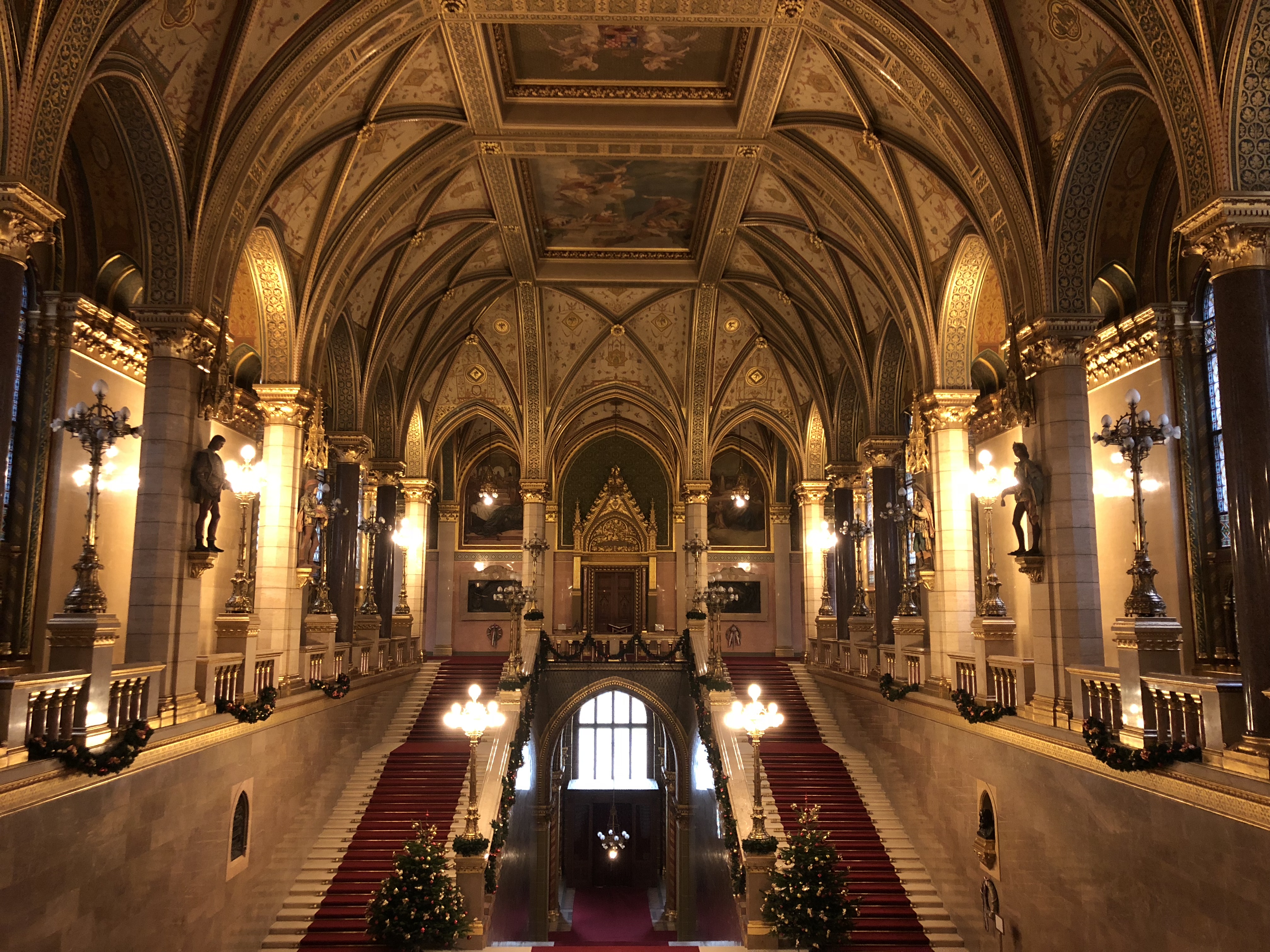
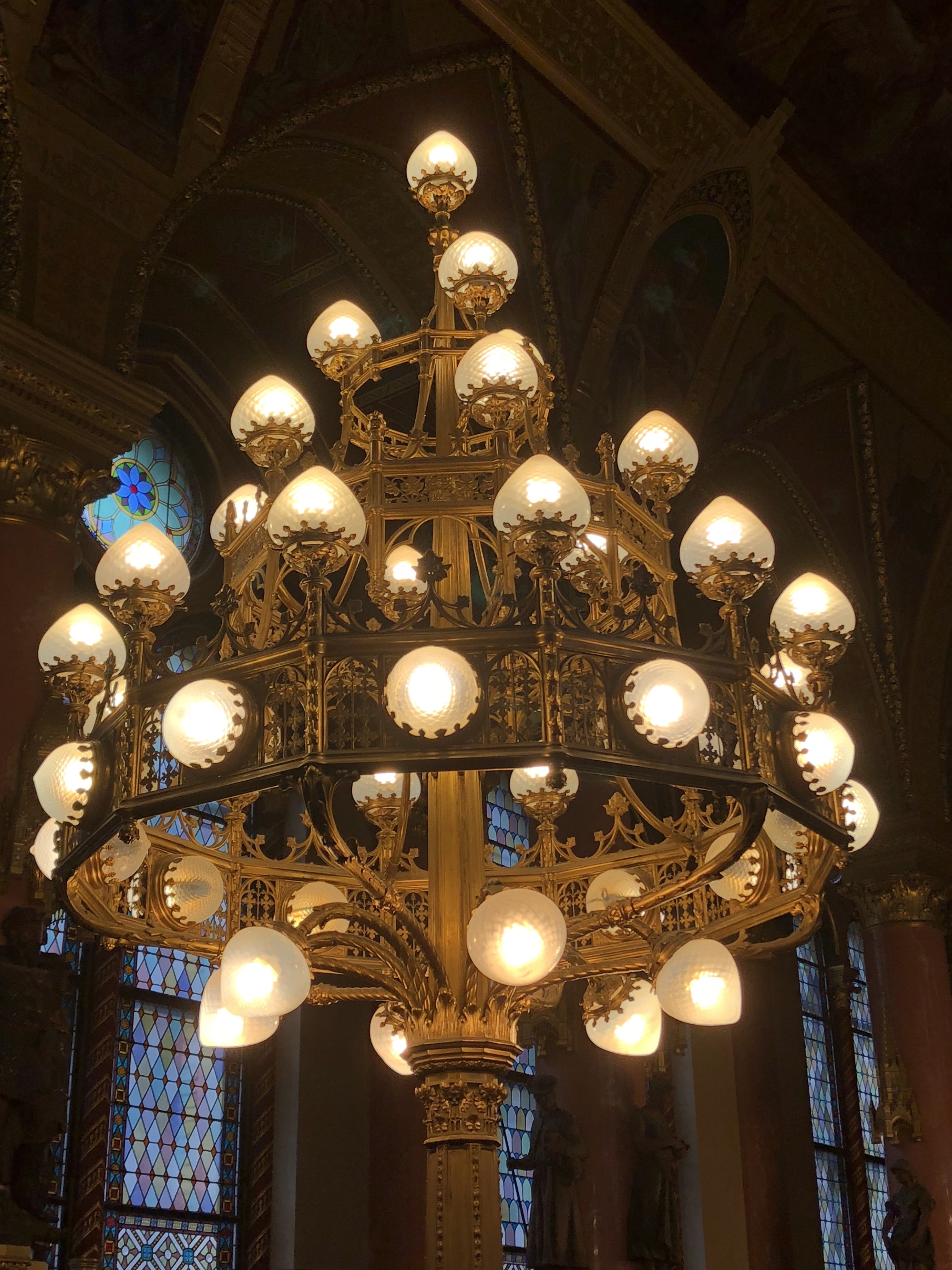
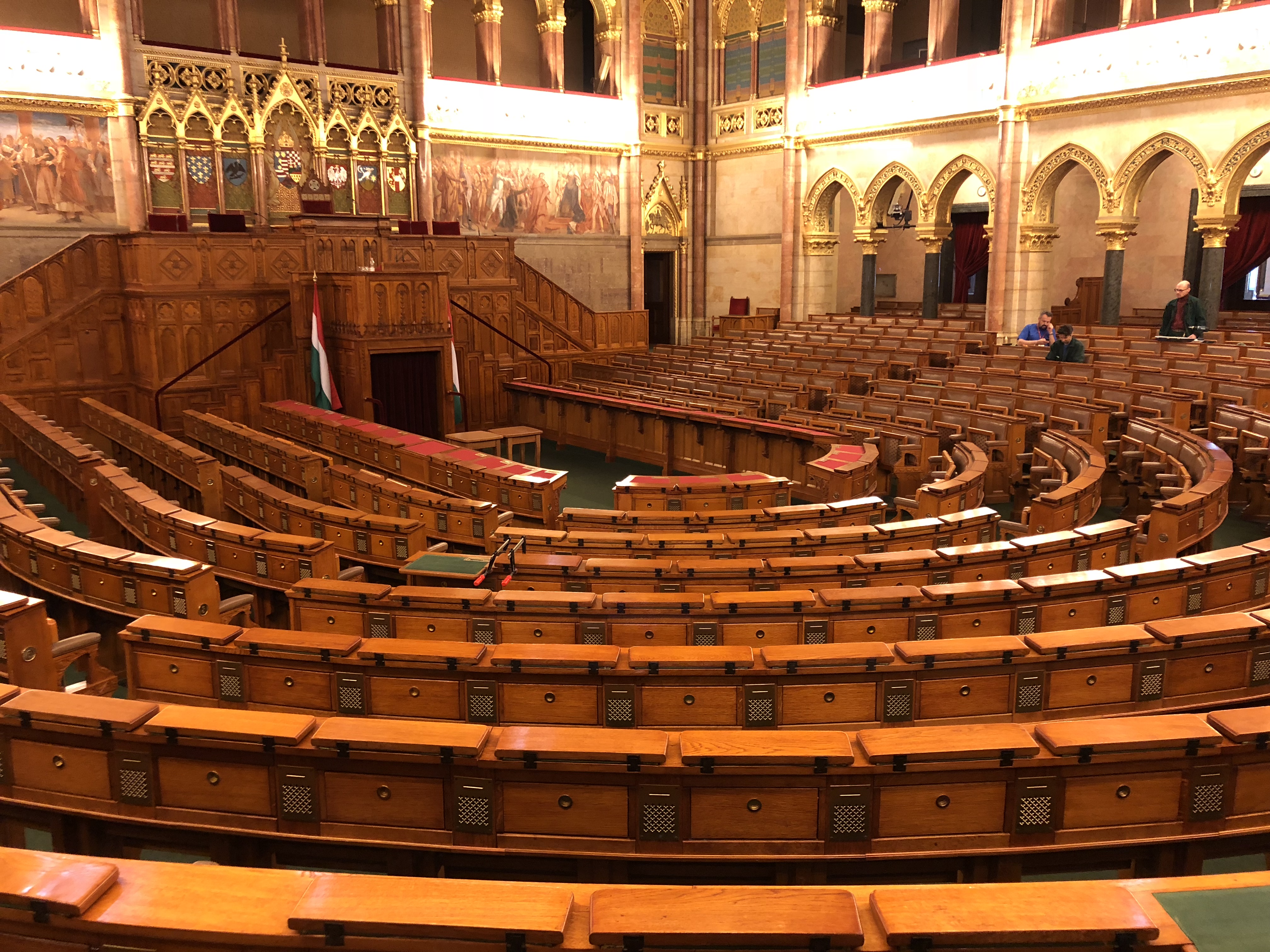
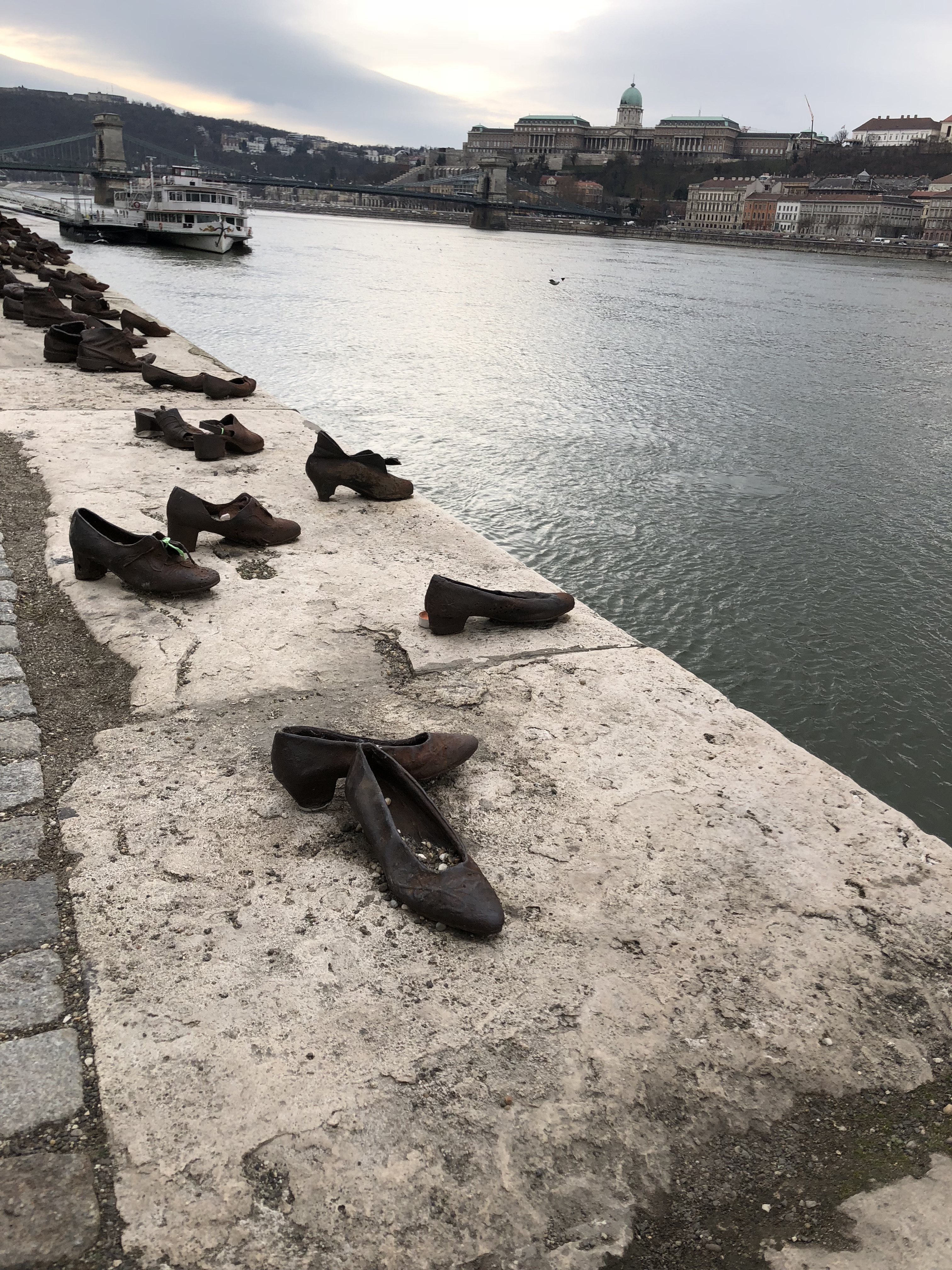
Although the rest of my group slept in, I woke up purposefully early to attend an 8:30 a.m. tour of Hungary’s parliament building, in English. It was the only timing slot by the time I’d checked the night before, and I was determined to see the inside of Hungary’s seat of government, which I’d passed up while studying abroad. Well, let me be the first to say that the visit was absolutely worthwhile. The tour enters through a side staircase, and leads down a long hallway before you reach the official entrance reserved for heads of state. It’s a massive, massive hallway composed of a grand staircase, velvety red carpeting, and a vaulted ceiling with paintings hanging overhead. It was honestly one of the most breathtaking spaces I’ve ever seen inside a government building. From the entrance hall we proceeded to the building’s central dome, where the true Hungarian regalia are kept. Looking is allowed, but pictures are forbidden. The spire on the dome rises to 96 meters, which is significant because Hungary was founded by the Magyars in the year 896. Its height is tied with that of St. Istvan’s basilica, and there’s an official ordinance that no building in all of Hungary can be taller than these two. Our visit continued into a couple parliamentary chambers that had fallen out of use, and down more grand hallways. Many windows overlooked the Danube, which is a view I’m sure the politicians appreciate as they go to and from their meetings in the building. Lastly, the tour exits upon the bank of the Danube. It was here that Budapest chose to put an outdoors Holocaust memorial, in the form of empty metal shoes of all shapes and sizes that represent the ones left behind by victims of that tragedy. It’s a memory to the state that they must never again be complicit in the kind of genocide that they aided the Nazis in when they arrived in the Hungarian capital in 1944.
Unfortunately we have to end on a less pleasant anecdote. After I returned from Parliament the rest of my party was awake, and we had to grab a meal before heading to the airport for our Ryanair flight to Prague. (Yes, I insisted that no trip to Europe was complete without the Ryanair Experience. I did this for my family too). Joel and I picked the Grand Market, since it also gave us an opportunity to pick up a few bottles of Hungary’s famed Tokaj wine as souvenirs to take home to our families. Anyway, we decided to split up for lunch and I handed my friends a wad of cash, perhaps 6,000 Forints or so (~$20). Well, I’d just finished ordering my food when Joel comes running up to me apologizing profusely, and saying that he and the others had been scammed at another stall. He quoted the price of their order at 90,000 Forints. That translates to nearly $300 USD! I was worried but pretty certain that couldn’t possibly be true. I walked over to the stall, and the owner clarified that the total due was 9,000 Forints, equal instead to ~$30. The price was so high (relatively) because my friends had been offered a bunch of different side dishes as additions, thinking they were all free. That was not the case and they had to pay for everything. Thankfully, I had enough cash on hand and we were all relieved that there wouldn’t be any last minute trouble. We ate our last meals in peace, and headed to the airport soon thereafter.
It goes without saying that I was absolutely thrilled to return to Budapest, especially with friends in tow. I had left enough things off of the usual Budapest tourist checklist that our group was able to fill our time with fascinating places that I hadn’t been to before. I was on my own waking up for the Parliament building tour, and it was absolutely worth it. And adding the magic of the city’s Christmas markets, especially near St. Istvan’s cathedral, made the trip unique and very special from my previous time there. Still, one of my favorite parts about returning was getting to revisit the old cafes, restaurants, and bars that I’d spent so much time in as a student. Favorites which I talk about in the food installment of this trip include Gelato Rosa, Socks coffee and Getto Gulyas. I know it’s not light to say this but I’m pretty sure Budapest will feature in my honeymoon, or at least in a trip I take while engaged. It’s cemented itself as a city that will be special to me forever.
 Miles Down the Aisle