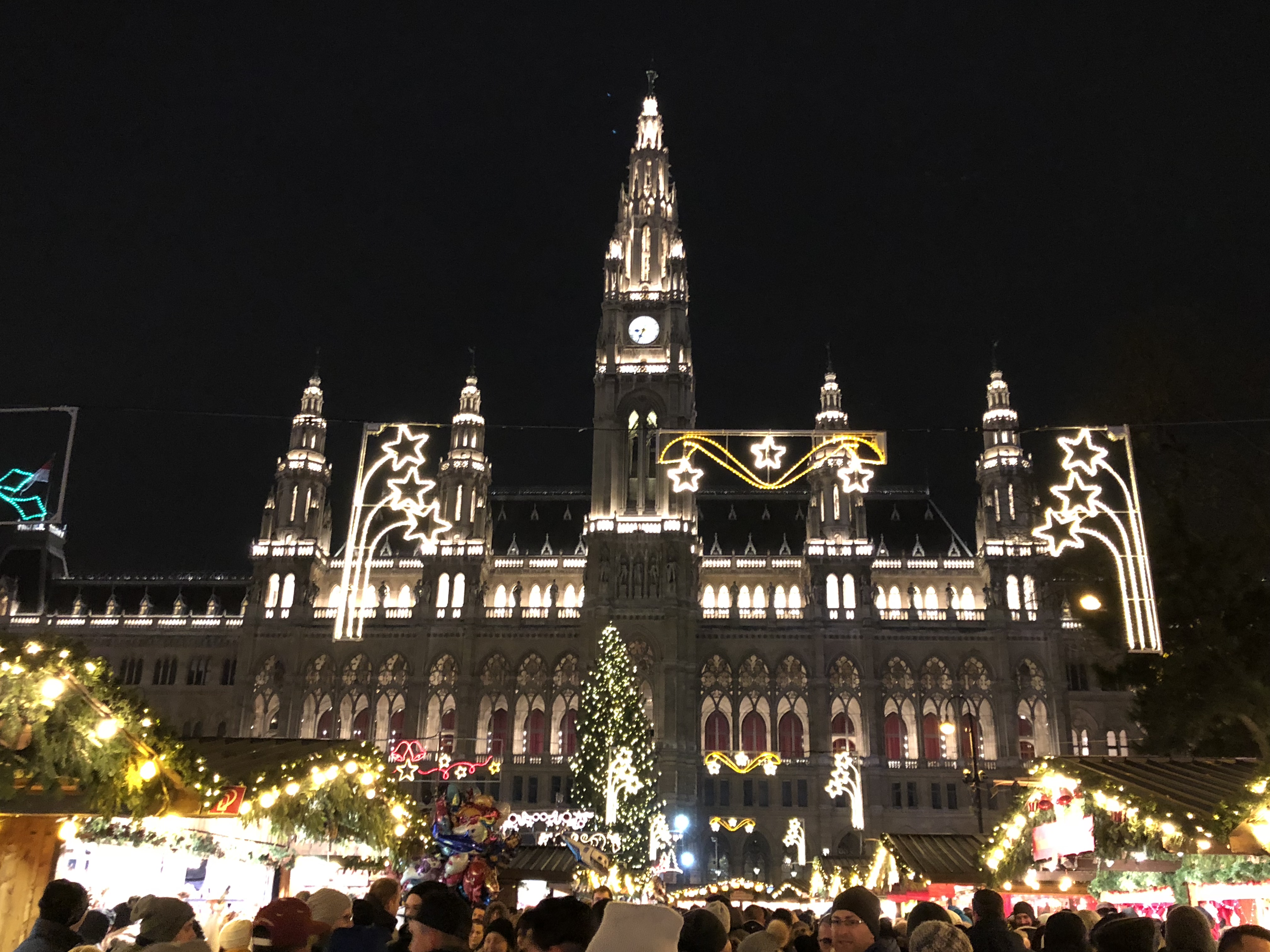
Ah, Christmas markets! They’re one of the staples of a December trip to Europe. Most major cities set up at least one near their city centres, and they’re especially widespread in Germany where they originated. In each of the 4 cities of Vienna, Budapest, Prague, and Nuremberg that we visited, there were multiple Christmas markets and we made a trip out to see each of them. The markets all have common characteristics, including to-go food and drink, in addition to local handmade souvenirs. However, we still found that each city’s markets had a distinct flavor. Here’s our experience in each of the four cities.
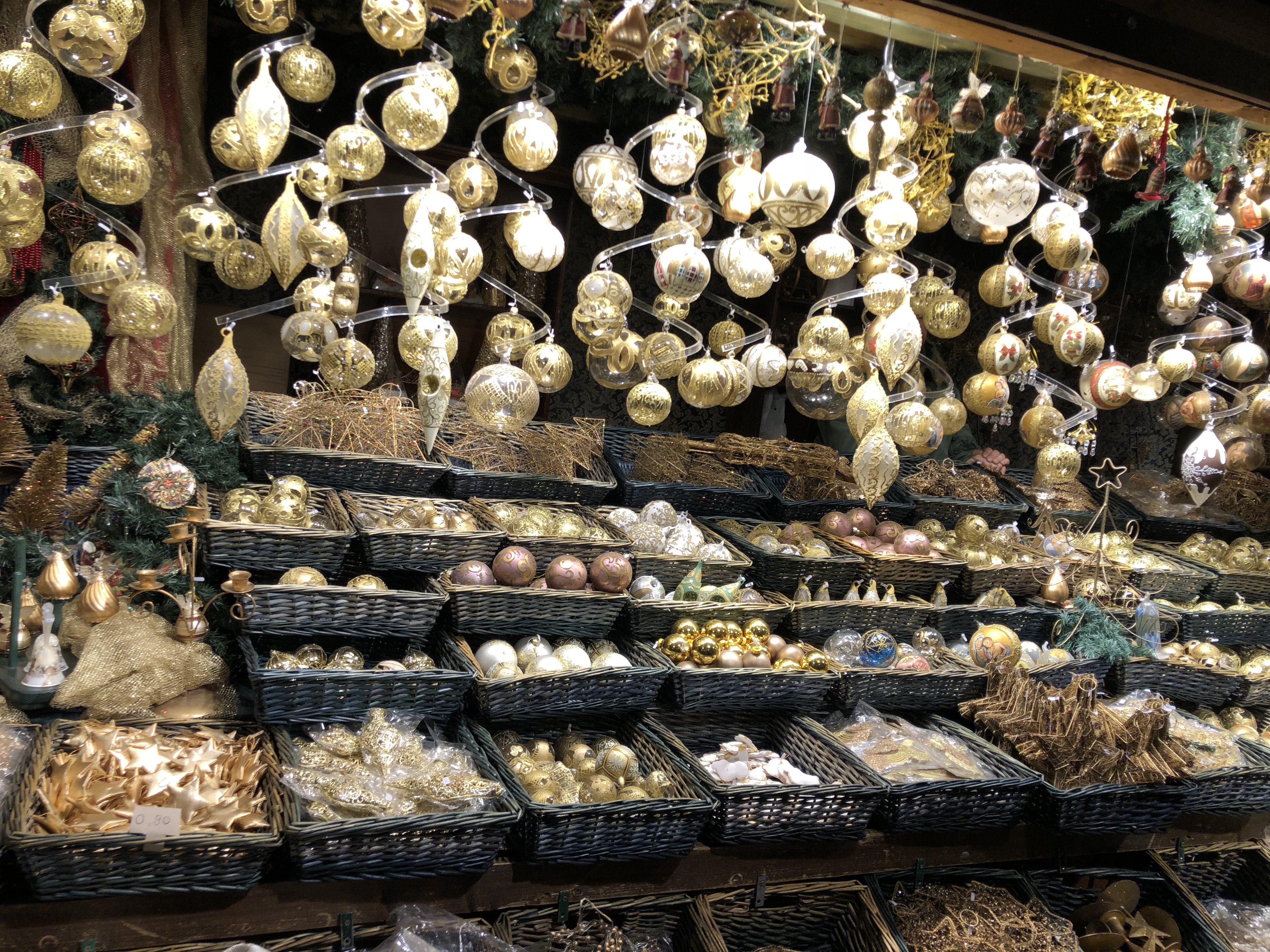
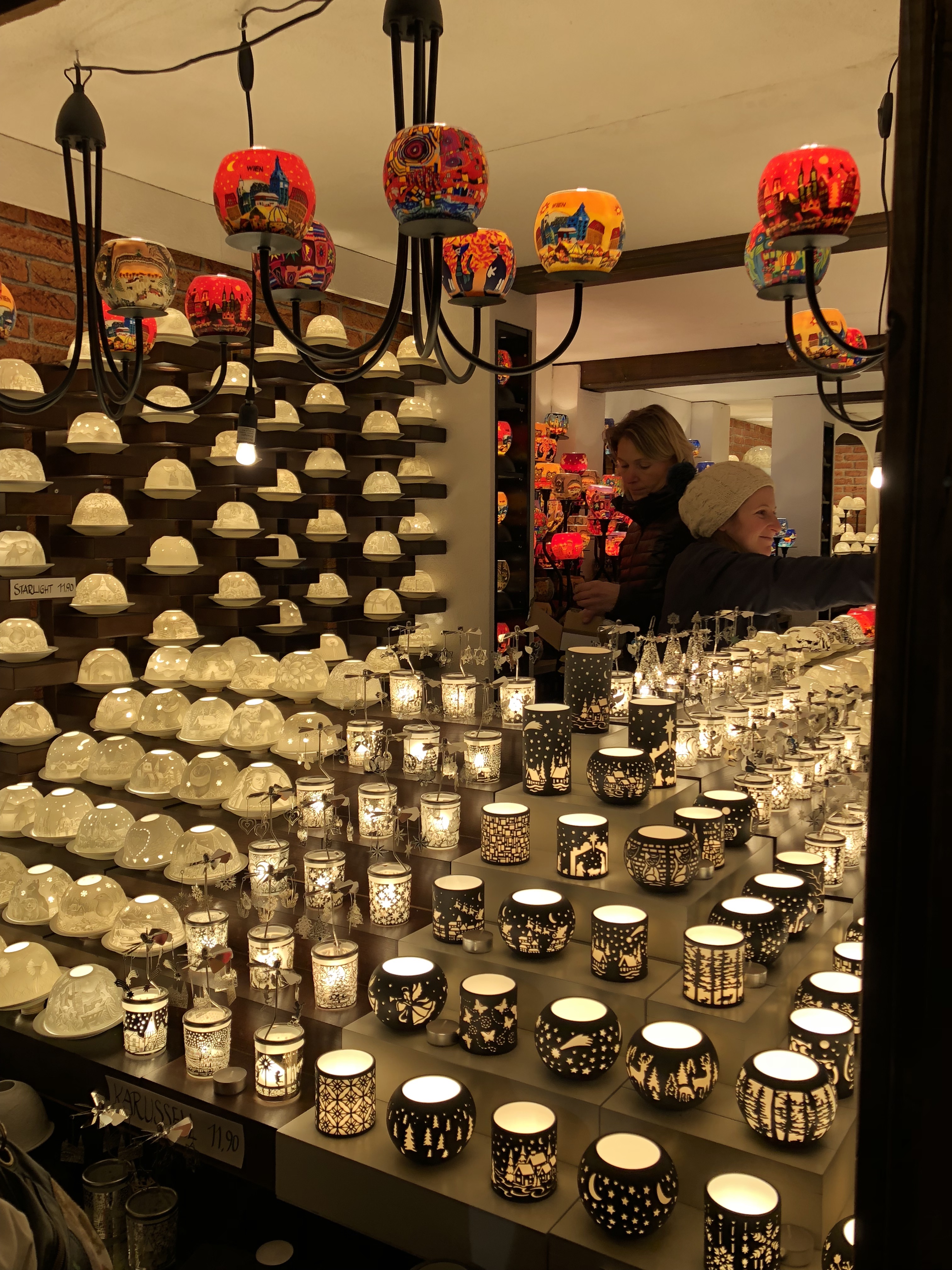
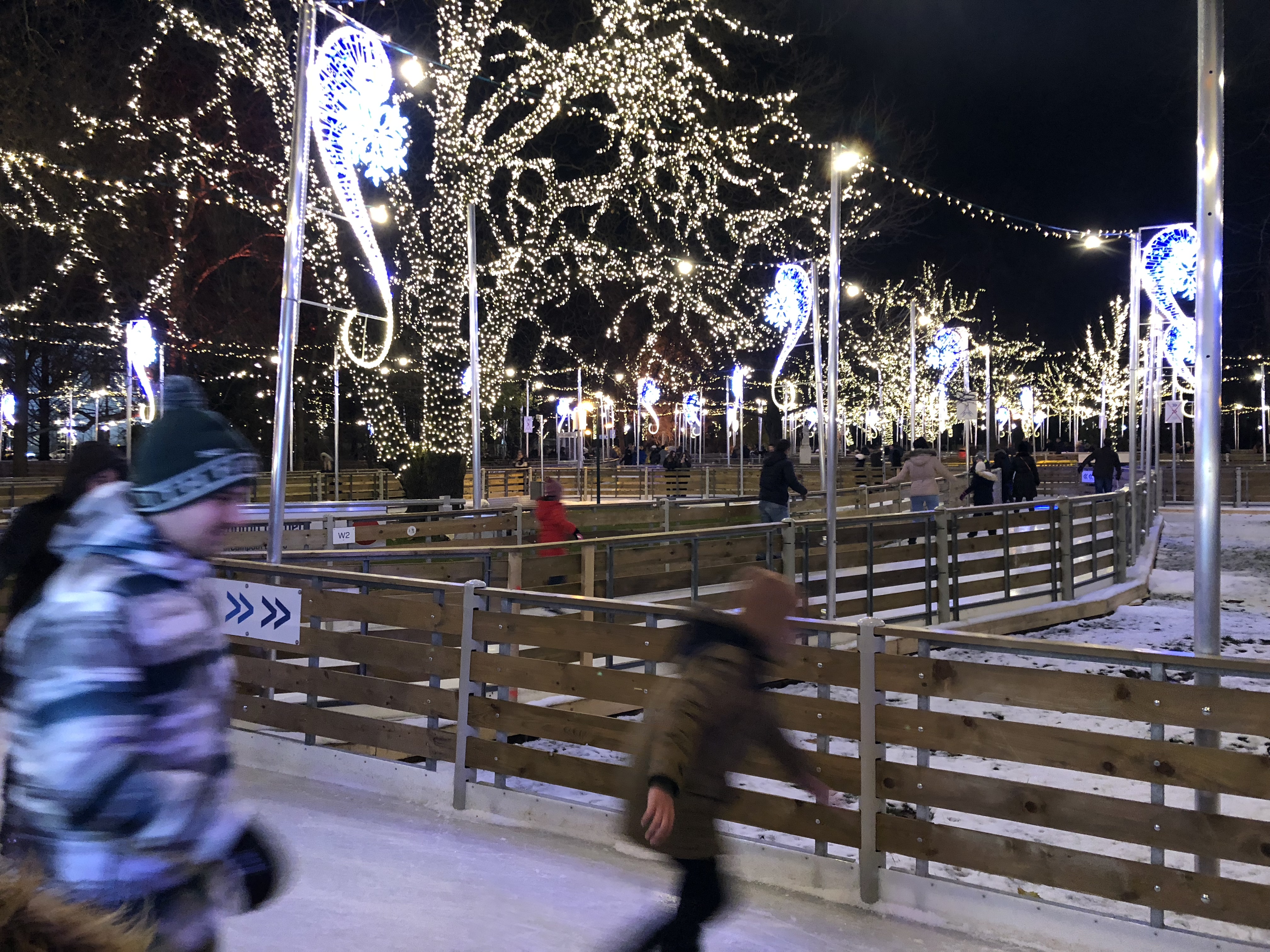
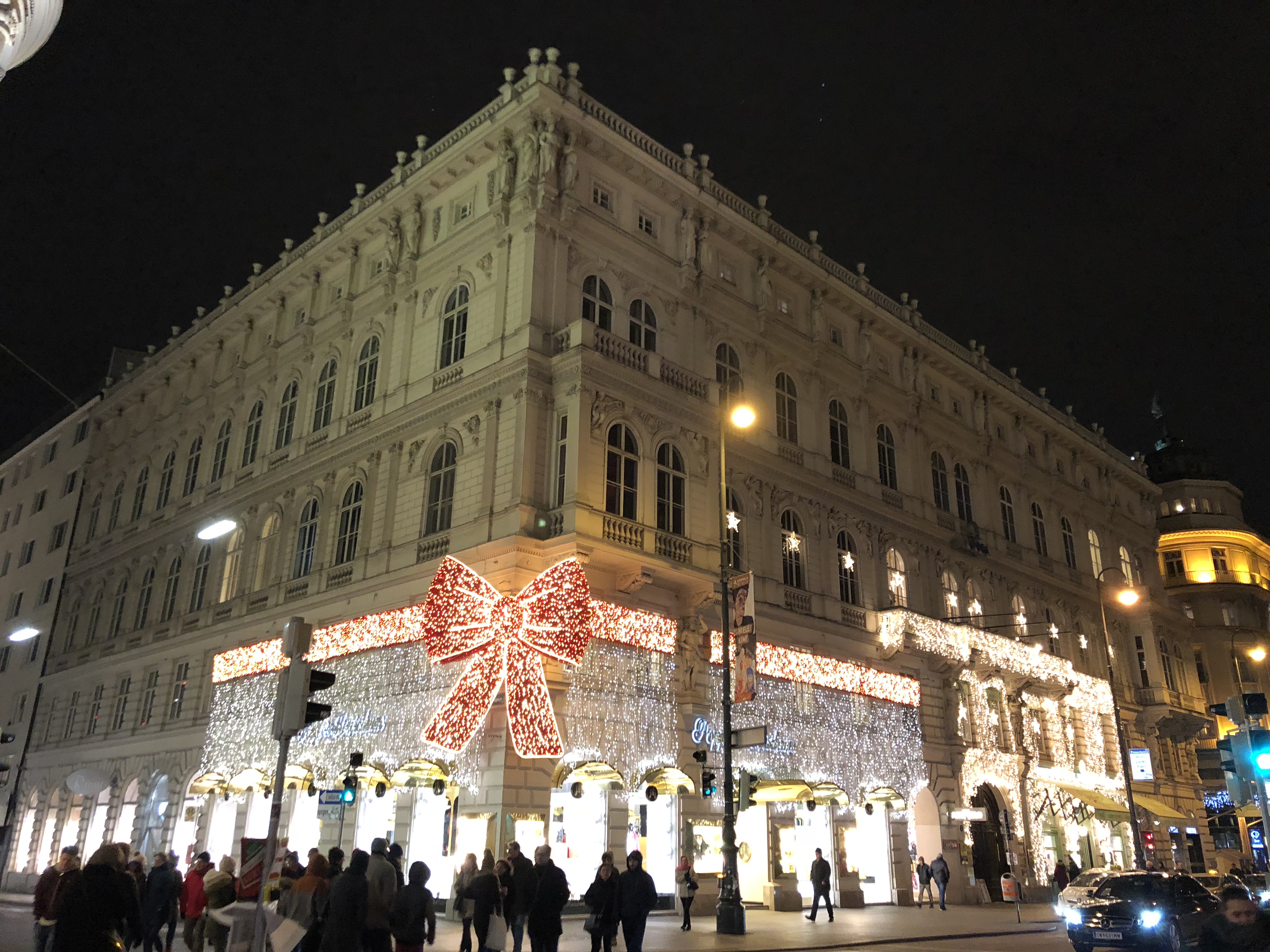
We started off in Vienna, and our first night we had enough energy to walk to the Rathausplatz market. This one was centered in front of city hall, which was a massive church-like structure that was flooded with light. Being a Saturday, the market was flooded with merrymakers, most of them European. Except for Nuremberg’s massive market, this and Austria’s Stephensplatz markets had a greater variety of souvenirs than any other. Ornaments, candles, and woodcarvings featured heavily in their offerings. There were also stuffed animals, writing materials, and most anything you could imagine giving as a gift. I remember getting a stuffed penguin and a stuffed koala (because Austria is spelled similarly to Australia) for friends. Another special part of Rathausplatz is that they set up an ice skating track that people were zipping around. Seeing as I had to be carted off a rink with a bleeding wound the last time I went, I decided not to try it this time. Of course there was mulled wine and pretzels as well, but I think my group was too tired when visiting to partake in either.
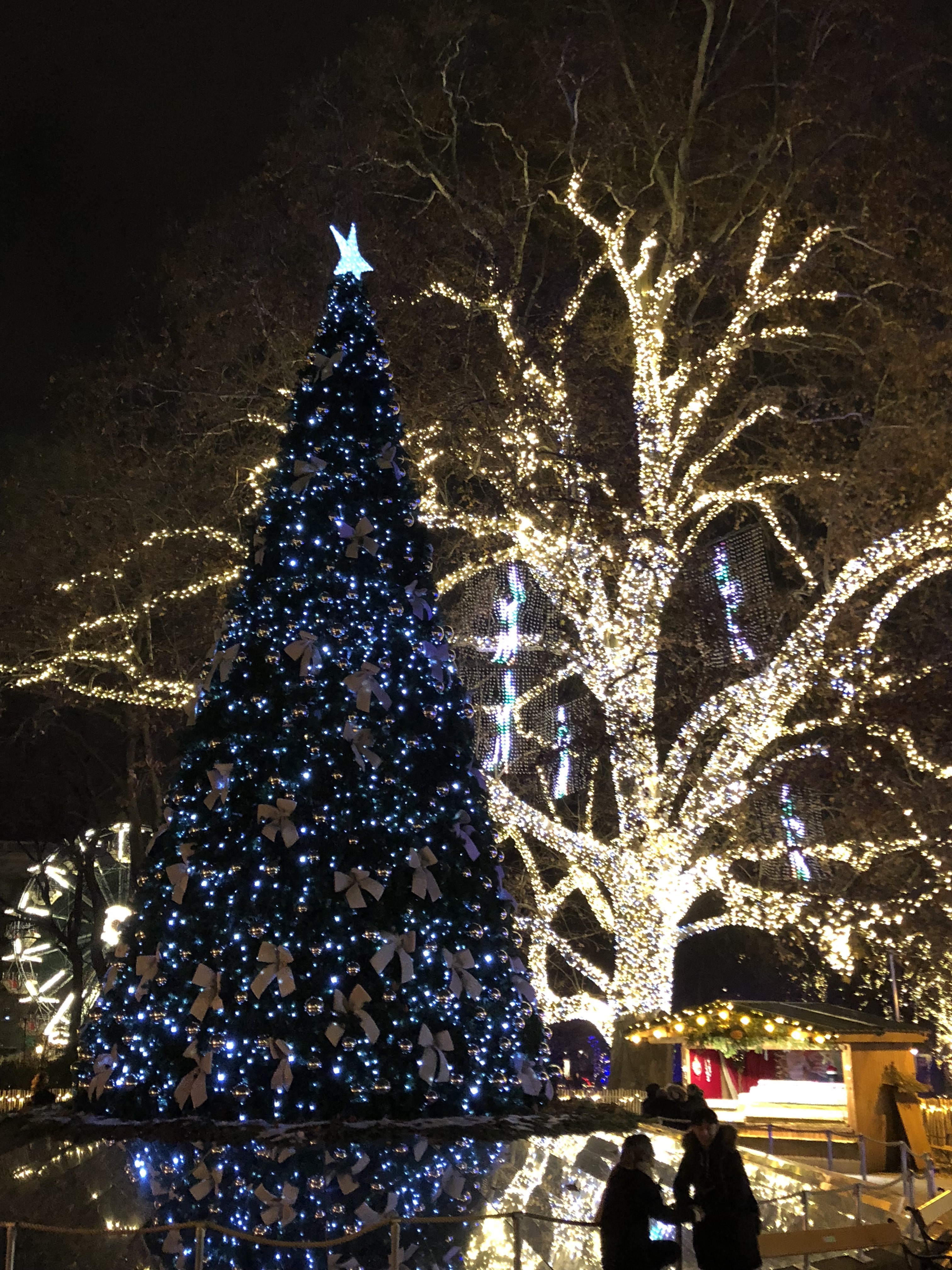
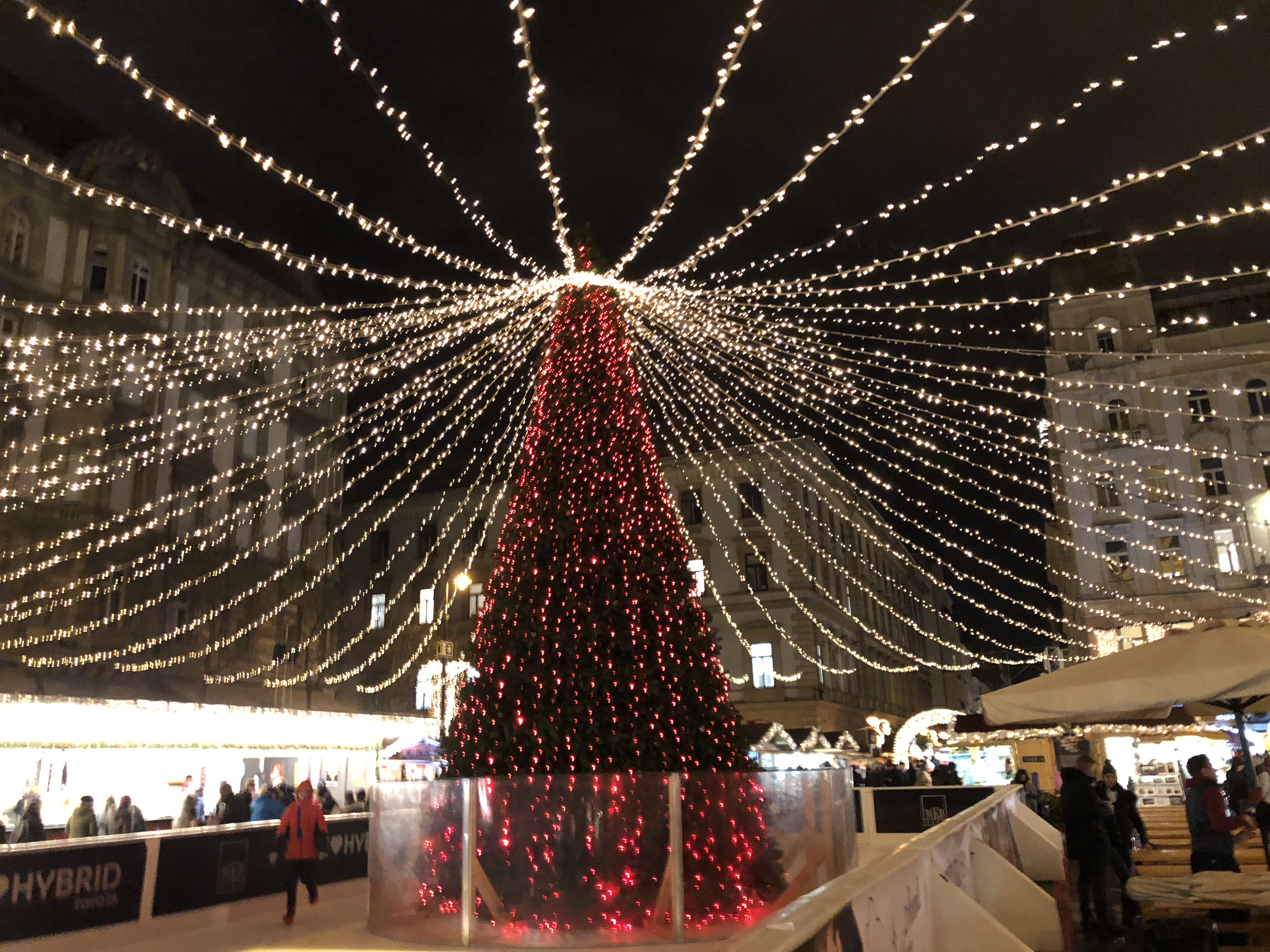
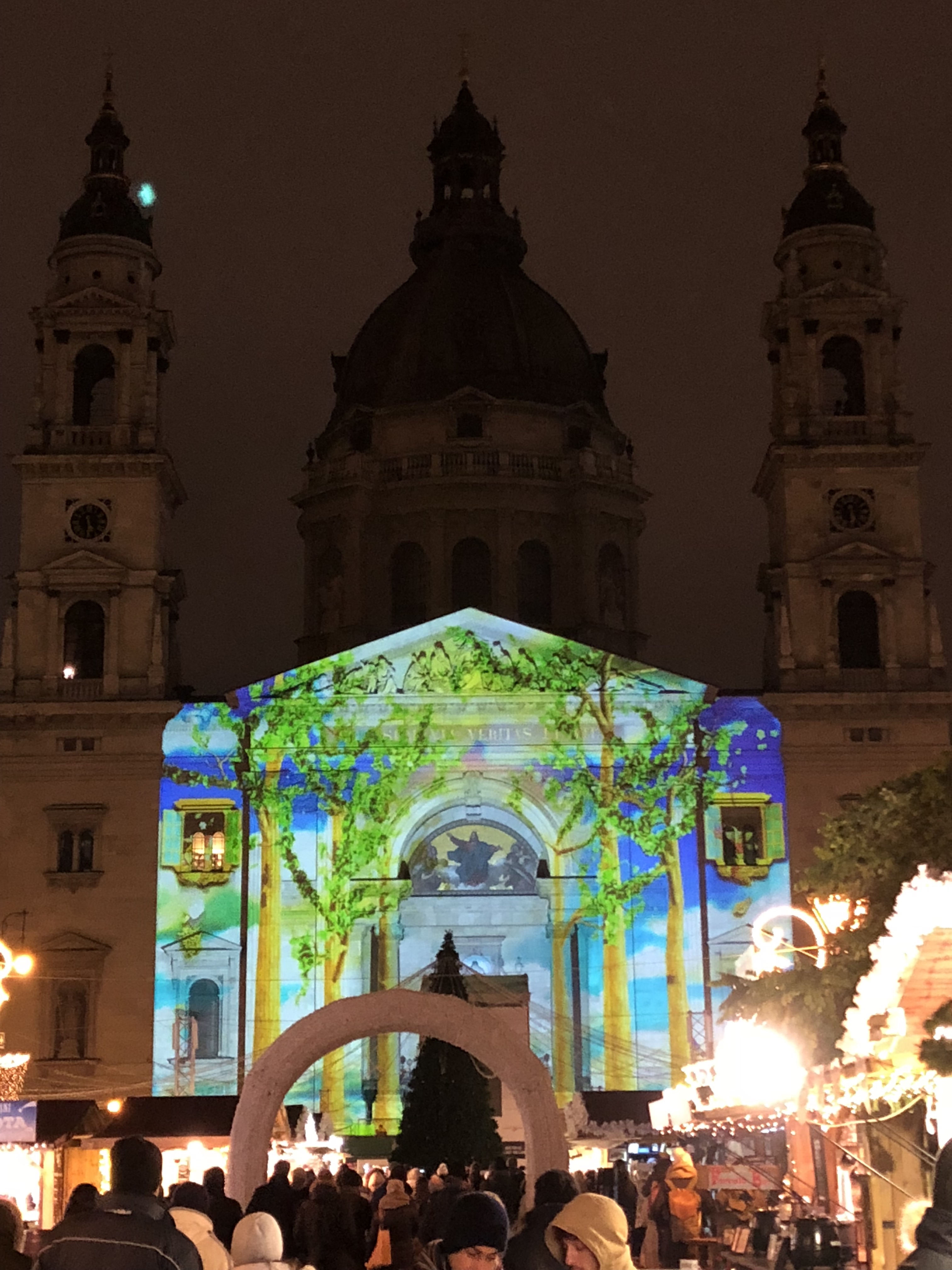
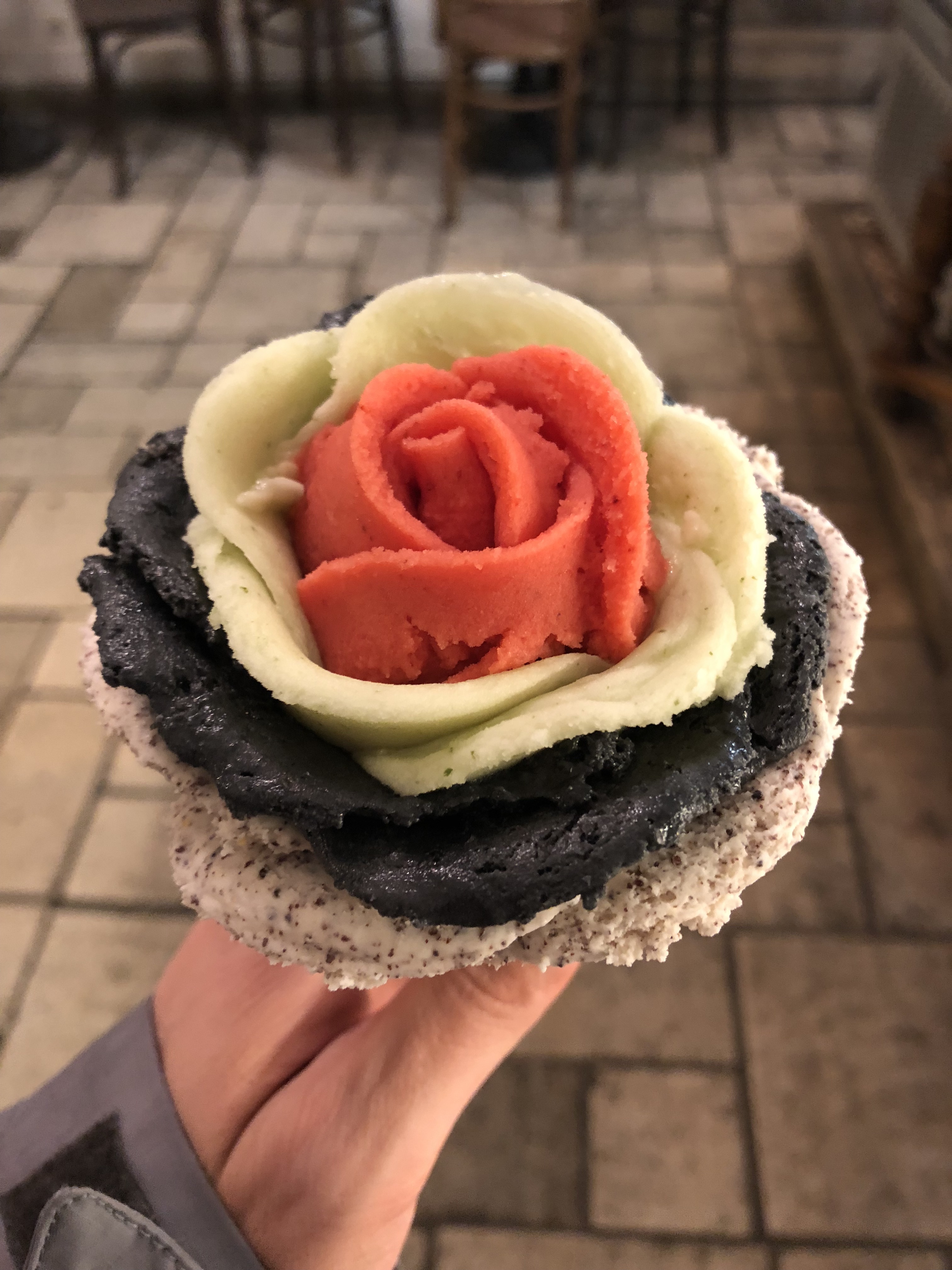
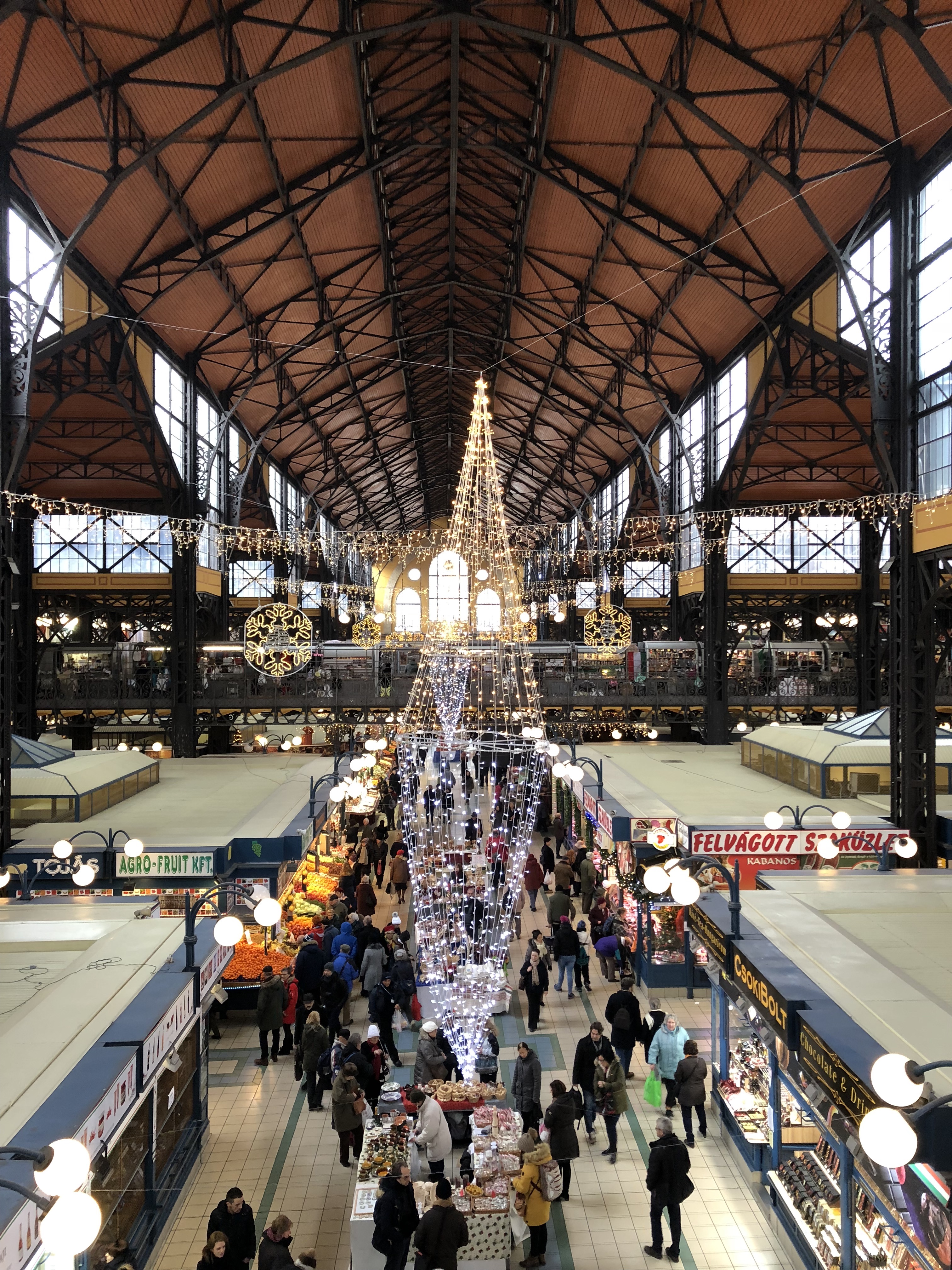
Our next stop was Budapest. Perhaps I’m biased because it’s my favorite city in Europe by virtue of the semester I spent abroad there, but they also had my favorite Christmas market. Their main one was just to the west of St. Istvan’s cathedral, which is just north of the city center. They had a gorgeous Christmas tree set up with red lights, and a canopy of bright lights were draped from the top of that tree to various stands around the market. It was here that my group tried mulled wine for the first time and we loved it! It’s much thicker than normal wine, and usually has hints of apples and citrus fruits that are brewed in. Next we tried unicum, which is a bitter herbal drink that was a one-and-done for me. Apparently, its origins lie in an herbal blend that a doctor administered to a sick Hapsburg prince that cured him. Istvan’s cathedral has an enormous frontal facade, and for the market it was the backdrop of a nature-themed light show. It was similar to light shows I’d seen at Vivid Sydney earlier that year. Overall, this market had less variety of souvenirs than the Viennese ones, but they had local goods that the former didn’t. Included in these were the porcelin shop where I got a tea set for my mom, and local woodworking and paprika-based souvenirs. I guess this next one isn’t technically part of the market, but my favourite gelato shop of Gelato Rosa is right next to the cathedral as well. Their strawberry-elderflower and basil-lime flavors are the best flavors of fruit gelato that I’ve ever tried in my life. That shop was where I’d go to treat myself and celebrate life events during my semester abroad, including finishing my first half marathon and my 21st birthday! Anyhow, they’re worth a visit no matter what time of year you go to Budapest. Lastly is a picture of our stop by Budapest’s Grand Market, just east of the Liberty Bridge. The market’s souvenir offerings changed to reflect the demand for Christmas goods, but the lower floor of food stalls were virtually unchanged. Lots of festive light installations were still hung up here, though.
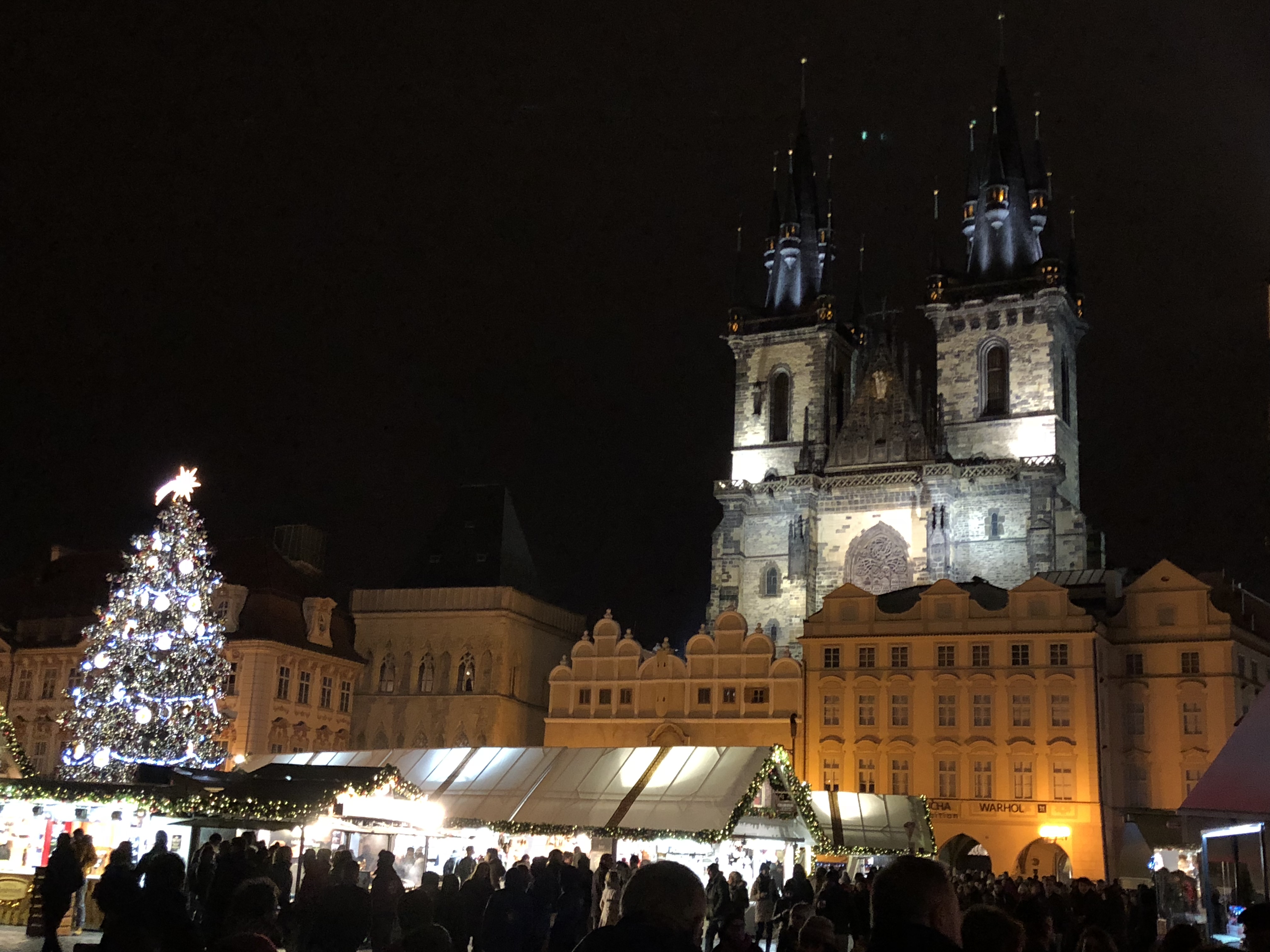
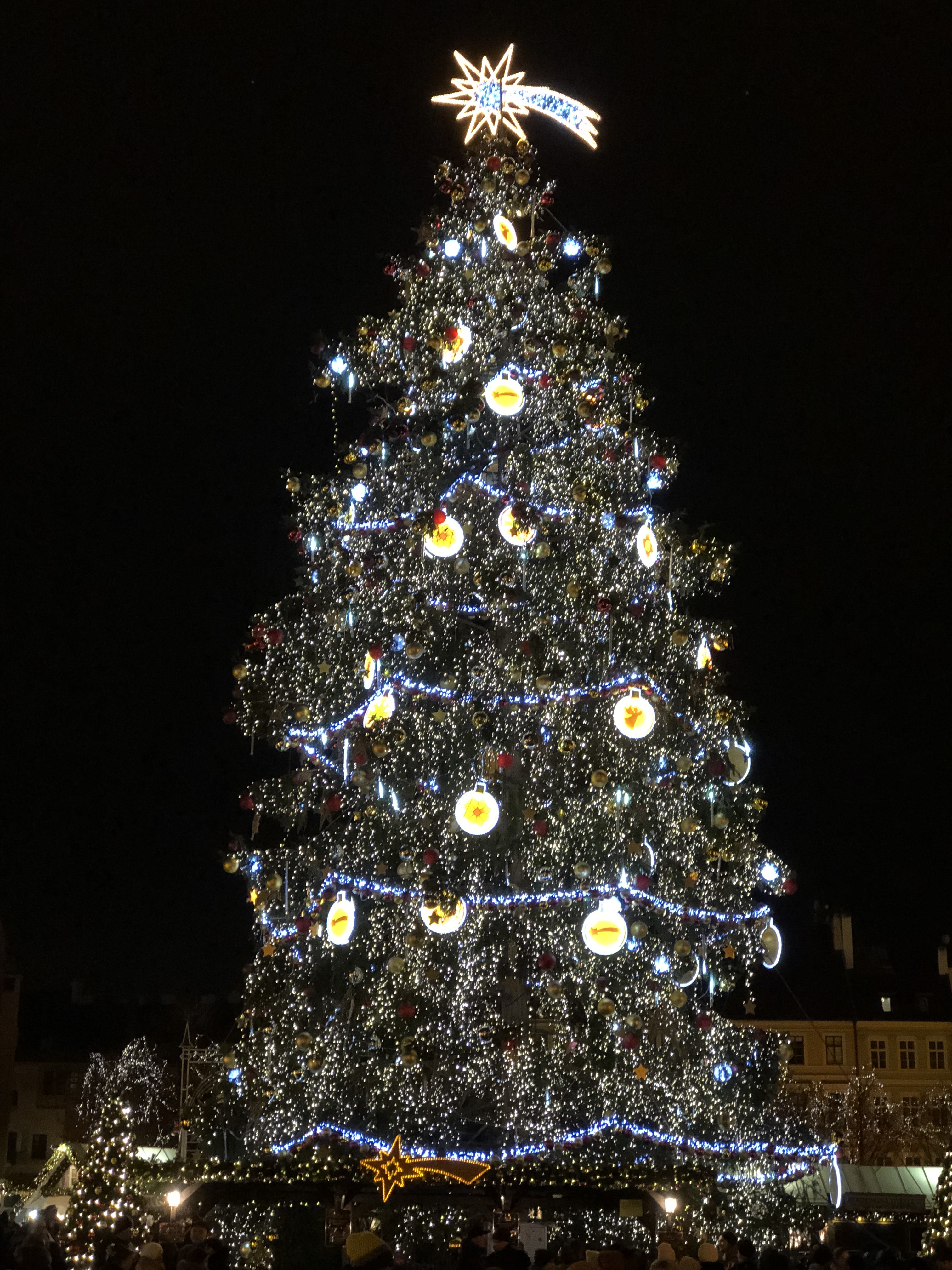
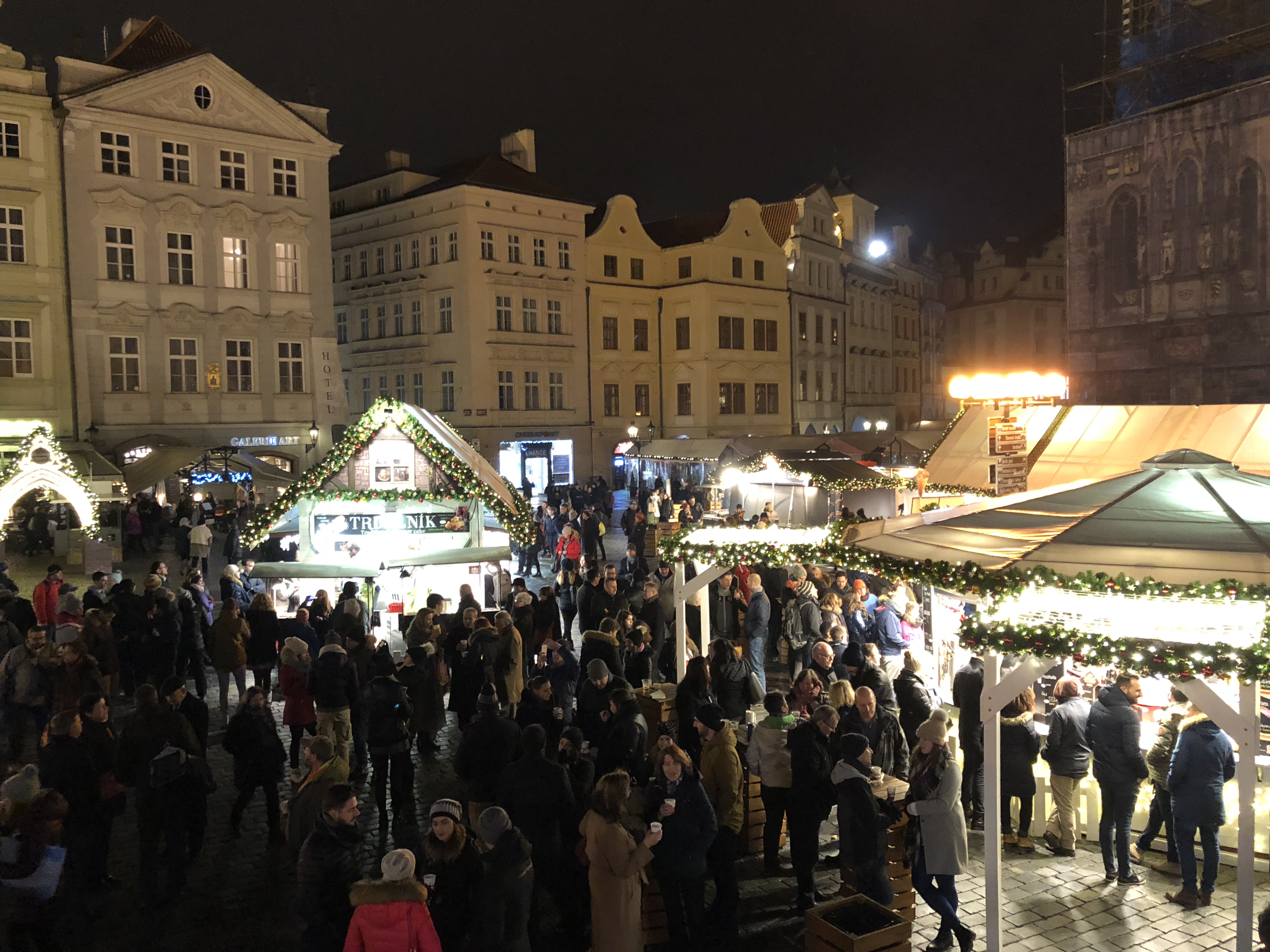
Next was Prague, which probably had the smallest Christmas markets we came across in Europe. Their main one was set up just east of their Astronomical clock, but there were others peppered west of the Vlatta river, especially in the castle area. Here the focus seemed to be more on food, as there were more hot drink and food options than before but the fewest souvenirs sold out of anywhere we went. The main market’s special attarction was a massive Christmas tree, the largest we came across. It had a viewing platform nearby, so it was easy to get good pictures of it with the city’s ancient towers in the background. This city was the only one where we found Grog, a drink made from rum and hot water. Needless to say, we found it disgusting and passed it around a lot before someone just chugged the rest. Prague certainly has an abundance of charms, enough to draw more tourists than any of the other cities we visited by far. However, I would not pick them for the Christmas markets alone.
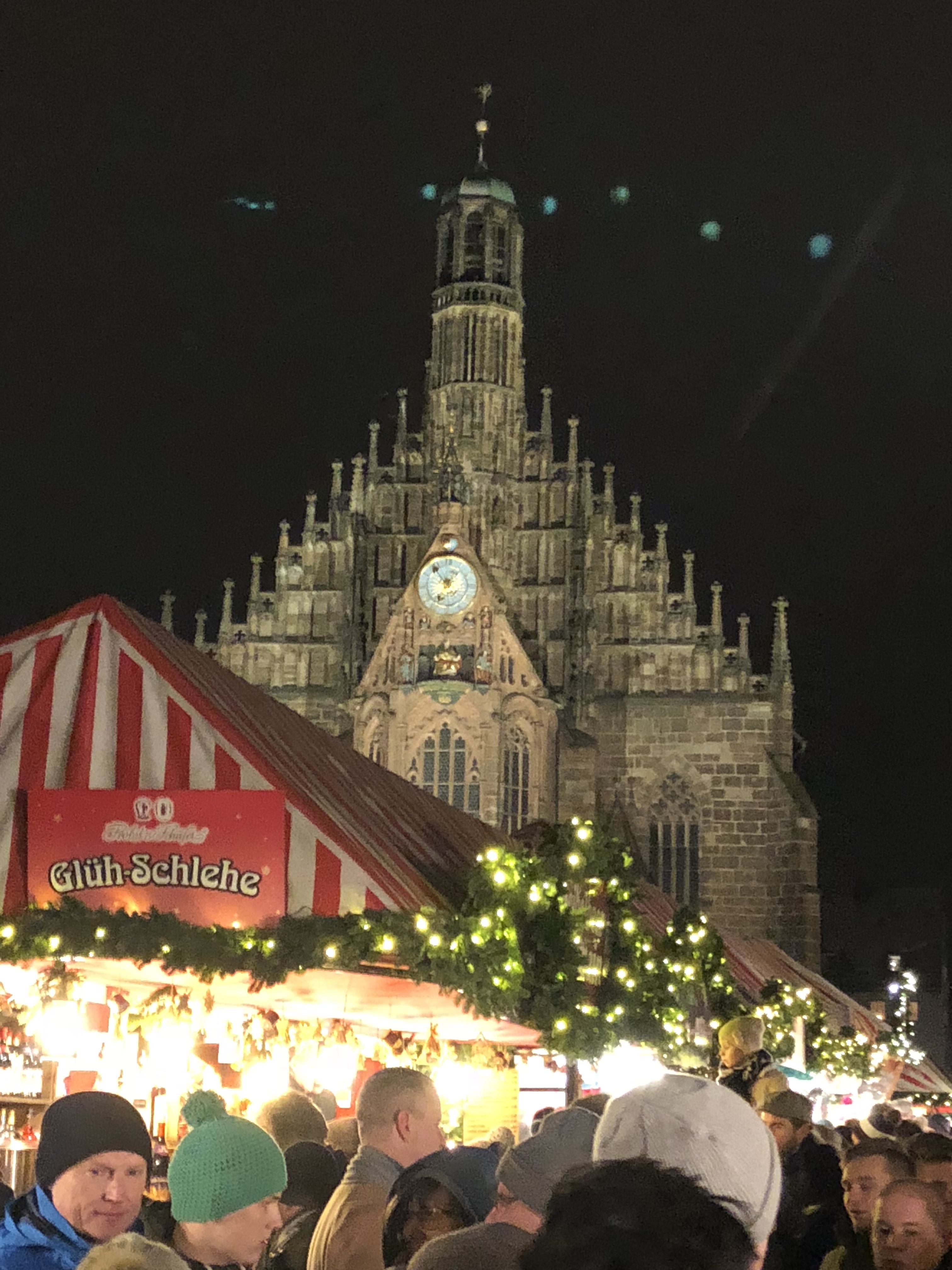
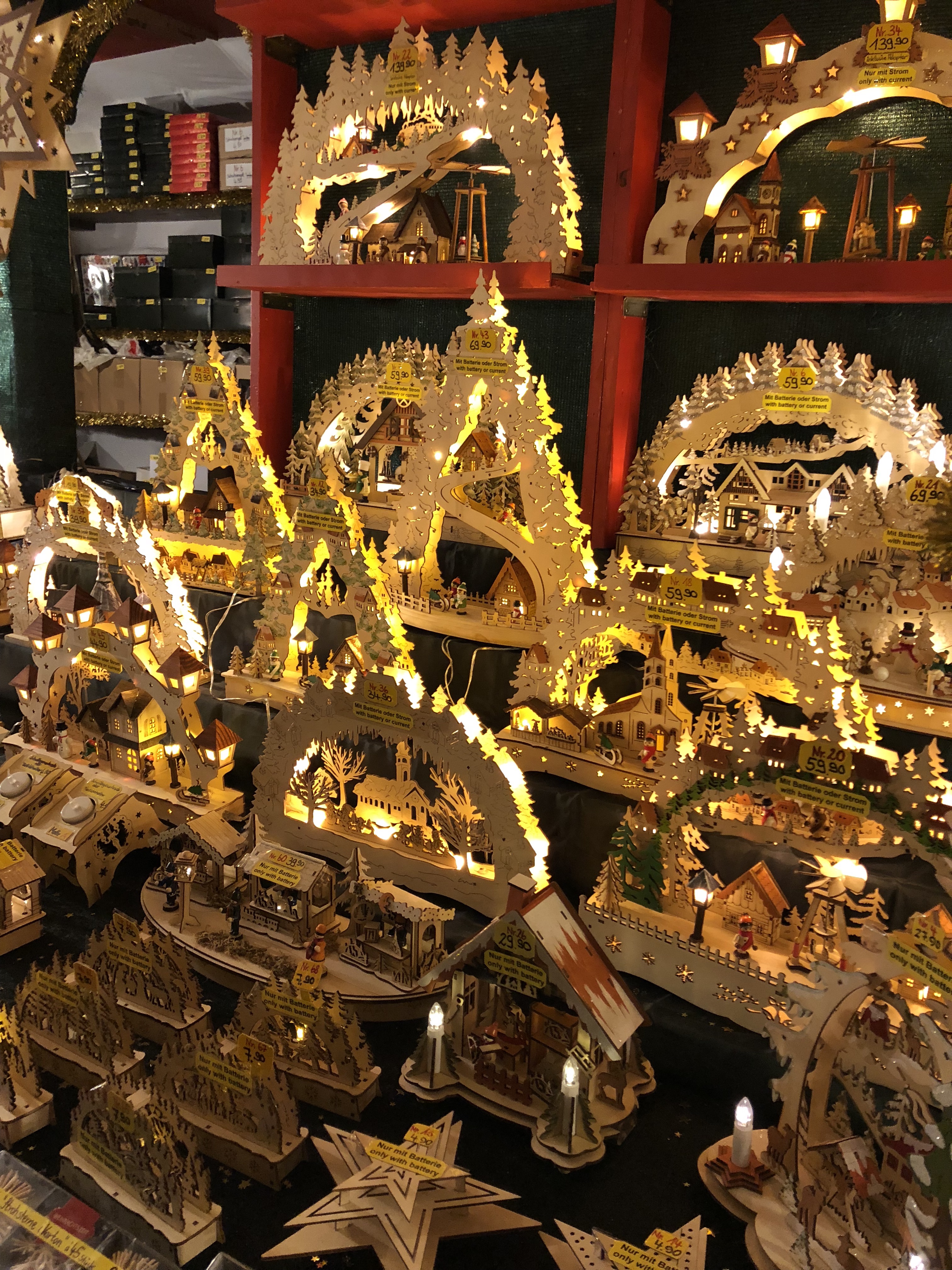
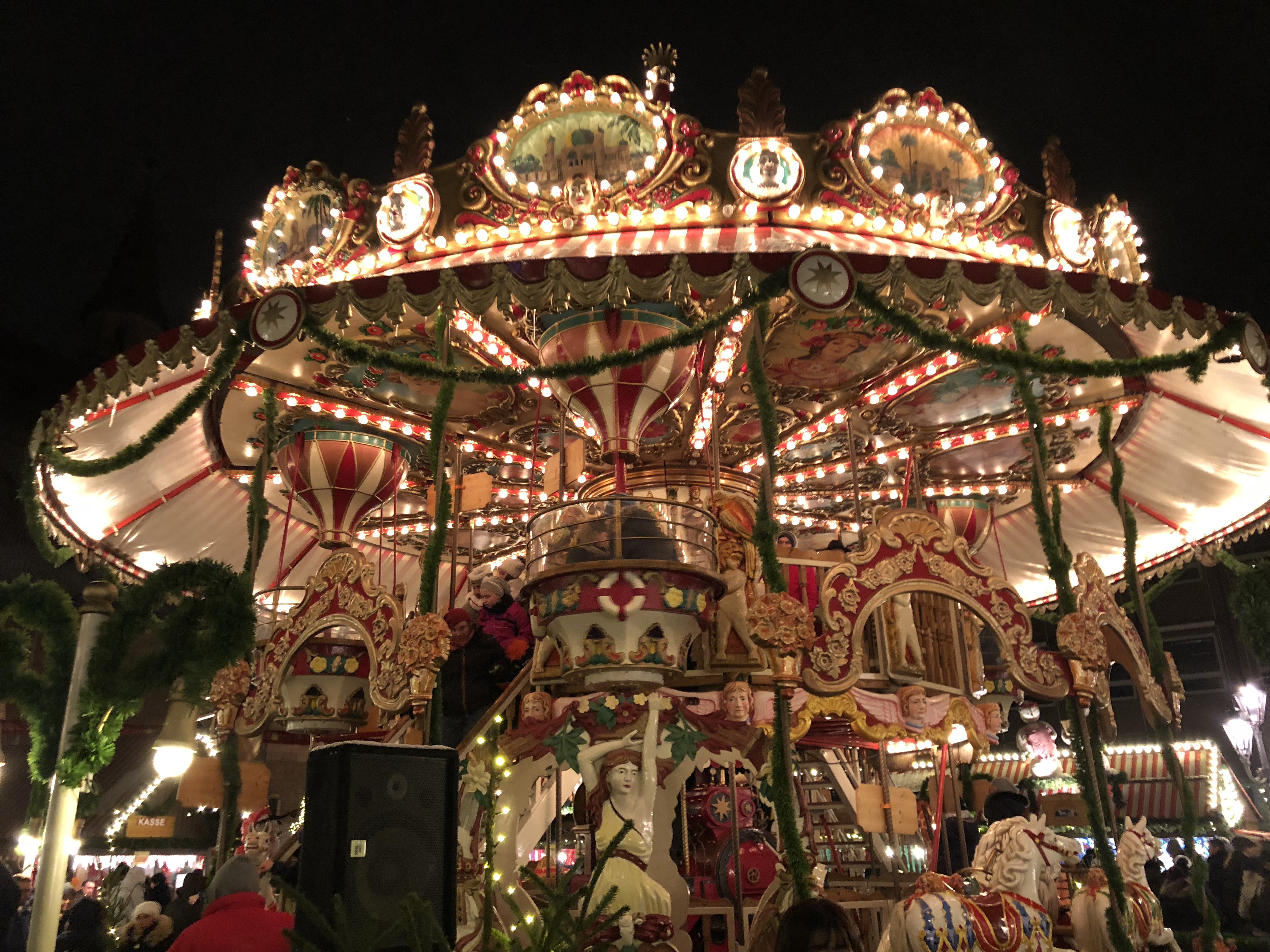
We thought we were saving the best for last with our stay in Nuremberg, reading earlier that they had the largest Christmas market in all of Europe. Their main market is just north of their city center, and it’s positioned right in front of a church. Naturally, this German market has the widest range of food offerings, centering on sausages. We had dinner here both nights and the sausages were more than filling enough for us. We also visited over the 500th anniversary of the reformation, and the mulled wine came in special souvenir cups commemorating this event. This market had a much larger collection of woodworking shops than the others, since that’s a German specialty. But what really set this market apart were the amusement park rides that were set up for children. These included a couple fancy merry-go-rounds and a few other compact rides. Despite this, the Nuremberg market didn’t give us the feeling of being the largest, as we thought even the Rathausplatz market in Vienna was slightly bigger. In the future, it could be worth visiting other markets across Germany, such as Frankfurt, Munich, Berlin, and Hamburg. I’d certainly be curious to see how they compare.
There ended up being a few common themes for the Christmas markets we visited. First, we always found them more exciting to visit at night, sometimes around dinnertime if we were fine dining on pretzels and sausages that night. The lights would turn on, and that was when the markets themselves really shine. Night is also more convenient because most of the city’s daytime attractions might have closed by that time. Even though it will be cold, likely hovering around freezing, the mulled wine and warm sausages will help you stay warm. They’re a great central place to pick up souvenirs, and I was able to find everything I wanted to buy as a gift there. There were variations in the markets by city, but I wouldn’t recommend say, a mega-tour of 7 different cities’ markets as you’ll probably not find enough differences to be interested in all of them. They can also get quite crowded at night, so if you want to be less crowded while exploring them or shopping for souvenirs then I’d recommend going closer to when they open, in the early afternoon. I do think that experiencing them once is a great reason to go to Europe in December, in addition to the snowscapes and winter activities that the region has to offer. They wouldn’t bring me back year after year, though. And out of the markets we did visit, I’d have to rank them: Budapest > Vienna > Nuremberg > Prague.
 Miles Down the Aisle